
TL;DR:
- Fire sprinkler systems reduce property damage by 65-75% in commercial buildings.
- Compliance with local fire codes is essential to avoid penalties and ensure safety.
- Investing in comprehensive fire protection enhances business continuity and can lower insurance costs.
Commercial properties with functioning sprinkler systems see 65-75% less property damage compared to unprotected buildings. That single number should reframe how you think about fire protection. It is not a compliance checkbox or a sunk cost. For Colorado commercial property owners and facility managers, fire protection is the difference between a recoverable incident and a total loss. Between staying open and shutting down permanently. With wildfire exposure increasing across the Front Range and insurers tightening their requirements, the stakes in 2026 are higher than ever. This article breaks down the real risks, the legal requirements, and the financial case for investing in fire protection.
Table of Contents
- The real risks of fire for Colorado commercial properties
- Legal compliance: Colorado’s fire codes and what they mean for you
- Fire protection ROI: Breaking down costs and savings
- Choosing effective fire protection: Solutions and best practices
- The real reason fire protection matters: Lessons from the field
- Fire protection solutions for Colorado properties
- Frequently asked questions
Key Takeaways
| Point | Details |
|---|---|
| Major risk reduction | Fire protection systems dramatically cut property losses and prevent catastrophic events. |
| Legal compliance required | Colorado mandates strict fire codes, and non-compliance risks fines and business closure. |
| Tangible ROI | Investment lowers insurance costs, preserves property value, and ensures business continuity. |
| Custom solutions matter | Choosing properly designed and maintained systems provides the best results for your building. |
The real risks of fire for Colorado commercial properties
Fire losses in the United States are staggering. U.S. fire losses in 2023 reached approximately $10.5 billion in property damage from home structure fires alone, and commercial property losses add billions more on top of that figure. Those numbers represent businesses that never reopened, employees who lost jobs, and communities that lost key facilities.
Colorado adds its own layer of complexity. Wildfire activity across the state has driven up insurance rates and pushed carriers to demand stronger risk mitigation measures before renewing commercial policies. If your property sits in or near a wildland-urban interface zone, your exposure is compounded by external ignition sources that no interior sprinkler system alone can fully address.
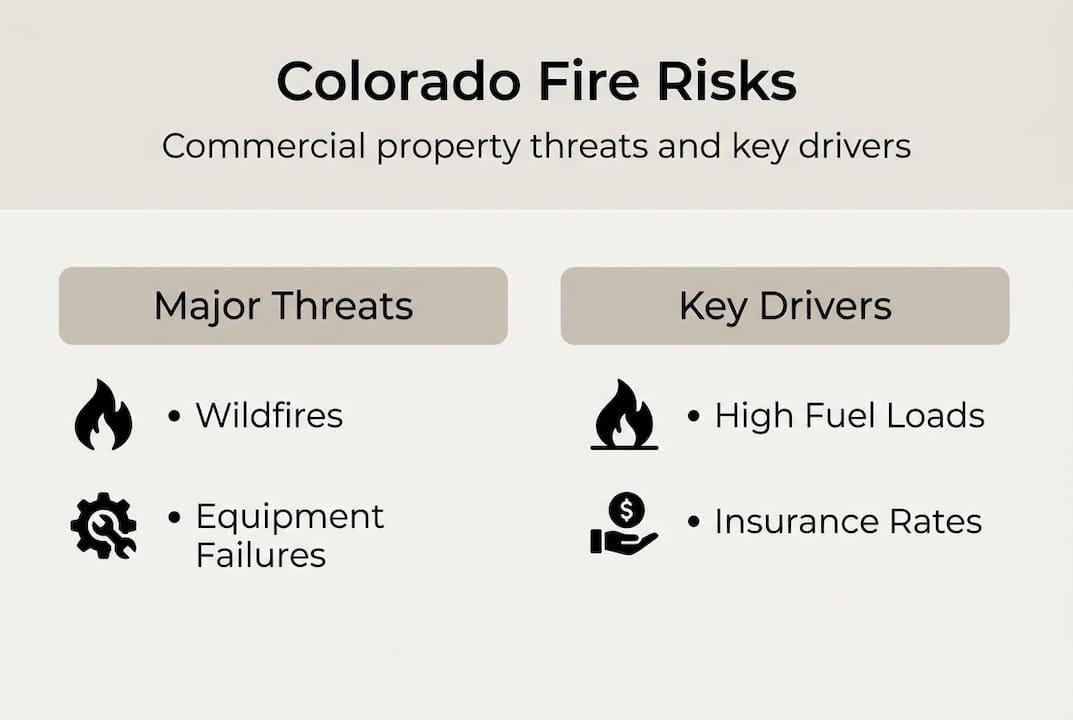
| Risk factor | Impact on unprotected buildings | Impact on protected buildings |
|---|---|---|
| Structure fire | High total loss probability | 65-75% less property damage |
| Wildfire ember exposure | Severe exterior and interior damage | Reduced spread with suppression systems |
| Insurance cost trends | Premiums rising sharply | Discounts available with mitigation |
| Business continuity | High closure rate post-fire | Faster recovery and reopening |
Commercial buildings in Colorado face vulnerabilities that go beyond standard fire risk:
- Older building stock in Denver and surrounding metros may lack modern suppression systems
- High-occupancy facilities like warehouses face concentrated fuel loads and delayed detection
- Mixed-use developments create complex fire spread pathways across occupancy types
- Seasonal dry conditions accelerate ignition and fire travel rates across the state
“Colorado’s wildfire environment is not just a rural problem. Embers can travel miles and ignite commercial rooftops in suburban and urban areas, making fire protection a regional concern, not just a building-level one.”
For Denver warehouse operators in particular, the combination of high fuel loads, limited egress, and proximity to wildfire corridors creates a risk profile that demands a serious, layered response. Understanding that risk is the first step. Knowing what the law requires is the next.
Legal compliance: Colorado’s fire codes and what they mean for you
Given these risks, staying compliant is not optional. Here is what you need to know about the rules.
Colorado does not operate under a single statewide fire code. Instead, commercial buildings must comply with local adoptions of the International Fire Code (IFC) and NFPA standards, enforced by municipal Authorities Having Jurisdiction (AHJs). In Denver, that means the Denver Fire Department enforces its own adopted version of the IFC, with local amendments that can be stricter than the base code.
AHJs have significant authority. They can require specific suppression systems, mandate inspection schedules, and issue stop-work orders or occupancy denials for non-compliant properties. Understanding Denver fire protection compliance requirements before you break ground or begin a retrofit saves you from expensive surprises.
| Code framework | Who enforces it | What it covers |
|---|---|---|
| International Fire Code (IFC) | Local AHJ (e.g., Denver Fire Dept.) | Suppression, egress, hazardous materials |
| NFPA 13 | AHJ and insurance carriers | Sprinkler system design and installation |
| NFPA 72 | AHJ and third-party inspectors | Fire alarm and detection systems |
| Local amendments | Municipal AHJ | Additional requirements beyond base codes |
The consequences of non-compliance are real and immediate:
- Fines and stop-work orders that halt operations or construction
- Insurance policy cancellation or refusal to renew coverage
- Increased liability exposure if a fire occurs in a non-compliant building
- Business interruption if an AHJ mandates closure pending remediation
Understanding fire safety code requirements in Colorado also means knowing that NFPA warehouse fire data is increasingly used by AHJs to justify stricter local requirements. The trend is toward more enforcement, not less.
Pro Tip: Engage your local AHJ early in any new construction or major retrofit project. A pre-application meeting with the Denver Fire Department or your municipal fire marshal can identify code gaps before they become costly corrections.
Fire protection ROI: Breaking down costs and savings
Beyond just meeting codes, investing in fire protection pays off. Here is why.
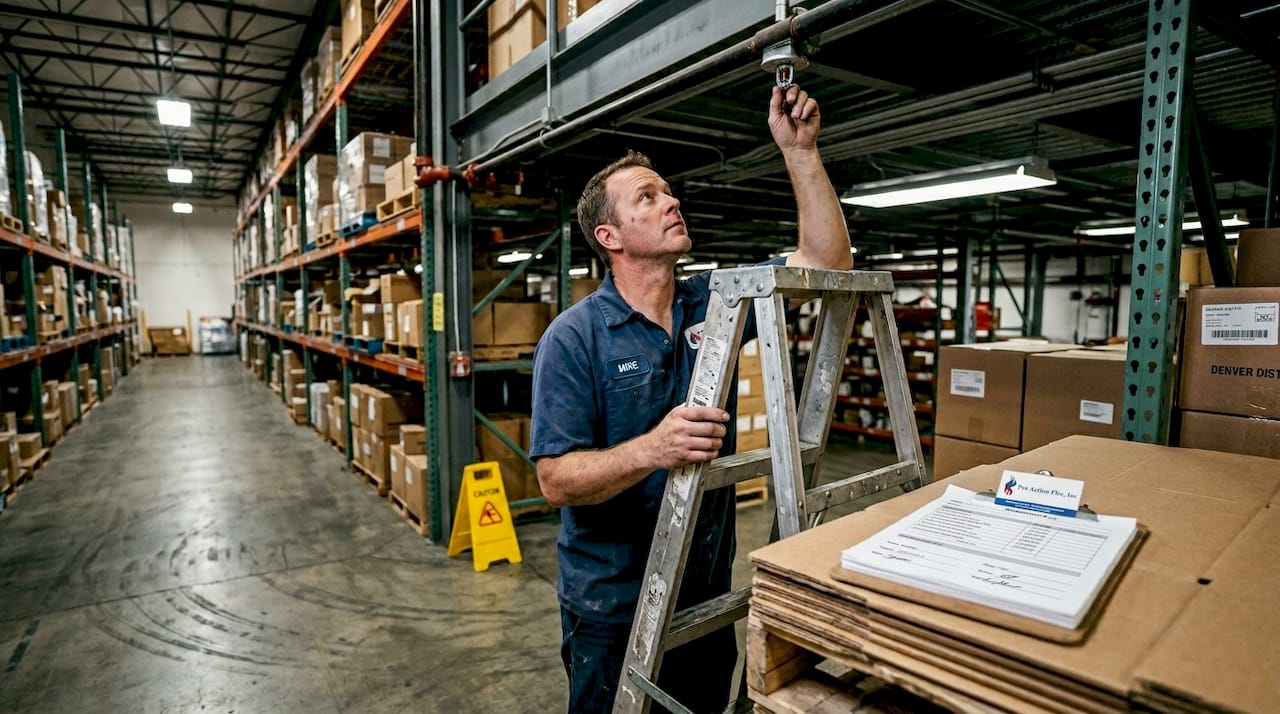
The financial case is not abstract. Consider restaurant fires as a concrete example. Restaurants without sprinklers average roughly $53,000 in fire losses per incident. Restaurants with sprinklers average around $13,000. That is a $40,000 difference per event, and that figure does not include lost revenue during closure, legal costs, or the reputational damage that follows a serious fire.
The numbers behind protection:
Sprinklers reduce property losses by 65-75% per incident. More striking is this: there have been no multiple-death fires recorded in fully sprinklered public assembly occupancies in the United States. That is not a coincidence. That is a system working exactly as designed.
| Building type | Avg. loss without sprinklers | Avg. loss with sprinklers | Reduction |
|---|---|---|---|
| Restaurant | $53,000 | $13,000 | 75% |
| Warehouse | High (varies by inventory) | 65-75% lower | Significant |
| Office building | Moderate | Substantially lower | Consistent |
Here is how to think about ROI on fire protection planning for your property:
- Estimate installation costs for your building type and square footage with a licensed contractor
- Calculate your current insurance premium and request quotes reflecting a fully protected building
- Estimate avoided losses using NFPA incident data for your occupancy type
- Factor in business continuity value: how many days of closure can your operation absorb?
- Add regulatory risk: what would a non-compliance fine or forced closure cost you?
Insurance benefits alone often justify the investment. Many carriers offer premium discounts of 5-15% for buildings with certified suppression and alarm systems. Over a 10-year period, those savings can offset a significant portion of installation costs. Add avoided losses and the math becomes even clearer.
Choosing effective fire protection: Solutions and best practices
A wise investment also means picking the right systems and strategies for your situation.
Fire protection is not a single product. It is a layered system where each component reinforces the others. A sprinkler system without a working alarm may suppress a fire but fail to evacuate occupants in time. An alarm without suppression buys time but does not stop the fire. Effective protection means all layers working together.
Core components of a complete fire protection system:
- Automatic sprinkler systems: The most proven suppression technology, with NFPA data confirming consistent performance across occupancy types
- Fire alarm and detection systems: Early warning for occupants and emergency responders, including smoke, heat, and carbon monoxide detection
- Portable fire extinguishers: First-response tools for small fires before suppression systems activate
- Fire monitoring services: 24/7 central station monitoring that notifies the fire department when alarms trigger
- Emergency lighting and exit signage: Critical for safe evacuation, especially in large commercial spaces
As wildfire construction standards evolve, exterior fire protection measures are becoming part of the conversation for Colorado properties. Ember-resistant vents, fire-rated roofing materials, and defensible space planning are increasingly relevant for commercial buildings near wildland areas.
For Denver commercial property owners, the key is matching system design to your specific occupancy type, building age, and risk profile. A cold storage warehouse needs a different sprinkler design than a multi-tenant office building. Getting that specification right requires experienced, certified professionals.
Pro Tip: Schedule annual inspections and quarterly walk-throughs of all fire protection equipment. Most system failures during a fire trace back to deferred maintenance or missed inspection items, not equipment defects.
The real reason fire protection matters: Lessons from the field
Here is something most fire protection guides will not tell you: the most costly fire disasters we have seen happen in buildings that were technically compliant. Meeting the minimum standard is not the same as being protected.
Minimum code compliance means your building passed an inspection at a point in time. It does not mean your systems are optimized for your actual risk profile, your occupancy has not changed since the last review, or your staff knows how to respond when an alarm sounds. We have worked with facility managers who were shocked to discover their suppression systems covered only part of their floor plan because of an uncommunicated renovation years earlier.
The ROI skepticism we hear from property owners almost always dissolves after one conversation about what a single serious fire event actually costs. Not just the property damage, but the legal exposure, the lost tenant relationships, the insurance renegotiation, and the months of lost revenue. Wildfire-driven regulatory changes in Colorado are making robust protection non-negotiable, not just financially smart.
We encourage every facility manager to treat fire protection as a business continuity investment. The question is not whether you can afford to invest in protection. It is whether your business can survive without it.
Fire protection solutions for Colorado properties
For Colorado property owners, taking action is the final critical step.
Pre Action Fire, Inc. has served the Denver Metro Area since 2009, helping commercial property owners build fire protection systems that go beyond minimum compliance. Our NICET-certified technicians design and install solutions tailored to your building type, occupancy, and risk profile.
Whether you need fire safety inspections to verify your current system status, guidance on fire alarm control panels that meet Denver’s adopted codes, or a full fire sprinkler installation in Arvada or surrounding communities, we bring the expertise to get it right the first time. Contact us today for a risk assessment and a customized protection plan built for your property.
Frequently asked questions
How does fire protection impact insurance costs in Colorado?
Investing in certified fire protection systems often qualifies commercial properties for premium discounts and may unlock risk reduction incentives that are especially valuable in wildfire-prone areas of Colorado.
What fire protection systems are most effective for commercial buildings?
Integrated systems combining sprinklers, alarms, and extinguishers consistently deliver the best outcomes, with sprinklered buildings showing 65-75% less property damage per fire incident.
Are there penalties for not complying with Colorado’s fire codes?
Yes. Non-compliance with Colorado’s fire code requirements can result in fines, insurance cancellation, and mandatory closure of your facility following a fire event.
How do wildfires affect commercial fire protection needs?
Wildfires expand the risk perimeter for all Colorado properties and make robust suppression systems more critical, as ember cast and radiant heat can threaten buildings well outside the immediate fire zone.
Recommended
- Building fire safety in Colorado: compliance and risk reduction
- Why comply with fire safety codes: risk, law, and cost
- Protect Colorado assets: NFPA fire safety standards 2026
- Fire protection guide: safe, compliant Denver buildings
- Why Compliance is a Strategic Asset, Not Just a Checkbox – Heights Consulting Group
- Denver Commercial Fire Protection