
Most property owners assume fire safety means having a few extinguishers mounted on walls and a smoke alarm that beeps when the battery dies. That assumption is expensive. Real building fire safety is a layered system that connects legal compliance, certified maintenance, operational procedures, and the right equipment working together. For Colorado property owners and facility managers, getting this wrong means fines, voided insurance claims, and serious liability exposure. This guide walks you through the regulatory landscape, your core responsibilities, the systems you need, and the practical steps to build a property that is genuinely fire safe.
Table of Contents
- Understanding Colorado’s building fire safety landscape
- Key codes and standards shaping building fire safety
- Owner and manager responsibilities: Compliance in action
- Fire protection systems: From sprinklers to alarms and more
- Risk reduction: How compliance pays off
- Practical steps to build a fire-safe property
- Partner with experts for seamless fire safety compliance
- Frequently asked questions
Key Takeaways
| Point | Details |
|---|---|
| Know Colorado’s fire codes | Colorado fire safety rules are governed by both state and local codes, which property owners must regularly check. |
| Stay proactive with inspections | Regular certified inspections prevent system failures and help avoid expensive fines or legal risks. |
| Document your compliance efforts | Maintaining accurate logs of inspections and maintenance can protect you during audits and insurance claims. |
| Invest in up-to-date systems | Modern fire protection systems, when maintained, lead to safer buildings and lower operational risks. |
| Partner with fire safety experts | Working with certified professionals streamlines compliance and keeps your property safe year-round. |
Understanding Colorado’s building fire safety landscape
Fire safety in Colorado is not governed by a single rulebook. It is a layered structure of state authority, local amendments, and nationally recognized standards that all apply simultaneously. Understanding who enforces what is the first step toward real compliance.
The Colorado Division of Fire Prevention and Control (DFPC) is the state agency responsible for fire, building, and life safety codes across specific facility types, including schools, hospitals, and state-owned buildings. Local fire authorities, such as Denver Fire Department, handle enforcement for most commercial and residential properties within their jurisdictions. These two layers often overlap, and local codes can be stricter than state minimums.
Colorado also adopts NFPA standards as part of its regulatory framework, which means the National Fire Protection Association’s technical requirements carry legal weight here. Denver, for example, has adopted its own fire code with local amendments that go beyond the state baseline.
Here is what building fire safety actually covers in Colorado:
- Fire alarm and detection systems
- Automatic sprinkler and suppression systems
- Emergency egress routes and exit signage
- Fire extinguisher placement and maintenance
- Carbon monoxide detection in applicable buildings
- Documentation, inspection records, and certifications
- Staff training and emergency response procedures
“Fire safety compliance is not a one-time event. It is an ongoing operational responsibility that touches every system in your building.”
Property owners who treat compliance as a checkbox exercise tend to discover the gaps only after an incident. Proactive engagement with the regulatory framework protects your tenants, your assets, and your legal standing.
Key codes and standards shaping building fire safety
Three primary frameworks shape fire safety requirements for Colorado buildings: the International Building Code (IBC), the International Fire Code (IFC), and NFPA standards. Each serves a different purpose, and they work together rather than independently.
The IBC governs construction and design requirements, setting the baseline for how buildings must be built to resist and contain fire. The IFC addresses ongoing operational requirements, covering everything from storage of flammable materials to fire lane access. NFPA codes like NFPA 25 (inspection and maintenance of water-based suppression systems) and NFPA 72 (fire alarm systems) fill in the technical details that the IBC and IFC reference but do not fully specify. Colorado adopts and enforces these codes statewide, with local jurisdictions adding amendments.
| Building type | Key code requirement | Sprinkler required | Alarm required |
|---|---|---|---|
| Commercial office | IBC, IFC, NFPA 72 | Often yes (over 5,000 sq ft) | Yes |
| Apartment complex | IBC, local code | Yes (new construction) | Yes |
| School or daycare | IBC, NFPA 72, DFPC rules | Yes | Yes |
| Industrial warehouse | IFC, NFPA 25 | Yes | Yes |
| Older retail building | IFC, local amendments | Varies by jurisdiction | Yes |
Denver’s local amendments are worth specific attention. The 2025 Denver Fire Code includes requirements around high-rise buildings, specific occupancy types, and inspection frequencies that exceed state minimums. If your property sits within Denver city limits, you are subject to both layers.

Pro Tip: Download the current Denver Fire Code and compare it against your building’s last inspection report. Gaps between what the code requires and what your last inspector documented are your highest-priority action items.
For a structured approach to meeting these requirements, a solid fire protection planning guide can help you map code requirements to your specific building type and occupancy.
Owner and manager responsibilities: Compliance in action
Knowing the codes is one thing. Executing on them consistently is another. Colorado regulations are clear: inspection, testing, and maintenance of fire protection systems must be conducted per applicable codes, and suppression systems must be managed by licensed professionals. This is not optional, and the documentation trail matters as much as the work itself.
Here is the core compliance sequence every facility manager should follow:
- Conduct a baseline audit. Identify every fire protection system in your building, its age, last inspection date, and current condition.
- Schedule inspections on code-required intervals. Monthly checks for extinguishers, quarterly or annual inspections for sprinkler systems, and annual testing for fire alarms are common minimums.
- Use licensed and certified professionals. Fire system certification requirements exist for a reason. Unlicensed work can void your compliance standing entirely.
- Maintain complete documentation. Inspection reports, maintenance records, and test results must be kept on file and available for authority review.
- Address deficiencies immediately. A failed inspection item that sits unresolved is a liability waiting to happen.
“Incomplete records are treated the same as non-compliance during a fire marshal inspection. If you cannot prove it was done, it was not done.”
One common mistake is assuming tenant responsibility covers fire system maintenance in leased spaces. In Colorado, the property owner retains responsibility for the building’s fire protection systems regardless of lease terms. Tenants may be responsible for portable extinguishers in their space, but the core systems are yours to maintain. Review your lease agreements against fire suppression system requirements to make sure there are no gaps.
Pro Tip: Create a master compliance calendar that maps every required inspection and test to a specific month. Share it with your property management team and your fire protection contractor so nothing falls through the cracks.
Fire protection systems: From sprinklers to alarms and more
Not all fire protection systems are created equal, and not every building needs the same combination. Understanding what each system does and what the code requires helps you make informed decisions rather than reactive ones.
| System type | Code requirement | Maintenance frequency |
|---|---|---|
| Wet pipe sprinkler | NFPA 25, IBC | Annual inspection, 5-year internal |
| Fire alarm panel | NFPA 72 | Annual testing, monthly visual |
| Portable extinguisher | NFPA 10 | Monthly visual, annual service |
| CO detection | Local/state code | Annual testing |
| Special suppression (foam, clean agent) | NFPA 11/2001 | Semi-annual or annual |
Colorado has specific rules for residential rentals. Residential rentals built after 2011 require sprinkler systems, and all rental properties must have working smoke and carbon monoxide detectors. This applies whether you own a single-family rental or a large apartment complex.
Older buildings present a different challenge. Many pre-2011 structures are exempt from sprinkler retrofit requirements but still must maintain functional smoke alarms, clear egress paths, and compliant extinguisher coverage. The Denver Fire Code includes specific provisions for existing buildings undergoing renovations, which can trigger new sprinkler requirements even in older structures.
Key inspection best practices for any building:
- Test smoke detectors monthly and replace batteries annually at minimum
- Inspect sprinkler heads for corrosion, paint overspray, or physical damage
- Verify that fire alarm pull stations and notification devices are unobstructed
- Confirm that all exit signs are illuminated and emergency lighting is functional
- Check that fire extinguishers are in their designated locations and fully charged
For buildings with complex suppression needs, a detailed fire sprinkler installation guide can clarify what system design best fits your occupancy type and risk profile.
Risk reduction: How compliance pays off
Compliance is not just about avoiding fines. It is about protecting the financial and operational continuity of your property. The numbers make a compelling case.
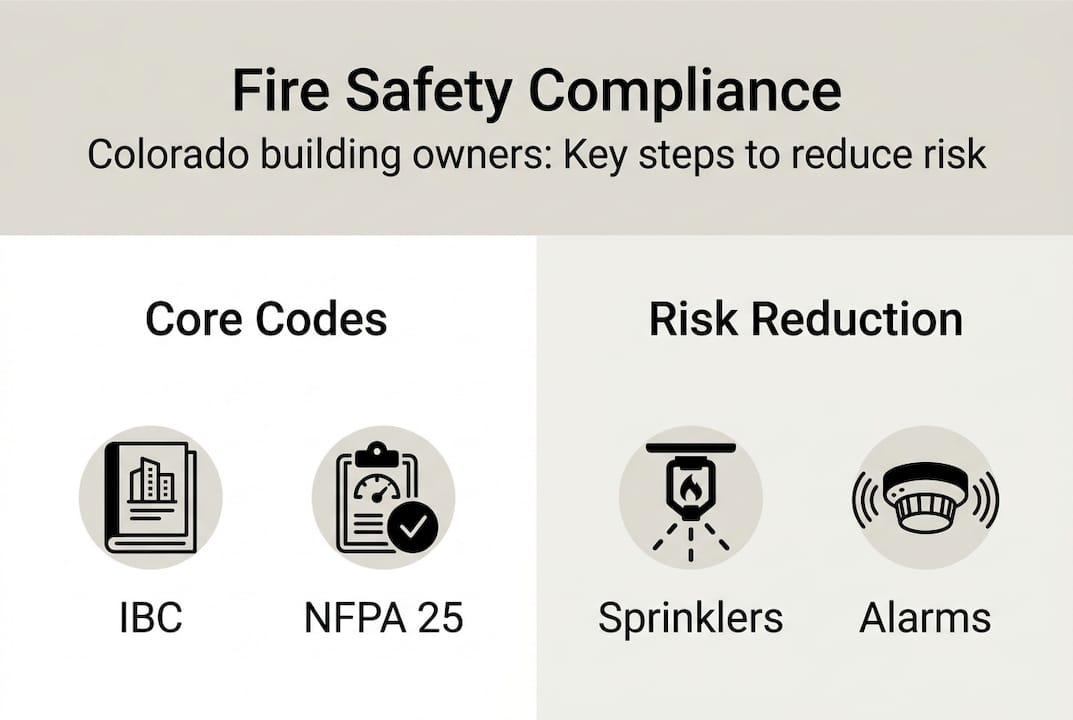
Statistic: Structure fires in commercial properties cause billions in property losses annually across the U.S. Buildings with properly maintained suppression systems consistently show dramatically lower loss severity compared to those without.
Proactive maintenance with certified professionals prevents system failures, reduces liability exposure, and directly impacts insurance costs. Insurers look at your inspection records, system age, and compliance history when setting premiums. A building with documented, up-to-date fire safety systems is a lower risk, and that translates to real savings.
The legal implications of non-compliance are equally serious. If a fire occurs in a building with documented code violations or missed inspections, the property owner faces:
- Denied or reduced insurance claims
- Civil liability from tenants or visitors injured in the fire
- Regulatory fines from the fire marshal
- Potential criminal liability in cases of gross negligence
Consider this scenario: two similar warehouse buildings experience electrical fires. Building A has a current NFPA 25 inspection on file, a functioning wet pipe sprinkler system, and documented monthly extinguisher checks. Building B’s last sprinkler inspection was three years ago and two heads were flagged as deficient but never repaired. Building A’s fire is contained to one area. Building B’s fire spreads. The insurance outcomes and legal exposure are not even comparable.
Pro Tip: Request a copy of your current insurance policy’s fire safety requirements. Many policies include specific maintenance obligations that, if unmet, can void coverage even when you think you are compliant with local codes.
Scheduling regular fire safety risk assessments is one of the most cost-effective steps you can take to identify vulnerabilities before they become claims.
Practical steps to build a fire-safe property
Compliance does not happen by accident. It requires a structured approach that connects hazard assessment, system maintenance, and ongoing documentation into a repeatable routine.
Follow these steps to build a fire-safe property in Colorado:
- Assess your hazards. Walk every area of your building and identify fire risks: storage of flammable materials, electrical panel conditions, cooking equipment, and high-occupancy areas.
- Verify your systems are current. Confirm that all installed systems meet current code requirements for your building type and occupancy. Older systems may need upgrades.
- Schedule all required inspections. The 2025 Denver Fire Code specifies monthly and annual inspection requirements for various systems. Map these to your calendar now.
- Update your emergency action plan. Your written emergency plan should reflect current exit routes, assembly points, and staff responsibilities. Review it annually and after any building changes.
- Train your staff. Employees should know how to use a fire extinguisher, where exits are, and what to do when an alarm sounds. Document this training.
- Partner with a certified fire protection contractor. Ongoing compliance is easier when you have a professional relationship with a contractor who knows your building and your local code requirements.
Pro Tip: Use the DFPC website and your local fire marshal’s office as ongoing resources. Both publish updated code information and can answer jurisdiction-specific questions before you invest in system changes.
For a deeper look at structuring your compliance program, the fire safety planning strategies available through Pre Action Fire, Inc. offer practical frameworks tailored to Colorado properties.
Partner with experts for seamless fire safety compliance
Building fire safety in Colorado is manageable when you have the right team behind you. Pre Action Fire, Inc. has served the Denver Metro Area since 2009, and our NICET-certified technicians understand both the state regulatory framework and the specific demands of local jurisdictions like Denver.
We provide fire safety inspections that go beyond a checklist, identifying real vulnerabilities and documenting your compliance status in a format that satisfies fire marshal requirements. Our fire sprinkler installation services cover new construction and retrofit projects, and our team handles the design, permitting, and installation process from start to finish. Whether you need a full system assessment or ongoing maintenance support, our fire protection planning services are built around your building’s specific needs. Contact us to schedule a consultation and take the guesswork out of compliance.
Frequently asked questions
Who enforces fire safety codes for commercial buildings in Colorado?
The Colorado DFPC enforces state fire codes for specific facility types, while local authorities like Denver Fire Department handle most commercial properties within their jurisdictions. Both layers can apply simultaneously.
What are my responsibilities for fire system maintenance as a facility manager?
Facility managers must ensure regular inspection and testing of all fire protection systems per state and local codes, using certified professionals for suppression systems. Complete documentation of all work is required.
Are older buildings in Colorado required to install fire sprinklers?
Older buildings may be exempt from sprinklers but must still maintain working smoke alarms, clear exit paths, and other fire safety code requirements. Renovations can trigger new sprinkler obligations even in older structures.
How does fire code compliance affect insurance costs?
Compliance reduces liability and demonstrates lower risk to insurers, which can result in lower premiums and stronger coverage outcomes after a loss event.