
Fire protection planning for commercial properties in Colorado demands careful coordination between regulatory compliance, risk assessment, and system selection. Property managers face complex decisions balancing occupant safety, asset protection, and budget constraints while navigating evolving fire codes. This guide delivers actionable steps and expert recommendations to streamline your fire protection planning process, helping you select appropriate systems, maintain compliance with Colorado regulations, and protect your investment through proven strategies that reduce risk and ensure long-term reliability.
Table of Contents
- Key takeaways
- Understanding fire protection requirements in Colorado
- Gathering tools and prerequisites for effective fire protection planning
- Step-by-step fire protection planning and implementation process
- Troubleshooting common planning mistakes and verifying fire protection system effectiveness
- Expert fire protection services for Colorado commercial properties
- FAQ
Key Takeaways
| Point | Details |
|---|---|
| Understand requirements | Identify building type, occupancy, and system options to define fire protection needs before designing or upgrading any installation. |
| Risk based planning | Perform a formal risk assessment to match protection levels with hazards and inform contractor selection. |
| Code compliance mandatory | Follow Colorado adopted codes and local amendments to ensure legal compliance and plan acceptance during submission and inspections. |
| Maintenance and testing | Schedule regular testing and ongoing maintenance to verify system reliability and reduce failure risk. |
| Early AHJ consultation | Engage authorities having jurisdiction early to clarify submittal, permit, and inspection expectations and prevent delays. |
Understanding fire protection requirements in Colorado
Colorado commercial properties must comply with the International Fire Code with state-specific amendments that address unique regional considerations including altitude, climate, and building density. These regulations establish minimum safety standards for fire alarm systems, sprinkler installations, emergency exits, and suppression equipment based on building classification and occupancy load. Property managers must understand how these codes apply to their specific facilities before beginning system design or upgrades.
The National Fire Protection Association establishes technical standards that Colorado incorporates into its enforcement framework. NFPA 13 governs sprinkler system design and installation, while NFPA 72 addresses fire alarm and detection systems. NFPA 25 outlines inspection, testing, and maintenance requirements that ensure ongoing system reliability. These standards provide detailed specifications for component selection, spacing, water supply calculations, and performance testing that form the technical backbone of compliant fire protection systems.
Fire risk assessment identifies hazards specific to your property including occupancy classification, materials stored, building construction type, and operational processes. High-hazard occupancies such as warehouses storing flammable materials require more robust protection than standard office spaces. Building layout affects evacuation routes, compartmentalization strategies, and detector placement. Understanding these risk factors early in the planning process helps you select appropriate protection levels and avoid costly redesigns during permitting or inspection phases.
Compliance failures create liability exposure beyond immediate fines. Insurance carriers may deny claims or increase premiums for properties with inadequate or improperly maintained fire protection systems.
Authorities having jurisdiction, including local fire marshals and building departments, interpret and enforce fire codes within their communities. Requirements may vary between Denver, Colorado Springs, Aurora, and smaller municipalities based on local amendments and enforcement priorities. Early consultation with your AHJ clarifies specific expectations for plan submittal, permit approval, and final inspection acceptance. This proactive approach prevents delays and ensures your system design meets all applicable requirements before installation begins.
Gathering tools and prerequisites for effective fire protection planning
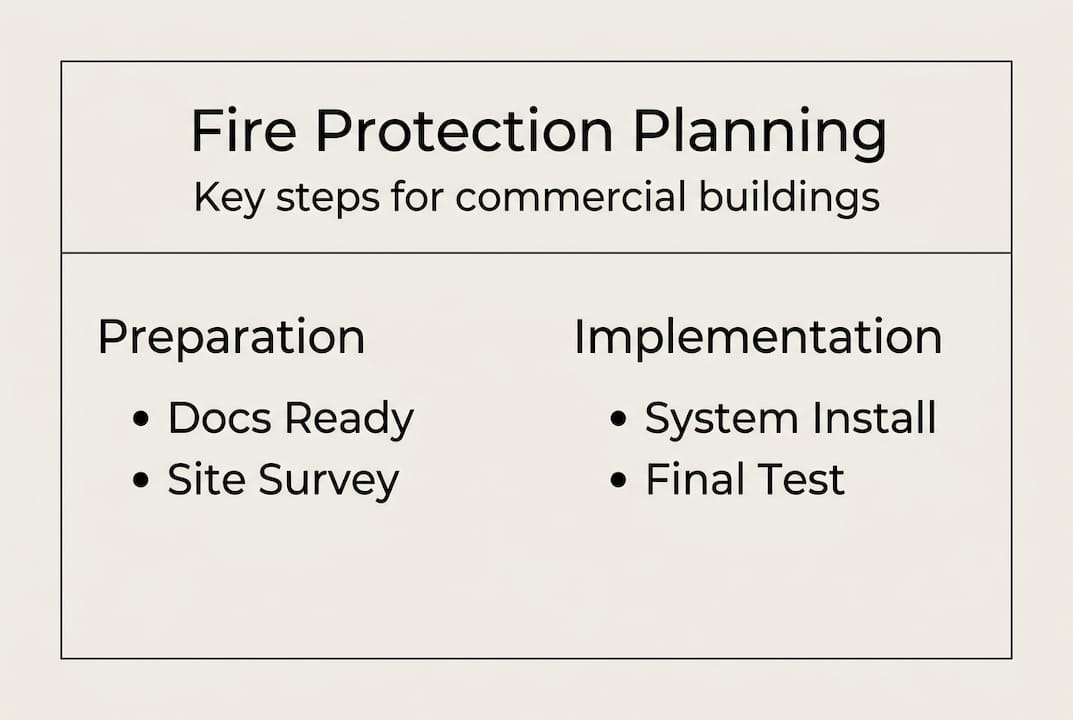
Comprehensive building documentation forms the foundation of effective fire protection planning. Collect architectural drawings showing floor plans, ceiling heights, wall construction, and occupancy layouts. Gather mechanical and electrical plans identifying HVAC systems, power distribution, and existing fire protection infrastructure. Obtain occupancy permits, previous inspection reports, and any documentation of past fire incidents or system activations. This information helps consultants and contractors develop accurate system designs tailored to your building’s specific characteristics.

| System type | Primary application | Key advantage | Maintenance frequency |
|---|---|---|---|
| Wet pipe sprinklers | Heated spaces, general occupancies | Simplest, most reliable, immediate response | Annual inspection |
| Dry pipe sprinklers | Unheated areas, freezing risk zones | Prevents pipe freezing in cold climates | Semi-annual inspection |
| Pre-action systems | Data centers, museums, sensitive equipment areas | Dual activation prevents accidental discharge | Quarterly testing |
| Fire alarm systems | All commercial occupancies | Early detection, occupant notification | Annual inspection with monthly testing |
| Clean agent suppression | Server rooms, electrical equipment spaces | No water damage, rapid fire suppression | Semi-annual inspection |
Fire protection system selection depends on building characteristics, occupancy hazards, and operational requirements. Wet pipe sprinkler systems provide reliable protection for most heated commercial spaces with simple maintenance requirements. Dry pipe systems protect areas subject to freezing temperatures by using pressurized air instead of water in the distribution piping. Pre-action systems combine detection and suppression, requiring both detector activation and sprinkler head operation before water discharge. Clean agent suppression systems protect sensitive electronics without water damage. Understanding these options helps you match protection strategies to specific building needs.
Risk assessment software and hydraulic calculation programs support accurate system design and code compliance verification. These tools model water flow, pressure requirements, and coverage patterns to ensure adequate protection throughout your facility. Fire modeling software simulates smoke movement and heat development to optimize detector placement and evaluate evacuation scenarios. While professional engineers typically operate these specialized programs, understanding their capabilities helps you evaluate proposals and ask informed questions during the planning process.
Pro Tip: Engage a NICET-certified fire protection specialist early in your planning process. Their expertise identifying code requirements and system options prevents costly design revisions and ensures your project stays on schedule and within budget.
Building a qualified project team requires identifying licensed fire protection contractors, consulting engineers, and equipment suppliers with Colorado experience. Verify contractor licenses, insurance coverage, and references from similar commercial projects. Request detailed proposals outlining system design, equipment specifications, installation timelines, and maintenance requirements. Compare proposals based on total lifecycle costs including installation, ongoing maintenance, and expected equipment lifespan rather than initial price alone. Strong contractor relationships ensure quality installation and responsive service throughout your system’s operational life.
Step-by-step fire protection planning and implementation process
Successful fire protection implementation follows a structured sequence that builds from assessment through installation and commissioning. Each phase requires specific deliverables and stakeholder coordination to maintain project momentum and ensure compliant outcomes.
- Conduct comprehensive fire risk assessment examining building construction, occupancy classification, hazardous materials present, and operational processes that create fire exposure. Document findings in a formal report identifying required protection levels, system types, and specific code requirements applicable to your property.
- Develop system design specifications selecting appropriate equipment and coverage patterns based on risk assessment findings. Engineers prepare hydraulic calculations, detector spacing layouts, and equipment schedules that demonstrate code compliance. Design documents serve as the basis for contractor bidding and permit applications.
- Prepare detailed project budgets accounting for equipment costs, installation labor, permit fees, inspection charges, and contingency reserves. Include ongoing costs for annual inspections, testing, and maintenance in your financial planning. Realistic budgets prevent mid-project funding shortfalls that delay completion or compromise system quality.
- Submit permit applications to your local building department and fire marshal including complete design drawings, hydraulic calculations, and equipment specifications. Schedule pre-submittal meetings to address questions and clarify requirements before formal review. Respond promptly to plan review comments to maintain approval timelines.
- Coordinate installation scheduling with building operations to minimize business disruption while ensuring adequate access for contractors. Establish clear communication protocols for daily progress updates, issue resolution, and change order approval. Monitor installation quality through regular site visits and documentation reviews.
- Complete system testing and commissioning verifying all components function according to design specifications and code requirements. Conduct flow tests, alarm verification, and integrated system testing with building fire alarm panels. Document test results for submission to authorities and retention in building records.
| Comparison factor | Wet pipe systems | Dry pipe systems |
|---|---|---|
| Response time | Immediate water discharge | 1-minute air evacuation delay |
| Maintenance complexity | Simple, annual inspection | Complex, semi-annual inspection required |
| Freeze protection | Not suitable below 40°F | Protects unheated spaces |
| Installation cost | Lower initial investment | 20-30% higher equipment and labor costs |
| Reliability | Highest reliability rating | Slightly lower due to additional components |
Pro Tip: Schedule final inspections well before your certificate of occupancy deadline. Inspection findings often require minor corrections that can delay approval if discovered at the last minute.
Documentation completion ensures regulatory compliance and supports future maintenance activities. Compile as-built drawings reflecting any field changes made during installation. Gather equipment manuals, warranty information, and maintenance schedules for all system components. Prepare operation and maintenance training materials for your facility staff. Organize inspection and testing records in accessible formats for quick retrieval during future inspections or emergency situations.
Troubleshooting common planning mistakes and verifying fire protection system effectiveness
Inadequate initial risk assessment represents the most common planning failure, leading to undersized systems or inappropriate equipment selection. Property managers sometimes rely on generic solutions without analyzing specific building hazards, occupancy patterns, or operational requirements. This approach creates compliance gaps and performance deficiencies that require expensive corrections. Invest time in thorough upfront assessment to ensure your system design addresses actual risks rather than assumed conditions.
Neglecting ongoing maintenance and testing compromises system reliability regardless of initial installation quality. Fire protection equipment requires regular inspections per NFPA guidelines to identify wear, corrosion, or component failures before they cause system malfunctions. Sprinkler heads accumulate dust and debris affecting spray patterns. Alarm sensors drift out of calibration reducing detection sensitivity. Pump controllers develop electrical faults preventing activation. Scheduled maintenance catches these issues early, preventing failures during actual fire events when reliable operation becomes critical.
Documentation lapses create serious compliance and liability concerns. Properties without complete inspection records face challenges during insurance audits, building sales, or incident investigations. Maintaining organized records demonstrates due diligence and regulatory compliance.
Budget shortfalls during installation often result from inadequate contingency planning or incomplete initial scoping. Hidden conditions such as asbestos fireproofing, unexpected structural obstacles, or utility conflicts require design modifications and additional costs. Establish realistic contingency reserves of 10-15% for renovation projects and 5-10% for new construction. Review contractor change order requests carefully to verify necessity and fair pricing before approval.
Poor coordination between fire protection contractors and other trades creates installation conflicts and project delays. Sprinkler piping interferes with ductwork or electrical conduit. Fire alarm devices conflict with architectural finishes or lighting layouts. Establish clear coordination protocols during pre-construction meetings and maintain regular communication throughout installation. Weekly coordination meetings with all trades prevent conflicts and resolve issues quickly when they arise.
System verification requires comprehensive testing beyond basic code compliance checks. Conduct flow tests at the most remote sprinkler head to verify adequate pressure and volume throughout the distribution system. Test alarm notification devices at maximum ambient noise levels to ensure audibility. Verify backup power systems activate properly and provide adequate runtime. Document all testing with detailed reports including measurements, observations, and any deficiencies requiring correction.
Ongoing performance monitoring identifies degradation trends before they cause system failures. Track water pressure readings, pump runtime hours, and alarm activation patterns. Investigate any anomalies promptly to determine root causes and implement corrections. Modern fire alarm systems provide diagnostic data highlighting detector sensitivity drift, circuit faults, or communication problems. Use this information proactively to schedule maintenance and component replacement before failures occur.
Expert fire protection services for Colorado commercial properties
Navigating fire protection planning and compliance requires specialized expertise that most property management teams lack in-house. Professional fire protection companies bring deep knowledge of Colorado codes, system design principles, and installation best practices that ensure compliant, reliable outcomes. Their experience across diverse building types and occupancies helps identify optimal solutions for your specific requirements while avoiding common pitfalls that create delays and cost overruns.
Preaction Fire delivers comprehensive fire protection services throughout the Denver Metro Area, combining technical expertise with responsive customer service. Their NICET-certified technicians design, install, and maintain fire alarm systems, sprinkler installations, and suppression equipment tailored to commercial property requirements. From initial risk assessment through ongoing inspection and testing, their team ensures your fire protection systems meet all applicable codes while providing reliable performance that protects your occupants and assets. Their experience with both new construction and system upgrades positions them to handle projects of any scale or complexity.
FAQ
How often should fire protection systems be inspected in commercial buildings?
NFPA standards require annual inspections for most fire protection equipment, with some components needing quarterly or monthly testing. Sprinkler systems need yearly inspections covering all valves, gauges, and piping. Fire alarm systems require annual inspection plus monthly functional testing of notification devices. Emergency lighting needs monthly testing and annual battery load tests. More frequent inspections apply to high-hazard occupancies or systems with performance issues.
What fire protection systems are best suited for Colorado commercial properties?
Wet pipe sprinkler systems work well for heated commercial spaces including offices, retail stores, and warehouses maintaining consistent temperatures above 40°F. Dry pipe or pre-action systems protect unheated areas, loading docks, and spaces subject to freezing temperatures common in Colorado winters. Clean agent suppression suits data centers and electrical equipment rooms requiring water-free fire protection. System selection depends on building use, construction type, and specific hazard analysis rather than one-size-fits-all recommendations.
Can I plan fire protection without professional help?
While property managers can research fire protection options independently, professional expertise ensures code compliance and optimized system performance. Fire protection engineering involves complex hydraulic calculations, code interpretation, and equipment selection requiring specialized training. DIY planning risks missing critical requirements, undersizing equipment, or selecting inappropriate system types. These errors create compliance failures, insurance complications, and inadequate protection during actual fire events. Professional consultation costs represent a small fraction of total project expenses while delivering substantial risk reduction.
What are the consequences of non-compliance with fire protection codes in Colorado?
Non-compliant fire protection systems trigger enforcement actions including stop-work orders, occupancy restrictions, and financial penalties from local fire marshals. Insurance carriers may deny coverage or significantly increase premiums for properties with code violations or inadequate protection. Serious incidents involving non-compliant systems create liability exposure for property owners and managers. Beyond legal and financial consequences, inadequate fire protection endangers occupants and increases property damage during fire events. Maintaining compliance protects people, assets, and your organization’s reputation.
How do I verify that my fire protection system remains effective over time?
Schedule professional inspections and testing according to NFPA 25 requirements, which specify frequencies based on equipment type and building occupancy. Maintain detailed records documenting all inspections, tests, repairs, and component replacements. Address deficiencies identified during inspections promptly rather than deferring corrections. Monitor system performance indicators including alarm activations, valve positions, and pressure readings for unusual patterns suggesting developing problems. Conduct periodic third-party assessments evaluating overall system condition and identifying upgrade opportunities as building uses change or codes evolve.