TL;DR:
- Sprinkler systems significantly reduce fire death risk by over 80%, making them essential for life safety in commercial buildings.
- They also provide water efficiency, cost savings, and property value increases, delivering a strong return on investment within years.
When you manage a commercial property, a fire isn’t just a safety crisis. It’s a business continuity crisis, a liability crisis, and a financial crisis all at once. Understanding the full range of sprinkler installation benefits helps you move from reactive thinking to a position of real control. This article breaks down the safety, operational, and financial advantages that modern sprinkler systems deliver to commercial properties, with specifics on compliance, water efficiency, ROI, and system types so you can make a confident, informed decision.
Table of Contents
- Key takeaways
- 1. The core sprinkler installation benefits for life safety
- 2. Water efficiency and environmental advantages
- 3. Labor and maintenance savings from automated systems
- 4. Financial returns, ROI, and property value
- 5. Regulatory compliance and risk management
- 6. Comparing commercial sprinkler system types
- My take on where property managers get this wrong
- How Preactionfire helps you get full value from your sprinkler system
- FAQ
Key takeaways
| Point | Details |
|---|---|
| Fire death risk drops sharply | Sprinkler systems reduce fire death risk by over 80%, making them the single most effective life-safety tool in a commercial building. |
| Water savings are significant | Smart irrigation and fire suppression systems cut water usage by 20 to 50%, lowering utility costs and supporting sustainability goals. |
| ROI arrives within years | Most commercial sprinkler installations pay for themselves within 3 to 5 years through insurance savings, water efficiency, and avoided damage costs. |
| Compliance protects you legally | Properly documented sprinkler systems reduce legal exposure and satisfy fire code requirements for most commercial occupancy types. |
| System type selection matters | Choosing between wet pipe, dry pipe, pre-action, and deluge systems directly affects long-term cost and maintenance burden. |
1. The core sprinkler installation benefits for life safety
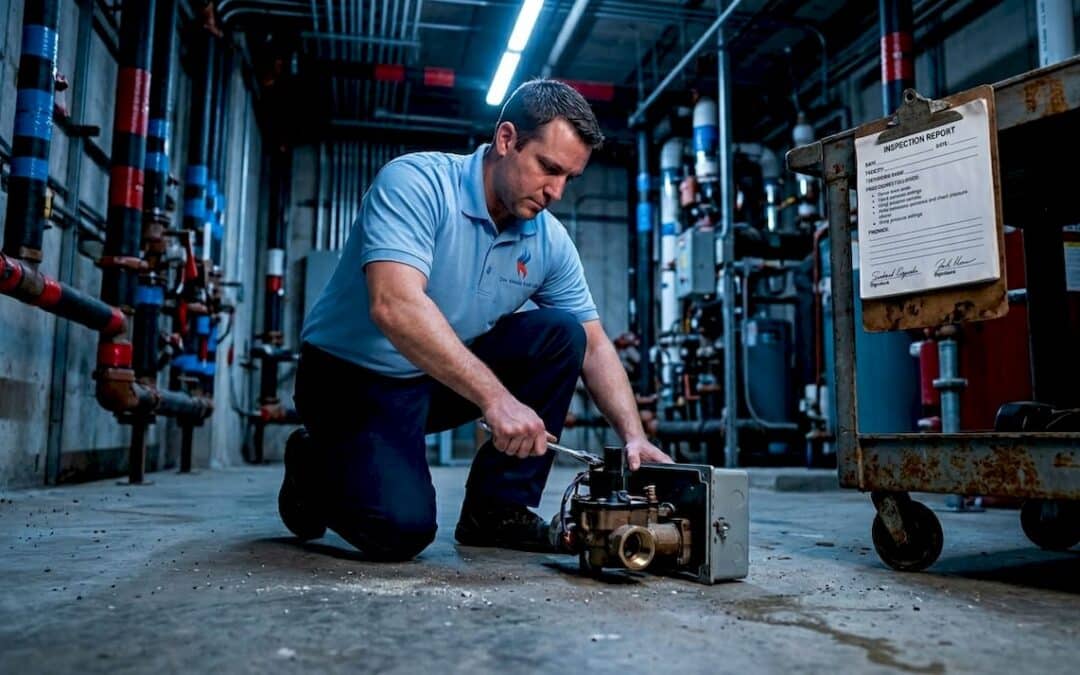
No other passive fire protection measure comes close to what a sprinkler system delivers in the first few minutes of a fire. Sprinkler systems reduce fire death risk by more than 80% and cut property loss by 50 to 66%. That isn’t a marketing number. It’s the operational reality that drives insurance pricing, building codes, and lender requirements.
The reason sprinklers work so well is activation speed. Each sprinkler head responds independently to heat, typically triggering at 135 to 165 degrees Fahrenheit. That means the head directly above the fire opens while the rest of the system stays closed. You get targeted suppression, not a building-wide water event.
- Fires controlled at early stages require significantly less firefighter intervention
- Early suppression reduces smoke damage, which often costs more to remediate than the fire damage itself
- Automatic activation protects buildings during off-hours when staff are absent
Pro Tip: When reviewing your fire risk profile, cross-reference your occupancy classification with NFPA 13 requirements. Most commercial properties above a certain square footage or occupancy load have mandatory sprinkler requirements regardless of your preferences.
For a deeper look at how sprinkler systems fit into a broader fire prevention strategy, understanding your building’s specific hazard classification is the right starting point.
2. Water efficiency and environmental advantages
The advantages of sprinkler systems extend well beyond fire suppression. Modern irrigation-integrated systems and smart fire suppression technology have made water efficiency a genuine selling point. Smart irrigation systems can reduce water usage by 20 to 50%, saving over 200 hours of manual labor annually while increasing property value by 5 to 15%.
For commercial properties with significant landscaping, that efficiency adds up fast. A 10-acre corporate campus running inefficient irrigation can waste tens of thousands of gallons per month. Switching to a zoned, sensor-driven system eliminates that waste at the source.
Smart controllers adjust schedules based on real-time weather data and soil moisture readings, so your grounds aren’t being watered during a rainstorm or on a day when temperatures have already saturated the ground. This kind of automated precision is simply not achievable with manual watering programs.

The environmental case is equally strong. Commercial properties that demonstrate responsible water stewardship often qualify for municipal rebates and can use that performance data in sustainability reports, which matters increasingly to tenants, investors, and insurers.
Pro Tip: Pair your irrigation controller with a rain sensor and a soil moisture sensor on each zone. The upfront cost is minimal and the water savings over a single Colorado summer are substantial.
3. Labor and maintenance savings from automated systems
One of the less-discussed sprinkler system advantages is what automation does to your staffing burden. Property managers who switch from manual watering schedules to fully automated irrigation systems report over 200 hours saved per year. That time gets redirected to higher-value maintenance tasks or simply reduces overtime.
Here’s how those savings break down operationally:
- Scheduling eliminated – Automated timers run on programmed cycles without daily supervision
- Inspection cycles reduced – Modern systems self-monitor and flag faults rather than requiring manual walk-throughs
- Fewer emergency repairs – Seasonal adjustments prevent freeze damage and component strain that leads to burst pipes and head failures
- Documented service history – Professional installation includes warranty-backed work and records that protect you during inspections and insurance audits
The maintenance neglect scenario is worth understanding clearly. A sprinkler head that freezes and shatters in a Denver January doesn’t just cost you a replacement head. It can flood a mechanical room, trigger a full system inspection requirement, and put your building out of compliance until repairs are certified.
Pro Tip: Schedule your winterization appointment in September, not November. HVAC and landscaping crews book out fast in October, and a missed winterization window in Colorado can mean freeze damage that costs 10 to 20 times the preventive service fee.
4. Financial returns, ROI, and property value
The cost-versus-value question is where most property managers spend the most time, and the numbers are more favorable than they expect. Sprinkler installations increase property value by 5 to 15%, and most systems reach full cost recovery within 3 to 5 years through a combination of insurance discounts, water savings, and avoided damage costs.
| Benefit Category | Typical Commercial Impact |
|---|---|
| Insurance premium reduction | 5 to 15% annual discount depending on carrier and property type |
| Water cost savings | 20 to 50% reduction in irrigation-related utility costs |
| Property value increase | 5 to 15% uplift in assessed and market value |
| Fire damage avoidance | 50 to 66% reduction in property loss during fire events |
| Labor cost reduction | 200+ hours saved annually from manual watering elimination |
Insurance premium reductions linked to sprinkler installations are well-documented and consistent across carriers. Most commercial insurers apply meaningful discounts when you can demonstrate a code-compliant, regularly inspected system. When you add that discount to water savings and reduced maintenance labor, the payback period shrinks considerably.
The comparison between professional and DIY installation is not close when you factor in long-term reliability. Professional installation ensures hydraulic pressure balancing and head coverage compliance, which a DIY approach almost never achieves correctly. A system that fails during a fire event because of improper pressure design is not just a financial loss. It’s a liability.
5. Regulatory compliance and risk management
Commercial properties in Colorado face real enforcement consequences for non-compliance with fire protection codes. Most jurisdictions require sprinkler systems in new construction above a specific square footage threshold, and retrofit requirements apply when buildings undergo significant renovation. Understanding those thresholds before you start a project saves you from expensive mid-construction changes.
The compliance case for sprinkler systems includes several specific protections:
- Documented sprinkler installations reduce legal liability in the event of fire-related injuries or property damage claims
- NFPA 13 compliance is required for most commercial occupancy types and is verified during certificate of occupancy inspections
- Ongoing inspection records demonstrate due diligence, which courts and insurers treat as material evidence
- Sprinkler systems integrated with fire alarm systems create a coordinated response that satisfies code requirements more completely than either system alone
Business continuity is a compliance issue in a practical sense. A property that contains a fire in one zone and prevents total loss can reopen faster, retain tenants, and avoid the reputational damage that follows a major fire event. That speed of recovery is directly tied to how well your protection systems performed.
Pro Tip: Keep a binder with installation permits, inspection reports, and system certifications updated annually. During an insurance claim or code inspection, the ability to produce documentation immediately carries real weight with adjusters and inspectors.
Reviewing your building fire risks with a qualified fire protection professional helps you understand exactly which code requirements apply to your specific occupancy class and construction type.
6. Comparing commercial sprinkler system types
Not every commercial building needs the same system. The four primary types are wet pipe, dry pipe, pre-action, and deluge, and each serves a different risk profile and building environment.
| System Type | Best Use Case | Key Consideration |
|---|---|---|
| Wet pipe | Standard commercial offices and retail | Simplest, most reliable, lowest maintenance cost |
| Dry pipe | Unheated warehouses, parking structures | Slower activation; requires air pressure maintenance |
| Pre-action | Data centers, archives, museums | Two-step activation prevents accidental discharge |
| Deluge | Aircraft hangars, chemical facilities | All heads open simultaneously for rapid coverage |
For most office buildings, retail centers, and multi-tenant commercial properties in the Denver metro area, wet pipe systems are the standard choice. They’re the lowest cost to install and maintain, and they activate the fastest. Dry pipe systems make sense when pipes run through spaces that can’t be kept above freezing, which is relevant in Colorado’s climate.
Pre-action systems are worth understanding specifically if you manage properties with sensitive equipment or irreplaceable records. The pre-action design requires both a detection signal and a manual or automatic release before water flows, meaning an accidental head discharge won’t flood a server room. That protection has real dollar value in the right context.
Smart sensor integration is increasingly available across all system types. Sensors that monitor flow rates, pressure drops, and temperature anomalies give you early warning of system problems before they become code violations or damage events.
My take on where property managers get this wrong
I’ve seen the full range of sprinkler decisions over the years, and the most expensive mistakes almost always follow the same pattern. The property manager treats the installation as a one-time compliance checkbox rather than an ongoing system that needs attention.
A sprinkler system installed correctly and never touched again will still outperform no system at all. But a system receiving regular seasonal maintenance and periodic audits will deliver the full ROI that the financial projections promise. The gap between those two outcomes is significant.
The second mistake is underestimating what professional installation actually provides. Hydraulics expertise and site-specific pressure balancing aren’t optional refinements. They’re what separates a system that works under fire conditions from one that looked fine during inspection. A proper initial site evaluation prevents dry zones, runoff problems, and head placement errors that cost far more to correct later than to do right the first time.
My practical advice: get a detailed hydraulic calculation as part of your installation proposal. If a contractor can’t provide one, that tells you everything you need to know about the quality of the installation you’d receive.
— Preactionfire
How Preactionfire helps you get full value from your sprinkler system
If you manage commercial property in the Denver Metro Area and you’re evaluating your fire protection options, the team at Preactionfire has been doing this work since 2009. Their NICET-certified technicians handle everything from initial design through permitting, installation, and ongoing inspection, so your system is code-compliant on day one and stays that way.
Whether you need a new sprinkler installation in Arvada, a system upgrade in Westminster, or a full fire protection review for a property in Aurora, Preactionfire provides customized solutions built around your specific occupancy type, hazard classification, and local code requirements. Their installations come with warranty-backed workmanship and maintenance packages that keep your documentation current and your premiums in check. Contact Preactionfire directly to schedule a consultation and get a site-specific assessment for your property.
FAQ
What are the main sprinkler installation benefits for commercial properties?
Sprinkler installations reduce fire-related fatalities and property damage, lower insurance premiums, improve regulatory compliance, and increase property value by 5 to 15% over time.
How much can a sprinkler system reduce water usage?
Smart irrigation and modern sprinkler systems can reduce water usage by 20 to 50% compared to manual watering, with payback typically achieved within 3 to 5 years.
Do commercial buildings in Colorado require sprinkler systems?
Most new commercial construction in Colorado above certain square footage thresholds requires NFPA 13 compliant sprinkler systems, and retrofit requirements apply during significant renovations.
What is the difference between wet pipe and pre-action sprinkler systems?
Wet pipe systems keep water in the pipes at all times for the fastest response, while pre-action systems require a detection signal before water flows, making them suitable for data centers and areas with sensitive equipment.
Does professional installation matter versus DIY for commercial sprinklers?
Professional installation includes hydraulic pressure calculations, code compliance verification, and warranty coverage that DIY approaches cannot replicate, directly affecting system performance and insurance eligibility.