Fire protection is not just a smoke detector on the ceiling. For commercial property managers and building owners in the Denver Metro Area, it is a legally mandated, multi-layer system of prevention, detection, suppression, and evacuation. NFPA standards govern every stage of that system, and Denver’s local code amendments add another layer of specificity. Get it wrong and you face fines, failed inspections, or worse. This guide breaks down exactly what fire protection means in practice, which codes apply to your building, and how to stay compliant year after year without guesswork.
Table of Contents
- What fire protection really means in Denver commercial buildings
- Denver fire codes and NFPA standards: What you must know
- Core fire protection systems: Comparing your choices
- Maintaining and documenting compliance: Annual tasks and best practices
- The critical edge: What most property managers miss about fire protection
- Denver’s trusted fire protection solutions for compliant properties
- Frequently asked questions
Key Takeaways
| Point | Details |
|---|---|
| Fire protection scope | Effective fire protection integrates prevention, detection, suppression, and safe evacuation for every commercial property. |
| Denver code compliance | The 2025 Denver Fire Code requires regular inspections, permits, and adherence to NFPA standards for all commercial buildings. |
| System choices | Sprinklers, alarms, suppression agents, and extinguishers each play a role and must be selected based on building use and code. |
| Annual maintenance | Licensed contractors must perform annual inspections, with thorough documentation to minimize liability and insurance costs. |
| Proactive management | Risk assessments and integrated systems are essential for staying compliant and ensuring occupant safety in changing environments. |
What fire protection really means in Denver commercial buildings
Most people picture fire protection as alarms and sprinklers. The reality is broader. Fire protection encompasses measures at every stage: prevention of ignition, early detection, suppression and control, and facilitating safe evacuation. Each stage is distinct, and each requires specific systems, maintenance schedules, and documentation.
For a Denver commercial building, that means addressing all four stages simultaneously:
- Prevention: Controlling ignition sources, managing hazardous materials, enforcing no-smoking zones, and conducting regular housekeeping to reduce fuel loads.
- Detection: Installing and maintaining fire alarm systems that meet NFPA 72 requirements, including smoke detectors, heat detectors, and manual pull stations.
- Suppression: Sprinkler systems designed per NFPA 13, plus specialized suppression agents for kitchens, server rooms, or labs where water would cause secondary damage.
- Evacuation: Clear exit signage, emergency lighting, and documented evacuation plans that your tenants and staff actually practice.
Think of these four stages as a chain. A weak link in any one of them can undermine the others. A suppression system that activates too late because detection failed is just as dangerous as no suppression system at all.
“Fire protection is not a product you buy once. It is an ongoing operational commitment that touches every part of your building’s lifecycle.”
Denver’s local codes build directly on national NFPA standards, which means the fire protection planning guide for your property must account for both layers. Working with a qualified fire protection company Denver property managers trust ensures you are not missing local amendments that go beyond the national baseline. Those amendments exist because Denver’s altitude, building stock, and occupancy mix create risks that a one-size-fits-all national standard does not fully address.
Denver fire codes and NFPA standards: What you must know
The 2025 Denver Fire Code is an amendment to the 2024 International Fire Code (IFC). Chapter 80 of that code lists every NFPA standard that Denver formally adopts. If you manage a commercial building, these are the three standards you will encounter most often:
- NFPA 13 governs the design, installation, and testing of automatic sprinkler systems. It dictates pipe sizing, sprinkler head spacing, and water supply requirements.
- NFPA 72 covers fire alarm and signaling systems, including detection equipment, notification appliances, and monitoring requirements.
- NFPA 25 sets the schedule for inspection, testing, and maintenance of water-based fire protection systems, including quarterly, annual, and five-year tasks.
Section 903 of the Denver Fire Code requires sprinklers in most commercial buildings, with very few exceptions. Permits are mandatory for any installation, modification, or significant maintenance work.
| Standard | What it covers | Key Denver requirement |
|---|---|---|
| NFPA 13 | Sprinkler system design | Required in most commercial occupancies per Section 903 |
| NFPA 72 | Fire alarm systems | Detection and notification in all commercial buildings |
| NFPA 25 | System inspection and maintenance | Annual inspections by licensed contractors |
Stat to know: Buildings with compliant sprinkler systems have a civilian death rate roughly 87% lower than those without, according to NFPA data. That number alone justifies the investment.
For a detailed breakdown of how these standards apply to Colorado properties, the NFPA standards for Colorado resource is a practical starting point. Scheduling a NFPA compliance inspection before a Denver Fire Department audit puts you in control rather than reactive mode. Understanding compliance and risk reduction together is the smarter long-term strategy.
Core fire protection systems: Comparing your choices
Now that we know the codes, let’s compare the systems you need to install, monitor, and maintain. Each system serves a specific function, and none of them are optional if your building falls under the relevant code sections.
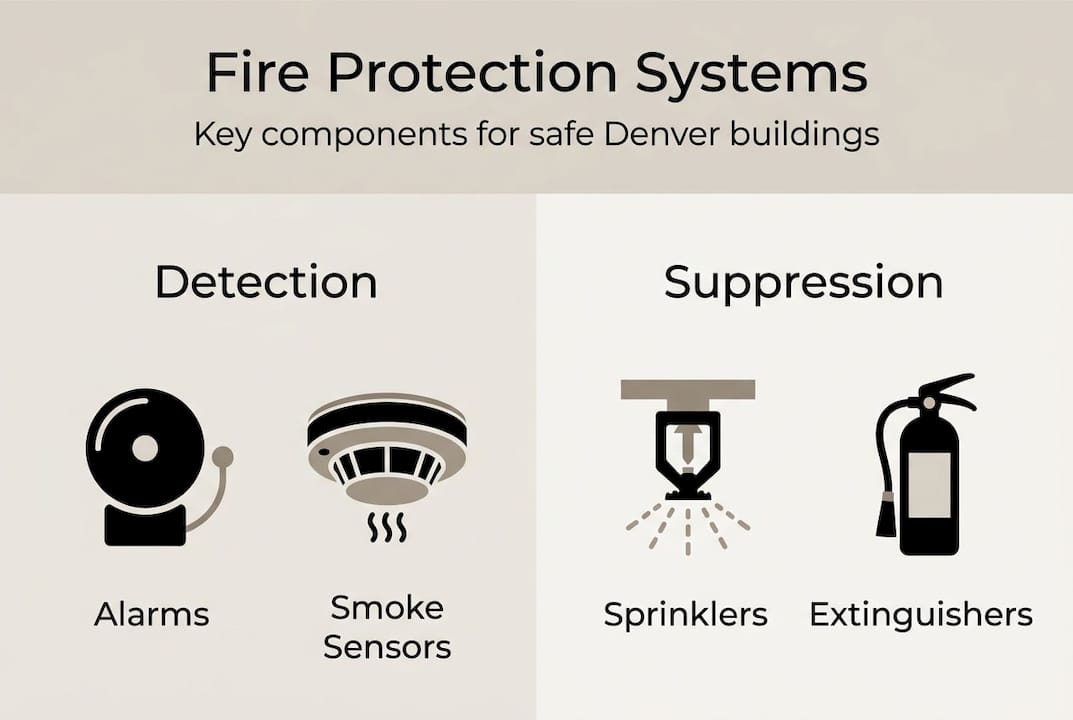
Sprinklers are required in most commercial buildings by Section 903, and fire alarms and extinguishers must meet installation and maintenance standards outlined in the Denver Fire Code.
| System | Primary function | Maintenance frequency | Governed by |
|---|---|---|---|
| Sprinkler system | Suppress and control fire spread | Annual (NFPA 25) | NFPA 13, Section 903 |
| Fire alarm system | Detect and notify occupants | Annual testing | NFPA 72 |
| Suppression agents | Targeted control (kitchens, labs) | Per manufacturer and code | NFPA 17/17A |
| Fire extinguishers | Immediate local response | Annual inspection | NFPA 10 |
Here is what distinguishes each system in practice:
- Sprinkler systems are your primary line of defense. Wet pipe systems are most common in Denver commercial buildings. Pre-action systems are used in areas where accidental discharge would cause serious damage, like data centers.
- Fire alarm systems must be monitored 24/7 by a listed central station. A system that alerts only on-site is not code-compliant for most commercial occupancies.
- Suppression agents like clean agents or dry chemicals are used where water would destroy equipment or create hazards. Restaurant hood suppression systems are the most common example.
- Fire extinguishers are the first-response tool for small, contained fires. They do not replace sprinklers. Understanding the fire extinguisher role in your overall safety plan keeps your staff prepared without creating false confidence.
Pro Tip: Do not treat your fire extinguisher program as a checkbox. Train your staff on which extinguisher type to use for which fire class. A Class K extinguisher in a commercial kitchen is not interchangeable with a Class ABC unit in a storage room.
NFPA system standards provide the technical foundation, but your licensed contractor translates those standards into a system that fits your specific building layout and occupancy type.
Maintaining and documenting compliance: Annual tasks and best practices
With system selection explained, here is how to keep your property compliant and safe year after year. Compliance is not a one-time event. It is a recurring operational responsibility with legal consequences if neglected.
The Denver Fire Code requires that you prioritize NFPA compliance through licensed contractors, conduct annual risk assessments especially when tenants or uses change, and document every inspection to reduce liability and support insurance claims.
Here is a practical annual compliance checklist for Denver commercial property managers:
- Schedule NFPA 25 inspections before your Denver Fire Department inspection window. Do not wait for a notice.
- Test all fire alarm components per NFPA 72, including smoke detectors, pull stations, notification appliances, and the central monitoring connection.
- Inspect and service fire extinguishers annually. Replace or recharge any unit that has been used or shows signs of damage.
- Conduct a building risk assessment whenever a tenant changes, a space is renovated, or the occupancy type shifts. A yoga studio has a very different risk profile than a restaurant.
- Update your evacuation plan and post it visibly. Run a drill at least once per year and document attendance.
- File all inspection reports in a dedicated compliance folder, physical or digital. Include contractor licenses, permit numbers, and deficiency correction records.
“Your inspection records are your legal shield. In a dispute, an insurance claim, or a code enforcement action, documented compliance is the difference between a manageable situation and a costly one.”
Pro Tip: When tenants change, do not assume the previous fire protection setup still applies. A new tenant bringing in commercial cooking equipment or flammable storage can trigger entirely new code requirements. Catch it early with a proactive risk assessment.
For properties in specific Denver Metro communities, Arvada NFPA inspection and Aurora NFPA inspection services are available to handle local jurisdiction requirements that may differ slightly from the city of Denver baseline.
The critical edge: What most property managers miss about fire protection
After working with commercial properties across the Denver Metro Area since 2009, we have noticed a consistent gap. Most managers handle the basics: they schedule the annual sprinkler inspection, they keep extinguishers tagged, and they respond to violations when cited. What they miss is integration.
Fire protection systems are most effective when they communicate with each other. An alarm that triggers a suppression system shutdown in the wrong zone, or a sprinkler that activates without notifying the central monitoring station, creates dangerous gaps. Integrated systems where alarms, sprinklers, and suppression agents are connected and tested together perform dramatically better in real emergencies.
The second gap is proactive documentation. Most managers document after a problem is found. The smarter approach is to document continuously, even when everything passes. That paper trail is what protects you when an insurance adjuster questions whether a system was properly maintained before a loss event.
The third gap is tenant change risk. We have seen properties pass inspection in January and fail a spot check in September because a new tenant changed the occupancy classification without notifying the property manager. Understanding building fire safety as a dynamic, not static, responsibility is what separates proactive managers from reactive ones.
Denver’s trusted fire protection solutions for compliant properties
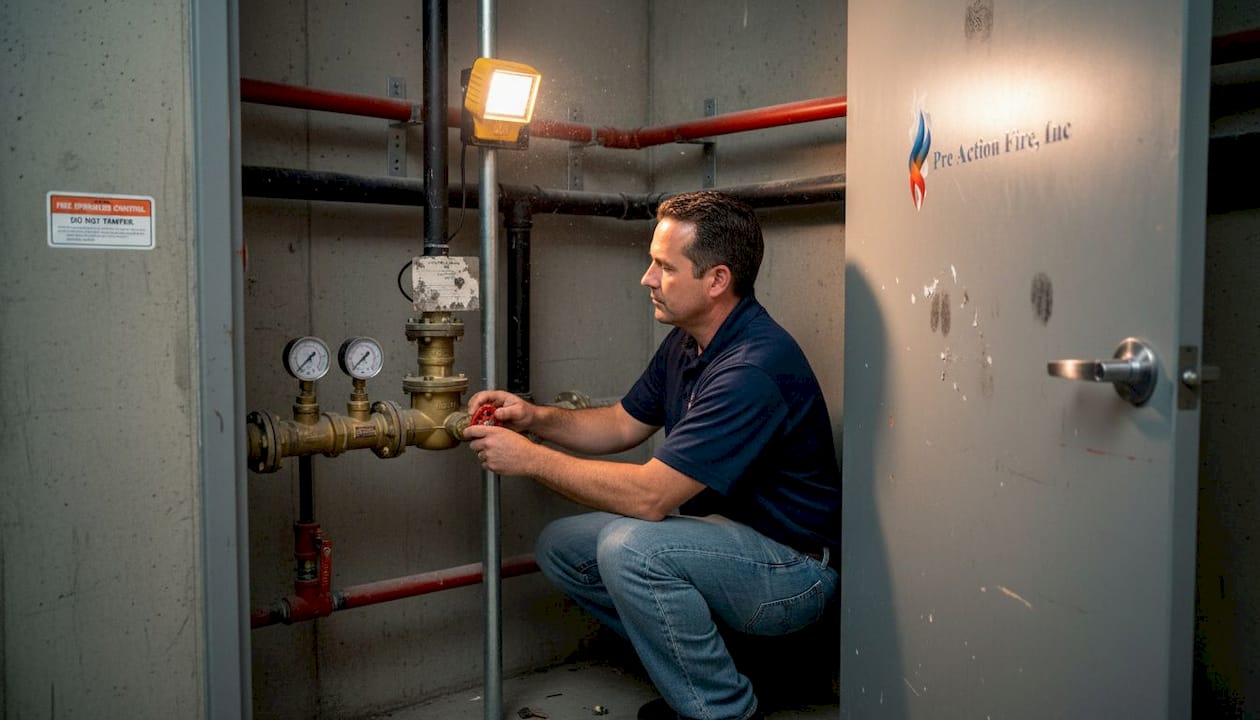
Putting these insights into practice starts with having the right partner. Pre Action Fire, Inc. has served Denver Metro property managers and building owners since 2009, providing NICET-certified technicians who understand both the national NFPA standards and Denver’s specific code amendments.
Whether you need a new Denver sprinkler installation, specialized fire suppression solutions for a kitchen or server room, or a reliable schedule of annual sprinkler inspections to keep your records clean, Pre Action Fire delivers solutions tailored to your building type and occupancy. Contact us today for a consultation and take the guesswork out of compliance.
Frequently asked questions
What are the main components of fire protection for Denver commercial buildings?
Prevention, detection, suppression, and safe evacuation are the four required stages, delivered through sprinklers, alarms, suppression equipment, and extinguishers. Denver Fire Code and NFPA standards mandate all of them for most commercial occupancies.
How often do Denver properties need fire protection system inspections?
Most systems require annual inspections by licensed contractors under NFPA 25 and Denver Fire Code amendments, with some components requiring quarterly checks.
Do tenant changes affect fire protection requirements in Denver commercial buildings?
Yes. Tenant changes can shift the occupancy classification and risk profile of a space, which may trigger new code requirements. Annual risk assessments after any tenant change are strongly recommended to stay compliant.
What documentation should property managers keep for fire protection compliance?
Maintain inspection reports, maintenance records, permits, and system modification logs. Documented compliance reduces liability exposure and supports insurance claims if a loss event occurs.
Recommended
- Building fire safety in Colorado: compliance and risk reduction
- Fire Protection Services Denver Co – Pre Action Fire, Inc
- Fire protection planning guide for commercial properties
- Fire Protection Company Denver Co – Pre Action Fire, Inc
- Réglementation formation incendie : guide complet 2026 pour PME
- Denver Commercial Fire Protection