
Many business owners believe simply mounting fire extinguishers on walls satisfies safety obligations. This misconception creates dangerous gaps in protection. Fire extinguishers serve as your first defense against small fires, but their effectiveness depends entirely on proper placement, regular maintenance, and trained personnel who understand when and how to use them. For commercial properties in Colorado, meeting NFPA standards and OSHA requirements means going far beyond basic installation to create a comprehensive fire safety strategy that protects both property and lives.
Table of Contents
- Key takeaways
- What is the role of fire extinguishers in commercial properties?
- Key standards for placement and selection of fire extinguishers
- Choosing the right fire extinguisher type for your facility
- Maintenance and training: ensuring effective use and compliance
- Enhance your fire safety strategy with professional support
- Frequently asked questions about the role of fire extinguishers
Key Takeaways
| Point | Details |
|---|---|
| Placement standards | Fire extinguishers must be placed for quick access according to NFPA 10 guidelines rather than simply mounting them on walls. |
| Match fire class | Different fire risks require specific extinguisher types chosen to match the class and hazard. |
| OSHA training | OSHA requires regular employee training on extinguisher locations, operation, and critical evacuation decisions. |
| Clean agent use | Clean agent extinguishers are recommended for sensitive areas to protect equipment and reduce collateral damage. |
What is the role of fire extinguishers in commercial properties?
Fire extinguishers protect property and save lives by enabling immediate response to small fires before they escalate into disasters. They serve as your critical first line of defense during those precious minutes before fire departments arrive. A small wastebasket fire can engulf an entire office in under three minutes, but a properly used extinguisher can stop it in seconds.
The effectiveness of fire extinguishers depends entirely on three factors: proper placement for quick access, correct type matching the fire risk, and trained personnel who understand operation procedures. Simply having extinguishers mounted without addressing these elements creates false security. Your team needs to know not just how to pull the pin and aim, but when fighting a fire becomes too dangerous and evacuation is the only safe option.
Commercial properties face unique fire risks compared to residential settings. Manufacturing facilities deal with flammable liquids, restaurants manage cooking oil fires, and office buildings contain electrical equipment alongside ordinary combustibles. Each environment requires specific extinguisher types positioned according to hazard zones. OSHA requires annual employee training covering locations, proper operation, and critical evacuation decisions for any workplace providing portable extinguishers.
Pro Tip: Walk your facility and time how long it takes to reach each extinguisher from different work areas. If any location exceeds the maximum travel distance for your fire class, you need additional units.
The role extends beyond emergency response to include regulatory compliance and insurance requirements. Fire marshals inspect commercial properties for proper extinguisher placement, current inspection tags, and documented employee training. Violations result in citations, fines, and potential business interruptions. Insurance carriers often require proof of compliant fire safety programs, and inadequate protection can void coverage or increase premiums significantly.
Fire extinguishers are only effective when accessible within seconds, matched to the fire type, and operated by someone who has practiced the technique at least once.
Think of fire extinguishers as insurance policies you hope never to use but must maintain perfectly. They represent your investment in preventing small incidents from becoming catastrophic losses. The difference between a minor kitchen flare that employees extinguish in 30 seconds and a building fire requiring evacuation often comes down to having the right equipment in the right place with trained people ready to act.
Key standards for placement and selection of fire extinguishers
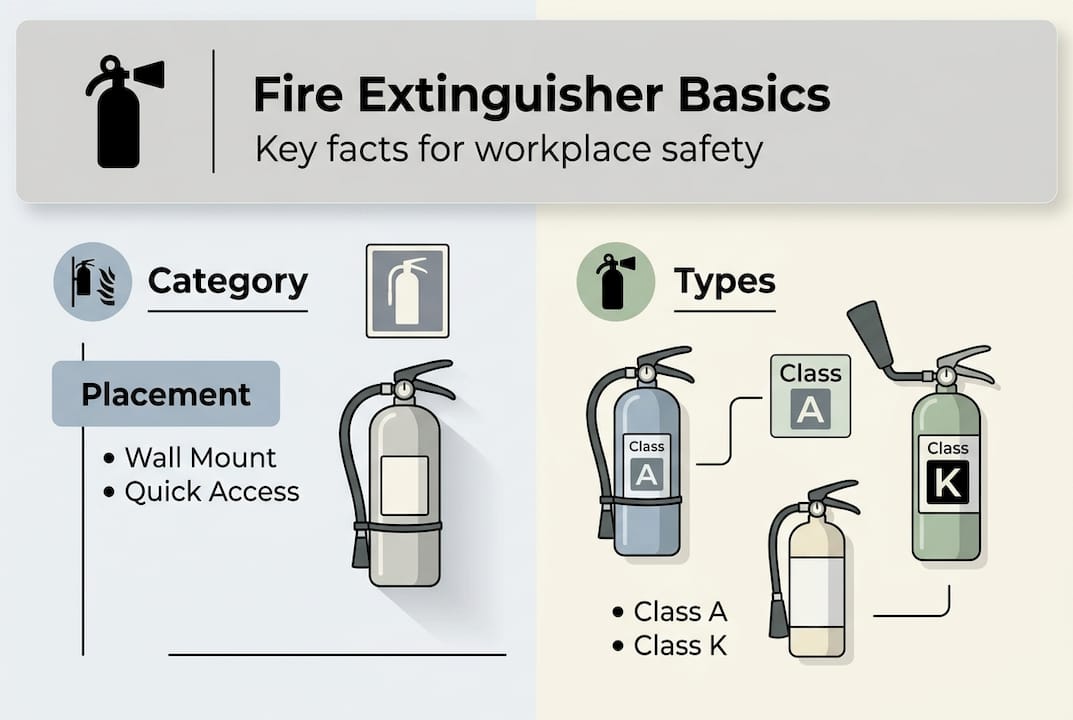
NFPA 10 establishes specific placement requirements based on fire classification and building layout. These standards ensure employees can reach appropriate extinguishers quickly without excessive travel during emergencies. Maximum travel distances vary by class: 75 feet for Class A fires in office environments, 50 feet for Class B flammable liquid hazards, and just 30 feet for Class K cooking oil fires in commercial kitchens.
Travel distance means the actual path someone walks, not straight line measurement. Hallways, doorways, and obstacles affect real access times. In large open warehouses, you might need multiple extinguisher stations even though sight lines are clear. Complex floor plans with many rooms require strategic placement ensuring no work area exceeds maximum distances.
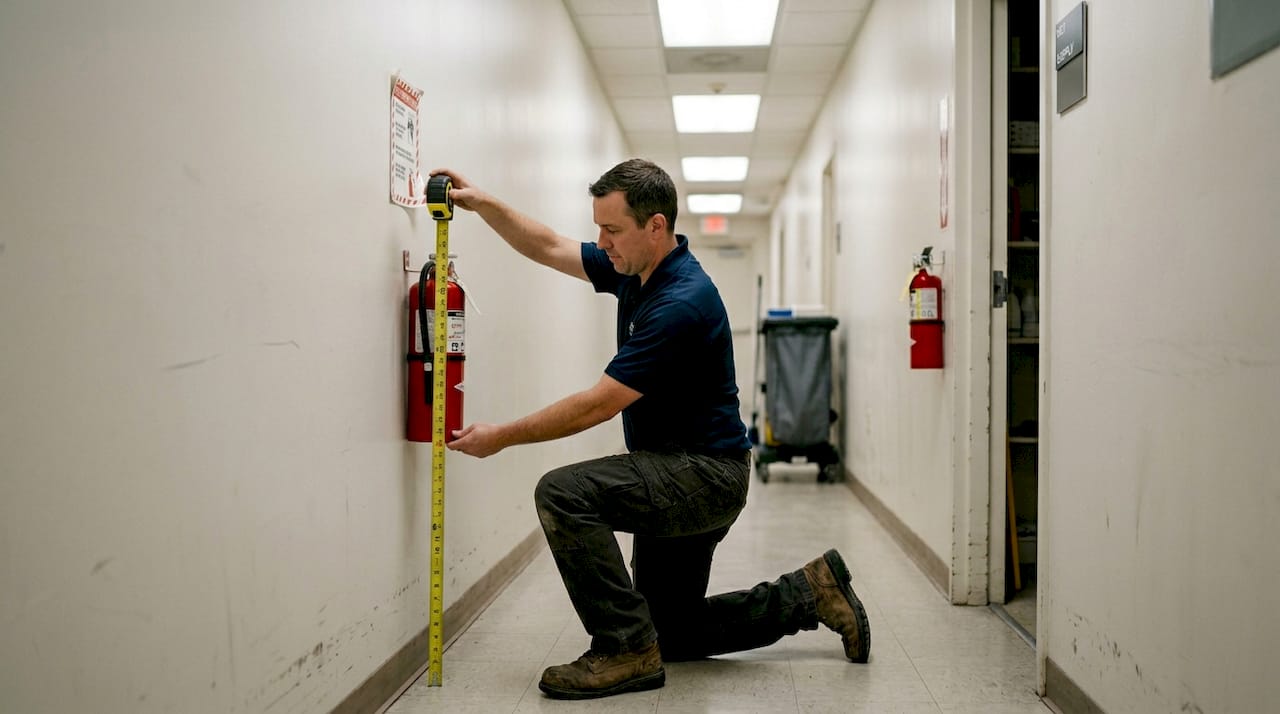
Mounting height affects both visibility and accessibility. Extinguishers should hang with the top between 3.5 and 5 feet from the floor for units weighing less than 40 pounds. Heavier models mount lower, with tops no higher than 3.5 feet. Consistent mounting heights help employees locate extinguishers quickly during high stress situations. Clear signage above each unit improves visibility, especially in areas with visual obstructions.
| Fire class | Common materials | Max travel distance | Typical commercial locations |
|---|---|---|---|
| Class A | Wood, paper, cloth, plastics | 75 feet | Offices, retail stores, warehouses |
| Class B | Gasoline, oil, grease, solvents | 50 feet | Maintenance shops, manufacturing areas |
| Class K | Cooking oils, animal fats | 30 feet | Restaurant kitchens, cafeterias |
| Class C | Electrical equipment | Varies by base class | Server rooms, electrical panels |
Area coverage requirements complement travel distance rules. For Class A hazards, one extinguisher typically covers 3,000 square feet for light hazard occupancies like offices, or as little as 1,000 square feet in areas with higher fire loads. These calculations ensure adequate protection density throughout your facility rather than just meeting minimum travel distances.
Pro Tip: Color code your extinguisher locations on facility maps and include them in new employee orientation tours. Familiarity during normal conditions translates to faster response during emergencies.
Special hazard areas require additional considerations beyond basic placement rules. Server rooms and data centers benefit from clean agent extinguishers near entrances, even if standard ABC units cover general travel distances. Spray booth areas need specific extinguisher types for flammable coatings. Loading docks where forklifts operate require protection for both ordinary combustibles and potential fuel fires.
Obstruction and visibility matter as much as distance. An extinguisher hidden behind a door that is usually open still creates access problems during evacuations when doors close. Units tucked into corners or behind equipment become invisible during emergencies. Strategic placement means considering traffic patterns, evacuation routes, and normal work activities to position extinguishers where people naturally move during both routine operations and emergency responses.
Choosing the right fire extinguisher type for your facility
Class A extinguishers handle ordinary combustibles including wood, paper, cloth, and most plastics. These fires leave ash residue and respond to water or dry chemical agents that cool burning materials below ignition temperature. Office buildings, retail stores, and warehouses primarily need Class A protection since these materials dominate their fire load. The familiar ABC multipurpose dry chemical extinguishers cover Class A hazards while also addressing other fire types.
Class B extinguishers combat flammable liquid fires from gasoline, oil, grease, solvents, and similar petroleum products. These fires float on water, so extinguishing agents must smother flames by cutting oxygen supply or interrupting the chemical reaction. Maintenance facilities, manufacturing plants using solvents, and any location storing flammable liquids require Class B coverage. Foam and dry chemical agents work effectively on these fires.
Class K extinguishers specifically target cooking oil and animal fat fires in commercial kitchens. These fires burn extremely hot and can violently react with water or standard dry chemicals. Class K units must be positioned within 30 feet of cooking equipment in any commercial kitchen, restaurant, cafeteria, or food service operation. The wet chemical agents create a barrier between fuel and oxygen while cooling the oil below its auto ignition temperature.
Clean agent extinguishers including CO2 and Halotron serve specialized roles in environments where residue from standard dry chemicals would cause secondary damage. Server rooms, data centers, laboratories, and areas with sensitive electronic equipment benefit from these agents that leave no residue and cause no corrosion. CO2 works by displacing oxygen around the fire, while Halotron interrupts the chemical reaction of combustion.
Pro Tip: Clean agent extinguishers cost more upfront but prevent thousands in equipment damage and downtime compared to dry chemical residue contaminating sensitive electronics.
Multipurpose ABC extinguishers offer versatility for general commercial spaces where multiple fire types might occur. These units contain monoammonium phosphate that handles ordinary combustibles, flammable liquids, and electrical fires. They represent the most common choice for offices, retail spaces, and mixed use areas. However, their versatility comes with tradeoffs. The dry chemical residue can damage electronics and requires thorough cleanup.
Matching extinguisher composition to specific fire risks ensures effective suppression while minimizing collateral damage. A manufacturing facility might need Class B units near solvent storage, ABC extinguishers in general work areas, and clean agent protection for the control room. Restaurants require Class K in kitchens plus ABC units in dining areas and offices. This layered approach addresses each hazard zone appropriately.
- Assess your facility room by room, identifying primary combustible materials and fire risks in each area
- Match extinguisher class to the most likely fire type, considering both probability and potential severity
- Install clean agent protection for any area where dry chemical residue would cause equipment damage exceeding fire damage
- Ensure kitchen areas have dedicated Class K extinguishers regardless of other units present
- Review your selections annually as operations change and new hazard areas develop
Employee awareness of extinguisher types directly impacts emergency response effectiveness. Color coding, clear labeling, and training help personnel grab the right unit during high stress situations. A worker who understands why the red Class K extinguisher hangs near the fryer will use it correctly rather than reaching for a nearby ABC unit that could spread burning oil.
Maintenance and training: ensuring effective use and compliance
Annual OSHA training requirements cover extinguisher locations throughout the facility, operation procedures using the PASS technique, and critical decisions about when fires exceed safe suppression attempts. This training must occur when employees are hired and repeated yearly to maintain readiness. Hands on practice with training extinguishers dramatically improves confidence and technique compared to classroom instruction alone.
Monthly visual inspections form the foundation of extinguisher maintenance. Designated personnel should check each unit for obvious physical damage, verify pressure gauges show proper charge levels, confirm inspection tags are current, and ensure accessibility remains unobstructed. These monthly checks prevent common violations like expired tags that result in citations during fire marshal inspections.
- Conduct monthly visual inspections checking pressure gauges, physical condition, and accessibility of every extinguisher in your facility
- Schedule annual professional inspections by certified technicians who perform internal examinations and required maintenance
- Arrange hydrostatic testing at intervals specified by manufacturer, typically every 5 to 12 years depending on extinguisher type
- Document all inspections, maintenance activities, and training sessions in permanent records for regulatory compliance
- Replace or recharge any extinguisher immediately after use, even if only partially discharged
- Train employees on the PASS technique: Pull the pin, Aim at the base of flames, Squeeze the handle, Sweep side to side
Annual professional inspections go beyond visual checks to examine internal components, verify proper agent levels, and ensure mechanical operation. Certified technicians remove extinguishers from service temporarily, inspect valve assemblies, check hoses for cracks, and attach new inspection tags documenting the service date. These comprehensive examinations catch deterioration invisible during monthly visual checks.
Hydrostatic testing verifies the structural integrity of extinguisher cylinders at specified intervals. This pressure testing ensures containers can safely hold their charge without risk of rupture. Testing intervals vary by extinguisher type and construction, ranging from 5 years for some models to 12 years for others. Manufacturers provide specific testing schedules in their documentation.
Common maintenance pitfalls include missing inspection tags, discharged pressure gauges, physical damage from impacts, and obstructed access. Extinguishers tucked behind boxes during busy periods become inaccessible during emergencies. Units with broken mounting brackets lean against walls instead of hanging properly. Pressure gauges showing red or yellow zones indicate charge problems requiring immediate attention.
Proper training transforms fire extinguishers from wall mounted equipment into tools your team confidently deploys during the critical first minutes of fire emergencies.
Documentation proves compliance during inspections and provides liability protection if incidents occur. Maintain records showing monthly inspection logs, annual professional service reports, hydrostatic test certificates, and employee training attendance. Digital systems simplify record keeping and provide easy access during audits. These records demonstrate your commitment to maintaining safe conditions and meeting regulatory obligations.
Training should emphasize knowing when not to fight fires as much as proper operation technique. Employees must understand that extinguishers work only on small, contained fires in their early stages. Fires spreading beyond the immediate ignition point, producing heavy smoke, or blocking escape routes require immediate evacuation rather than suppression attempts. This judgment prevents injuries from misguided heroics.
Enhance your fire safety strategy with professional support
Navigating NFPA standards, OSHA requirements, and local fire codes while running your business creates significant administrative burden. Professional fire safety services eliminate guesswork by conducting facility assessments, recommending optimal extinguisher placement and types, and ensuring every aspect of your program meets current regulations. Expert inspections catch potential violations before fire marshals arrive, preventing citations and business disruptions.
Certified technicians bring specialized knowledge about evolving fire safety technologies and regulatory updates that affect your compliance obligations. They understand nuances like clean agent applications for sensitive equipment areas and proper Class K coverage for commercial cooking operations. Customized training programs prepare your employees with hands on practice using actual extinguishers, building confidence that classroom instruction alone cannot achieve. Partnering with fire protection specialists provides peace of mind that your facility maintains comprehensive, compliant fire safety protecting both property and the people working there every day.
Frequently asked questions about the role of fire extinguishers
How often should fire extinguishers be inspected in commercial buildings?
Monthly visual inspections by designated employees check pressure gauges, physical condition, and accessibility. Annual professional inspections by certified technicians perform comprehensive internal examinations and required maintenance. Hydrostatic testing occurs at manufacturer specified intervals, typically every 5 to 12 years depending on extinguisher type.
Are there penalties for not complying with NFPA 10 standards in Colorado?
Yes, fire marshals issue citations for violations including improper placement, missing inspection tags, and inadequate employee training. Penalties range from fines to temporary business closures until deficiencies are corrected. Insurance carriers may also deny claims or increase premiums if fire safety programs fail to meet standards.
Can I use a Class A extinguisher on a kitchen grease fire?
No, Class A extinguishers can spread burning grease and intensify kitchen fires. Commercial kitchens require Class K extinguishers specifically designed for cooking oil and animal fat fires. The wet chemical agents in Class K units cool the oil while creating a barrier between fuel and oxygen, safely suppressing these dangerous fires.
What training is required for employees regarding fire extinguishers?
OSHA mandates annual training covering extinguisher locations, proper operation using the PASS technique, and critical decisions about when fires exceed safe suppression attempts. Training must occur when employees are hired and repeat yearly. Hands on practice with training extinguishers significantly improves response effectiveness compared to classroom instruction alone.
How do I know which extinguisher is best for my business environment?
Assess each area of your facility to identify primary combustible materials and fire risks. Offices typically need Class A or ABC multipurpose units, manufacturing areas with flammable liquids require Class B coverage, commercial kitchens must have Class K extinguishers, and sensitive electronic equipment areas benefit from clean agent protection. Professional fire safety assessments ensure optimal protection matching your specific hazards and operations.