
TL;DR:
- Missing a fire protection maintenance deadline in Denver can lead to failed inspections, fines, or undetected emergency failures. Implementing a systematic reminder schedule aligned with Denver’s fire code and NFPA standards ensures timely inspections for extinguishers, sprinklers, fire alarms, and permits. Distinguishing staff visual checks from professional technician inspections and maintaining separate records protect compliance and prevent costly violations.
Missing a single fire protection maintenance deadline is not just an administrative slip. It can mean a failed inspection, a city fine, or worse, an undetected equipment failure during an actual emergency. For commercial property managers and business owners in the Denver Metro Area, staying on top of maintenance intervals across fire extinguishers, sprinkler systems, fire alarms, and special inspections is a full-time challenge. The good news is that a well-structured reminder system, built on the actual rules in Denver’s fire code and NFPA standards, turns this challenge into a manageable checklist. This guide breaks it all down by system, schedule, and responsibility so you never miss a critical deadline.
Table of Contents
- Understand Denver fire code and NFPA standards
- Fire extinguisher maintenance reminders: Visual checks and technician visits
- Sprinkler system inspections: Critical scheduling for compliance
- Permits, special inspections, and city reimbursement: Don’t overlook these reminders
- The biggest compliance pitfall: Mixing staff and technician reminders
- Get expert help for Denver fire protection maintenance
- Frequently asked questions
Key Takeaways
| Point | Details |
|---|---|
| Denver-specific compliance | You must align fire protection maintenance reminders to the 2025 Denver Fire Code and referenced NFPA standards. |
| Staff vs technician checks | Visual inspections are your team’s responsibility while annual and periodic tests require qualified technicians. |
| Sprinkler and extinguisher intervals | Set reminders for monthly, quarterly, annual, and multiyear services—each has unique actions for compliance. |
| Permits and special inspections | Reminders should cover both routine maintenance and administrative triggers, such as permit applications and city reimbursement. |
| Avoid common pitfalls | Failure to separate operational from technical reminders is the top reason for compliance violations. |
Understand Denver fire code and NFPA standards
Before setting up any reminder system, you need to understand what drives the intervals in the first place. Denver does not simply follow a generic national template. The city has adopted its own framework: the 2025 Denver Fire Code incorporates referenced standards and enforcement mechanisms that apply specifically to buildings in the city. That means your maintenance deadlines are legally binding, not suggestions.
The foundation of those deadlines comes from NFPA standards. The National Fire Protection Association publishes specific codes for each system type: NFPA 10 covers fire extinguishers, NFPA 25 covers water-based systems, and NFPA 72 covers fire alarms. Each sets inspection, testing, and maintenance intervals that become enforceable once adopted by a local jurisdiction like Denver. Understanding Denver fire code compliance is the first step toward building a reminder system that actually holds up to an inspection.
The Authority Having Jurisdiction, commonly called the AHJ, is the Denver Fire Department in this context. Their rules are not advisory. If an inspector finds a missed interval, the consequences are real:
- Written violations requiring corrective action within a set timeframe
- Fines and potential permit holds for construction or occupancy
- Business shutdowns in serious or repeat situations
- Liability exposure if an incident occurs during a lapse in maintenance
“Compliance is not a once-a-year event. The Denver Fire Code ties enforcement directly to documented maintenance intervals, meaning every missed test or skipped inspection creates a traceable gap in your compliance record.”
Scheduling NFPA compliance inspections on a rolling calendar is the only way to avoid these gaps. Every system in your building has a different trigger, and each one needs its own reminder.
Fire extinguisher maintenance reminders: Visual checks and technician visits
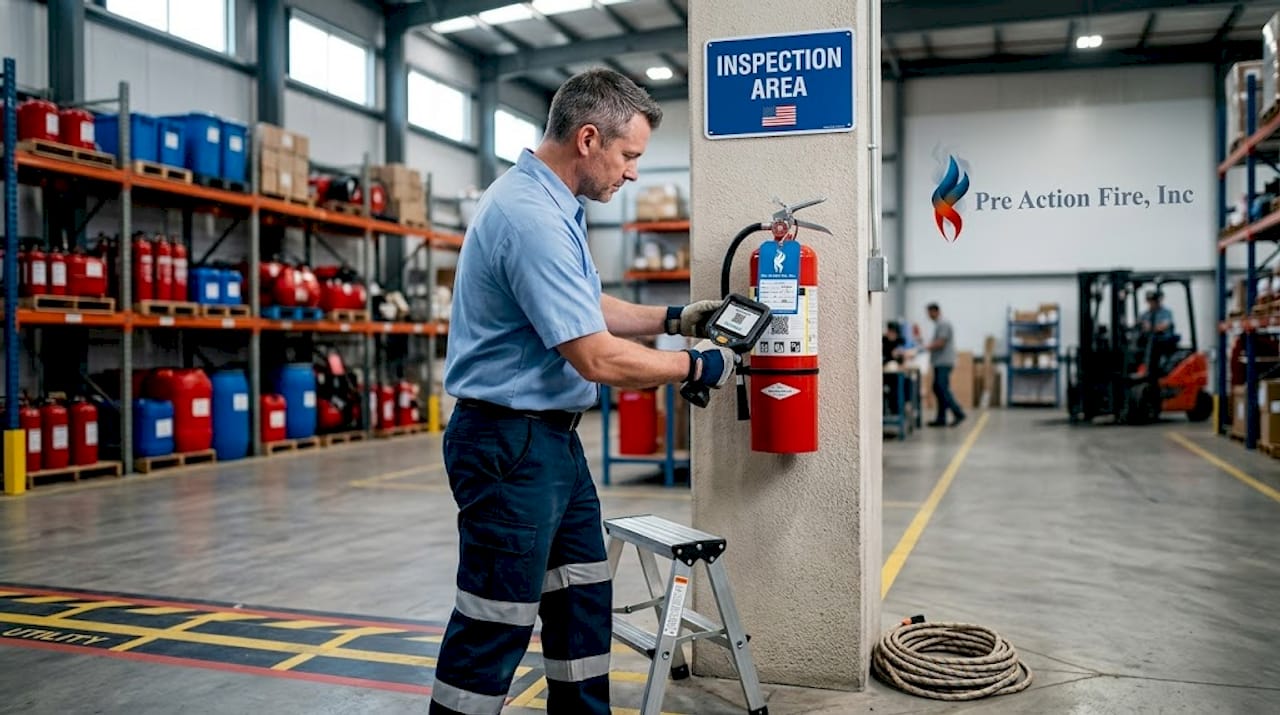
Fire extinguishers are the most visible fire protection equipment in any commercial building, but they are also the most commonly mismanaged. The reason is simple: people assume that because they can see the extinguisher on the wall, they know it is fine. That assumption fails under the NFPA 10 standard, which mandates monthly visual inspection, annual technician maintenance, 6-year internal inspections, and 12-year hydrostatic testing for most stored-pressure extinguishers.
Here is how those intervals should translate into reminders:
- Monthly visual check reminder: Set a recurring calendar event on the first business day of every month. Assign a trained staff member to physically inspect each extinguisher for visible damage, pressure gauge reading within the green zone, safety pin intact, and unobstructed access. Document with a signature or photo.
- Annual maintenance reminder: At least 60 days before the annual due date, schedule a certified technician visit. This gives time to coordinate access, notify tenants, and address any failures found during the visit.
- Six-year internal inspection reminder: This one requires an actual licensed technician to disassemble and inspect internal components. Set a multi-year calendar reminder for each unit with the purchase or last service date as the anchor.
- Twelve-year hydrostatic test reminder: This is the deepest and most involved service interval. The extinguisher cylinder itself is pressure-tested for structural integrity. Miss this one and the unit is out of service.
| Interval | Who performs it | Reminder lead time |
|---|---|---|
| Monthly visual check | Trained staff | Day 1 of every month |
| Annual maintenance | Certified technician | 60 days before due date |
| 6-year internal inspection | Licensed technician | 90 days before due date |
| 12-year hydrostatic test | Licensed technician | 90 days before due date |
Pro Tip: Different extinguisher types have different rules. Dry chemical extinguishers on a 6-year and 12-year cycle are common in commercial buildings, but CO2 and wet chemical units have unique intervals. When setting up your reminder system, tag each extinguisher in your records by type and last service date so technicians can quickly confirm the right schedule.
Getting fire extinguisher inspections handled by a certified professional on schedule keeps your documentation clean and protects you in the event of a fire department audit. Staff checks matter too, but they are not a substitute for professional service.
Sprinkler system inspections: Critical scheduling for compliance
Sprinkler systems are the backbone of passive fire suppression in most commercial buildings, and they carry the most complex maintenance schedule of any system type. NFPA 25 outlines inspection, testing, and maintenance intervals for water-based fire protection systems, and those intervals are broken down by component rather than by system as a whole. That distinction matters enormously for your reminder calendar.
Here is what a component-based reminder schedule looks like in practice:
| Component | Inspection interval | Test interval |
|---|---|---|
| Control valves | Weekly or monthly (seal type) | Annually |
| Waterflow alarm devices | Quarterly | Quarterly |
| Pressure gauges | Monthly | 5 years |
| Fire pumps | Weekly (run test) | Annually |
| Sprinkler heads | Annually (visual) | Every 50 years (sample testing) |
| Main drain | Quarterly | Quarterly |
The practical challenge here is that no single reminder covers the whole system. You need layered alerts:
- Weekly: Fire pump run test reminder for diesel-driven or electric pumps
- Monthly: Control valve visual check and pressure gauge reading
- Quarterly: Waterflow alarm test, main drain test, and anti-freeze loop inspection if applicable
- Annually: Full technician inspection covering heads, hangers, piping, and all devices
- Every 5 years: Internal pipe inspection and gauge replacement
- Every 10 years: Comprehensive obstruction investigation for systems in high-risk environments
Denver’s AHJ may also authorize special out-of-cycle inspections based on occupancy type, system modifications, or identified impairments. When an impairment is discovered, do not wait for the next scheduled date. Denver’s fire code requires rapid correction, and an impaired system must be documented and reported promptly. Understanding the full sprinkler inspection workflow helps you know exactly what to do when something is found.
Pro Tip: Whenever a sprinkler head is activated or physically damaged, the entire zone needs to be inspected before the system is returned to service. This is not optional under NFPA 25. Build a triggered reminder into your workflow so that any activation automatically queues a technician visit within 24 to 48 hours. Pair this with a clear understanding of Denver sprinkler installation best practices so your system design also supports faster post-event recovery.
The single biggest sprinkler compliance failure we see is property managers relying on one annual inspection as their entire strategy. That approach might have passed a decade ago, but Denver’s enforcement under the 2025 code is more granular. Component-specific intervals are tracked, and a fire pump that has not been documented for its weekly run test is a violation waiting to happen.
Permits, special inspections, and city reimbursement: Don’t overlook these reminders
Most property managers focus their reminder systems on physical equipment. Fewer build reminders for the administrative side of fire protection compliance. That gap is where many penalty situations start. The 2025 Denver Fire Code draws a clear distinction between routine maintenance and permit-required work, and it establishes special inspection authority along with reimbursement obligations.
Here is how to build the administrative layer into your reminder system:
- Permit tracking reminder: Anytime you modify, upgrade, or install a fire protection component, a permit is likely required. Set a reminder to check permit status and schedule a required inspection before the work is covered or the system is returned to service.
- Special inspection request reminder: Denver Fire Prevention personnel can authorize a special inspection for complex issues, impairments, or systems with unusual configurations. If a special inspection is ordered or recommended, it should be treated as an urgent calendar item, not a routine one.
- Reimbursement deadline reminder: Denver’s fire code includes provisions where property owners may incur city reimbursement obligations tied to special inspections. Missing payment or response deadlines on those obligations creates additional compliance exposure. Set a reminder the moment you receive any city communication related to inspection fees.
- Engineer coordination reminder: Some special inspections and permit-related modifications require a licensed fire protection engineer to sign off. Build lead time into your calendar for engineer availability, which can be 2 to 4 weeks in a busy market like Denver.
“Routine maintenance and permit-required work are not the same thing under Denver’s fire code. Treating a system modification as routine maintenance without pulling a permit can invalidate your compliance record entirely.”
Staying ahead of fire safety inspections means accounting for both the physical and administrative calendar. If you are managing a building through a renovation or occupancy change, also review your requirements for custom fire system setup to make sure all new or modified systems are built to code before an inspection is scheduled.
The biggest compliance pitfall: Mixing staff and technician reminders
Here is the opinion we hold after years of working with Denver property managers: the most damaging compliance mistake is not a missed annual inspection. It is the belief that a competent staff member doing a monthly visual check is equivalent to a qualified technician completing a functional test. Those are not the same thing, and mixing up the reminders that govern each creates real liability.
Monthly visual checks exist because something can go wrong between annual visits. A staff member walking past an extinguisher should catch obvious issues like a broken seal, a gauge in the red, or an obstructed mounting location. But a staff member cannot detect internal corrosion, valve drift, or waterflow sensor degradation. Only a trained technician with the right tools and the knowledge of what NFPA 10 actually requires for annual maintenance can catch those problems. Building separate calendars for staff checks versus technician inspections is not bureaucratic overhead. It is the difference between a documented compliance record and a gap that a fire inspector will flag immediately.
The practical approach we recommend: use two completely separate systems. Staff checks live in a shared internal calendar with assigned team members and a simple photo-based documentation process. Technician inspections are tracked in a separate service management system, ideally one your fire protection contractor helps you maintain. When a technician completes a visit, the report goes into your records with a date, signature, and specific findings. That documentation is what saves you if a violation is contested.
There is also the edge case scenario most property managers never plan for: equipment impairment. When a system component fails or is taken offline for repairs, that triggers out-of-cycle inspection obligations. It can also trigger reimbursement fees under Denver’s code if the city has to send personnel for an unplanned visit. Documenting these events with photos and technician reports, and linking them back to your calendar records, creates the paper trail that protects your business. Consider building fire protection for new builds principles into your reminder strategy even for existing buildings. The discipline required for a new installation, thorough documentation, component-level scheduling, and clear responsibility assignments, is the same discipline that keeps older systems compliant year after year.
Get expert help for Denver fire protection maintenance
Managing the full scope of fire protection maintenance reminders across extinguishers, sprinkler systems, permits, and special inspections is genuinely complex work. The intervals are specific, the documentation requirements are strict, and Denver’s enforcement is not going to get less rigorous.
Pre Action Fire, Inc has been helping Denver Metro Area property managers and business owners stay compliant since 2009. Our NICET-certified technicians handle everything from routine fire extinguisher inspections to full NFPA compliance inspection programs tailored to your building type and occupancy. We also help clients build the reminder systems and documentation workflows that make compliance a manageable process rather than a scramble before every city visit. Whether you are managing a single commercial property or a portfolio of buildings, contact Pre Action Fire, Inc today to get a maintenance schedule that actually works for Denver’s code requirements.
Frequently asked questions
How often should fire extinguishers be inspected in Denver?
Fire extinguishers require monthly visual checks, annual technician maintenance, 6-year internal inspections, and 12-year hydrostatic tests under NFPA 10 and the Denver fire code.
What triggers a special fire inspection by Denver Fire Department?
Impairments to fire protection systems or unusual building configurations can authorize a special inspection by Denver Fire Prevention personnel, which may include reimbursement fees under the Denver Fire Code.
What’s the most common reminder mistake for fire protection maintenance?
Mixing staff reminders for visual checks with qualified technician inspection schedules leads to compliance failures because the two types of service address entirely different types of issues.
Where can I find official Denver fire code requirements for maintenance intervals?
The 2025 Denver Fire Code is available from the City of Denver and references all adopted inspection, testing, and maintenance standards by system type.
How can I automate fire protection maintenance reminders for my building?
Use a combination of digital shared calendars for staff checks and a dedicated service management system tied to your fire protection contractor’s inspection schedule to ensure no interval is missed across any system type.