
TL;DR:
- Regular inspections per NFPA 25 are essential to ensure fire safety and avoid violations.
- Only NICET-certified technicians should perform sprinkler inspections and documentation.
- Accurate recordkeeping and thorough workflow management prevent most compliance violations.
A missed fire sprinkler inspection can trigger fines, insurance complications, and real safety gaps in your building. For commercial property owners and facility managers in Colorado, this isn’t a hypothetical risk. NFPA 25 compliance is mandatory, and the inspection workflow is more detailed than most owners realize. Skipping steps, using unqualified technicians, or letting documentation slip can all lead to violations that are entirely preventable. This guide walks you through every stage of the sprinkler inspection workflow, from preparation to final reporting, so you can stay compliant, protect your occupants, and avoid costly surprises.
Table of Contents
- Getting ready: Prerequisites and tools for sprinkler inspection
- Step-by-step sprinkler inspection workflow
- Troubleshooting and common mistakes in sprinkler inspections
- Verifying, reporting, and ensuring NFPA compliance
- What most guides miss about sprinkler inspection workflow
- Enhance your fire protection with expert services
- Frequently asked questions
Key Takeaways
| Point | Details |
|---|---|
| Certified techs required | Only trained, certified professionals should conduct inspections to meet legal and safety standards. |
| Regular and deep checks | Annual sprinkler system inspections and five-year internal assessments are mandatory under NFPA 25. |
| Digital and manual synergy | While digital tools aid the inspection workflow, manual verification of records and equipment is essential. |
| Detailed documentation matters | Proper recordkeeping and reporting prevents compliance violations and ensures building safety. |
Getting ready: Prerequisites and tools for sprinkler inspection
Before anyone sets foot near a sprinkler head, the groundwork has to be solid. Jumping straight into testing without the right prep is one of the fastest ways to produce an incomplete inspection, and incomplete inspections are a leading driver of NFPA violations. Knowing who is responsible, what tools are needed, and what documentation must be on hand sets the entire inspection up for success.
Who carries the responsibility? Under NFPA 25, owners bear primary responsibility for maintaining fire sprinkler systems and ensuring inspections are carried out by certified technicians. That means you, as the property owner or facility manager, cannot simply assume a contractor handled everything. You need to verify qualifications. NICET (National Institute for Certification in Engineering Technologies) certification is the industry standard for fire protection technicians in Colorado. Hiring a NICET-certified team is not optional for serious compliance. Our team’s approach to annual sprinkler inspections reflects exactly this standard.
Required tools and documentation vary by system type, but the core list includes:
- Current system drawings and hydraulic calculations
- Previous inspection reports (at least the last two cycles)
- Pressure gauges and flow test equipment
- Inspection tags and correction notice forms
- Digital inspection software or paper-based forms
- Personal protective equipment for confined or hazardous areas
Digital tools have made workflow tracking faster, but they do not replace physical verification. A tablet app can log data quickly, but a technician still needs to physically check each sprinkler head, valve, and pipe section. Staying current with NFPA inspection compliance requirements in 2026 means using both approaches together.
Comparison: Digital vs. manual verification tools
| Feature | Digital tools | Manual verification |
|---|---|---|
| Speed of data entry | Fast | Slower |
| Error rate | Lower for logging | Lower for physical checks |
| Compliance documentation | Automated reports | Requires manual filing |
| Reliability in field | Depends on connectivity | Always reliable |
| Best use | Recordkeeping and scheduling | Hands-on inspection tasks |
Pro Tip: Pull the last two inspection reports before you begin. Look for recurring issues like low pressure readings or specific valves that repeatedly fail. Patterns in past reports tell you exactly where to focus extra attention during the current inspection.
Step-by-step sprinkler inspection workflow
With everything prepped, it’s time to start the inspection itself. Here’s how to proceed step by step.
Sprinkler inspections are not one-size-fits-all events. NFPA 25 requires different checks at different intervals. Some are visual and happen every quarter. Others involve functional testing and happen annually. The five-year internal assessment is the most involved. Understanding the full sequence helps you plan resources and avoid missing a required step.
Inspection frequency overview:
- Quarterly: Visual inspection of control valves, gauges, and alarm components. Check that all valves are in the correct open or closed position.
- Annual: Full visual inspection of all sprinkler heads, hangers, and piping. Functional testing of main drain, alarm devices, and antifreeze systems where applicable.
- Five-year: Internal pipe inspection at a minimum of four points in the system to check for corrosion, scale, or obstructions. Per NFPA guidance, the five-year internal assessment covers piping at four points for corrosion and obstructions, applied to every other wet system unless an issue is found, and triggers a full obstruction investigation if problems appear.
Step-by-step actions during the annual inspection:
- Confirm all system control valves are open and properly supervised.
- Visually inspect every sprinkler head for corrosion, paint, or physical damage.
- Check pipe hangers and seismic bracing for integrity.
- Test the main drain and record static and residual pressure readings.
- Verify alarm devices activate correctly during the drain test.
- Inspect dry-pipe or preaction valve assemblies if applicable, including trip testing.
- For sprinkler installation steps in newer systems, verify that all components match the original design specifications.
- Log all findings immediately, noting any deficiencies and their locations.
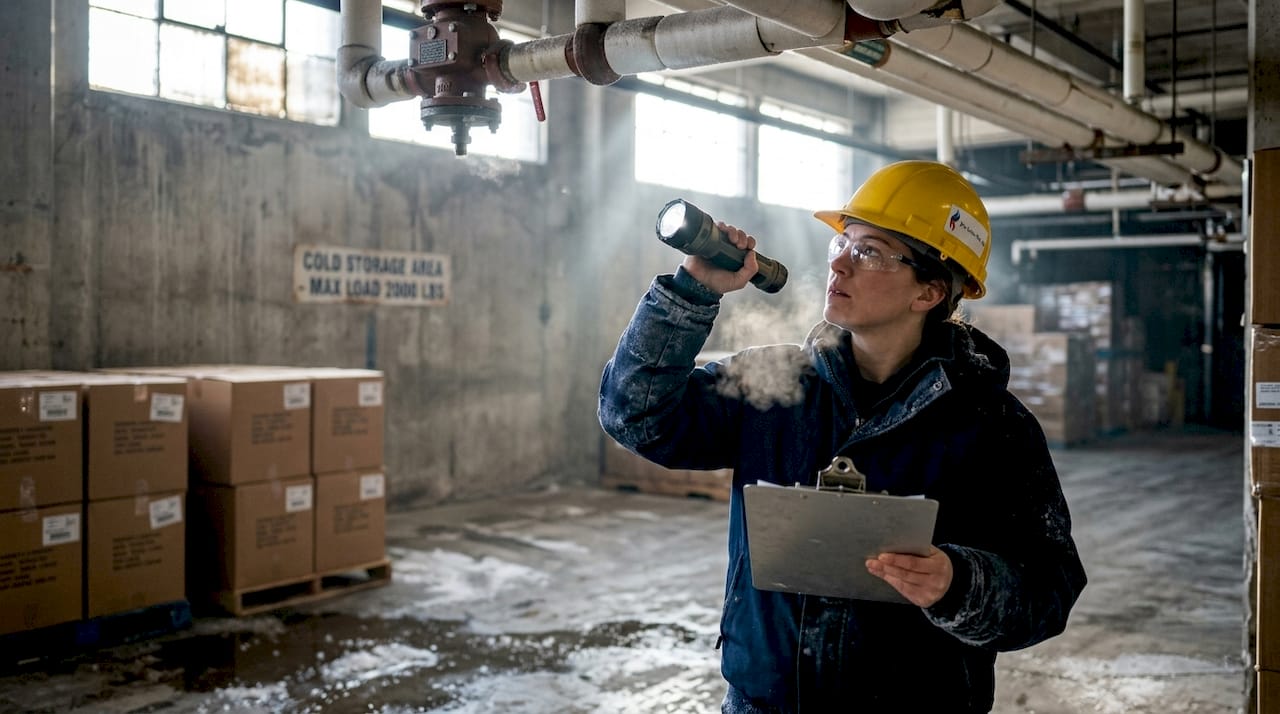
For dry or preaction systems, especially those in cold storage or refrigerated warehouse environments, the stakes are higher. These systems are more sensitive to temperature swings and require more frequent internal checks. If your facility has areas below freezing, factor that into your inspection schedule. If a system needs updating after deficiencies are found, understanding the Colorado upgrade process is the next logical step.
| Inspection type | Frequency | Key actions |
|---|---|---|
| Visual check | Quarterly | Valves, gauges, signage |
| Full inspection | Annual | Heads, piping, alarms, drains |
| Internal pipe check | Five years | Corrosion, scale, obstruction |
| Trip test (dry/preaction) | Annual or per NFPA | Valve operation, timing |
Pro Tip: Document findings on the spot using a digital form or voice memo. Waiting until you’re back at the office introduces errors and omissions that can compromise your compliance records.
Troubleshooting and common mistakes in sprinkler inspections
Even the most prepared teams can run into trouble. Here’s how to avoid common mistakes and solve issues quickly.
The inspection workflow is detailed, and the margin for error is narrow. Most problems fall into predictable categories: documentation gaps, environment-specific oversights, and skipped long-interval tests. Knowing where teams typically go wrong helps you build a process that closes those gaps before they become violations.
Common mistakes and quick fixes:
- Incomplete documentation: Technicians note a deficiency verbally but fail to log it formally. Fix: require digital sign-off on every finding before leaving the site.
- Ignoring environment-specific needs: Facilities with freezers or cold rooms often skip or delay internal checks. Per NFPA guidance, ice in freezer environments can cause annual obstructions, making those checks critical rather than optional. Dry and preaction systems require more frequent testing, and harsh environments accelerate the testing schedule.
- Skipping five-year internal tests: This is the most commonly deferred inspection. Teams assume nothing has changed inside the pipes, but corrosion and biological growth can develop unseen.
- Inaccessible piping: Pipes above drop ceilings or behind equipment can be skipped if access is not planned in advance. Fix: schedule access with building operations before inspection day.
- Recordkeeping errors: Dates, technician names, and system identifiers entered incorrectly invalidate reports. Fix: use a standardized digital template with required fields.
Ice buildup inside sprinkler piping in freezer environments is not a rare edge case. It is a documented, recurring obstruction source that demands annual internal checks. Treating it as a low-priority item is a compliance risk you cannot afford.
Using an NFPA compliance checklist during every inspection reduces the chance of skipping a required step. For facilities with fire pumps, separate attention is needed since pump inspection pitfalls are a distinct category of compliance risk that overlaps with sprinkler system performance.
Pro Tip: Set up recurring digital calendar reminders tied to your last inspection date for quarterly, annual, and five-year intervals. Assign a named person to each reminder so accountability is clear, not assumed.
Verifying, reporting, and ensuring NFPA compliance
Once the inspection itself is completed, it’s vital to ensure your records and reporting are rock solid.
Completing the physical inspection is only half the job. What happens after the technician leaves the building determines whether you are actually compliant. Reporting and documentation are where many facilities fall short, and the consequences are serious. Over 70% of sprinkler system inspection violations stem from incomplete or inaccurate records, not from physical system failures.
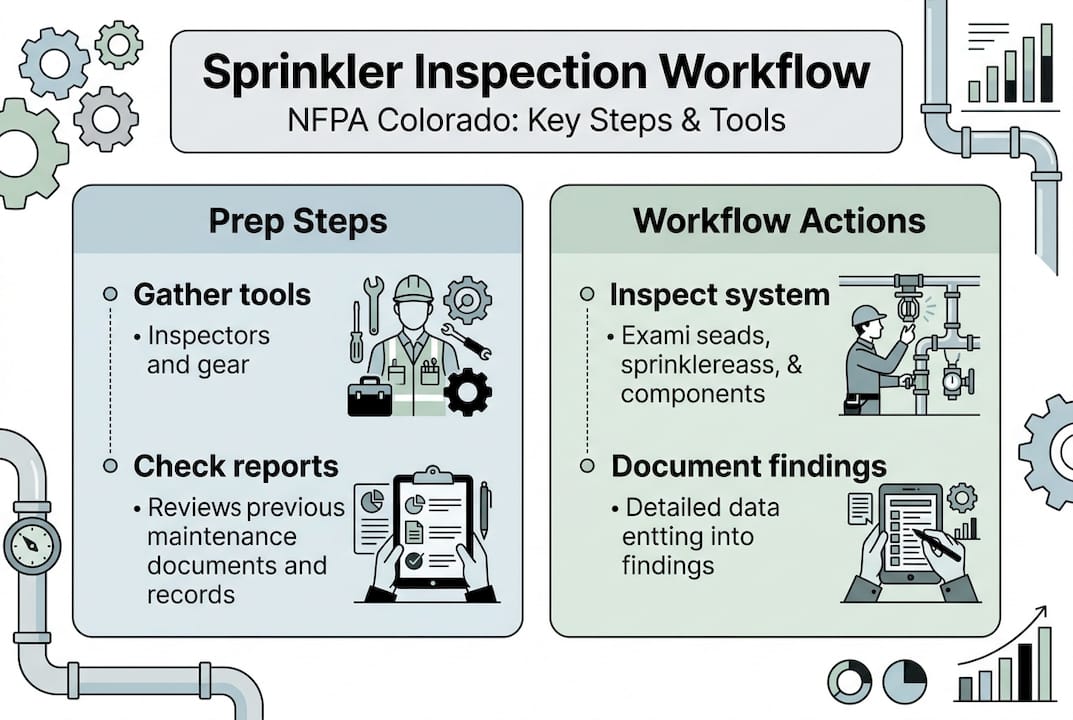
Under NFPA 25, owners bear primary responsibility for maintaining accurate records, and digital tools are increasingly used to support workflow, but manual verification of every entry remains essential. A digital report that contains errors is still a violation.
Post-inspection compliance checklist:
- Confirm all deficiencies are formally logged with location, description, and severity.
- Assign corrective actions with deadlines and responsible parties.
- Submit the completed inspection report to the authority having jurisdiction (AHJ) if required by local Colorado code.
- Store all testing data in a secure, retrievable format for a minimum of one year or per AHJ requirements.
- Verify that the inspection tag is updated and physically attached to the system riser.
Step-by-step reporting process:
- Review all field notes and digital logs immediately after inspection.
- Cross-check findings against the previous report to flag recurring issues.
- Generate the formal inspection report using NFPA-compliant formatting.
- Have the lead technician sign and certify the report.
- Deliver a copy to the property owner and file one with the AHJ if required.
- Schedule corrective work for any deficiencies before the next inspection cycle.
For facilities managing annual inspection reporting, maintaining a consistent reporting format across inspection cycles makes audits far easier. If you operate in specific jurisdictions, local compliance services can help you navigate any city-specific requirements layered on top of NFPA 25.
What most guides miss about sprinkler inspection workflow
Most inspection guides focus on the checklist and stop there. That’s useful, but it misses the bigger picture that experienced fire protection professionals see every day.
Digital inspection tools are genuinely helpful. They speed up data entry, reduce transcription errors, and make scheduling easier. But we’ve seen facilities in Colorado where a perfectly formatted digital report masked a physical inspection that was rushed or incomplete. The software looked great. The system was not actually verified. That gap is where fires happen and where violations are discovered during audits.
The uncomfortable truth is that most violations are entirely preventable. They don’t come from complex system failures. They come from skipped steps, deferred five-year tests, and documentation that no one reviewed after it was filed. Proactive compliance, the kind where you review annual inspection insights and act on patterns before the AHJ shows up, is what separates facilities that pass from facilities that scramble.
Hands-on, NICET-certified inspections catch what automation misses. A corroded sprinkler head, a valve that’s slightly out of position, ice buildup in a freezer line. These are physical realities that no app can detect remotely. The workflow matters. The people executing it matter more.
Enhance your fire protection with expert services
Ready to take action and secure your property? Here’s how professional support streamlines your workflow.
Navigating NFPA 25 compliance on your own is manageable with the right knowledge, but working with a certified team removes the guesswork entirely. Pre Action Fire, Inc has served the Denver Metro Area since 2009, and our NICET-certified technicians handle every stage of the inspection workflow with precision.
Whether you need installation in Westminster, system certification for a new or existing facility, or ongoing alarm monitoring services to keep your protection active around the clock, we have the expertise to match your building’s specific needs. Contact us today to schedule an inspection or consultation and make compliance straightforward.
Frequently asked questions
How often should sprinkler systems be inspected in Colorado commercial buildings?
Sprinkler systems require quarterly visual checks, annual functional inspections, and a five-year internal assessment of piping for corrosion and obstructions per NFPA 25. Missing any interval can result in violations.
Who can legally perform a fire sprinkler inspection?
Only certified technicians, ideally NICET-certified, are qualified to conduct inspections that meet NFPA 25 standards. Per NFPA 25 owner responsibilities, the building owner is accountable for ensuring qualified personnel are used.
Are there special requirements for dry or preaction sprinkler systems?
Yes. Dry and preaction systems need more frequent checks than standard wet systems, and harsh environments such as freezer rooms require annual internal inspections due to ice obstruction risks.
What is the most common cause of inspection violations?
Incomplete or inaccurate recordkeeping drives the majority of violations. Even when the physical inspection is done correctly, missing documentation creates compliance failures that are entirely avoidable with consistent reporting practices.