
TL;DR:
- A failed fire safety inspection can lead to operational halts, fines, and significant liability for Denver businesses.
- Compliance requires using licensed contractors, maintaining detailed records, and regularly inspecting active and passive fire protection systems.
- Embedding readiness into daily operations ensures long-term safety, simplifies inspections, and protects property and lives.
A failed fire safety inspection can halt your operations, trigger fines, and expose your business to serious liability. For Denver commercial property managers and business owners, the stakes are real: the Denver Fire Department licenses fire protection systems including sprinkler systems, fire alarm systems, and portable extinguishers, and requires that anyone performing service or inspection holds a current Denver Fire Department license. Compliance covers far more ground than most owners expect, including alarms, sprinklers, passive barriers, and documentation. This guide gives you a clear, practical framework to prepare your property, pass inspections, and keep your team safe year-round.
Table of Contents
- Fire equipment compliance: What you need to know
- Step-by-step fire extinguisher readiness check
- Sprinkler and alarm systems: Compliance and readiness steps
- Passive fire protection and overlooked areas
- Top inspection mistakes and how to avoid them
- What most guides miss about fire equipment readiness
- Denver fire compliance: Take the next step
- Frequently asked questions
Key Takeaways
| Point | Details |
|---|---|
| Know Denver regulations | Stay aware of local licensing and inspection requirements to avoid failed audits. |
| Follow structured checks | Consistent monthly, annual, and periodic equipment checks are essential for true readiness. |
| Verify licenses and documentation | Ensure all inspections and services are completed by properly licensed personnel with detailed records. |
| Don’t overlook passive items | Fire doors, signage, and egress paths are frequently checked in Denver inspections. |
| Prevention beats correction | Proactive readiness prevents costly fines, downtime, and safety incidents. |
Fire equipment compliance: What you need to know
Denver’s fire safety requirements pull from multiple layers of regulation. The 2025 Denver Fire Code governs inspection processes involving property owners, managers, and contractors, and it aligns closely with national NFPA (National Fire Protection Association) standards. Understanding the full scope of what’s regulated is the first step toward real readiness.
The Denver Fire Department regulates licensing for fire sprinkler and fire alarm systems, as well as portable extinguishers. That means the company or technician you hire must carry the right credentials before they ever touch your equipment. Hiring an unlicensed provider doesn’t just risk a failed inspection. It can void your warranty and create legal exposure.
Here’s a quick overview of the systems that fall under Denver’s compliance scope:
| System type | Governing standard | Who inspects |
|---|---|---|
| Portable fire extinguishers | NFPA 10 | Licensed service company |
| Fire sprinkler systems | NFPA 25 | Licensed contractor |
| Fire alarm systems | NFPA 72 | Licensed contractor |
| Passive protection (fire doors) | IBC/NFPA 80 | Qualified inspector |
What documentation must you keep? Denver expects you to maintain inspection tags, maintenance logs, and contractor license verification on file. When an inspector arrives, these records need to be available immediately. A common mistake is keeping records digitally without a printed backup on-site. Keep both.
Our NFPA compliance inspection guide breaks down exactly which standards apply to your building type. For older Denver properties, passive fire protection compliance is often the most overlooked layer of the code. Don’t let it catch you off guard.
Key compliance requirements every Denver property manager should know:
- Licensed contractors only for inspection, testing, and maintenance of regulated systems
- Documented inspection records retained and available for review
- Annual at minimum for most systems, with some requiring quarterly or monthly checks
- Extinguisher tags must reflect the most recent service date and technician information
- Any deficiencies noted during inspections must be corrected within a specified timeframe
Stat to know: According to NFPA 10 standards, extinguishers that fail monthly visual checks are a leading cause of citation during commercial fire inspections. The fix is almost always simple, but only if you’re looking.
Step-by-step fire extinguisher readiness check
With your compliance scope clear, focus on the most-checked item during audits: portable extinguishers. These are the first things an inspector examines, and they generate more violations than any other piece of fire safety equipment. The good news? They’re also the easiest to keep in shape.
Monthly visual inspection steps:
- Confirm the extinguisher is mounted in its designated location and clearly visible
- Check that access is unobstructed. Nothing should be stored in front of it
- Inspect the pressure gauge needle. It must be in the green zone
- Verify the pull pin is intact and the tamper seal is unbroken
- Check the body and handle for dents, corrosion, or physical damage
- Confirm signage or markings are legible and posted at the correct height
- Note your findings in a written log with the date and your initials
A practical readiness methodology based on NFPA 10 includes monthly visual inspections, annual maintenance, and periodic detailed testing. Each level builds on the previous one, and skipping any of them breaks the chain of documented compliance.
Annual maintenance goes deeper than a visual check. A licensed technician must open and inspect the internal components, verify the agent charge, replace any worn parts, and affix a new inspection tag with the date and their credentials. This is not a DIY task, and it cannot be delegated to someone without a current Denver Fire Department license.
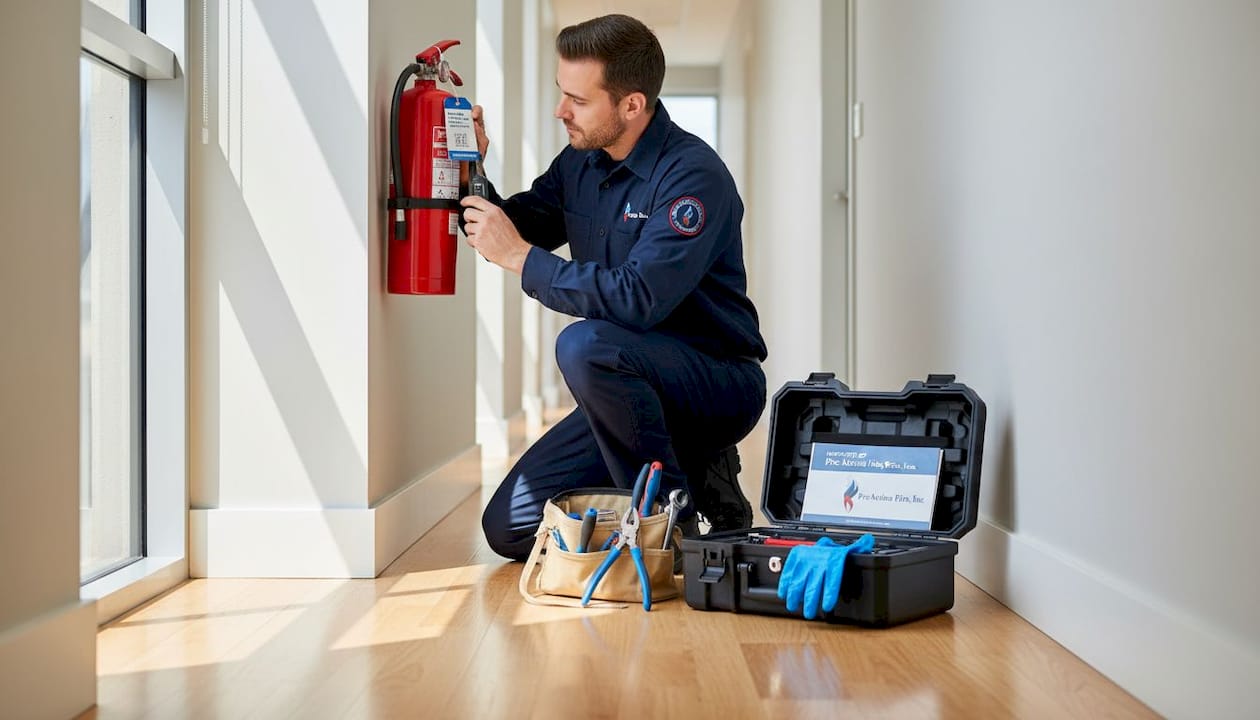
Hydrostatic testing is required at longer intervals, typically every 6 or 12 years depending on the extinguisher type. This test pressurizes the cylinder to verify structural integrity. Missing a hydrostatic test is a citable offense even if the extinguisher looks fine externally.
Here’s how the three levels compare:
| Inspection type | Frequency | Who performs it | What it checks |
|---|---|---|---|
| Visual inspection | Monthly | Owner or designee | Placement, gauge, seal, damage |
| Annual maintenance | Yearly | Licensed technician | Internal components, charge, tag |
| Hydrostatic test | 6 or 12 years | Certified lab/technician | Cylinder pressure integrity |
Common inspection gaps include expired tags, lagging annual or periodic maintenance, and low-pressure extinguishers. These are avoidable with a simple system.
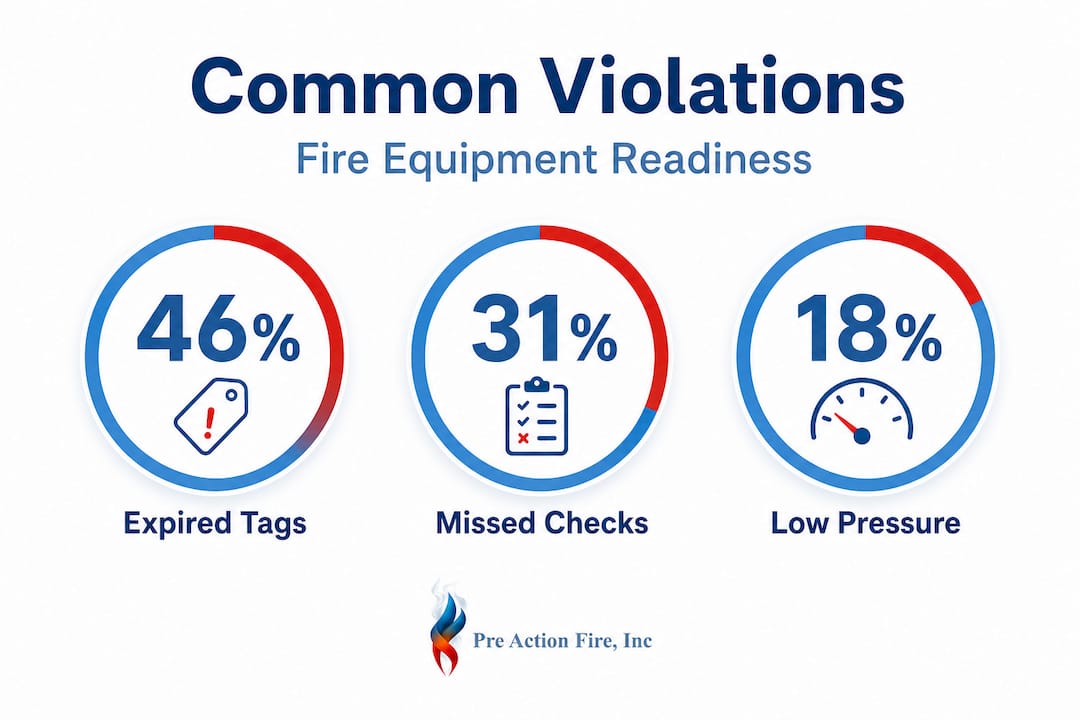
Pro Tip: Build a shared digital log and take a quick photo of each extinguisher tag every time a service is completed. If a question ever comes up during an inspection, you’ll have timestamped visual proof ready in seconds.
Our fire extinguisher safety checklist walks through every required element in plain language. For Denver-specific guidance, our fire extinguisher inspection tips page covers regional requirements and scheduling. You can also reference this inspection checklist for additional detail on what to document.
Sprinkler and alarm systems: Compliance and readiness steps
With extinguishers covered, let’s address readiness for built-in systems, specifically sprinklers and alarms. These systems are more complex, more expensive to fix, and carry heavier inspection consequences when they’re out of compliance.
Denver follows NFPA 25 for sprinkler systems and NFPA 72 for fire alarm systems. Both standards require regular inspections at specific intervals, and those intervals vary by component. Understanding the schedule is critical because missing even one required test can result in a failed inspection or a stop-work notice.
NFPA 25-driven workflows rely on component-specific inspection and testing frequencies, and many test activities must be performed by or under qualified contractors, with records available for review. The key phrase is “records available for review.” Doing the work without documentation is treated the same as not doing it.
Here’s a simplified frequency reference for key components:
| Component | Inspection frequency | Notes |
|---|---|---|
| Sprinkler heads (visual) | Annually | Check for damage, corrosion, obstruction |
| Control valves | Weekly/Monthly | Verify open position, no leaks |
| Water flow alarm | Quarterly | Tested via inspector’s test valve |
| Backflow preventer | Annually | Must be tested by licensed contractor |
| Fire alarm devices | Annually minimum | Smoke detectors, pull stations, horns |
| Alarm control panel | Annually | Battery backup, zone functionality |
| Emergency generator | Weekly/Monthly | Run test and fuel level check |
What to look for when verifying contractor credentials:
- Confirm the contractor holds a current Denver Fire Department license for the system type
- Request a copy of their license and keep it in your records
- Verify their insurance is active before any work begins
- Ask for a written report after every inspection, not just a verbal update
Important: If a contractor or tester is not properly licensed per Denver requirements, that can cause an inspection failure even if the equipment is functioning perfectly. Always verify credentials before scheduling any service.
Our Denver NFPA inspection checklist maps out every required test and interval for Colorado commercial properties. Use it alongside your contractor’s report to verify nothing was missed.
Passive fire protection and overlooked areas
Active equipment readiness alone isn’t enough. Inspections may cover far more, so let’s look at passive elements that frequently trip up otherwise well-prepared properties.
Passive fire protection refers to building features that contain or slow the spread of fire without requiring activation. Fire doors are the most common example. They don’t make noise or spray water. They simply need to close, latch, and hold. But they fail inspections more often than most people realize.
Including passive fire protection items such as fire doors in your readiness methodology is essential because inspections routinely evaluate more than just active equipment. A propped-open fire door or a door that fails to latch is a direct violation, regardless of how well your sprinklers are maintained.
Passive protection checklist items:
- Fire doors: confirm they self-close and latch fully without manual assistance
- Door frames and hardware: check for damage, missing labels, or unauthorized modifications
- Exit signs: verify they are illuminated and visible from the required distance
- Emergency lighting: confirm it activates on power loss and covers egress paths
- Means of egress: all hallways, stairwells, and exit paths must be clear and unobstructed
- Fire-rated walls and ceilings: look for unsealed penetrations or damage to rated assemblies
Pro Tip: Walk your entire egress path once a month with fresh eyes. You’ll be surprised what accumulates in hallways and stairwells over time. Stored boxes, seasonal decorations, and temporarily parked equipment are among the most common egress violations Denver inspectors find.
Our passive fire protection inspection tips page covers how Colorado’s building codes apply to fire-rated assemblies, doors, and barriers across different occupancy types. It’s worth a review before your next audit.
Top inspection mistakes and how to avoid them
To wrap up, let’s cover the most common fire inspection mistakes and how to ensure you avoid them. Most violations don’t happen because a system broke. They happen because someone forgot to document, schedule, or verify something.
Readiness gaps often occur when monthly extinguisher checks are completed but formal annual maintenance and periodic services are missed. The monthly check gives a false sense of security. The annual and hydrostatic services are where most properties fall behind.
The top five inspection failures and how to prevent them:
- Expired or missing extinguisher tags. Set a calendar reminder 30 days before each annual maintenance due date. Never let a tag expire before scheduling service.
- Unlicensed contractor documentation. Build a vendor file for every service provider. Include a copy of their current Denver Fire Department license and insurance certificate.
- No record of required system tests. Request a written report from your contractor after every single inspection. Store it digitally and keep a physical copy on-site.
- Blocked fire doors or exits. Schedule a monthly walk-through specifically focused on egress paths. Assign a staff member to own this task.
- Missed hydrostatic tests. Add extinguisher type and last hydro test date to your maintenance log. This data is easy to lose track of without a dedicated record.
Pro Tip: Schedule a self-audit 60 days before your expected inspection date. Pull every service record, verify contractor licenses, walk all egress paths, and photograph any deficiencies. Fix what you find before the inspector does.
For properties under construction or renovation, our fire protection compliance for new construction guide explains how readiness requirements apply during build-out phases. Review safety regulations best practices for additional context on construction-phase compliance expectations.
What most guides miss about fire equipment readiness
Most compliance guides hand you a checklist and call it done. That’s useful, but it’s not enough. In our experience working with Denver commercial properties since 2009, the buildings that consistently pass inspections aren’t the ones with the most expensive equipment. They’re the ones that treat readiness as an operational habit rather than an annual event.
The properties that struggle are almost always reacting. They find out an inspection is coming in two weeks, scramble to schedule a contractor, discover an expired tag or a propped door, and spend the next ten days fixing things that should have been addressed months earlier. That pattern repeats every year, and it carries real cost in rushed service calls, potential violations, and staff stress.
Sustainable compliance comes from embedding readiness into everyday operations. That means assigning a named responsible party for each system, building service schedules into your facilities calendar at the start of every year, and treating the monthly visual check as a genuine task rather than a formality. It also means understanding that documentation is compliance. An inspection done without a record is, from a regulatory standpoint, an inspection not done.
The overlooked details that separate pass from fail are almost always the same ones: passive systems, contractor credentials, and complete records. A sprinkler head that fails to activate during a fire is a tragedy. A fire door that was propped open for convenience is also a tragedy. The difference is that the fire door violation was entirely preventable with a simple weekly walk.
The true value of a solid readiness program isn’t just avoiding citations or satisfying your insurance carrier, though both matter. It’s building a workplace where your tenants, employees, and customers are genuinely safer. That’s a business continuity argument and a moral one. A long-term fire protection strategy built on consistent habits outperforms any last-minute scramble, every time.
Denver fire compliance: Take the next step
Knowing what to check is half the battle. Having the right local partner makes the other half manageable.
Pre Action Fire, Inc has served the Denver Metro Area since 2009 with NICET-certified technicians who understand Colorado code requirements inside and out. Whether you need scheduled Denver fire safety inspections or help choosing compliant extinguishers for your specific occupancy type, we deliver the documentation, credentials, and service reports your next inspection demands. Our team also handles Denver fire alarm systems compliance for commercial and industrial properties of all sizes. Contact us today to build a readiness program that keeps your property protected, compliant, and ready for any inspection.
Frequently asked questions
How often should I check my fire extinguishers for readiness?
Monthly visual checks and an annual maintenance exam are required for most commercial properties. A practical readiness methodology based on NFPA 10 includes monthly inspections, annual maintenance, and periodic hydrostatic testing at longer intervals.
What documentation do I need for Denver fire inspections?
You must keep inspection tags, maintenance records, and proof your contractors are licensed by the Denver Fire Department. The Denver Fire Department requires current licenses for anyone performing service or inspection on regulated fire protection systems.
Who can service or inspect my sprinkler system in Denver?
A qualified contractor with a current Denver Fire Department license must perform these services. Most test activities under NFPA 25 must be performed by or under the supervision of a properly credentialed contractor.
Are fire doors and signs part of equipment readiness checks?
Yes, passive fire protection like fire doors and exit signage are routinely included in readiness inspections. Including passive fire protection items in your readiness methodology is essential because inspectors evaluate far more than just active systems.