
TL;DR:
- Effective fire safety requires an integrated system of detection, notification, suppression, and egress components.
- Colorado-specific codes and local amendments impact system design, installation, and ongoing compliance.
- Property owners are responsible for continuous system maintenance, documentation, and working with the AHJ.
Many commercial property managers assume that having a fire alarm panel and a sprinkler head or two means they’re covered. They’re not. A fire alarm is one piece of a much larger puzzle, and in Colorado, that puzzle has local layers that most national guides never mention. This article walks through what a life safety system actually includes, which codes govern your building, and what ongoing compliance looks like in practice, so you can manage your property with confidence instead of guesswork.
Table of Contents
- Understanding life safety systems: Beyond fire alarms
- Core elements of life safety systems for Colorado properties
- Colorado fire and life safety codes: What you need to know
- Maintenance, inspection, and compliance: Your ongoing responsibilities
- Expert perspective: What most Colorado building managers miss about life safety
- How Pre Action Fire, Inc. can support your life safety system compliance
- Frequently asked questions
Key Takeaways
| Point | Details |
|---|---|
| Systems are comprehensive | A life safety system includes detection, alert, suppression, and evacuation features working together. |
| Local compliance is critical | Colorado properties must meet state and local codes, which often exceed basic national standards. |
| Maintenance is ongoing | Routine inspections, maintenance, and clear records are required to stay compliant and avoid risk. |
| AHJ is the gatekeeper | Local fire officials have final say—establish early partnership to avoid costly mistakes. |
| Proactive planning pays | Understanding and upgrading your system goes beyond avoiding fines; it protects lives and investments. |
Understanding life safety systems: Beyond fire alarms
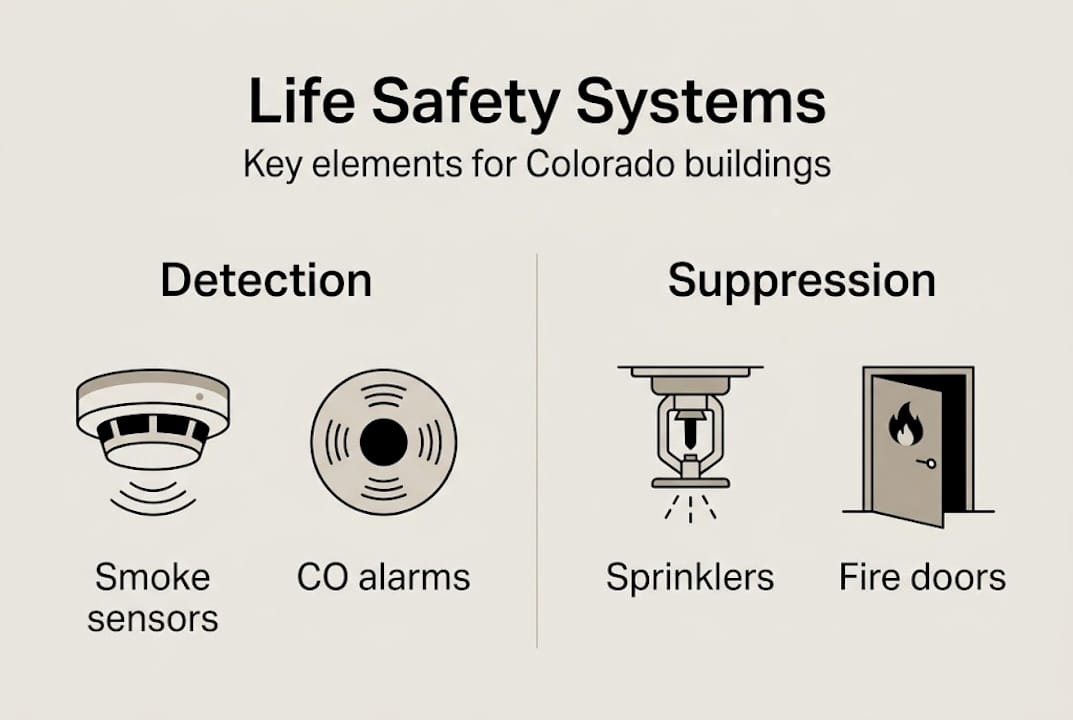
Most people hear “life safety” and picture a smoke detector on the ceiling. In reality, a life safety system is an integrated network of physical and operational components built to do four things: detect hazards, notify occupants, slow or stop fire spread, and get everyone out safely. When one component is missing or underpowered, the whole system suffers.
Think of it like a relay race. Detection is the first runner. Notification is the handoff. Suppression and smoke management are the middle legs. Egress is the finish line. A sprinkler system alone, without functional exit lighting or a working alarm panel, is a team missing half its runners.
Here’s a quick comparison to illustrate the difference:
| Feature | Basic fire alarm | Full life safety system |
|---|---|---|
| Smoke/heat detection | Yes | Yes |
| CO monitoring | Rarely | Yes |
| Audible/visual alerts | Yes | Yes |
| Suppression (sprinklers) | No | Yes |
| Smoke management/dampers | No | Yes |
| Emergency egress lighting | No | Yes |
| Exit signage | No | Yes |
| AHJ inspection records | Sometimes | Required |
A building fire safety in Colorado plan must account for all of these components working together, not just the ones that are easiest to install.
Key components every facility manager should know:
- Detection systems: Smoke, heat, flame, and carbon monoxide (CO) sensors
- Notification systems: Audible alarms, strobe lights, voice evacuation, annunciator panels
- Suppression systems: Wet pipe sprinklers, dry pipe systems, standpipes, portable extinguishers
- Smoke management: Pressurization fans, exhaust systems, damper controls in HVAC
- Egress systems: Illuminated exit signs, battery-backed emergency lighting, clearly marked evacuation routes
Integration is the key word. Modern systems use central control panels that link detection to suppression and notification automatically. When a sensor trips, the panel activates alarms, closes smoke dampers, and signals the fire department, all within seconds. That kind of fire protection planning saves lives in ways that a standalone alarm simply cannot.
Buildings with integrated life safety systems experience significantly fewer fire-related fatalities compared to those relying on partial systems. That statistic alone should reframe how you budget for safety upgrades.
Core elements of life safety systems for Colorado properties
Colorado’s geography introduces variables that most national fire codes don’t fully address. Denver sits at 5,280 feet above sea level. Sprinkler system hydraulics behave differently at altitude. Air pressure affects smoke movement. And if your property sits in or near a wildland-urban interface (WUI) zone, the threat profile is completely different from a downtown high-rise.
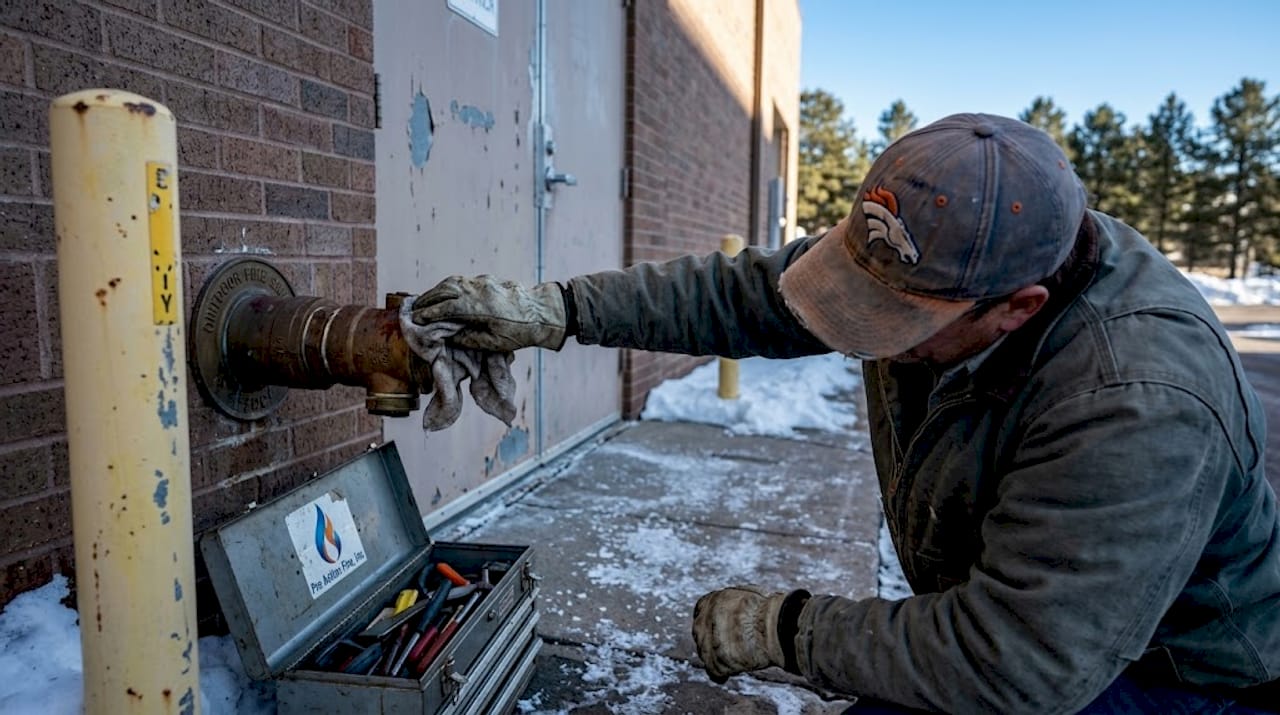
Colorado commercial properties follow IBC and IFC codes with local amendments, including Denver’s updated fire code and the Wildfire Resiliency Code for applicable zones.
Here’s a breakdown of life safety elements and the local code triggers that often catch managers off guard:
| System element | Colorado/Denver code trigger |
|---|---|
| Sprinkler systems | Required in most new commercial builds per IFC |
| CO detection | Mandated in buildings with fuel-burning equipment |
| Fire alarm panel | Required where occupancy exceeds local thresholds |
| Smoke dampers | Triggered by HVAC integration requirements |
| Emergency lighting | Required in all occupancy types per IBC 1008 |
| WUI-rated materials | Required in designated wildfire zones |
A compliant system for a Denver office park looks quite different from one for a mountain resort. Altitude affects detector sensitivity, sprinkler discharge patterns, and even battery backup performance. The fire protection guide for Denver buildings reflects these unique conditions.
Here are the five core elements every Colorado system should address:
- Detection technology matched to occupancy – Warehouses need heat detectors; offices need photoelectric smoke detectors; kitchens need combination units.
- Notification devices rated for your space – A loud warehouse needs higher-decibel horns; a healthcare facility may need low-frequency alert tones for sleeping occupants.
- Suppression selected for your hazard class – Ordinary combustibles get wet pipe systems; data centers or server rooms may need clean-agent suppression.
- Smoke management tied into HVAC – Failing to integrate dampers with your HVAC system is one of the most common fire hazards in Denver properties.
- Egress paths verified and maintained – Exit hardware, signage brightness, and battery backup lighting all require regular verification.
Pro Tip: If your property is near a WUI zone or sits above 6,000 feet, bring your system designer into a pre-application meeting with your local fire marshal before you finalize equipment specs. Altitude adjustments to sprinkler hydraulic calculations and detector spacing can meaningfully change your equipment list and project cost.
Colorado fire and life safety codes: What you need to know
Compliance isn’t just about having the right equipment. It’s about satisfying the Authority Having Jurisdiction, or AHJ. In Colorado, that’s typically your local fire marshal or building department official. They interpret code, issue permits, conduct inspections, and have final say on what passes.
Colorado adopts the International Building Code (IBC) and International Fire Code (IFC) as base standards, but local jurisdictions amend them. Denver’s fire code includes altitude-specific adjustments, and properties in WUI areas must comply with the Colorado Wildfire Resiliency Code, which covers ember-resistant construction, defensible space, and material specifications.
Key insight: In Colorado, the AHJ has significant discretionary authority. Two identical buildings in different jurisdictions can have very different compliance requirements. Knowing your local amendments, not just the base IBC or IFC, is where compliance actually lives.
For Colorado fire code compliance, you’ll need to navigate:
- Permits required before installation or modification of any life safety system
- Plan review by the local fire department or third-party reviewer
- Inspections at rough-in and final stages
- Certificate of occupancy sign-off that includes life safety systems
- Annual inspection reports filed with the AHJ in many jurisdictions
Common missteps that Colorado property managers make:
- Assuming a national NFPA standard alone satisfies local code without checking amendments
- Missing permits for system modifications, especially after tenant improvements
- Failing to update systems after a change in occupancy type or building use
- Overlooking the NFPA standards for Colorado fire safety that may apply beyond base IFC requirements
- Skipping documentation updates after any system change or repair
- Not accounting for WUI zone reclassifications as wildfire maps are updated
The AHJ will not give you credit for good intentions. Permits, plans, inspections, and records are the currency of compliance.
Maintenance, inspection, and compliance: Your ongoing responsibilities
Installing a life safety system is a milestone. Keeping it compliant is a permanent job. NFPA 25 governs sprinkler and standpipe maintenance, while NFPA 72 covers fire alarm systems. Both standards require documented testing on a strict schedule, and maintenance per NFPA 25 means property owners are directly responsible for tracking every task.
Here is the inspection and testing schedule that Colorado property managers must plan around:
- Weekly: Inspect all control valves to confirm they’re in the open position and not tampered with.
- Monthly: Check all pressure gauges on sprinkler systems; verify fire alarm panel shows no trouble signals.
- Quarterly: Test waterflow alarms and supervisory signals; inspect portable fire extinguishers.
- Annually: Full sprinkler system test including main drain; fire alarm sensitivity and audibility testing per NFPA 72; emergency lighting discharge test.
- Every five years: Internal inspection of sprinkler piping for corrosion, obstruction, or microbiologically influenced corrosion (MIC).
Owner responsibilities versus vendor responsibilities can trip people up. The vendor performs the physical tests, but you are legally responsible for ensuring those tests happen on time and that records are kept. The AHJ doesn’t care if your vendor forgot to schedule the annual test. That’s on you.
Pro Tip: Build a simple compliance binder, either physical or digital, with separate tabs for each system type. Include the last three years of inspection reports, equipment serial numbers, permit histories, and your vendor’s license and insurance. When the fire marshal walks in for a spot check, having this ready turns a stressful visit into a five-minute conversation.
For clarity on importance of fire code compliance, consider this: a failed inspection can trigger a stop-work order, occupancy suspension, or fines that far exceed the cost of routine maintenance. The math always favors staying ahead of the schedule.
Expert perspective: What most Colorado building managers miss about life safety
After years of working with Colorado commercial properties, one pattern shows up repeatedly: managers who pass their annual inspection and then completely disengage until the next one. Passing inspection is the floor, not the ceiling.
The AHJ relationship is chronically undervalued. Most property managers treat the fire marshal like an auditor to avoid. The smarter approach is treating them like a consultant. A quick conversation before a tenant buildout, a renovation, or a change in building use can prevent a costly redesign months later. Fire marshals generally appreciate proactive engagement, and it builds goodwill that matters when you face an ambiguous code situation.
Colorado also has exterior risks that standard training rarely addresses. Wildfire smoke can saturate detectors and cause false alarms. Altitude affects both equipment calibration and evacuation protocols. Fire protection investment in Colorado needs to account for what’s outside the building, not just inside it.
Review code updates at least annually. Colorado’s wildfire map reclassifications and local code adoption cycles mean your compliance status can change even when your building hasn’t.
How Pre Action Fire, Inc. can support your life safety system compliance
Navigating the layers of NFPA standards, local Denver code amendments, WUI requirements, and AHJ expectations is genuinely complex work. Knowing what you need is one thing. Getting it installed, inspected, and documented correctly is another.
Pre Action Fire, Inc. has been serving the Denver Metro Area since 2009, with NICET-certified technicians who specialize in designing, installing, and maintaining life safety systems for commercial properties across Colorado. From fire alarm systems in Denver to full-system inspections and compliance recordkeeping, we bring local code knowledge and field experience to every project. Explore our full range of building fire safety services and contact us today to schedule a consultation that starts with your specific building, occupancy type, and compliance timeline.
Frequently asked questions
What is a life safety system in a commercial building?
A life safety system is an integrated network of devices and protocols that detect hazards, alert occupants, control fire and smoke, and ensure safe evacuation in emergencies. It goes well beyond a single alarm panel or sprinkler system.
What codes regulate life safety systems in Colorado?
Colorado uses IBC and IFC codes with local amendments; Denver’s 2025 Fire Code and the Wildfire Resiliency Code are enforced by the local AHJ, who has authority to interpret and add requirements beyond the base standards.
How often do life safety systems need inspection?
Valves are checked weekly, gauges monthly, alarms quarterly, full tests annually, and internal pipe exams every five years, with all records kept and available for code officials on request.
Who is responsible for life safety system maintenance in Colorado commercial properties?
Property owners are fully responsible for ensuring all testing, maintenance, and NFPA 25 recordkeeping requirements are met, even when a third-party vendor performs the actual inspections and tests.