
TL;DR:
- Fire alarm notification devices must meet strict placement, wiring, and performance standards per NFPA 72 and Denver code.
- 2025 updates require voltage drop calculations, synchronized strobes, and consideration of physical obstructions for visual coverage.
- Regular testing, empirical site assessments, and proper documentation are critical for ensuring life safety and compliance.
Most property managers assume that as long as a building has a fire alarm, they’re covered. That assumption is wrong, and it’s one of the most common reasons Denver commercial properties fail inspection. Fire alarm notification devices are a distinct, regulated category of equipment governed by both NFPA 72 and Denver’s adopted fire code. Getting them right means understanding device types, placement requirements, wiring standards, and 2025 code updates that changed how audible and visual coverage must be calculated. This guide breaks all of that down so you can make informed decisions for your building.
Table of Contents
- Understanding fire alarm notification devices
- Key code requirements and 2025 NFPA 72 updates
- Selecting devices: Coverage, placement, and special populations
- Testing, maintenance, and integrating modern technologies
- Our take: What most compliance guides forget about fire alarm notification
- Denver fire alarm compliance made easy with Pre Action Fire
- Frequently asked questions
Key Takeaways
| Point | Details |
|---|---|
| Device variety matters | Audible, visual, and special notification devices fulfill different safety needs. |
| 2025 code tightens rules | Denver’s updated fire code introduces new coverage, calculation, and monitoring mandates. |
| Special populations need attention | Low-frequency alarms are required in sleeping and sensitive areas for effective wake-up. |
| Testing ensures reliability | Annual testing and documentation are key for compliance and true emergency readiness. |
| Expert guidance helps | Professional support simplifies compliance and ensures no critical detail is missed. |
Understanding fire alarm notification devices
A fire alarm system is only as effective as its ability to alert occupants. That is the job of notification appliances, commonly called fire alarm notification devices or NADs. These are the physical devices that produce the signal that people actually respond to during an emergency. According to UFGS 28 31 66, fire alarm notification devices include audible, visual, and textual types operating via Notification Appliance Circuits (NACs).
NACs are the wiring loops that connect individual devices back to the fire alarm control panel. Most commercial buildings use Class B (Style Y) wiring, which is the standard open-circuit configuration. This wiring carries both the signal and the power that activates each device. Understanding control panel connections is key to understanding why device placement decisions made at the panel level directly affect performance at the room level.
The three main device categories are:
- Audible devices: Horns, bells, and speakers. Horns are common in open commercial spaces. Speakers support voice evacuation messaging and are increasingly required in larger occupancies.
- Visual devices: Strobes, which produce a synchronized flash pattern to alert occupants who cannot hear the audible signal or who are in high-noise environments.
- Textual devices: Digital displays or message boards that deliver specific evacuation instructions, most commonly in high-rise or complex occupancy buildings.
Here is a quick comparison to help clarify when each type applies:
| Device type | Signal method | Best environment | Code trigger |
|---|---|---|---|
| Audible (horn/bell) | Sound output (dB) | Offices, warehouses | Required in nearly all occupancies |
| Visual (strobe) | Candela flash rate | Noisy areas, ADA spaces | Required in public and common areas |
| Textual (display) | Written message | High-rise, mixed use | Required where voice alone is insufficient |
The reason layered solutions matter is that no single device type covers every scenario. A warehouse floor with heavy equipment running may render a horn useless. An office with glass partitions may scatter strobe coverage unpredictably. Alarm annunciation basics explain why the control panel must be configured to match the actual device layout, not just the blueprint.
“A compliant fire alarm notification device system is not one that makes noise. It is one that is heard, seen, and understood by every occupant in every condition.”
Key code requirements and 2025 NFPA 72 updates
Denver’s fire alarm regulations align with the 2025 Denver Fire Code, which integrates updated NFPA 72 provisions covering NAC calculations, visual coverage, and monitoring requirements. If you are managing a commercial property in the Denver Metro Area and your system was last updated before 2024, it is worth reviewing whether your notification devices still meet current standards.
On the visual side, strobe devices must meet minimum candela ratings based on room size. Larger rooms require higher output or more devices. Strobes must be synchronized to prevent seizure risk from competing flash rates, and they must fall within occupants’ field of view at mounting heights specified by code. Spacing maximums depend on the room’s square footage and ceiling height.
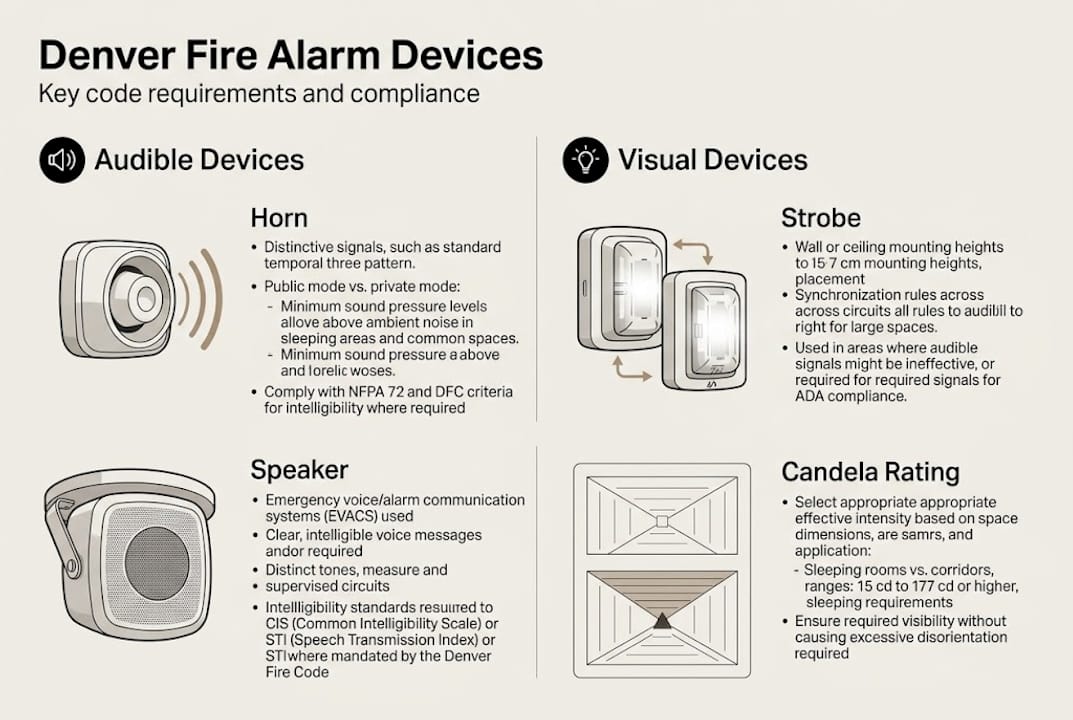
The 2025 NFPA 72 code added a voltage drop calculation requirement and a new obstruction annex for visual coverage. This means designers can no longer assume a device covers a room just because it is mounted on the wall. They must now calculate whether voltage loss across the NAC degrades device performance, and they must document how physical obstructions affect strobe visibility.
Here is a summary of notable code changes:
| Code area | Prior standard | 2025 update |
|---|---|---|
| Voltage drop | Often estimated | Now formally calculated |
| Visual obstruction | General guidance | Dedicated annex with documentation |
| NAC power | AC-focused | AC/DC nuances clarified |
| Monitoring | Required in most cases | Expanded scope, stricter verification |
Steps for site code compliance in Denver:
- Obtain a copy of your current system drawings and compare device placement to 2025 requirements.
- Identify any rooms where strobes are missing or where candela ratings may be too low.
- Have a qualified technician perform voltage drop calculations on all NACs.
- Confirm central station monitoring is active and properly permitted with Denver Fire.
- Pull updated permits if any device changes are made, as Denver requires permit documentation for modifications.
For a full breakdown, the Denver fire alarm systems resource covers permitting expectations in detail. Non-compliance is not just a code issue. It is a liability issue. Failing an inspection after an incident dramatically increases legal exposure for property managers.
Selecting devices: Coverage, placement, and special populations
Code sets the floor, not the ceiling. The best notification device layouts go beyond minimum compliance and account for your specific occupant population and building configuration. That distinction matters enormously in practice.
For standard office environments, wall-mounted horn strobes at 80 to 110 inches above finished floor typically provide adequate coverage. Warehouses with high ceilings and ambient noise require higher-decibel horns and may benefit from pendant-mounted strobes aimed at floor level work zones. Multifamily and hospitality properties involve sleeping areas, which triggers a separate and stricter set of requirements.
Low-frequency devices operating at 520 Hz are required in sleeping areas and are up to 6 times more effective at waking people who are hard of hearing, children, elderly individuals, and those who use sleep aids. Denver requires central station monitoring for commercial properties with sleeping occupancies, adding another layer of accountability.
Building populations that require special device consideration:
- Guests or residents with hearing impairments (ADA-covered spaces)
- Elderly residents in assisted living or senior housing
- Children in schools, daycares, or residential facilities
- Workers in high-noise industrial environments
- Mixed-use buildings with both office and residential occupancies
For sensitive environments, RAMO (Residential Audible and Messaging Output) devices can be configured to reduce sound output during non-emergency hours while maintaining alert capability. This is worth considering for hotels or assisted living facilities where alarm fatigue is a real concern.
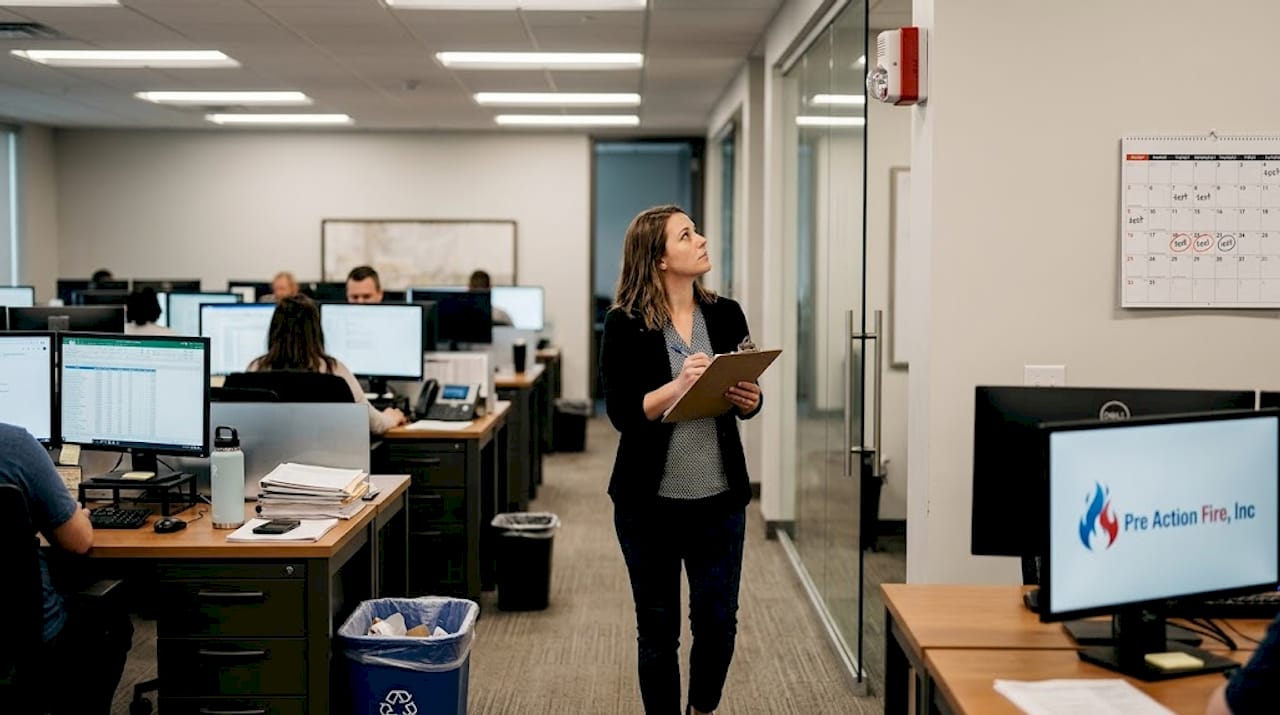
Pro Tip: Before finalizing your device layout, physically walk the space with a sound level meter during peak occupancy. Ambient noise levels shift significantly between an empty building and a full one, and code-minimum dB ratings may fall short in practice. The same applies to strobe visibility, especially in open-plan offices with movable partitions.
Building strategies for safe Denver buildings consistently show that empirical testing during commissioning catches placement errors that desk-based calculations miss.
Testing, maintenance, and integrating modern technologies
Installing compliant devices is step one. Keeping them compliant over time is where many properties fall short. NFPA 72 requires annual testing of notification appliances, and Denver’s local amendments may specify additional inspection intervals depending on occupancy type.
Testing is not just about confirming devices activate. It includes measuring sound output at listening height, verifying visual coverage reaches required candela levels, and recalculating voltage drop if any wiring changes have occurred. Devices degrade. Lenses fog. Horn diaphragms weaken. What passed inspection five years ago may not pass today.
Notification device maintenance best practices:
- Test all audible and visual devices annually at minimum, documenting output levels.
- Inspect NAC wiring for corrosion, damage, or unauthorized splices.
- Verify strobe synchronization across all devices on a shared NAC.
- Check panel event logs for any fault or trouble conditions tied to notification circuits.
- Update test records immediately and retain them on-site for inspector review.
Modern systems also introduce integration demands. The 2025 NFPA 72 code updates require Mass Notification Systems (MNS) to be integrated with fire alarm systems, though MNS does not replace traditional notification appliances. It supplements them with voice messaging capability. The same update introduced new cybersecurity standards, requiring that networked fire alarm components be protected against unauthorized access.
“Regular testing is not an administrative formality. It is the only way to confirm that your notification system will perform when lives depend on it. Gaps in documentation are gaps in your legal defense.”
Pro Tip: Create a single binder or digital folder for each building that includes device test records, voltage drop worksheets, strobe synchronization logs, and permit copies. Denver Fire inspectors appreciate organized documentation, and it speeds up inspections significantly.
For step-by-step guidance, alarm troubleshooting steps and NFPA inspection tips are practical resources to keep your system inspection-ready year-round.
Our take: What most compliance guides forget about fire alarm notification
Most compliance guides treat fire alarm notification as a checklist exercise. Verify device count. Confirm candela rating. Sign off. What that approach misses is the gap between code compliance and actual life safety performance.
In our experience visiting Denver Metro commercial properties since 2009, the most common failure is not missing devices. It is devices that exist but do not perform. A strobe mounted in the wrong corner of a large open office. A horn placed where an HVAC unit drowns it out at 75 dB. A low-frequency device specified for a hotel but never actually tested in a furnished room with doors closed.
Code tells you the minimum. It does not tell you whether your specific building, with its specific occupant mix and acoustic profile, is actually protected. That requires empirical testing, site-specific design judgment, and experience with how real buildings behave versus how they look on paper.
The fire alarm system insights we have gathered from years of Denver site work consistently point to one conclusion: the properties with the best safety outcomes are the ones where the notification device design was treated as a performance goal, not a paperwork goal.
Denver fire alarm compliance made easy with Pre Action Fire
Navigating the 2025 Denver Fire Code, NFPA 72 updates, and the practical realities of device placement is a lot to manage on your own. Pre Action Fire has been helping Denver Metro commercial property managers do exactly that since 2009, with NICET-certified technicians who understand both the code and the buildings.
From initial system design and device selection to installation, annual testing, and documentation support, we handle every stage of fire alarm systems for Denver businesses. Our team can conduct an on-site compliance assessment to identify gaps before your next inspection. Reach out today to schedule a review and get your notification devices performing at the level your occupants deserve. Full details on Denver alarm regulations are also available on our site.
Frequently asked questions
What is a fire alarm notification device?
These are appliances like horns, strobes, and speakers that alert building occupants to fire emergencies using audible, visual, or textual signals, as defined in UFGS 28 31 66. Each type serves a distinct function depending on occupancy and occupant need.
How often should fire alarm notification devices be tested?
Annual testing is required by NFPA 72 for notification appliances, but Denver’s local amendments may call for additional intervals based on your building’s occupancy classification.
What are the 2025 Denver Fire Code changes for notification devices?
The 2025 code tightens rules for visual coverage, introduces formal voltage drop calculations, and requires central monitoring with low-frequency alerts in sleeping occupancies.
Are special devices required for sleeping areas?
Yes, low-frequency 520 Hz devices are mandated in sleeping spaces and are significantly more effective for people who are hard of hearing, elderly, or otherwise at elevated risk during nighttime emergencies.