
TL;DR:
- Fire code compliance in Denver involves regular inspections, permits, and adherence to updated standards.
- Common hazards include overloaded outlets, improper storage, outdated wiring, and blocked exits.
- Proactive risk assessment and professional support are essential for ongoing fire safety management.
Fire code compliance in Denver is not just paperwork. Between aging infrastructure, evolving International Fire Code (IFC) amendments, and the Authority Having Jurisdiction (AHJ) conducting surprise inspections, commercial property owners face real consequences for gaps in safety. The 2025 Denver Fire Code mandates permits for hazardous materials, routine inspections, and strict adherence to updated IFC standards. Noncompliance can mean fines, forced closures, and worst of all, preventable fires. This guide walks you through the most common fire hazards in Denver commercial buildings and gives you concrete, actionable solutions for each one.
Table of Contents
- Criteria for identifying fire hazards in Denver properties
- Top fire hazards in Denver commercial buildings
- Fire hazard comparison: Risk, cost, and compliance impact
- Practical solutions to common fire hazards
- Why true fire safety means going beyond code compliance
- Get expert support for fire hazard mitigation in Denver
- Frequently asked questions
Key Takeaways
| Point | Details |
|---|---|
| Common hazards | Electrical issues, storage practices, and neglected exits are leading fire risks in Denver commercial properties. |
| Denver regulations | 2025 Denver Fire Code sets specific requirements for hazardous materials, inspections, and warehouse storage. |
| Actionable solutions | Routine inspections, upgrading old systems, and staff training drastically decrease fire risk. |
| Beyond compliance | Proactive, ongoing risk assessment is essential for resilient, safe properties. |
Criteria for identifying fire hazards in Denver properties
Before you can fix a hazard, you need to know what to look for. Denver’s fire code shapes hazard identification in specific ways, placing emphasis on high-risk materials, building configurations, and aging infrastructure. The AHJ does not just glance at your sprinkler heads during an inspection. They evaluate the full picture, from how combustibles are stored to whether your electrical panel is overloaded.
Using a solid compliance framework helps you stay ahead of what inspectors prioritize. Here is a quick checklist of the most common hazard criteria they examine:
- Storage practices: Are flammable or combustible materials stored safely and within permitted quantities?
- Exit accessibility: Are all emergency exits clearly marked, unobstructed, and functional?
- Electrical load management: Are circuits overloaded, or are extension cords used as permanent wiring?
- Fire suppression systems: Are sprinklers, alarms, and extinguishers current on inspections and in working order?
- Housekeeping: Is trash, debris, or clutter accumulating near heat sources or in mechanical rooms?
- Permit compliance: Do you have current operational permits for any hazardous materials on-site?
Key code reminder: The 2025 Denver Fire Code requires operational permits for hazardous materials and mandates regular inspections for commercial properties. Failing to secure these permits is one of the most cited violations in Denver.
Think of this checklist as your baseline. If any item raises a red flag during your own walkthrough, it will almost certainly raise one during an official inspection too.
Top fire hazards in Denver commercial buildings
With criteria in mind, here is what the most common and costly fire hazards look like in Denver commercial settings.
- Overloaded electrical outlets — Power strips daisy-chained together in open-plan offices are a leading ignition source.
- Poor housekeeping — Accumulated cardboard, paper waste, and debris near heat sources create easy fuel.
- Improper storage of flammables — Solvents, cleaning agents, and fuels stored without permits or proper containment.
- Neglected alarms and extinguishers — Devices that have not been inspected or tested per NFPA standards.
- Blocked exits — Pallets, furniture, or equipment pushed against emergency doors, especially in back-of-house areas.
- Outdated wiring — Knob-and-tube or aluminum wiring in older Denver buildings cannot handle modern electrical loads.
- High-piled storage — Stacking inventory above 12 feet in warehouses without the correct rack configuration or sprinkler coverage. High-piled storage in Denver warehouses requires specific racking and ESFR (Early Suppression Fast Response) sprinklers.
- Non-compliant construction materials — Temporary partitions or tenant improvements using materials that do not meet fire-resistance ratings.
- Heating equipment — Portable space heaters placed near combustibles or permanently installed units lacking proper clearance.
- Unsupervised smoking areas — Improperly designated zones where cigarette materials contact combustible waste.
Consider a Denver warehouse scenario: a distribution company stacks product 15 feet high without notifying the AHJ or upgrading their sprinkler system. One fast-moving fire can outpace a standard sprinkler before suppression even begins. Review warehouse fire safety tips to understand what upgrades are required.
In an office context, a historic LoDo building with original wiring running modern workstation loads is a ticking problem. Electrical faults account for a significant share of commercial building fires nationally.
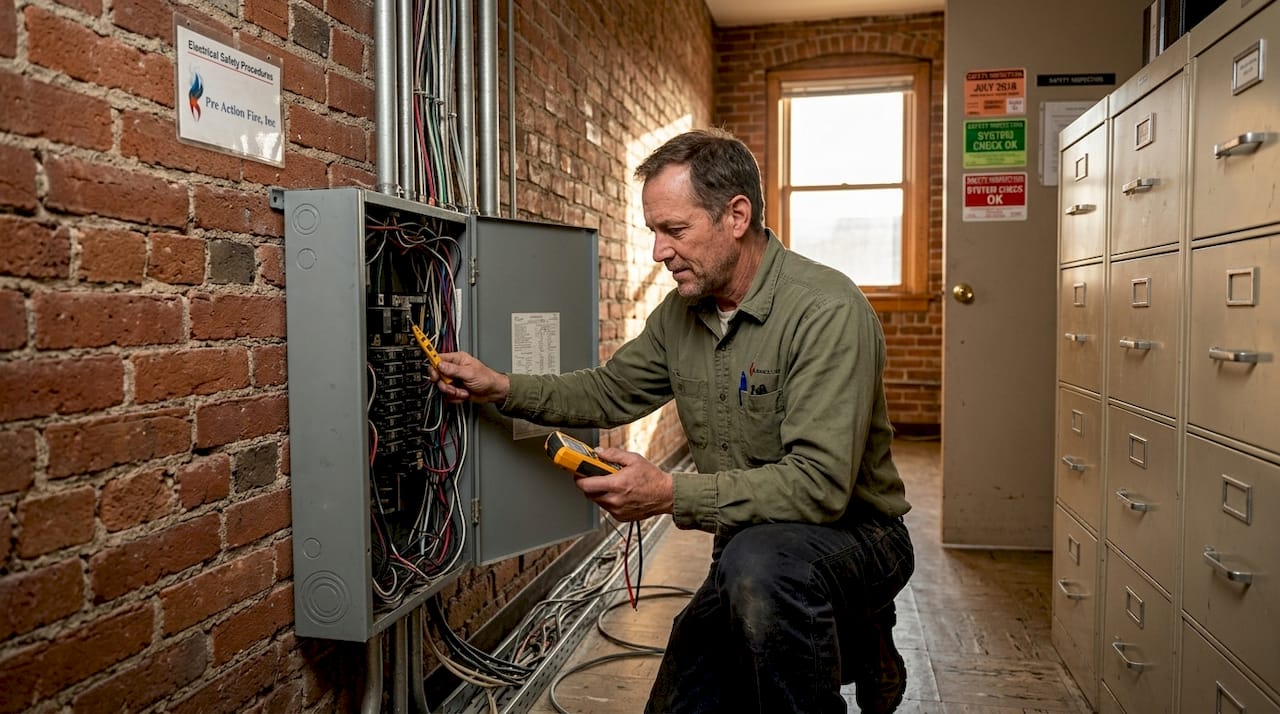
Pro Tip: Seasonal decorations and temporary partitions installed for events or tenant buildouts are frequently overlooked. Both can block exits and introduce non-rated materials. Walk your property before every major event or construction phase.
Fire hazard comparison: Risk, cost, and compliance impact
Now, let us compare these hazards to see which should rise to the top of your safety priority list.
| Hazard | Likelihood | Damage potential | Compliance difficulty | Example mitigation |
|---|---|---|---|---|
| Overloaded outlets | High | Moderate | Low | Rewire circuits, ban daisy-chaining |
| Poor housekeeping | High | Moderate | Low | Weekly inspections, waste protocols |
| Improper flammable storage | Moderate | High | Moderate | Permits, approved containers |
| Neglected alarms/extinguishers | Moderate | High | Low | Scheduled NFPA inspections |
| Blocked exits | High | High | Low | Daily walkthrough checklist |
| Outdated wiring | Moderate | Very high | High | Licensed electrical upgrade |
| High-piled storage | Moderate | Very high | High | Racking plan, ESFR sprinklers |
| Non-compliant materials | Low | Moderate | Moderate | Pre-approval for tenant work |
| Heating equipment | Moderate | Moderate | Low | Clearance rules, ban portables |
| Smoking areas | Low | Low | Low | Designated zones, receptacles |
Some hazards are cheap and fast to fix. Clearing a blocked exit costs nothing. Others, like rewiring an older building or installing ESFR sprinklers, require significant capital investment and contractor coordination. Operational permits for flammable materials and storage limits are strictly enforced in Denver, making improper storage one of the fastest routes to a citation.
Here is what most commonly triggers fines or business interruption in Denver:
- Expired or missing operational permits for hazardous materials
- High-piled storage without AHJ notification or sprinkler upgrades
- Fire alarm systems with overdue inspections
- Exits that fail during an unannounced inspection
Explore the full range of Denver fire protection services to understand what remediation looks like at each level of complexity.
Practical solutions to common fire hazards
Understanding the problems is only half the battle. Here is how you can resolve them and boost compliance cost-effectively.
Best practices for routine fire safety:
- Schedule quarterly fire safety walkthroughs with a designated staff member
- Train all employees on exit routes, extinguisher use, and reporting procedures
- Maintain a log of all fire protection equipment inspections
- Coordinate with contractors to ensure all tenant improvement materials are pre-approved
- Post clear signage at exits, extinguisher locations, and hazardous material storage areas
| Action | Responsible party | Recommended frequency | Cost class |
|---|---|---|---|
| Fire alarm inspection | Licensed contractor | Annually (NFPA 72) | Low |
| Sprinkler system test | Licensed contractor | Annually (NFPA 25) | Low |
| Electrical panel review | Licensed electrician | Every 3 to 5 years | Moderate |
| Exit hardware check | Facility manager | Monthly | None |
| Housekeeping audit | Facility manager | Weekly | None |
| Hazardous material permit renewal | Property owner | Per permit schedule | Low |
Older buildings need electrical upgrades to handle modern loads safely. If your building predates 1980, a licensed electrician should assess your panel capacity before you add new tenant loads or HVAC equipment. Working with local fire officials early, before a violation notice arrives, saves time and money. Inspectors in Denver are generally willing to discuss compliance timelines when property owners show good faith effort.
Schedule Denver fire safety inspections proactively rather than waiting for a mandatory visit. Pairing that with a relationship with a trusted fire protection company in Denver means you have expert backup when code questions arise.
Pro Tip: Building a direct line of communication with your local fire district inspector is one of the most underused tools in compliance management. A quick phone call before a renovation can prevent a costly stop-work order.
Why true fire safety means going beyond code compliance
Here is the uncomfortable truth most fire safety articles skip: passing an inspection is not the same as being safe. Inspections are snapshots. They capture what is visible and measurable on a single day. They do not capture the slow drift of operational habits, the storage that creeps up over months, or the wiring that is technically within code but running at 95% capacity.
We have seen Denver properties that passed their last inspection and still experienced close calls because nobody was tracking the cumulative risk. High-piled storage and older buildings pose risks that routine code checks may miss entirely.
“Code compliance is the floor, not the ceiling. The properties that avoid serious incidents are the ones treating fire safety as an ongoing operational discipline, not an annual checkbox.”
The shift we encourage is moving from reactive compliance to proactive fire risk assessment. That means regular internal audits between inspections, tracking near-misses, and updating your safety plan when operations change. It is a mindset change, and it is the single biggest factor separating properties that stay safe from those that do not.
Get expert support for fire hazard mitigation in Denver
If any of the hazards in this guide sound familiar, you do not have to figure out the fixes alone. Getting a professional assessment is the fastest way to know exactly where your property stands and what needs attention first.
Pre Action Fire has served Denver Metro commercial properties since 2009, with NICET-certified technicians who understand local code requirements inside and out. Whether you need a full fire safety audit, help with fire alarm control panels compliance, or a scheduled program of fire safety inspections, the team is equipped to support properties of every size and type. Reach out today to schedule a site assessment and get a clear, prioritized action plan tailored to your building.
Frequently asked questions
What are examples of the most common fire hazards in Denver commercial properties?
Frequent fire hazards include overloaded outlets, improper storage of combustibles, poorly maintained fire alarms, blocked exits, and outdated wiring. The 2025 Denver Fire Code details the most cited violations in commercial environments.
How can I reduce fire risks in an older Denver office building?
Upgrade electrical systems, schedule regular fire safety inspections, and ensure clear exits to reduce fire risks in older structures. Older buildings require upgrades to safely handle modern electrical loads.
Who is responsible for mitigating fire hazards in a leased commercial property?
The property owner and tenants typically share responsibilities for mitigating hazards, as outlined in lease agreements and enforced by local authorities. The AHJ enforces compliance for both owners and tenants.
Why does Denver require specific racking and sprinklers for high-piled storage?
Denver mandates these measures to reduce the risk of rapid fire spread and to comply with updated fire code amendments. High-piled storage in Denver warehouses requires specific racking and ESFR sprinklers to meet current standards.
Recommended
- Fire risk assessment tips for Colorado properties
- Fire protection guide: safe, compliant Denver buildings
- Fire Protection Services Denver Co – Pre Action Fire, Inc
- Fire Protection Company Denver Co – Pre Action Fire, Inc
- 7 Essential Property Damage Prevention Steps for Landlords – Rental Income Insurance
- Denver Commercial Fire Protection