
TL;DR:
- Colorado commercial properties face unique high wildfire and technology-related fire risks.
- Regular maintenance, inspections, and compliance with IFC and NFPA are essential for safety.
- Proactive planning and verification of fire protection systems help prevent costly losses.
Colorado commercial properties face a fire risk profile unlike most other states. Between the wildland-urban interface zones, aging industrial infrastructure, and the rapid adoption of lithium-ion battery storage, property managers here carry a heavier compliance burden than the national average suggests. Structure fires cause 66.7% of deaths and 84.4% of injuries in Colorado structures, which means the stakes are high every time a heating unit malfunctions or an electrical panel is overloaded. Understanding the specific types of fire risks in your building is not just a compliance checkbox. It is the foundation of every smart safety decision you make.
Table of Contents
- Common sources of building fire risks
- Heating, electrical, and machinery risks
- Intentional fires and special risk factors
- Colorado compliance and prevention strategies
- Our take: What most guides miss about Colorado building fire risks
- Take action on fire risk: Smart solutions for Colorado businesses
- Frequently asked questions
Key Takeaways
| Point | Details |
|---|---|
| Major risk sources | Heating, electrical, arson, and wildfires are the main fire risks for Colorado commercial properties. |
| Edge risk factors | Emerging threats include lithium-ion batteries, dust explosions, and wildland-urban interface exposure. |
| Compliance importance | Following IFC/NFPA codes and routine maintenance drives fire risk reduction for commercial sites in Colorado. |
| Prevention strategy | Investing in alarms, sprinklers, professional inspections, and risk assessments is vital for safety and compliance. |
| Local support | Colorado property managers benefit from expert guidance and local fire safety services tailored to unique risks. |
Common sources of building fire risks
Commercial fires do not start randomly. They follow patterns, and those patterns are well-documented enough that property managers can use them to prioritize inspections, upgrades, and training. The major categories of fire risk in commercial buildings include heating equipment, electrical faults, cooking hazards, arson, and a growing list of edge-case risks tied to new technology and Colorado’s geography.
Heating equipment causes 11 to 14% of commercial fires, with higher rates in industrial settings where boilers, furnaces, and process heaters run continuously. Electrical faults are the second major driver, often invisible until a fault becomes a flame. Cooking equipment is a dominant risk in restaurants and mixed-use buildings. And intentional fires account for up to 20% in some property categories, making arson a genuine operational concern rather than a fringe event.
Here is a breakdown of common fire risk sources and their typical commercial impact:
| Risk source | Typical share of commercial fires | Primary building types affected |
|---|---|---|
| Heating equipment | 11 to 14% | Industrial, office, warehouse |
| Electrical faults | 15 to 20% | All types |
| Cooking equipment | 25 to 30% | Restaurants, mixed-use |
| Arson/intentional | Up to 20% | Educational, retail, vacant |
| Machinery and dust | 5 to 10% | Industrial, manufacturing |
| Wildfire embers | Emerging | WUI-adjacent commercial |
Beyond the standard categories, Colorado businesses also need to account for combustible dust in manufacturing environments, friction heat from industrial machinery, and the fire exposure risk from wildfire embers carried by wind into urban commercial zones. These are not theoretical risks. They are documented loss events.
- Combustible dust explosions can ignite in grain, wood, and chemical processing facilities
- Lithium-ion battery fires in storage or fleet charging areas are difficult to suppress with standard extinguishers
- Wildfire embers can travel miles and ignite rooftop HVAC units or open loading docks
Pro Tip: Review the common fire hazards at Denver properties specific to your building type before your next inspection cycle. The hazard profile for a warehouse differs significantly from an office building or a restaurant.
For a broader view of how these risks translate into a protection strategy, the Denver fire protection guide is a solid starting point for managers building or updating their safety plans.
Heating, electrical, and machinery risks
These three categories are responsible for a disproportionate share of commercial fire losses, and they share one common thread: most incidents are preventable with regular maintenance and proper system design.
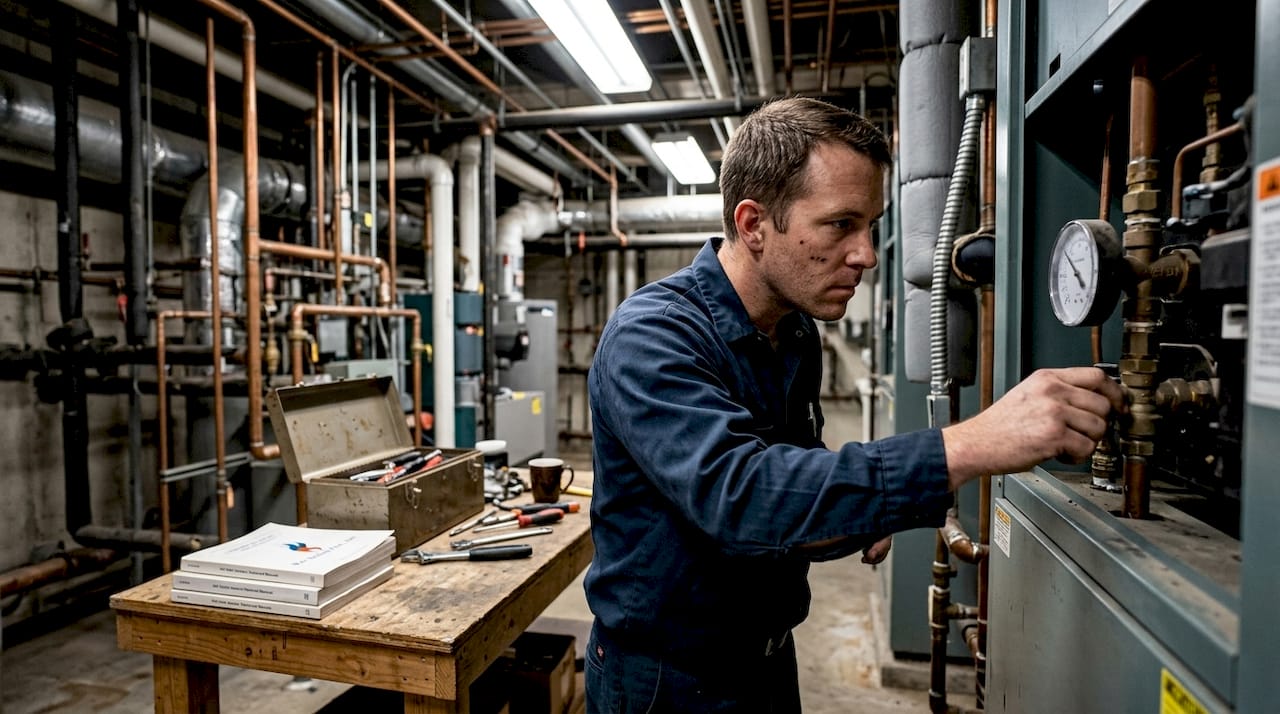
Heating equipment failures often come down to one of three factors. The unit malfunctions due to age or lack of servicing. It is installed too close to flammable materials like stored inventory or insulation. Or the fuel supply, whether gas, oil, or electric, develops a fault that goes undetected. Heating equipment causes up to 14% of industrial fires, and in Colorado’s cold winters, heating systems run hard for months at a time, accelerating wear.
Electrical hazards are more varied and often harder to predict. Overloaded circuits, deteriorating wiring insulation, faulty connections in junction boxes, and hot work like welding or cutting near combustibles are all documented ignition sources. Electrical faults dominate industrial property losses according to FM Global data, which tracks large commercial and industrial claims globally. For Colorado businesses running aging facilities or expanding electrical loads without panel upgrades, this is a serious exposure.
Machinery risks are most relevant to manufacturing, warehousing, and processing facilities. Friction heat from misaligned or poorly lubricated components can ignite nearby combustibles. Overheating motors are a classic ignition source. And combustible dust, which accumulates in grain mills, woodworking shops, and chemical plants, can create explosive atmospheres if not controlled through proper ventilation and housekeeping.
“The most dangerous fire risks in commercial buildings are the ones that build slowly and quietly. A frayed wire or a dusty motor does not announce itself.”
- Schedule heating system inspections before each winter season, not just annually
- Use thermal imaging cameras during electrical inspections to catch hot spots before they ignite
- Establish a combustible dust management program if your facility generates particulate waste
- Ensure hot work permits are issued and enforced for any cutting, grinding, or welding activity
Pro Tip: The Colorado building fire safety framework includes specific guidance on maintenance schedules and inspection intervals that align with both IFC and NFPA requirements.
For facilities where portable suppression is the first line of defense, understanding the role of fire extinguishers in your overall protection plan is essential, especially in areas where sprinklers may not provide adequate coverage.
Intentional fires and special risk factors
Not every fire starts by accident. Arson and intentional fires represent a significant and often underappreciated category of commercial fire risk, particularly in certain building types. And Colorado’s geography introduces additional edge-case risks that most standard fire safety guides do not address.
Arson accounts for 10% of office fires and 36% of educational building fires. Those numbers are not small. For property managers overseeing schools, government facilities, or high-vacancy commercial spaces, intentional fire risk requires a different mitigation strategy than equipment failure. Detection speed, access control, and exterior lighting all become part of the fire safety equation.
“Arson prevention is as much a security issue as a fire issue. The two disciplines need to work together in any serious risk management program.”
Colorado’s wildland-urban interface zones add a layer of risk that is genuinely unique. The 2021 Marshall Fire destroyed over 1,000 structures, many of them commercial, in a matter of hours. Wind-driven embers can travel significant distances and ignite rooftop equipment, open dumpsters, or unprotected loading areas. Wildfire exposure and lithium-ion batteries are now classified as growing fire risk concerns for commercial facilities, and Colorado sits squarely in the path of both trends.
- Conduct a site assessment to identify exterior ignition points, including vegetation, stored materials, and roof features
- Install ember-resistant vents and non-combustible exterior cladding in WUI-adjacent properties
- Develop a lithium-ion battery storage and charging protocol if your facility uses electric vehicles or large battery backup systems
- Coordinate with local fire departments on wildfire evacuation and exposure plans
Pro Tip: Use the fire risk assessment tips for Colorado properties to build a site-specific checklist that covers both conventional and emerging risk factors.
For facilities that need a structured approach from the ground up, fire protection planning for commercial properties provides a practical framework that accounts for Colorado-specific exposures.
Colorado compliance and prevention strategies
Knowing your risks is only useful if you act on them. Colorado commercial properties are required to comply with the International Fire Code (IFC) and NFPA standards, enforced by local Authorities Having Jurisdiction (AHJ), such as the Denver Fire Department. These are not optional guidelines. They are enforceable legal requirements with real penalties for non-compliance.
Colorado commercial fire compliance requires IFC and NFPA standards with active AHJ oversight, meaning your local fire marshal has the authority to inspect, cite, and require corrections on your property. Annual inspections, permit requirements for system modifications, and documentation of maintenance records are all part of the compliance picture.
“Compliance is not the ceiling. It is the floor. The best-protected buildings in Colorado go beyond code minimums.”
Here is a comparison of key protection systems and their compliance requirements:
| System | NFPA standard | Inspection frequency | Key failure mode |
|---|---|---|---|
| Fire sprinklers | NFPA 13/25 | Annual (quarterly for wet systems) | Closed valves, corrosion |
| Fire alarms | NFPA 72 | Annual | Dead batteries, sensor failure |
| Fire extinguishers | NFPA 10 | Annual (monthly visual) | Discharged, obstructed access |
| Emergency lighting | NFPA 101 | Annual (monthly test) | Dead batteries |
Sprinklers activate effectively in 95% of cases, but when they fail, 67% of failures are due to closed valves or poor maintenance. That statistic should be alarming to any property manager who assumes their sprinkler system is ready just because it was installed.
- Verify sprinkler control valves are open and tagged after every inspection
- Test fire alarm systems annually and document all results for AHJ review
- Maintain a fire extinguisher log with monthly visual checks and annual service records
- Review your fire safety plan with your AHJ at least every three years or after any major renovation
For facilities near Denver, the Colorado fire protection compliance resources outline specific local requirements that go beyond the baseline IFC. And for warehousing operations, the Denver warehouse fire safety guide addresses storage height, sprinkler density, and aisle clearance requirements that catch many managers off guard.
Our take: What most guides miss about Colorado building fire risks
Most fire safety content is written with residential audiences in mind, or it treats commercial fire risk as a scaled-up version of home fire risk. That is a mistake. Commercial fires are rarer but significantly costlier per incident than residential fires, which means the loss profile is completely different. A single commercial fire can wipe out a business, trigger regulatory action, and expose a property manager to serious liability.
What we see consistently in Colorado is that managers underestimate two things: the speed of wildfire exposure events and the complexity of newer technology risks like battery storage fires. Both require proactive planning, not reactive response.
The other gap we see is over-reliance on installed systems without verifying they actually work. A sprinkler system with a closed valve is not a sprinkler system. A fire alarm with dead sensors is not a fire alarm. The Colorado fire safety compliance guide reinforces this point clearly. Routine maintenance and honest code review are not optional extras. They are the difference between a contained incident and a total loss.
Take action on fire risk: Smart solutions for Colorado businesses
You now understand the major fire risk categories facing Colorado commercial properties, from heating and electrical faults to arson and wildfire exposure. The next step is making sure your building’s protection systems are actually up to the task.
Pre Action Fire, Inc. has served the Denver Metro Area since 2009, helping property managers and business owners build compliant, reliable fire protection programs. Our NICET-certified technicians can assess your Colorado building fire safety posture, service your fire extinguisher systems, and design or upgrade Denver fire alarm systems that meet current IFC and NFPA requirements. Contact us today to schedule a consultation and close the gap between where your building is and where it needs to be.
Frequently asked questions
What are the most common causes of commercial fires in Colorado?
Heating equipment causes 11 to 14% of commercial fires and arson accounts for up to 20% in certain property categories, alongside electrical faults and wildfire exposure as leading causes for Colorado commercial properties.
How do Colorado fire codes affect commercial property managers?
Colorado requires IFC and NFPA standards for commercial properties, enforced by local AHJs such as the Denver Fire Department, with real inspection authority and penalties for non-compliance.
Are wildfires a significant risk for commercial buildings in Colorado?
Yes, especially in wildland-urban interface zones. The Marshall Fire destroyed over 1,000 structures and demonstrated how quickly wildfire exposure can threaten commercial buildings through wind-driven embers and rapid fire spread.
How effective are fire sprinklers and alarms in preventing losses?
Sprinklers activate effectively in 95% of cases, but failures occur in 67% of non-activation incidents due to closed valves or maintenance lapses, making regular inspection non-negotiable.