
Several indoor zones are recognized as high risk for commercial fire losses, including commercial kitchens, boiler and mechanical rooms, electrical equipment rooms, battery/UPS and server rooms,...
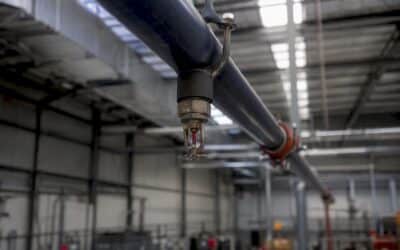
Several indoor zones are recognized as high risk for commercial fire losses, including commercial kitchens, boiler and mechanical rooms, electrical equipment rooms, battery/UPS and server rooms,...
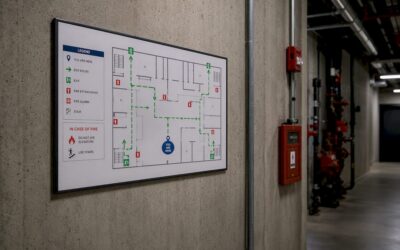
A compliant evacuation route map shows a primary exit path, a secondary route in case the first is blocked, a “You are here” marker oriented to match the viewer’s position, an outdoor assembly...

The fastest way to cut a commercial fire-insurance premium is to install engineered fire protection, keep it documented under NFPA testing schedules, and put that proof in front of your underwriter...

Prioritize life-safety autonomy first, then layer on event-based automation that connects fire alarms to access control, elevators, CCTV, and building management systems through UL-listed gateways...
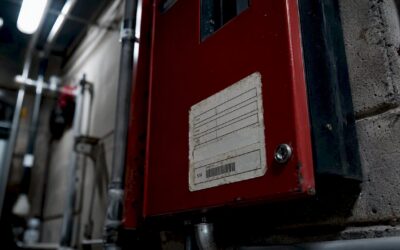
If your control panel is more than 20 years old, your alarms trip for no reason more than once a quarter, or your last inspection turned up “cannot verify” next to more than one device, your fire...
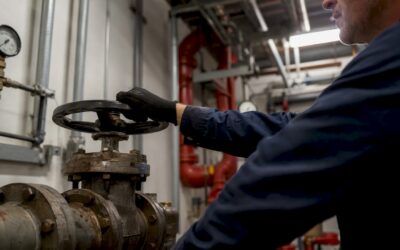
When an emergency forces a facility shutdown, the first move is always the same: get people safe, then kill the energy. Personnel safety comes before equipment protection, every single time, and...
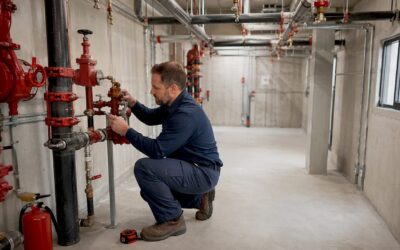
Fire code penalties are civil fines, per-day continuing assessments, and potential orders to suspend operations or close a facility. When you receive a citation, the clock starts immediately. Verify...

A layered, three-tier strategy that meets NFPA 75 and NFPA 76, ties detection directly to HVAC interlocks, and combines pre-action sprinklers with targeted rack-level suppression is the baseline for...
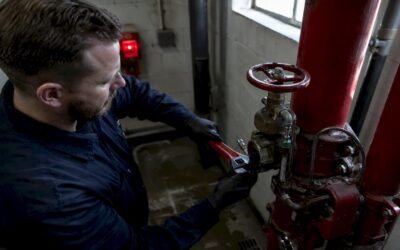
The fire safety equipment lifecycle has seven stages: planning/design, procurement, installation/commissioning, monitoring/operation, inspection/testing/maintenance (ITM), repair/upgrade, and...
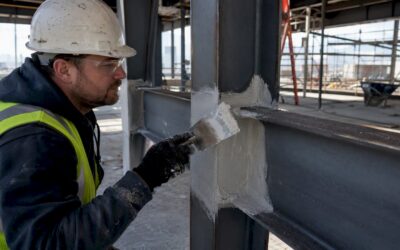
For Denver commercial buildings, “fireproofing techniques for buildings” means designing, installing, and maintaining NFPA-compliant active fire-protection systems — sprinklers, standpipes, fire...
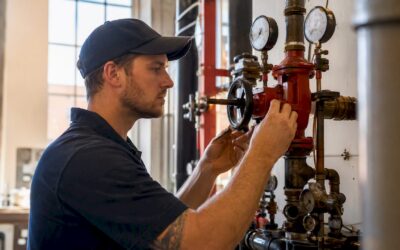
Under Denver’s adopted fire code, the building owner is legally responsible for inspection, testing, and maintenance (ITM) of every fire protection system on the property. Three duties come first:...
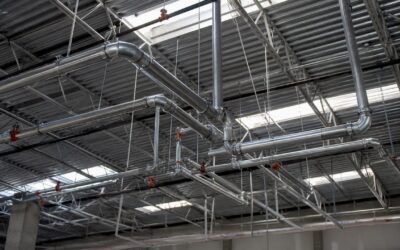
The three standard sprinkler piping layouts defined by NFPA 13 are tree (dead-end), looped, and gridded. Use a tree layout for small, simple systems where pressure is adequate and hand calculations...