
Painted sprinkler heads are not allowed to stay in service once the paint is deemed “detrimental to sprinkler performance,” and in practice, almost every painted head gets replaced rather than cleaned. NFPA 25’s 2023 language gives inspectors a little discretion, but don’t count on it. If you find painted heads, stop, photograph them, tag the area, and call your fire safety inspector or a licensed sprinkler contractor before anyone touches them.
TL;DR:
- Painted sprinkler heads are generally required to be replaced once deemed detrimental, with only limited exception for light, noncritical coats based on inspector judgment.
- NFPA 25’s 2023 language narrows the rules to paint that is “detrimental to sprinkler performance,” but local authorities may still enforce stricter, older standards.
- Paint can delay heat response, gum up internal components, and cause uneven water distribution, significantly increasing fire risk if not replaced.
- Inspection focuses on signs of non-factory paint, with enforcement varying from strict replacement mandates to discretionary allowances for minor coatings.
- Immediate replacement prevents higher costs, safety risks, and false confidence in sprinkler system functionality, especially if paint may have reached critical parts.
Table of Contents
- What NFPA 25 and NFPA 13 Actually Say About Painted Sprinkler Heads
- How Paint Actually Breaks a Sprinkler Head
- What Inspectors Look for and How Enforcement Actually Varies
- Replacing Painted Heads: The Process and What Drives Cost
- Preventing Painted Sprinkler Heads During Renovation Work
- Why Proactive Replacement Often Beats Waiting for a Lab Test
- Are Painted Sprinkler Heads a Health or Safety Risk Beyond Fire Response?
- What Real-World Painted Sprinkler Incidents Look Like
- A Field Note From Pre Action Fire
- How Preactionfire Handles Painted Sprinkler Head Assessment and Replacement
- Sources
What NFPA 25 and NFPA 13 Actually Say About Painted Sprinkler Heads
The rule most inspectors cite lives in NFPA 25, and it changed in a way that matters if you manage buildings across multiple jurisdictions. Older editions flagged any aftermarket paint, full stop. The 2023 edition narrowed the wording to paint “other than that applied by the sprinkler manufacturer, detrimental to sprinkler performance,” according to QRFS’s breakdown of the 2023 changes. That single phrase, “detrimental to sprinkler performance,” is the whole ballgame.
Annex A guidance attached to that section clarifies that a light, limited coat in a noncritical spot might pass inspection if the inspector genuinely believes it won’t interfere with operation. That’s a meaningful shift from the old zero-tolerance default, but it hands the call to the inspector’s judgment, not to you or your painting contractor.
NFPA 13 takes a harder line on one specific point: painted sprinklers must not be cleaned and reused, a rule that closes off the tempting shortcut of just wiping the head down. QRFS’s history of the replacement rules traces how both the 2017 and 2023 editions reshaped when paint, corrosion, or physical loading triggers mandatory replacement.
Here’s the catch for property managers with buildings in more than one city: local authorities having jurisdiction, or AHJs, aren’t required to adopt the newest edition. Some jurisdictions are still enforcing NFPA 25 language from years ago, which means a head that might pass under 2023’s discretion clause could fail under an older, stricter local code. Never assume the newest NFPA edition governs your building until you confirm which edition your AHJ has actually adopted.
How Paint Actually Breaks a Sprinkler Head
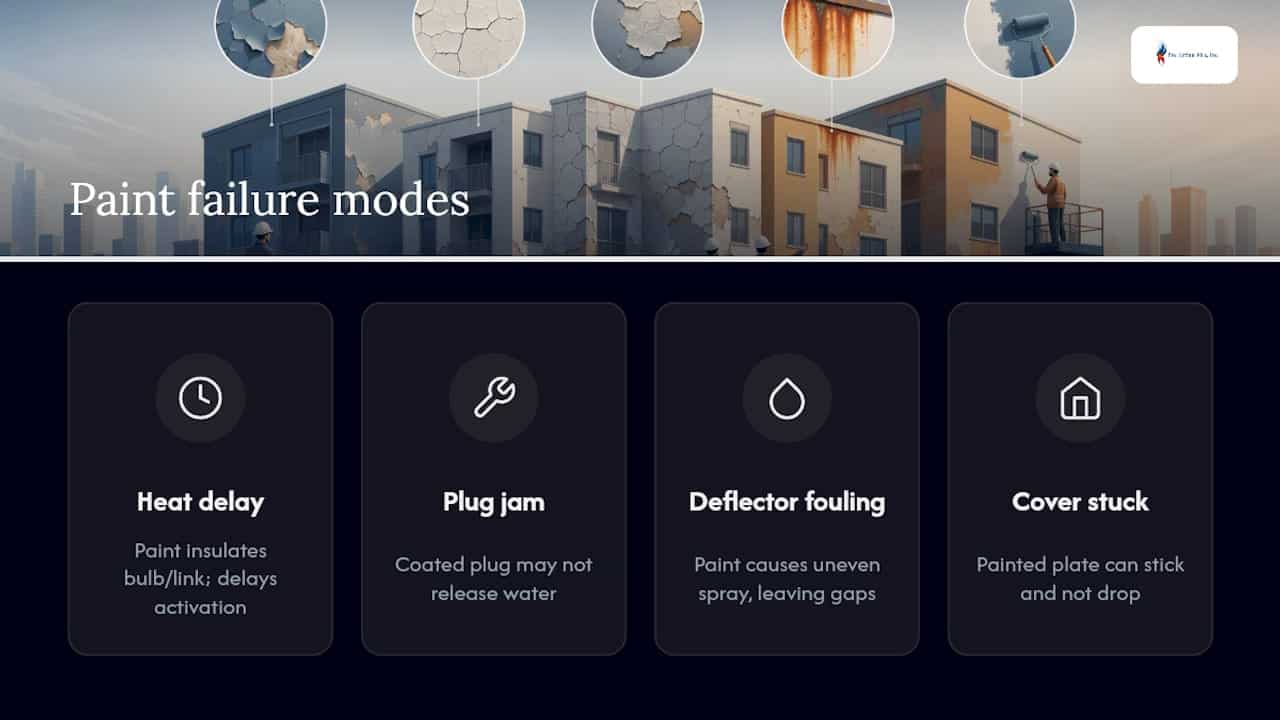
Paint isn’t a cosmetic problem here. It’s a mechanical one, and it fails a sprinkler head in four distinct ways.
The heat-sensitive element, usually a glass bulb or a fusible link, is designed to respond to a precise temperature threshold. A coat of paint acts as insulation, and insulation delays heat transfer. That means the bulb may not shatter, or the link may not separate, until the fire has grown well past the point the system was designed to catch it. Seconds matter in a working fire, and this failure mode buys the fire exactly the seconds it needs.
Paint can also gum up the plug assembly, the small component that seals water inside the pipe until activation. If that plug is coated or partially fused by dried paint, it may not release cleanly even after the heat element does its job. You get a head that trips but doesn’t discharge, which is arguably worse than one that never trips at all, since it fools anyone glancing at the system into thinking it worked.
The deflector, that little umbrella-shaped plate that shapes the water pattern, is just as vulnerable. Fouled with paint, it distributes water unevenly and leaves gaps in coverage exactly where a fire might need it most. For a deeper look at what each part does, see this rundown of sprinkler head types and their critical components. Concealed sprinkler cover plates have their own failure mode: painted shut, they can stick to the ceiling and refuse to drop away when they should.
What Inspectors Look for and How Enforcement Actually Varies
Inspectors trained on this issue know exactly where to look. They’ll check the bulb or link for any film that isn’t factory finish, examine the deflector for buildup, look at the plug for signs of coating, and, for concealed heads, test whether the cover plate moves freely. NFPA’s own visual inspection guidance treats paint not applied by the manufacturer as a specific condition inspectors are trained to flag.
What happens next depends heavily on where your building sits. Some AHJs run a strict, zero-tolerance policy: any aftermarket paint means replacement, no exceptions, no argument. Sedona Fire District’s published policy is a clear example, stating flatly that removing paint from a sprinkler is not an acceptable remedy. Other jurisdictions lean on NFPA 25’s 2023 discretion clause and may let a light, noncritical coat pass.
If you want to make a case for “limited” paint rather than outright replacement, come prepared. Clear, close-up photos of every affected head, the sprinkler identification number (SIN) and model number, and notes on how many heads in the population show paint all help an inspector make a defensible call in your favor.
Replacing Painted Heads: The Process and What Drives Cost
The moment you spot a painted head, resist any urge to wipe, scrub, or solvent-clean it. Manufacturer instructions typically forbid touching the operating elements at all, and doing so can void the warranty on top of masking a real defect, a point QRFS covers in detail. Document the head with photos, tag it, and log its location.
A licensed contractor’s next step is identification: pulling the SIN and model number off each affected head to confirm exact replacements are available, and determining whether the paint reached the head itself, the cover plate, or both. Sometimes only the escutcheon needs swapping. Often the whole head does.
Replacement itself follows a predictable workflow. The contractor isolates and drains the affected zone, pulls the compromised heads, threads in matched replacements rated for the same temperature and coverage pattern, refills and pressure tests the line, and calls in the inspector for sign off before the zone goes back into service. If you’re coordinating this across a system, these compliance best practices for sprinkler installation work walk through what that process looks like in more detail.
Cost swings widely based on a handful of factors: how many heads need replacing, how hard they are to access (a dropped ceiling grid is a very different job than an open warehouse bay), how much of the system has to be drained to isolate the work safely, whether any heads have specialty finishes or ratings that cost more to source, and whatever permit or reinspection fees your jurisdiction charges. A five-head office suite job and a 200-head warehouse retrofit are not remotely the same budget line.
Preventing Painted Sprinkler Heads During Renovation Work
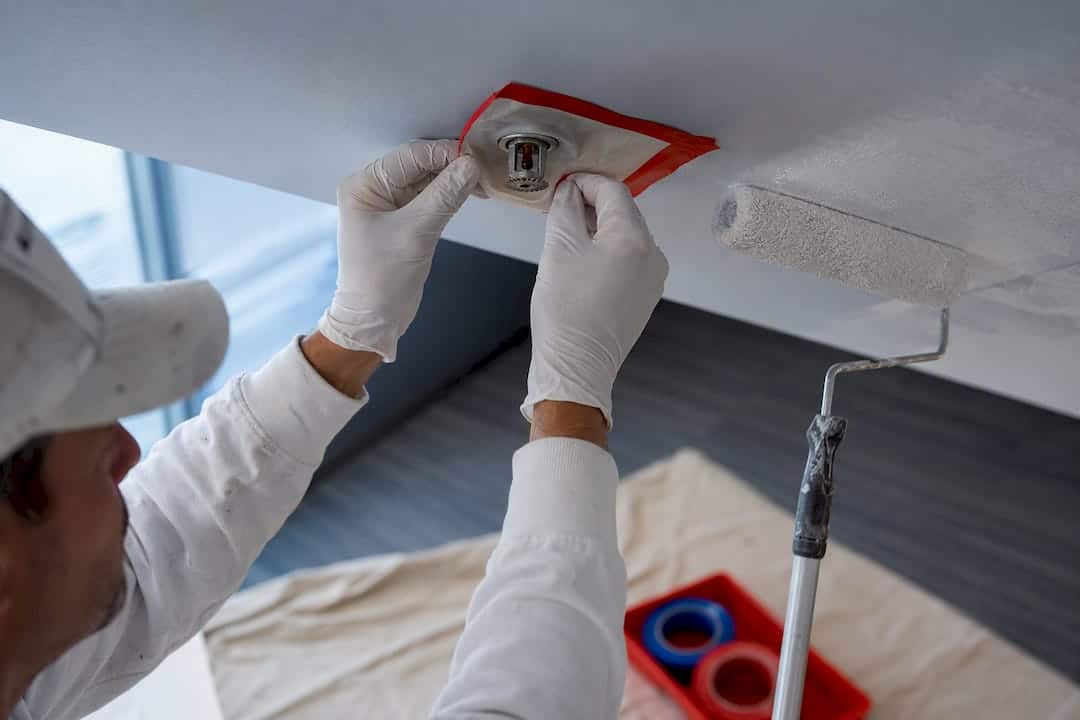
Every painted sprinkler head incident typically traces back to the same root cause: nobody protected it before the paint went on. The fix isn’t complicated, but it has to be written into the job, not left to the painter’s judgment.
- Use thin cellophane bags, roughly 0.08 millimeters or less, or approved paint shields designed for sprinkler protection, and remove them the same day the painting finishes.
- Write sprinkler protection into the scope of work explicitly, naming who bags heads, who removes concealed cover plates before spraying, and who supervises the crew near fixtures.
- Walk the space before work starts and again immediately after, comparing against a simple checklist of every head location.
- Require dated photos of covered heads before painting and uncovered heads after, filed with the project records.
If your renovation involves a paint booth or spray area rather than general interior painting, the fire suppression considerations are different again. This guide to paint booth fire suppression requirements covers those separately.
Pro Tip: Add a single line item to every painting purchase order: “sprinkler protection and post work photo documentation required before final payment.” Contractors respond to what’s tied to their invoice, not what’s buried in a verbal instruction.
Why Proactive Replacement Often Beats Waiting for a Lab Test
Some inspection programs rely on representative sample testing, pulling a handful of heads from a population and lab testing them for function. If even one sampled head fails, policy typically requires replacing the entire represented population, not just the failed unit. That single bad sample can turn a ten-head problem into a two-hundred-head mandate overnight.
That’s the real financial argument for acting the moment you spot painted heads rather than waiting for a scheduled test cycle. Swapping out ten or twenty visibly compromised heads now, on your own timeline, almost always costs less than a forced replacement of an entire building population after a failed sample. Document what you find, talk to your AHJ before any sampling occurs, and consider targeted proactive replacement as insurance against the bigger bill.
Are Painted Sprinkler Heads a Health or Safety Risk Beyond Fire Response?
The primary danger from painted heads is straightforward: delayed or failed fire suppression when it’s needed most. But there are secondary risks worth flagging for anyone managing an occupied building.
Some aftermarket paints and the solvents used to apply or attempt to remove them can involve volatile organic compounds, which raises indoor air quality concerns during and after a botched cleaning attempt, particularly in enclosed mechanical spaces or occupied offices where ventilation is limited. Attempting to scrape, sand, or chemically strip paint off a live head also risks accidentally triggering the release mechanism, since you’re working directly on a pressurized component designed to fail at a specific stress point. That’s a physical injury risk to whoever’s doing the “fix,” on top of the compliance problem it doesn’t actually solve.
There’s also a quieter risk: false confidence. A building with painted heads that technically still look intact can lull staff and management into believing the system is fully functional when portions of it may not activate correctly, or may activate late. That gap between perceived protection and actual protection is the most dangerous outcome of all, because nobody budgets for a fire response failure they don’t know is coming.
None of this means panic if you find a painted head. It means treat it as a real defect requiring a real fix, not a cosmetic issue to be waved off.
What Real-World Painted Sprinkler Incidents Look Like
Most painted sprinkler problems surface the mundane way: during a routine annual inspection, a technician spots overspray on a bulb or deflector that clearly wasn’t factory applied, usually left over from a ceiling repaint, a tenant improvement project, or a maintenance crew that never got the memo about masking fixtures. The head gets flagged, tagged, and scheduled for replacement, and the building moves on.
The more expensive version of this story shows up when nobody catches it at the routine level. A painting contractor sprays an entire suite without bagging a single head, the building passes a cursory visual walk through because nobody was looking closely, and the problem doesn’t surface until a formal NFPA 25 inspection or a representative sample test months or years later. By then, the population of affected heads has grown, the paint has cured harder, and the AHJ has less patience for an argument about “limited” coating, because the building already missed one obvious chance to catch it.
The pattern across these situations is consistent: the incidents that turn expensive are never the ones caught early by an alert facilities team. They’re the ones that sat unnoticed through one or more inspection cycles, either because nobody was specifically trained to look for paint, or because a renovation crew worked without supervision near active fixtures. That’s the entire case for building a masking and documentation habit into every paint job, not just the ones near obviously visible sprinkler heads.
A Field Note From Pre Action Fire
We’ve walked enough Denver-area buildings to know painted heads rarely come from malice. They come from a painter who wasn’t told to mask fixtures. Call a licensed sprinkler contractor the moment you spot one; don’t let in-house staff attempt anything beyond photos and tags. Before your next inspection, confirm your SIN numbers, your photo log, and your AHJ’s current edition of NFPA 25.
— Results
How Preactionfire Handles Painted Sprinkler Head Assessment and Replacement
If you’ve found painted heads and you’re staring down the question of scope, cost, and timeline, a specialized fire protection company gives Denver Metro property managers a direct path to an answer instead of a guessing game. Experienced technicians can identify exactly which heads are affected, pull SIN and model numbers, and tell you within one site visit whether you’re looking at a five head fix or something bigger.
Scheduling an assessment is simple: a technician visits the site, documents every affected head with photos, and walks you through a written quote covering parts, labor, and system draining requirements before any work begins. From there, the fire protection provider handles the full replacement workflow, isolating the affected zone, installing matched heads, pressure testing the line, and coordinating inspector sign off so the system goes back into full compliance without you managing five different vendors.
Preactionfire also runs full fire safety inspections that catch painted heads and other NFPA compliance gaps before they turn into a forced, large-scale replacement. If you manage a building anywhere in the Denver Metro Area and you suspect painted or compromised sprinkler heads, reach out to schedule a site assessment and get a straight answer on scope and cost.
Sources
- A guide to key NFPA 25 changes in the 2023 edition | QRFS
- Visual inspection of sprinklers | NFPA
- CRR Policy 1312: Painted fire sprinkler heads | Sedona Fire District