
If your control panel is more than 20 years old, your alarms trip for no reason more than once a quarter, or your last inspection turned up “cannot verify” next to more than one device, your fire system is likely outdated and needs a professional evaluation now, not next budget cycle. Those three signs alone account for most emergency replacements Preactionfire gets called out for. Nearly all of them were preventable with earlier action.
Here’s the fast version, expanded throughout the rest of this guide:
- Control panel that has been in service for many years, or detectors/smoke alarms approaching the end of typical service life
- Nuisance alarms or false trips happening monthly or more
- Detection or notification gaps left by renovations, new storage, or added tenants
- Corroded sprinkler pipes, leaking heads, or repeated suppression repairs
- Panel model discontinued, or parts back ordered for weeks at a time
- Failed inspections, repeated code violations, or Authority Having Jurisdiction (AHJ) citations
- Occupancy changes (office to gym, warehouse to mixed use) without a system re-review
- Rising annual maintenance invoices with no corresponding drop in faults
- No addressable devices, no remote monitoring, no way to pinpoint which zone tripped
- System that can’t talk to your building management platform or access control
If two or more of these apply, schedule a formal evaluation with a NICET-certified technician or fire protection engineer before you do anything else. Don’t wait for a failed inspection to force the issue.
Pro Tip: Walk up to your fire alarm control panel right now and photograph the manufacturer label. Search the model number plus “discontinued” or “end of life.” If the manufacturer stopped supporting it, you already have your answer, regardless of how well it seems to be working today. The USFA’s nonresidential fire data shows commercial fire risk doesn’t announce itself gradually. Systems tend to fail quietly for months before an actual event exposes the gap.
Key Takeaways
Outdated fire systems reveal themselves through age, recurring faults, coverage gaps, and inspection findings, and planned replacement always costs less than an emergency one.
| Point | Details |
|---|---|
| Age is the starting checkpoint | Panels over 20 years and detectors over 10 years warrant a formal condition evaluation. |
| Nuisance alarms signal system failure | Repeated trips across multiple device types point to panel or wiring problems, not one bad detector. |
| Coverage must match current use | Renovations, new storage, or occupancy changes can leave detection and notification gaps behind. |
| Plan before you’re forced to | Phased upgrades cost less and disrupt operations less than emergency full-system replacement. |
| Preactionfire evaluates before recommending | NICET-certified technicians assess age, deficiencies, and occupancy fit to prioritize a phased upgrade plan. |
Table of Contents
- Signs of Outdated Fire Systems: Age and Component Service Life
- Frequent False Alarms, Nuisance Trips, or Recurring Malfunctions
- Inadequate Coverage or Missing Detectors and Notification Devices
- Sprinkler and Suppression System Wear or Non-Compliance
- Obsolete Panels, Incompatible Devices, and Scarce Replacement Parts
- Failed Inspections, Code Violations, or Repeated AHJ Findings
- Building Renovations, Occupancy Changes, or New Hazards
- What to Do Next: Evaluate, Prioritize, and Plan a Phased Upgrade
- When Code Compliance Isn’t Enough
- Sources
Signs of Outdated Fire Systems: Age and Component Service Life
Age is the single most reliable predictor of failure, and it’s the easiest sign to check because it requires no technical expertise. Control panels installed before 2006 deserve a hard look, and anything installed before 2000 should be evaluated now, according to Jensen Hughes’ analysis of replacement triggers.
Different components wear out at different rates, and treating your whole system as one unit hides where the actual risk sits:
- Fire alarm control panels: typically 15 to 20 years before parts and firmware support become unreliable
- Smoke and heat detectors: roughly 10 years, per manufacturer guidance cited by the Houston Fire Department
- Sprinkler heads: 50 years for standard heads under some standards, but far sooner if exposed to corrosive environments or paint overspray
- Fire pumps: 20 to 25 years depending on run hours and maintenance history
- Backup batteries: 3 to 5 years regardless of how the rest of the system performs
Manufacturer end-of-life status matters more than the calendar age in some cases. A 12-year-old panel from a manufacturer that exited the fire business is a worse position than an 18-year-old panel still receiving firmware updates and parts support. NFPA maintains the codes and standards that govern inspection and testing criteria, including NFPA 72, but the standard doesn’t mandate a fixed replacement age. That’s exactly why age has to be paired with a real condition assessment rather than treated as a simple countdown clock.
The financial argument for acting on age before failure is straightforward. FacilitiesNet’s guidance on NFPA 72 compliance notes that planned, phased replacement runs considerably cheaper than emergency full-system swaps done under pressure after a panel dies completely. Waiting for failure doesn’t save money. It just moves the cost to a worse moment.
Frequent False Alarms, Nuisance Trips, or Recurring Malfunctions
Nuisance alarms happening more than once a month are rarely about one bad detector. They usually point to wiring degradation, panel instability, or a detector generation that’s simply reached the end of reliable operation, a pattern Jensen Hughes documents as a top replacement trigger alongside age and occupancy change.
Start collecting evidence before you call anyone. Pull your alarm monitoring company’s event logs for the past 12 months and count trips by device and zone. Pull technician service invoices and look for the same device or panel section appearing three or more times. That paper trail turns “the alarm keeps going off” into a specific, fundable case.
A facility manager at a mid-size warehouse called Preactionfire after the fourth service visit in six months for the same duct detector zone. Each visit fixed the immediate symptom. None addressed the actual cause: a 22-year-old panel struggling to hold calibration across a wiring run that had been patched twice. Replacing the zone controller instead of the detector solved a problem the previous three service calls hadn’t touched.
Pro Tip: Before your next insurance renewal or budget meeting, export a year of alarm events alongside your maintenance invoices. A one-page summary showing rising frequency and repeat repair costs makes the case for replacement far faster than a verbal description of “it keeps happening.”
Watch for these markers that separate a fixable nuisance pattern from genuine end-of-life behavior:
- Trip frequency increasing month over month rather than staying flat
- Multiple unrelated device types failing (smoke detectors and pull stations, not just one zone)
- Alarms triggering during normal, unchanged conditions with no environmental explanation
- The same repair recurring within 90 days of the last service visit
Inadequate Coverage or Missing Detectors and Notification Devices
A system that technically functions can still leave dangerous blind spots if devices weren’t updated when the building changed. Missing detectors in converted storage rooms, notification appliances too quiet for a newly noisy production floor, or closed-off suites with no coverage at all are signs your system no longer matches how the building is actually used.
- Pull your current device layout from the last approved fire alarm drawings and compare it room by room against how each space is used today.
- Flag any space that changed function since the drawings were approved: storage converted to occupied office, a mechanical room now housing charging equipment, a partition added that splits one zone into two.
- Check notification coverage in loud areas like mechanical rooms, production floors, or commercial kitchens, where standard horn/strobe output may not meet audibility requirements over ambient noise.
- Compare detector spacing to your occupancy type, since a sleeping occupancy like a hotel or dormitory requires different notification standards than an assembly space or a warehouse.
- Note any new interior walls or dropped ceilings installed after the original design, since both can create dead zones a decade-old layout never accounted for.
The Houston Fire Department’s placement guidance offers a useful baseline for detector spacing in mixed-use spaces if you want a plain-language reference while walking the building.
Pro Tip: Do a daytime walk-through with the building’s actual ambient noise running: HVAC on, equipment operating, doors closed. Stand in the farthest corner of the loudest room and see if you’d actually hear the horn. Silence in that moment is the clearest coverage gap you’ll find all year. Understanding how your building’s occupancy classification shapes required coverage helps frame exactly what “adequate” should look like for your specific space.
Sprinkler and Suppression System Wear or Non-Compliance
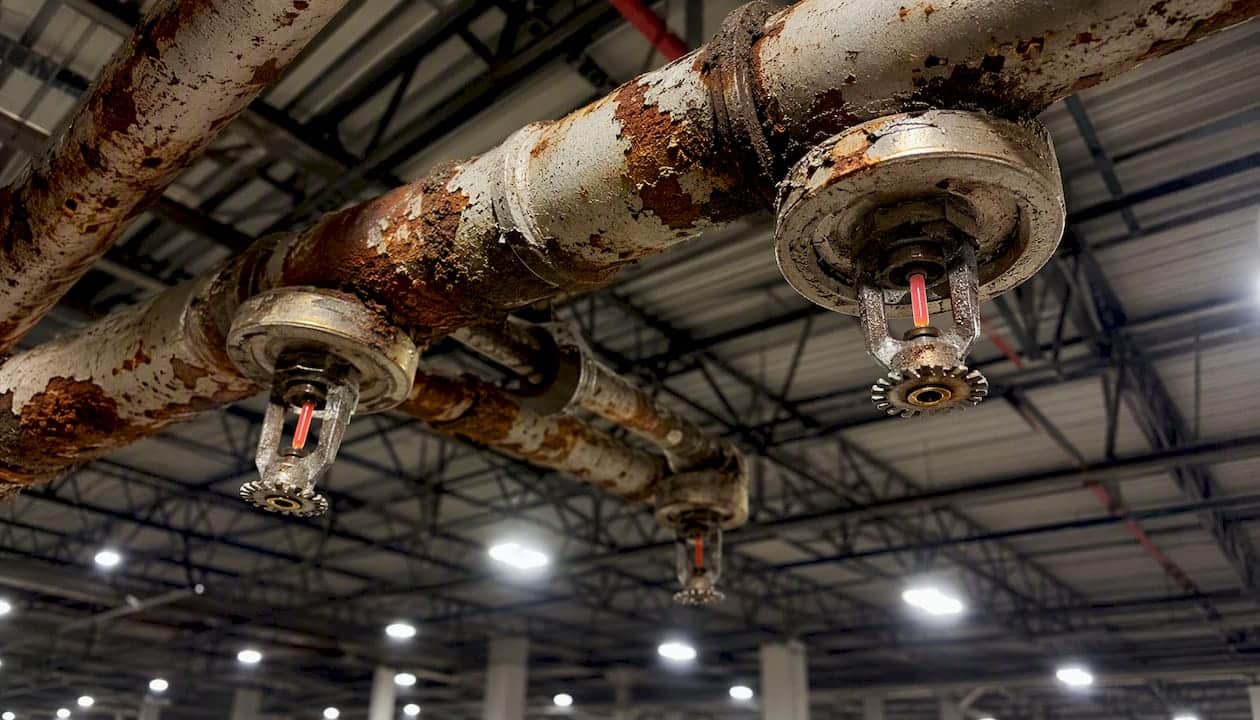
Visible corrosion on sprinkler piping, leaking heads, or a suppression system that needs a technician on site every quarter for the same recurring fault are high-priority signs the whole suppression system, not just the alarm side, is aging out.
Watch for these during your next walk-through or scheduled inspection:
- Rust streaks or discoloration on visible pipe runs and fittings
- Corroded pipe joints, especially at threaded connections in older galvanized systems
- Missing or improperly spaced pipe hangers, which can indicate unauthorized past modifications
- Flow switches that fail testing or trigger supervisory signals inconsistently
- Sprinkler heads painted over, obstructed by storage, or clearly mismatched in age or type across one zone
Suppression and detection systems aren’t separate problems. A failing flow switch or tamper device sends its signal through your fire alarm panel, so a suppression fault can force an alarm system upgrade even when the panel itself seems fine. If your control panel can’t properly supervise a modern flow switch or pressure sensor, replacing the sprinkler component alone won’t fix the underlying issue.
Sprinkler head service life runs decades under normal conditions, but corrosive environments, paint contamination, or mechanical damage cut that dramatically, and inspection standards call for testing at defined intervals precisely because visible condition doesn’t always match internal function. If your suppression system hasn’t had a documented internal inspection in several years, that gap alone should move an upgrade to your sprinkler system up your priority list, regardless of how the alarm side looks.
Obsolete Panels, Incompatible Devices, and Scarce Replacement Parts
If your technician has to hunt for parts, or your panel manufacturer has issued an end-of-life notice, repairs are buying you time, not solving the problem. This is one of the clearest, most concrete signs on this whole list because it doesn’t require judgment. Either the parts exist or they don’t.
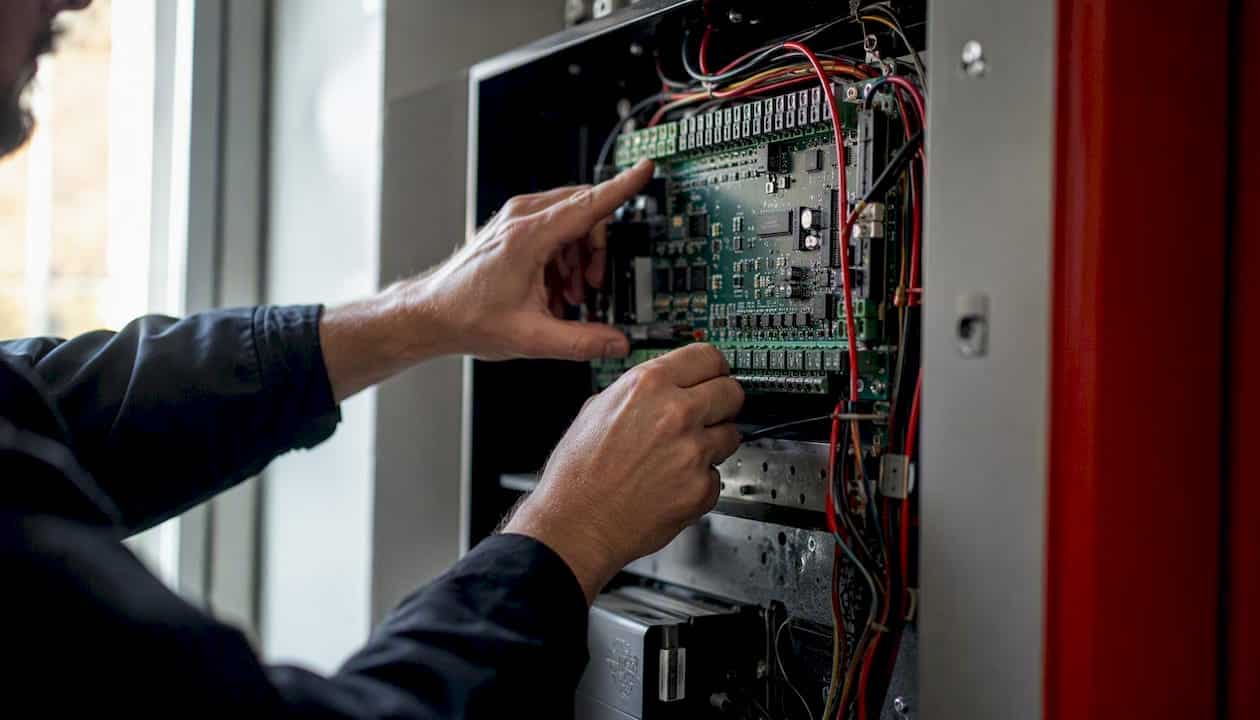
Run this check yourself before your next service call: record the exact panel model number and serial number from the label. Search the manufacturer’s site or call their support line and ask directly whether the model is still in production and whether firmware updates are still issued. Then ask your technician, point blank, how long the last parts order took to arrive.
Compatibility failures show up in ugly, expensive ways. One facility attempted a one-for-one swap of a failed smoke detector using what looked like an equivalent replacement, only to have the AHJ reject the installation during final walkthrough because the new device’s addressable protocol wasn’t compatible with the panel’s aging firmware. What should have been a $200 part replacement turned into a panel-level upgrade discussion under time pressure, exactly the emergency-replacement scenario that costs the most.
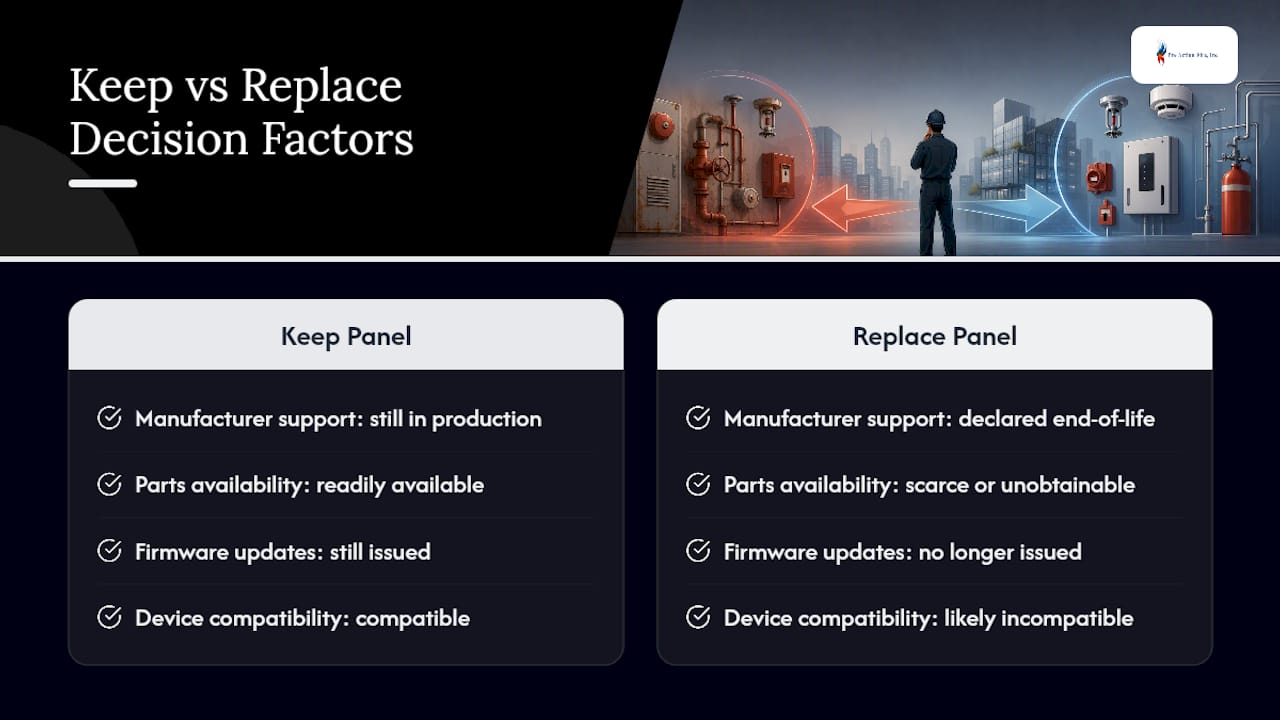
The general framework here: keep the panel if it’s still supported and parts are reasonably available, and plan for replacement if the manufacturer has declared it end of life or critical components are genuinely unobtainable. That’s a fair summary of how most fire protection engineers approach the upgrade-versus-replace decision.
Pro Tip: Ask vendors this exact question before signing off on any targeted repair: “If I replace this one component, will it still be compatible with the rest of the panel five years from now?” A vendor who can’t answer confidently is telling you something about how much longer the platform has left.
Failed Inspections, Code Violations, or Repeated AHJ Findings
A single deficiency on an inspection report is normal. A pattern of repeated findings, especially at the panel level rather than the device level, is a strong signal the whole system architecture may be inadequate for current requirements, not just in need of a quick fix.
Inspection outcomes that should trigger replacement planning, not just another repair ticket:
- Open deficiencies on the panel itself across two or more consecutive inspection cycles
- Wiring methods flagged as unacceptable under current code, even if they passed years ago under an older edition
- Notification device shortfalls that require adding devices the existing panel can’t support
- The inspector noting the panel “cannot verify” a function rather than a specific device failing a single test
An inspection report on a 19-year-old panel read: “Panel unable to properly supervise Zone 4 circuit; device-level testing inconclusive due to panel age.” That’s a fundamentally different finding than “replace pull station at Zone 4, Room 112.” One is a device fix. The other is telling you the panel itself can no longer be trusted to do its job.
NFPA 72 guides inspection and testing criteria but doesn’t automatically require replacement just because a system is old. What it does require is that the system function correctly, and repeated panel-level findings are how inspectors document that it no longer does. If your fire alarm shows signs of malfunction at the inspection stage rather than in daily operation, treat that as the more serious warning, not the lesser one.
Building Renovations, Occupancy Changes, or New Hazards
A system designed for one use case can become genuinely outdated overnight when the building’s function changes, even if not a single device has physically aged. This is the sign most building managers miss, because nothing about the equipment itself changed.
Consider an office converted into a fitness facility. The original design assumed light occupant density and standard combustible loads. The fitness conversion adds locker rooms with different humidity exposure, a juice bar with cooking equipment, and often a spin studio with sound levels that can drown out standard notification appliances. None of that shows up as a “sign” in the traditional sense. It shows up as a mismatch nobody flagged.
Triggers that should mandate a system re-evaluation, whether or not anything has technically failed:
- Any renovation that adds walls, converts open space, or changes room function
- A new tenant type with a different occupancy classification than the space was designed for
- Added equipment with real thermal or electrical risk, especially lithium-ion battery charging stations for e-bikes, scooters, or backup power systems
- Increased storage density or a change in what’s being stored, particularly anything combustible that wasn’t part of the original hazard assessment
- Any change that alters occupant load, since notification requirements scale with how many people need to hear the alarm and how quickly
Reviewing common fire hazards specific to commercial facilities before a renovation, rather than after, saves the cost of ripping out newly finished walls to add coverage that should have been part of the original plan.
What to Do Next: Evaluate, Prioritize, and Plan a Phased Upgrade
If you’ve recognized two or more signs from this list, the sequence matters. Don’t jump straight to a full replacement quote, and don’t ignore it until the next scheduled inspection either. Work through this in order over the next 30 to 90 days:
- Document everything you’ve noticed — alarm frequency, inspection findings, recent repairs, and any occupancy changes — in one file.
- Schedule a formal evaluation with a NICET-certified technician or fire protection engineer, not just your standard maintenance visit.
- Ask for a written condition assessment that separates life-safety-critical findings from lower-priority cosmetic or convenience issues.
- Get a cost comparison between a targeted upgrade (panel swap, keeping compatible devices) and a full system replacement.
- Build a phased timeline that tackles life-safety-critical items first and spreads lower-priority work across budget cycles.
Ask your contractor or evaluator these questions directly, and don’t accept vague answers:
- Is this panel still manufacturer-supported, and for how much longer?
- What’s realistic parts availability if something fails next year?
- What will the AHJ expect for acceptance testing on a phased versus full replacement?
- Can we phase this project, and if so, in what order should the phases happen?
Timeline expectations vary widely by scope. A targeted panel upgrade with compatible existing devices might run a few weeks from approval to acceptance testing. A full system replacement across a multi-story commercial building typically runs several months once design, permitting, and AHJ coordination are factored in. Budget accordingly and start the conversation earlier than you think you need to.
Pro Tip: Keep every maintenance invoice and inspection report in one folder, digital or physical, going back at least three years. When you talk to your insurer about premiums or to the AHJ about a variance request, a documented maintenance history is worth more than any verbal assurance that the system has “always worked fine.” Assessing your fire system’s actual needs before requesting quotes also keeps contractor proposals apples to apples.
When Code Compliance Isn’t Enough
Meeting minimum code doesn’t guarantee your building is actually safe, it just means you’ve cleared the legal floor. That distinction gets lost constantly in facility management conversations, and it’s worth stating plainly: codes set minimum thresholds, not optimal ones.
The NFSA has written directly about this gap, noting that buildings can remain technically compliant under the code edition they were built to while carrying meaningfully higher risk than a building designed to current standards. A system installed in 2004 might still pass an inspection today under a grandfather clause and still leave you with weaker detection, slower notification, and less monitoring granularity than what’s standard now.
Codes generally represent a floor, not a target. A system that clears minimum requirements can still leave real gaps in detection speed, notification coverage, or monitoring visibility compared to what current technology and current standards make possible.
Jensen Hughes’ research points to the same three triggers again and again across their client evaluations: system age, recurring inspection deficiencies, and changes in occupancy or hazard profile. Those three factors matter more than whether the system technically passed its last inspection, because passing today doesn’t guarantee passing next year as components continue aging in parallel.
The financial case reinforces the safety case. Confirmed Life Safety’s analysis of deferred maintenance documents how delaying upgrades compounds costs through higher insurance premiums, tenant disruption, and larger emergency repairs, well beyond what proactive planning would have cost. Waiting rarely saves money. It just defers the bill to a worse moment, usually right after something has already gone wrong.
Preactionfire’s NICET-certified technicians conduct evaluations against this same framework: age, deficiency history, and occupancy fit, not just a pass/fail inspection checklist. That’s a meaningfully different conversation than “did it pass,” and it’s the one that actually protects the building.
- Codes set minimums; proactive modernization exceeds them
- Age, recurring faults, and occupancy change are the three consistent replacement triggers across independent industry sources
- Planned upgrades cost less than emergency replacement, almost without exception
- A NICET-certified evaluation gives you a defensible, documented basis for budget and insurer conversations
A Practical Note on Getting Started
When Preactionfire evaluates an aging system, the approach starts with separating life-safety-critical findings from everything else. A panel that can’t reliably supervise its own circuits gets flagged before a cosmetically worn device that still functions correctly. That prioritization is what makes phased upgrades workable for a real operating budget instead of an all-or-nothing decision that gets postponed indefinitely because the full number feels too big.
Most buildings don’t need a complete teardown. They need an honest assessment of which components are still earning their keep and which ones are quietly becoming liabilities. Phasing that work, tackling the panel first if it’s the weak link, then addressing device coverage, then suppression, keeps disruption to tenants and operations manageable while still closing the gaps that matter most.
Professional Evaluation and Phased Upgrade Planning
Recognizing a sign on this list is the easy part. Acting on it before an inspection failure or an actual incident forces the timeline is where most buildings fall behind. Preactionfire has served commercial and industrial properties across the Denver Metro Area since 2009, and evaluation is exactly where every upgrade conversation should start, not a sales pitch at the end of it.
Preactionfire’s NICET-certified technicians conduct full condition assessments against NFPA 72 and current AHJ expectations, then build a phased plan that prioritizes life-safety-critical items first, so you’re not choosing between “do everything now” and “do nothing.” Learn more about fire safety remediation strategies that help ensure compliance and effective risk management. Services include fire alarm system design and replacement, sprinkler and suppression system upgrades, inspection and testing, and full backflow and fire pump service, all sized to your building and your budget cycle.
If any of the signs above sound familiar, start with a fire alarm system evaluation and get a written condition report before your next inspection cycle puts the decision on someone else’s timeline. Preactionfire serves commercial and industrial properties throughout the Denver Metro Area.
Sources
- Compliant and still deadly: when adoption undermines safety (NFSA)
- Codes and Standards (NFPA)
- When Is It Time to Replace Your Fire Alarm System? (Jensen Hughes)