
TL;DR:
- Choosing fire alarms in Colorado requires understanding local permitting, AHJ discretion, and NFPA 72 standards to ensure legal compliance and safety. Proper system selection involves integrating detection technologies, power backup, and monitoring features while collaborating early with authorities and licensed contractors. Ongoing maintenance, regular testing, and AHJ cooperation are crucial for sustained code compliance and effective fire protection.
Knowing how to choose fire alarms for your Colorado commercial property is not just a matter of picking the right hardware off a shelf. Between Denver’s layered permitting requirements, authority having jurisdiction (AHJ) discretion, and NFPA 72 technical standards, the wrong decision can mean failed inspections, forced rework, and real liability exposure. Denver fire alarm projects require permits, approved licensure, and inspections before a system can legally operate. This guide walks you through every critical step, from understanding Colorado’s legal framework to selecting the right features, executing installation, and maintaining compliance year after year.
Table of Contents
- How to choose fire alarms: legal and code requirements in Colorado
- Key features to look for when selecting fire alarm systems
- Step-by-step process for selecting and installing compliant fire alarms
- Maintaining compliance: inspections, testing, and avoiding costly pitfalls
- Common challenges and expert tips for commercial fire alarm selection
- The overlooked impact of AHJ and contractor collaboration on fire alarm success
- Get expert fire alarm system support in Colorado
- Frequently asked questions
Key Takeaways
| Point | Details |
|---|---|
| Know local code requirements | Understanding Denver and Colorado fire codes helps you avoid costly permit and compliance mistakes. |
| Choose engineered systems | Select fire alarms designed as integrated life-safety systems, not just standalone devices. |
| Hire licensed contractors | Ensure installers and maintenance providers have proper licenses and NICET certifications. |
| Follow NFPA 72 schedules | Adhere to distinct inspection, functional testing, and sensitivity testing timelines to stay compliant. |
| Maintain strong AHJ communication | Early and clear coordination with local authorities prevents project delays and compliance risks. |
How to choose fire alarms: legal and code requirements in Colorado
Building a compliant fire alarm system starts with understanding the legal environment governing installation and modifications in your jurisdiction. In Colorado, this is more complicated than most property owners expect.
The 2025 Denver Fire Code mandates construction permits before any fire alarm installation or modification, and post-installation inspections are required to verify functionality. That applies whether you are adding a new system to a building under renovation or upgrading detection devices in an existing facility.
One critical concept that trips up facility managers: Colorado’s fire code enforcement is decentralized. Two buildings of the same occupancy type on the same street can face different requirements depending on which AHJ governs them. The AHJ (the local authority with legal power to enforce fire codes) has real discretion in how they interpret and apply code provisions. You cannot assume what was approved for a neighboring property applies to yours.
Another common misstep is failing to distinguish between maintenance and modification. Replacing a smoke detector with an identical model from the same manufacturer generally qualifies as maintenance. Swapping in a different detector type, relocating devices, or updating a panel’s zone configuration almost always triggers a permit requirement. Getting this wrong means stopping work mid-project while you obtain permits retroactively, which costs time and money.
Key compliance essentials for Colorado commercial buildings:
- Obtain construction permits before starting any installation or modification work
- Verify your specific AHJ’s requirements, not just the statewide baseline
- Confirm whether planned changes are classified as maintenance or modification before ordering equipment
- Only use contractors licensed by the applicable local fire authority
- Retain approved plans and permit documentation on site during all phases of work
Pro Tip: Contact your AHJ during the planning phase, not after you have already specified equipment. An early conversation can clarify permitting scope and save you from selecting systems that require costly redesigns.
| Scenario | Permit required? | AHJ involvement |
|---|---|---|
| Replacing same-model smoke detector | Typically no | Minimal |
| Upgrading to new detector technology | Yes | Plan review required |
| Adding devices to existing system | Yes | Inspection required |
| Full system replacement | Yes | Inspection and sign-off |
| Changing panel brand or model | Yes | Engineering review likely |
For a deeper breakdown of local requirements, review this Denver fire alarm regulations guide and the broader Colorado commercial fire code requirements to understand how state and municipal rules interact.
Key features to look for when selecting fire alarm systems
With the legal framework clear, the next step is identifying the essential technical features your fire alarm system must have to meet safety and compliance demands.

Detection technology is your first decision point. Both ionization and photoelectric smoke detection technologies should be present in a well-designed system. Ionization detectors respond faster to fast-flaming fires. Photoelectric detectors excel at detecting slow, smoldering fires that produce heavier smoke before open flame develops. Using only one type leaves a real gap in your coverage.
Fire alarm systems are not just collections of detectors. A properly engineered system incorporates wiring, power supply design, device placement, and integration with building systems like HVAC shutdowns and elevator recall. A compliant fire alarm control panel must meet power backup requirements, support the correct initiating and notification circuits, and integrate with any life safety systems in your building. This is not equipment you select from a general supply catalog.
Critical features to evaluate when selecting fire alarm systems:
- Detection coverage: Does the system cover all required areas per NFPA 72 placement standards?
- Power backup: Does the panel include a battery backup capable of maintaining operation for the code-required duration during a power outage?
- Monitoring integration: Is the system designed to interface with a licensed central station for continuous supervision?
- Notification devices: Do alarm notification devices meet ADA (Americans with Disabilities Act) requirements for both audible and visual alerting?
- Annunciation: Does the building require a remote fire alarm annunciation panel for fire department access?
- NFPA 72 compliance: Are all components listed and labeled per the applicable code edition adopted locally?
Central station monitoring is worth specific attention. Many commercial occupancies in Denver require supervised monitoring by a licensed central station, not just a local bell or strobe. This monitoring company must hold current permits. Confirm this requirement with your AHJ early, because it affects both equipment selection and ongoing operating costs.
Pro Tip: Ask your contractor for a written engineered proposal, not just a quote. A proper proposal specifies device types and locations, wiring methodology, power backup calculations, and integration points. If a contractor cannot provide this, they may not be qualified for commercial work.
Step-by-step process for selecting and installing compliant fire alarms
Now that you understand the features your system needs, here is a practical, step-by-step guide to ensuring your fire alarm is properly selected and installed in line with Colorado regulations.
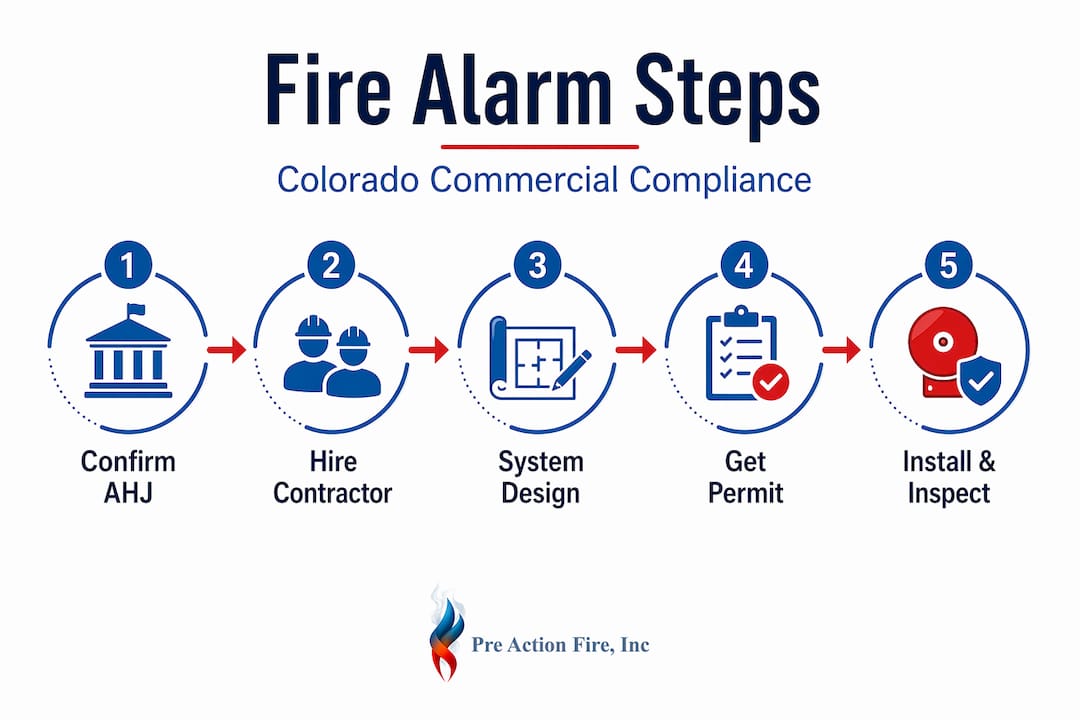
Step 1: Confirm occupancy requirements with your AHJ.
Before specifying a single device, meet with your AHJ to confirm what your occupancy classification requires. Bring your building plans. Ask specifically about monitoring obligations, notification zones, and whether any local amendments override the base NFPA 72 standard.
Step 2: Hire a licensed contractor.
Denver’s Fire Department enforces strict contractor licensing for fire alarm work. Verify your chosen contractor holds a current Denver Fire Department license before signing any agreement. Ask for proof, not just their word.
Step 3: Develop an engineered system design.
Work with your contractor to create a full design package including device placement drawings, wiring diagrams, power calculations, and any required interface specifications for HVAC or elevator systems.
Step 4: Obtain permits before starting work.
Submit your design package to the AHJ for plan review and receive written permit approval. Do not begin any physical installation work until permits are in hand. This protects you from stop-work orders and retroactive redesign requirements.
Step 5: Execute installation per NFPA 72 standards.
Follow fire alarm system installation steps per the approved drawings. Device placement, wiring methods, and power connections must match the approved plans exactly. Any field changes need AHJ approval.
Step 6: Schedule and pass post-installation inspections.
Request the required inspections through the AHJ. Functional testing will be performed, and your system must perform correctly before occupancy sign-off is granted.
Key mistakes to avoid during installation:
- Ordering equipment before permit approval
- Making field changes without updating approved drawings
- Failing to test all devices and circuits before the inspection
- Skipping the monitoring setup before requesting final inspection
| Installation phase | Common mistake | Prevention |
|---|---|---|
| Planning | Skipping AHJ pre-meeting | Schedule AHJ consultation first |
| Design | Inadequate power backup spec | Use licensed engineer or NICET-certified designer |
| Permit application | Incomplete drawings | Use contractor experienced in local plan review |
| Installation | Unauthorized field changes | Document and get approval for any deviations |
| Inspection | Untested devices | Full commissioning test before inspector arrives |
Pro Tip: Bring your permit and approved plans to the inspection. Inspectors want to verify that what was installed matches what was approved. Having documentation ready speeds up the process significantly.
Maintaining compliance: inspections, testing, and avoiding costly pitfalls
After installation, staying compliant requires diligent maintenance and understanding the testing schedules and monitoring obligations your system must meet.
NFPA 72 establishes specific testing frequencies for each component type. Smoke detectors require semiannual visual inspections, annual functional testing, and sensitivity testing within one year of installation and every alternate year thereafter. Manual pull stations, notification devices, and control panels each carry their own inspection intervals. Missing any one of them puts your compliance record at risk.
“Testing requirements under NFPA 72 are component-specific, not system-wide. A facility manager who treats fire alarm maintenance as a single annual event will almost certainly miss required intervals for specific devices.”
Many commercial systems in Denver also require central station monitoring permits renewed annually. Letting a monitoring permit lapse is a compliance violation, even if the physical system is in perfect working order.
Maintenance best practices for Colorado commercial properties:
- Schedule all NFPA 72 testing frequencies on a written calendar at the start of each year
- Retain all test results and inspection records, ideally in a digital format accessible during AHJ audits
- Verify your central station monitoring provider renews permits on time, do not assume they handle this automatically
- Choose maintenance providers who demonstrate knowledge of NFPA 72 component-specific testing, not just general fire safety
- Address fire alarm troubleshooting issues promptly to avoid nuisance alarms that can draw fines
Pro Tip: Digital recordkeeping is not just convenient, it is a competitive advantage during audits. When an AHJ inspector asks for three years of maintenance records, being able to pull them up in seconds demonstrates the kind of operational discipline that builds credibility and shortens inspection time.
Common challenges and expert tips for commercial fire alarm selection
Understanding challenges and heeding expert advice can save you time, money, and liability risk as you select and maintain your fire alarm system.
One of the most expensive mistakes property managers make is failing to define scope with their AHJ before work begins. The 2025 Denver Fire Code draws a clear line between maintenance and modifications, and crossing that line without a permit creates delays, additional costs, and potential stop-work orders.
Another underestimated challenge is sensitivity testing. Many teams skip or delay sensitivity testing, assuming that if a detector activates during a functional test, it is compliant. Sensitivity testing is a separate requirement that measures whether the detector responds within the calibrated threshold range. It requires specialized calibrated equipment and a trained technician. Failing sensitivity testing while passing functional testing is entirely possible.
“Sensitivity testing remains one of the most frequently missed NFPA 72 requirements in commercial buildings, yet it directly impacts whether your system will actually detect a fire at the right threshold.”
Expert tips for selecting and maintaining fire alarms in Colorado:
- Define the full scope of your project in writing before meeting with your AHJ
- Budget for sensitivity testing equipment and qualified technicians from day one
- Require NICET (National Institute for Certification in Engineering Technologies) Level II or higher certification from any contractor or maintenance provider
- Digitize every inspection report, work order, and permit document immediately after receipt
- Treat regular maintenance as risk management: consistent upkeep reduces false alarms and protects occupants while minimizing regulatory penalties
Pro Tip: When vetting contractors, ask them directly: “Have you worked on projects in this specific AHJ?” Local experience matters enormously. A contractor who knows your AHJ’s preferred submission format and inspection process will move your project faster and with fewer surprises than one who has never worked in your jurisdiction.
The overlooked impact of AHJ and contractor collaboration on fire alarm success
Most articles about selecting fire alarms focus heavily on hardware: detector types, panel specifications, monitoring options. Those things matter. But in our experience serving Colorado commercial properties since 2009, the factor that most consistently determines whether a project succeeds or fails is the quality of collaboration between the property owner, the contractor, and the AHJ.
Code enforcement in Colorado is decentralized. As highlighted in this guide to protecting Colorado assets under NFPA standards, treating the AHJ as part of your procurement specification from the start is essential to avoiding expensive post-installation surprises. The AHJ is not your adversary. They are the authority who will ultimately sign off on your system, and engaging them early as a partner transforms the dynamic entirely.
Here is what that looks like in practice. Instead of submitting plans and waiting for rejection notes, schedule a pre-submittal meeting. Bring your contractor. Walk through your scope and ask specific questions about how the AHJ interprets ambiguous code provisions for your occupancy type. Get their feedback in writing when possible. This single step eliminates the most common cause of plan review rejection and inspection failure.
Contractor selection is equally decisive. Licensing is the baseline requirement, but it is not enough. Contractors with NICET certification and a documented track record within your specific AHJ bring a level of credibility to plan submissions and inspections that translates directly to faster approvals. They know the nuances. They know how to present scope documentation in the format the AHJ prefers. That is not a soft advantage; it directly affects your timeline and budget.
For a deeper look at how these dynamics play out in Denver, the Denver fire alarm compliance insights resource covers local AHJ patterns in detail. The property owners who treat fire alarm compliance as a collaborative process rather than a regulatory obstacle consistently achieve better outcomes, faster approvals, and fewer reinspections.
Get expert fire alarm system support in Colorado
Navigating Denver’s fire codes and NFPA 72 requirements is significantly easier when you have experienced, licensed professionals in your corner from day one.
Pre Action Fire, Inc. has served the Denver Metro Area since 2009 with NICET-certified technicians who specialize in commercial fire alarm installation, inspection, and maintenance. We handle everything from initial system design and permit submission to fire alarm safety and compliance verification and central station monitoring setup. Our team understands the nuances of Denver Fire Department requirements and works proactively with AHJs to keep your projects on schedule. Whether you need new fire alarm notification devices installed, a system upgrade permitted, or a fire alarm troubleshooting assessment, we bring the credentials and local experience your building demands. Contact Pre Action Fire today to schedule a consultation.
Frequently asked questions
Do I always need a permit to install or modify a fire alarm system in Denver?
Yes, the 2025 Denver Fire Code requires a construction permit before installation or major modification of fire alarm systems, but routine maintenance such as replacing identical components typically does not require a permit.
How often must smoke detectors be tested in commercial buildings?
Smoke detectors require semiannual visual inspections, annual functional tests, and sensitivity testing within the first year after installation and then every two years following per NFPA 72.
Is central station monitoring mandatory for all commercial fire alarm systems in Colorado?
Most commercial occupancies require central station monitoring per NFPA standards and local fire codes in Denver, but some lower-risk occupancy types may qualify for exemptions after AHJ review and approval.
What qualifications should I look for in a fire alarm contractor?
Contractors must hold a current Denver Fire Department license, and NICET-certified personnel at Level II or higher are strongly preferred to ensure proper installation, commissioning, and testing capabilities.
Can neglecting sensitivity testing affect system compliance?
Yes, sensitivity testing is distinct from functional testing and directly determines whether a detector activates within its required calibrated threshold, meaning a system can fail compliance even if devices respond during standard functional checks.