
TL;DR:
- Fire detection systems are integrated networks that sense early signs of fire and alert occupants and responders.
- Choosing the right technology and proper placement are critical for effective early warning and compliance.
- Ongoing maintenance, adherence to local codes, and collaboration with certified professionals ensure long-term system reliability and safety.
Most property managers believe fire detection means installing a few smoke alarms and calling it done. That assumption can put occupants at risk and leave your building out of compliance with Colorado codes. Fire detection is the process of sensing early signs of fire such as smoke, heat, or combustion byproducts, and generating an alert so people can evacuate and responders can act. A functioning detection system is a legal requirement for most commercial properties in Colorado, not an optional upgrade. This guide breaks down every layer of fire detection so you can make informed decisions for your building.
Table of Contents
- Defining fire detection: More than just alarms
- Core fire detection technologies: Smoke, heat, and smart sensors
- Compliance in Colorado: Codes, standards, and AHJ requirements
- Choosing and designing a fire detection system: Practical considerations
- A better way to think about fire detection for Colorado properties
- Partner with local fire detection experts for lasting compliance
- Frequently asked questions
Key Takeaways
| Point | Details |
|---|---|
| Fire detection is a system | True fire protection relies on integrated detection, alerting, and response systems—not just isolated smoke alarms. |
| Code compliance is local | Colorado uses city-level code enforcement and referencing NFPA standards, so you must check local requirements. |
| Modern detectors cut false alarms | Multi-sensor and smart sensor technologies improve reliability and reduce nuisance alarms in challenging spaces. |
| Professional design matters | Expert system design and device placement are key for both compliance and real-world effectiveness. |
| Maintenance is required | Ongoing inspection and testing are mandatory to keep fire detection systems working and legally compliant. |
Defining fire detection: More than just alarms
Let’s clear something up right away. A smoke alarm plugged into a wall outlet is not a fire detection system. It’s a single device. A real fire detection system is an integrated network of components working together to identify a fire threat, alert occupants, communicate with responders, and trigger protective actions across the building.
The core components of a complete fire detection system include:
- Detectors: Devices that sense smoke, heat, or other combustion products in specific zones
- Control panels: The brain of the system, which processes signals from detectors and coordinates responses
- Notification devices: Horns, strobes, and speakers that alert occupants to evacuate
- Communication links: Connections to monitoring stations or first responders, often required by code
- Suppression triggers: Interfaces with sprinkler systems or other suppression equipment
Fire detection senses early signs and generates an alert so that the right people take the right actions at the right time. That chain of events depends on every component working correctly.
For Colorado commercial properties, fire alarm systems in Denver must meet code requirements that go well beyond placing battery-operated devices in hallways. Building codes reference specific standards for system design, device placement, panel capacity, and monitoring connections.
“A detection system that only alerts occupants but never reaches the fire department is only half a system. In a large commercial building, those extra minutes matter enormously.”
Pro Tip: Map the full path from initial detection to occupant evacuation before evaluating any device or system. If there are gaps in that chain, no single detector can fix them.
Core fire detection technologies: Smoke, heat, and smart sensors
Not all detectors work the same way, and choosing the wrong technology for a space can mean slow response, excessive false alarms, or both. Understanding how each type works helps you match the right device to the right environment.
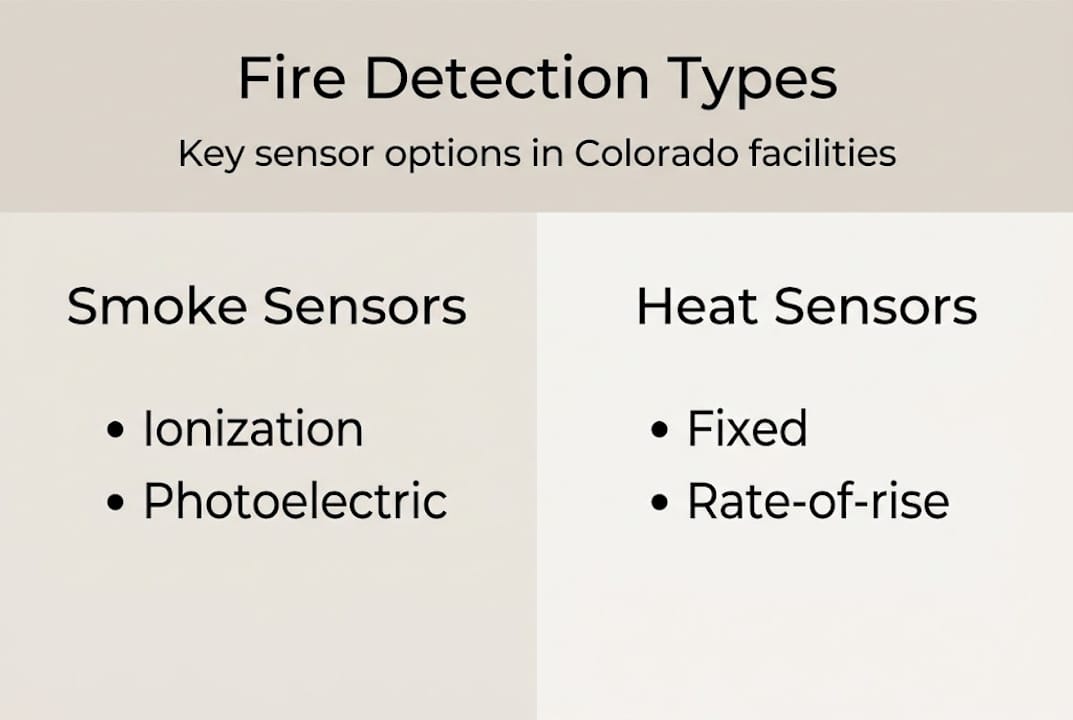
Ionization smoke detectors use a small radioactive source to ionize air inside a sensing chamber. When smoke particles enter, they disrupt the ionization current and trigger the alarm. These detectors respond quickly to fast-flaming fires with small combustion particles.
Photoelectric (optical) smoke detectors use a light beam inside a chamber. Smoke scatters the light onto a sensor, triggering the alarm. These excel at detecting slow, smoldering fires that produce larger particles before open flames develop.
Fixed temperature heat detectors activate when the air around them reaches a set threshold, such as 135°F or 194°F. They work well in dusty or steamy environments where smoke detectors would generate constant false alarms.
Rate-of-rise heat detectors respond to rapid temperature increases, even if the absolute temperature hasn’t reached the fixed threshold. They catch fast-developing fires in spaces like server rooms or storage areas.
Common detection modalities include ionization, photoelectric, heat, and multi-sensor approaches, each suited to different fire signatures and building environments.
| Detector type | Best fire scenario | Nuisance alarm risk | Relative cost |
|---|---|---|---|
| Ionization smoke | Fast-flaming fires | Moderate | Low |
| Photoelectric smoke | Slow, smoldering fires | Lower | Low-moderate |
| Fixed temperature heat | High-dust or steam areas | Very low | Low |
| Rate-of-rise heat | Rapid temperature events | Low | Moderate |
| Multi-sensor | Mixed or unknown scenarios | Lowest | Higher |
Over 90% of fire deaths occur in buildings without working detection systems, making technology selection a life-safety decision, not just a checkbox.
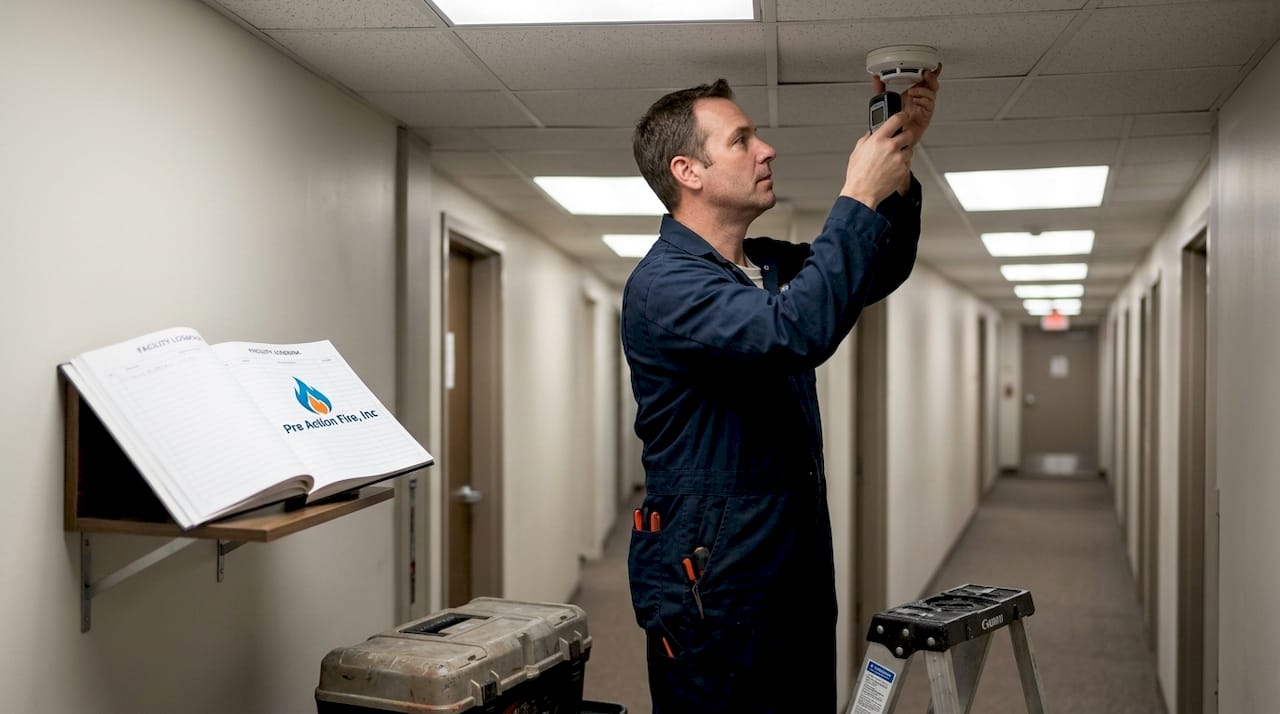
Modern multi-sensor fire detectors combine two or more sensing technologies in one device. By requiring agreement between sensors before triggering an alarm, they dramatically reduce false alarms while still catching real fires early. For building fire safety in high-traffic commercial spaces, this balance is often critical.
Compliance in Colorado: Codes, standards, and AHJ requirements
Knowing the tech is only part of the equation. Successful fire detection also means mastering compliance, and in Colorado, that process has some unique wrinkles that trip up even experienced property managers.
Colorado does not operate under a single statewide fire code that applies uniformly to every building in every city. Instead, compliance is driven by locally adopted codes that reference NFPA technical standards, with each jurisdiction adding its own amendments. Denver, Aurora, and Colorado Springs may all have different adoption cycles and local modifications.
The Authority Having Jurisdiction, or AHJ, is the local official or body that interprets and enforces fire codes in your area. Their approval is required for system design, installation, and final inspection.
Colorado uses decentralized local enforcement through AHJs, and cities adopt and amend NFPA-based requirements independently. What passes in one city may require modification in another.
NFPA 72, the National Fire Alarm and Signaling Code, serves as the technical foundation for fire detection system design and mandatory testing across most Colorado jurisdictions. Your system must meet its design standards, testing intervals, and documentation requirements.
Essential compliance steps for a new or remodeled commercial building in Colorado include:
- Review the Colorado commercial fire code requirements for your occupancy type
- Identify your local AHJ and request their adopted code version and any local amendments
- Submit system design plans for AHJ review before installation begins
- Use a licensed and certified installer to complete the work
- Schedule required inspections at rough-in and final stages
- Maintain documentation and testing records for ongoing compliance
Review Denver fire alarm regulations if your property falls within Denver’s jurisdiction, since the city has specific requirements for monitored systems and plan submittal formats.
Pro Tip: Contact your AHJ during the planning phase, not after installation. Late-stage corrections to device placement or panel specifications cost significantly more than getting it right the first time.
Choosing and designing a fire detection system: Practical considerations
After clarifying codes and rules, it’s time to put everything together to design a system that fits your property and meets legal requirements. The goal is not just passing inspection. It’s building a system that actually protects your occupants when it counts.
Step-by-step framework for Colorado property managers:
- Conduct a fire risk assessment: Identify ignition sources, fuel loads, occupancy types, and high-risk zones in your building. Review fire risk assessment tips for Colorado-specific guidance.
- Determine code and AHJ requirements: Confirm which edition of NFPA 72 your jurisdiction has adopted and what local amendments apply.
- Select detection technologies: Match detector types to the fire scenarios most likely in each space.
- Plan device placement: Follow NFPA 72 spacing rules and account for ceiling height, airflow patterns, and obstructions.
- Factor in maintenance and testing: Plan for annual inspections, quarterly testing for certain device types, and documentation.
Detector selection and placement are critical because fire detection designs must account for real-world trade-offs between detection speed and nuisance alarm risk.
| Space type | Recommended detector | Nuisance alarm rate | Maintenance level |
|---|---|---|---|
| Office | Photoelectric smoke | Low | Low |
| Commercial kitchen | Fixed temperature heat | Very low | Low |
| Warehouse | Rate-of-rise heat | Low | Low |
| Lobby or common area | Multi-sensor | Lowest | Moderate |
| Server room | Multi-sensor or rate-of-rise | Very low | Moderate |
Multi-sensor approaches improve discrimination and reduce nuisance alarms while maintaining early-warning performance in complex environments.
Pro Tip: In commercial kitchens, never install smoke detectors near cooking equipment. Use fixed temperature heat detectors rated for that environment to avoid constant false alarms that train occupants to ignore the system.
For complex facilities such as multi-story buildings, mixed-use properties, or hazardous storage areas, professional system design is not optional. A NICET-certified fire alarm technician brings both technical knowledge and code familiarity that protects your investment and your tenants.
A better way to think about fire detection for Colorado properties
Here is something most guides won’t tell you: the most expensive fire detection mistake isn’t buying the wrong detector. It’s treating fire detection as a one-time installation task rather than an ongoing system with a lifecycle.
We’ve worked with Colorado property managers who passed their initial inspection and then didn’t think about their system again for years. When something failed during that time, either a detector lost sensitivity or a panel developed a fault, nobody noticed until a real event or a compliance audit. That’s a dangerous gap.
Modern multi-sensor technology closes part of that gap by making individual devices smarter. But technology alone doesn’t replace relationships. Your relationship with your AHJ, your certified installer, and your testing schedule is what keeps a system compliant and ready.
Focusing on the entire building’s risk profile and using protecting Colorado assets with NFPA standards as your compliance foundation leads to fewer surprises and more confident code approvals. The cost of ignoring AHJ feedback early or placing devices based on gut instinct rather than code is almost always higher than doing it right from the start.
Pro Tip: Treat fire detection as an integrated investment in your building’s long-term safety and business continuity. Properties with well-documented, maintained systems also tend to command better insurance terms.
Partner with local fire detection experts for lasting compliance
Navigating Colorado’s decentralized fire codes, selecting the right detection technology, and keeping up with annual testing requirements is a significant responsibility. The good news is you don’t have to figure it out alone.
Pre Action Fire, Inc. has been serving the Denver Metro Area since 2009, helping commercial property managers and business owners build compliant, reliable fire detection systems from the ground up. Our NICET-certified technicians handle system design, installation, inspection, and testing, so your building stays protected and your compliance records stay clean. Explore our Denver fire alarm solutions and review the Denver fire alarm regulations guide to understand what your property needs. Reach out today and let’s build a system that works when it matters most.
Frequently asked questions
What are the main types of fire detectors used in Colorado buildings?
The most common types are ionization and photoelectric smoke detectors, fixed temperature and rate-of-rise heat detectors, and multi-sensor devices that combine sensing technologies for improved accuracy across different fire scenarios.
How do I know if my property meets Colorado fire detection codes?
You’ll need to verify compliance with your local AHJ, which enforces locally adopted NFPA-based standards that may include city-specific amendments differing from neighboring jurisdictions.
What are multi-sensor fire detectors and are they better?
Multi-sensor detectors combine smoke and heat sensing so both must indicate a threat before alarming, which reduces nuisance alarms while maintaining early detection performance compared to single-technology devices.
Does fire detection require ongoing maintenance and testing?
Yes, NFPA 72 and local codes require regular inspection and testing to confirm systems function correctly. Detector selection and placement also factor into how frequently specific components need attention to stay compliant.