
TL;DR:
- Licensed fire contractors are responsible for designing, installing, testing, and maintaining fire protection systems throughout their lifecycle to ensure legal compliance and safety. Facility managers benefit from hiring licensed providers as they minimize legal liability, reduce long-term costs, and guarantee system reliability through proper documentation and ongoing maintenance. Verifying licenses, certifications, and references is essential when selecting a qualified, full-service contractor to prevent costly violations and system failures.
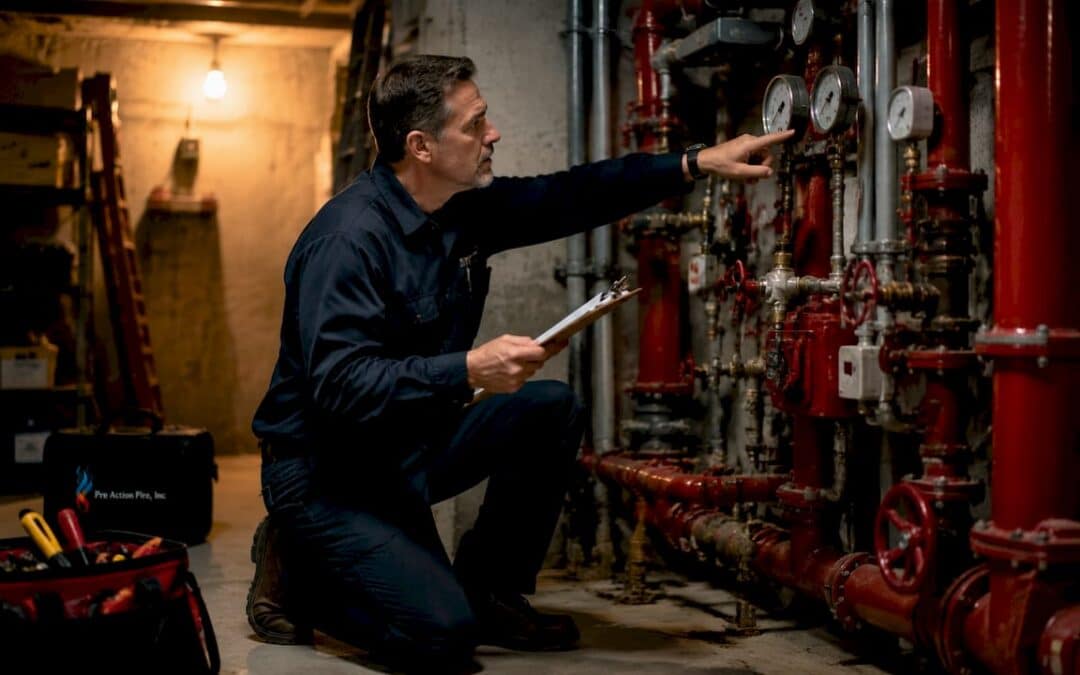
Licensed fire contractors are certified professionals responsible for the complete lifecycle of fire protection systems, from initial design through installation, testing, and ongoing maintenance, in commercial and industrial buildings. For facility managers and business owners, understanding the role of licensed fire contractors is not optional. It is a legal and financial obligation. Unlicensed or underqualified work exposes your property to failed inspections, voided insurance, and significant liability. This article breaks down what licensed contractors must do, what you gain by hiring them, and how to verify you are working with the right provider.
What are the legal and regulatory responsibilities of licensed fire contractors?
Licensed fire contractors operate under strict legal frameworks that vary by state but share common requirements across the country. These are not voluntary standards. They are enforceable conditions that determine whether a contractor can legally perform fire protection work on your property.
To obtain a license, contractors must meet several mandatory thresholds. Florida requires a minimum 70% score on a licensing exam. Idaho mandates a $2,000 surety bond. Maryland and Delaware require individual technicians to hold NICET Level III certification or higher. These requirements exist because fire protection failures carry life-safety consequences, not just property damage.
The legal obligations of a licensed fire contractor include:
- Passing state licensing exams that test knowledge of NFPA standards, local fire codes, and system design principles
- Carrying liability insurance and surety bonds to protect building owners from financial exposure caused by contractor errors
- Holding NICET certifications at the appropriate level for the systems being installed or maintained
- Providing official documentation per NFPA 13, 24, and 72, including Contractor’s Material and Test Certificates required to secure a Certificate of Occupancy
- Maintaining compliance records that satisfy both local fire marshals and insurance carriers
The penalties for bypassing these requirements are severe. Fines can reach $10,000 per day for serious fire code violations, and unauthorized work can result in misdemeanor charges. Beyond fines, non-compliant work can void your property insurance entirely, leaving you personally liable for fire-related losses.
Regulatory bodies also discipline contractors directly for misrepresentation and noncompliance, which means reputable licensed providers have strong professional incentives to maintain their standing.
Pro Tip: Verify any contractor’s license through your state fire marshal’s official registry before signing a contract. A license number that cannot be confirmed in the registry is a red flag, regardless of what documentation the contractor presents.
How do licensed fire contractors support fire safety system lifecycle management?
The fire safety contractor role extends far beyond installation day. Licensed contractors manage every phase of a fire protection system’s life, and each phase carries distinct technical and compliance requirements.
-
System design. A licensed contractor assesses building occupancy type, square footage, hazard classification, and local code requirements before specifying any equipment. A warehouse storing flammable materials requires a fundamentally different sprinkler design than a medical office building. This phase produces engineered drawings submitted to the authority having jurisdiction (AHJ) for approval.
-
Installation to NFPA standards. Sprinkler systems must comply with NFPA 13. Fire alarm systems fall under NFPA 72. Standpipe systems reference NFPA 14. Licensed contractors know which standard governs each component and install accordingly. Deviations from these standards during installation are the most common cause of failed inspections.
-
Commissioning and acceptance testing. Before a building receives its Certificate of Occupancy, the contractor must provide mandatory certificates confirming that all systems have been tested and meet code. This includes flow tests, alarm signal verification, and pressure checks documented on official forms.
-
Ongoing preventive maintenance. Fire protection systems are not static. Building renovations, changes in occupancy, and annual code updates all affect system requirements. Licensed contractors adapt systems to reflect these changes through scheduled maintenance contracts, preventing failures when systems are actually needed.
-
Compliance documentation and record keeping. Every inspection, test, and repair generates records that facility managers need for insurance audits, regulatory inspections, and liability defense. Licensed contractors provide time-stamped logs and digital records that form a traceable compliance history for your building.
Pro Tip: Ask your contractor for a sample maintenance report before signing a service agreement. If the documentation is vague or lacks system-specific data, that contractor will not serve you well during an insurance audit or AHJ inspection.
For new construction projects, understanding fire protection compliance requirements from the design phase forward prevents costly mid-construction corrections.
What benefits do facility managers gain from hiring licensed fire contractors?
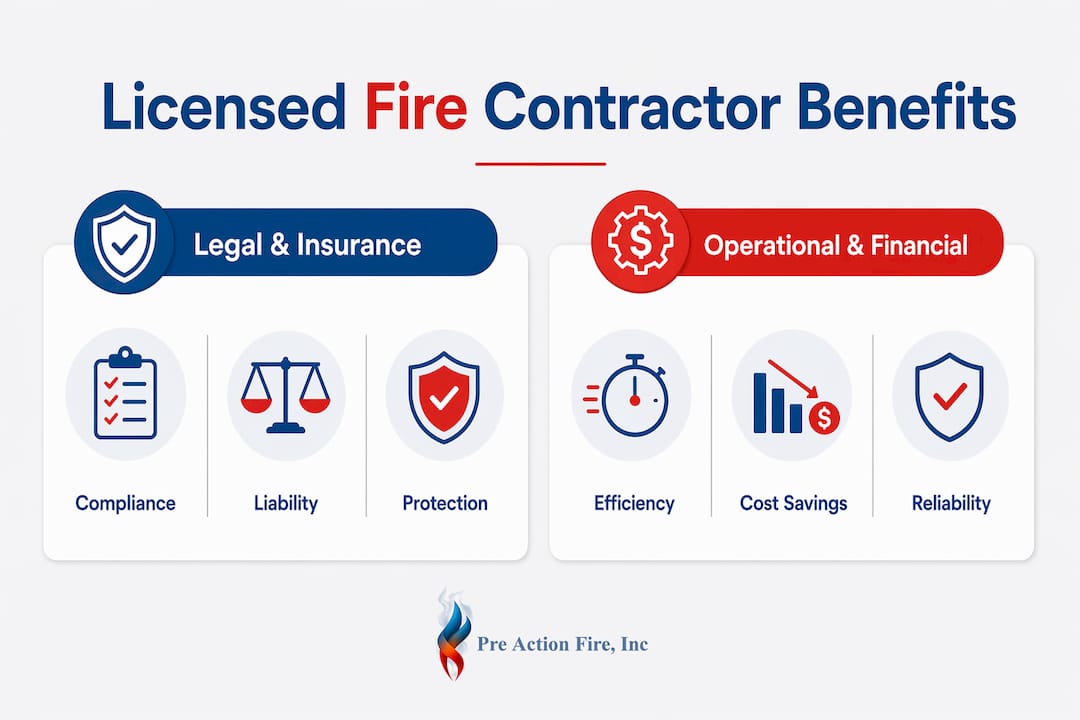
The benefits of licensed fire services are measurable across three categories: legal protection, financial performance, and operational reliability.

Legal and insurance protection
Facility managers carry personal legal accountability for fire safety failures on their properties. Courts hold building managers liable even when a contractor misrepresented their credentials. Proactive license verification is not just due diligence. It is a legal defense. Insurance carriers also prefer work performed by accredited contractors, and this preference can translate directly into lower premiums and fewer claim disputes.
Operational and financial efficiency
Fragmented vendor arrangements create accountability gaps. When one company installs a sprinkler system and a different company maintains the alarms, no single party owns the compliance outcome. Full-service licensed contractors centralize design, installation, inspection, and maintenance under one provider, reducing troubleshooting time and simplifying insurance claim documentation.
The cost comparison between licensed and unlicensed work is not close over a five-year horizon:
| Factor | Licensed contractor | Unlicensed or lowest-bid contractor |
|---|---|---|
| Inspection pass rate | High, with documented compliance records | Elevated risk of failed inspections |
| Insurance coverage | Maintained and supported | Risk of voided coverage |
| Long-term maintenance cost | Predictable with service contracts | Higher due to retrofits and emergency repairs |
| Legal liability exposure | Minimized through certified work | Significant, including personal liability |
| Code update management | Proactive and documented | Reactive or absent |
Hiring the lowest bidder consistently leads to poor compliance and elevated costs over time. Non-certified contractors increase the risk of failed inspections and expensive retrofits that a properly installed system would never require.
Understanding Colorado’s commercial fire code requirements gives facility managers a baseline for evaluating whether a contractor’s proposed scope of work actually meets state standards.
How to verify and choose a qualified licensed fire contractor?
Choosing the right contractor requires more than reviewing a proposal. It requires verifying credentials through independent sources before any work begins.
- Confirm the contractor’s state license through your state fire marshal’s official online registry. Do not accept a license number without independently confirming it is active and in good standing.
- Verify individual technician certifications. A company-wide license does not guarantee that the technician assigned to your building holds the required credentials. NICET certification at the technician level provides the highest confidence in system quality.
- Request proof of liability insurance with your facility listed as an additional insured. This protects you if the contractor’s work causes damage or injury.
- Ask for references from comparable facilities. A contractor experienced with retail strip centers may not be the right fit for a multi-story office building or a cold-storage warehouse.
- Review their documentation practices. Request a sample inspection report and a sample Contractor’s Material and Test Certificate. Contractors who cannot produce clean, detailed records will create compliance problems for you later.
- Evaluate their knowledge of current codes. Ask specifically how they handle mid-contract code changes. A qualified contractor will have a defined process. An unqualified one will not.
Fire safety compliance resources like LifeSafety.ai outline the maintenance and inspection standards that licensed contractors are expected to meet, giving you a useful benchmark when evaluating proposals.
Pro Tip: Request a copy of the contractor’s most recent state inspection or disciplinary record. Regulatory bodies publish this information publicly, and a clean record over multiple years is one of the strongest indicators of contractor reliability.
Key takeaways
Licensed fire contractors are the single most important external partner a facility manager can retain for fire safety compliance, legal protection, and system reliability across a building’s full operational life.
| Point | Details |
|---|---|
| Legal accountability is non-negotiable | Facility managers are personally liable for fire safety failures, even when caused by contractor error. |
| Licensing requirements are rigorous | Contractors must pass exams, carry bonds, hold NICET certifications, and provide NFPA-compliant documentation. |
| Full-service contractors reduce risk | Single-provider oversight centralizes records, simplifies audits, and eliminates accountability gaps. |
| Lowest-bid hiring increases long-term costs | Non-certified work leads to failed inspections, costly retrofits, and potential insurance voidance. |
| Technician-level verification matters | Confirm individual NICET credentials, not just the company license, before authorizing any work. |
What 15 years of fire safety work has taught me about contractor selection
Most facility managers I speak with treat contractor selection as a procurement exercise. They collect three bids, compare line items, and award the contract to the most competitive number. That approach works for landscaping. It does not work for fire protection.
The licensed fire contractor responsibilities that matter most are not visible in a proposal. They show up in the documentation a contractor produces after the work is done, in how they respond when the AHJ raises a question during inspection, and in whether they proactively notify you when a code change affects your system. Those behaviors separate genuine professionals from contractors who are simply licensed on paper.
I have seen facilities pass initial inspections with work that failed catastrophically within 18 months because the installing contractor had no maintenance relationship with the building. The system was installed correctly but never adapted to a tenant renovation that changed the occupancy classification. A full-service contractor with an ongoing maintenance agreement would have caught that change and filed the required permit before it became a liability.
The other pattern worth naming is the false economy of credential verification. Facility managers sometimes assume that a contractor’s proposal referencing NFPA standards is sufficient proof of competence. It is not. Any contractor can cite NFPA 13 in a document. Confirming that the assigned technicians hold active NICET certifications through the NICET registry takes five minutes and eliminates most of the risk.
Fire protection is one of the few building systems where the consequences of failure are immediate, irreversible, and personal. Treat contractor selection accordingly.
— Preactionfire
How Preactionfire serves Denver-area facility managers
Preactionfire has served the Denver Metro Area since 2009 with NICET-certified technicians who handle fire alarm systems, sprinkler installations, suppression systems, and inspection services for commercial and industrial properties. Every project includes full NFPA-compliant documentation, from Contractor’s Material and Test Certificates to ongoing maintenance records that satisfy both local fire marshals and insurance carriers.
For facility managers who need a single accountable partner across the full fire protection lifecycle, Preactionfire delivers fire alarm system compliance and professional fire safety inspections backed by verifiable credentials and a 15-year track record in Colorado. Contact Preactionfire directly to discuss your facility’s current compliance status and service needs.
FAQ
What does a licensed fire contractor do?
A licensed fire contractor designs, installs, tests, and maintains fire protection systems including sprinklers, alarms, and suppression systems to meet NFPA standards and local fire codes. They also provide the official documentation required to secure Certificates of Occupancy and satisfy insurance requirements.
What certifications should a fire contractor hold?
Licensed fire contractors should hold state-issued contractor licenses, carry liability insurance and surety bonds, and employ technicians with active NICET certifications at the appropriate level for the systems being serviced. NICET Level III or higher is required in several states including Maryland and Delaware.
What happens if I hire an unlicensed fire contractor?
Hiring an unlicensed contractor can result in fines up to $10,000 per day for fire code violations, voided property insurance, and personal legal liability for fire-related losses. Courts hold facility managers accountable for contractor credential failures regardless of what the contractor represented.
How do I verify a fire contractor’s license?
Confirm the contractor’s license through your state fire marshal’s official online registry using the contractor’s license number. Also verify individual technician NICET certifications through the NICET registry, since a company license alone does not confirm technician-level competence.
Why does hiring a full-service fire contractor matter?
A full-service licensed contractor centralizes design, installation, inspection, and maintenance under one provider, eliminating accountability gaps that arise when multiple vendors share responsibility for a single system. This structure simplifies compliance audits and reduces insurance claim disputes.