TL;DR:
- Most prescriptive fire codes are designed for average buildings and may not address complex or unique structures effectively.
- Performance-based fire protection solutions, permitted by Denver’s 2025 Fire Code, tailor systems to specific building conditions, enhancing safety and compliance.
Most property owners in the Denver Metro Area assume fire protection means selecting from a short list of standard systems and calling it done. That assumption can leave your building under-protected and out of compliance. The 2025 Denver Fire Code explicitly allows modifications to code provisions for practical difficulties when public safety is maintained, meaning tailored fire protection is not only permitted but often the smarter path forward. This guide walks you through what customized fire solutions actually involve, when they make sense, and how to navigate the approval process successfully.
Table of Contents
- When and why standard fire solutions fall short
- What makes a fire protection solution ‘customized’?
- How Denver’s fire code supports customization
- Real-world benefits: Safety, efficiency, and compliance gains
- The truth about custom fire solutions: What most miss
- Ready for a safer, compliant facility? Explore your custom solution options
- Frequently asked questions
Key Takeaways
| Point | Details |
|---|---|
| Denver code enables customization | Property owners in Denver can pursue tailored fire protection when public safety is maintained under the latest fire code. |
| Customized solutions address unique risks | Non-standard properties or uses often require custom approaches to ensure optimal safety and code compliance. |
| Approval process involves evidence | Documenting your design’s safety performance is essential for regulatory approval of custom fire solutions. |
| Benefits extend beyond compliance | Custom fire protection can improve operational efficiency, insurance eligibility, and peace of mind. |
When and why standard fire solutions fall short
Standard, prescriptive fire protection systems are designed around typical building configurations. They work well for the majority of structures, but Denver’s commercial landscape includes far more variety than a typical floor plan can accommodate.
Think about the historic brick warehouse in RiNo repurposed as a creative office campus, the mixed-use high-rise in LoDo with retail below and residential above, or the cold-storage distribution facility near the Denver Tech Center. Each of these properties has fire hazards, occupancy patterns, and structural constraints that a cookie-cutter system simply cannot address with precision. Understanding the full range of common fire hazards in Denver properties is the first step toward recognizing where standard solutions leave critical gaps.
When a generic system is installed without accounting for these variables, several problems emerge. Coverage gaps form in irregular floor plans or tall rack storage areas. Detection devices may trigger false alarms in environments with high dust, steam, or temperature swings, frustrating occupants and desensitizing staff. Suppression systems may deliver water where it causes damage but not where fire actually travels.
“In Denver Metro Area, fire code modifications exist specifically to address practical difficulties when standard code compliance does not fully serve public safety.”
Common scenarios where standard approaches fall short include:
- Historic buildings where wall penetrations or ceiling heights restrict standard sprinkler layouts
- Mixed-use developments where occupant loads and hazard classifications change from floor to floor
- Industrial and warehouse facilities with high rack storage requiring specialized suppression
- Data centers and server rooms where water-based suppression would destroy equipment
- Healthcare or laboratory environments where air handling and chemical storage require unique detection strategies
Tackling compliance and risk reduction in these settings demands a design approach that begins with the building’s actual conditions, not a product catalog.
Pro Tip: Bring a fire protection specialist into your planning process before finalizing architectural drawings. Identifying practical difficulties early prevents costly redesigns and code-variance delays after construction has begun.
What makes a fire protection solution ‘customized’?
The term “customized fire solution” refers specifically to a performance-based design approach, as opposed to the more common prescriptive design method.
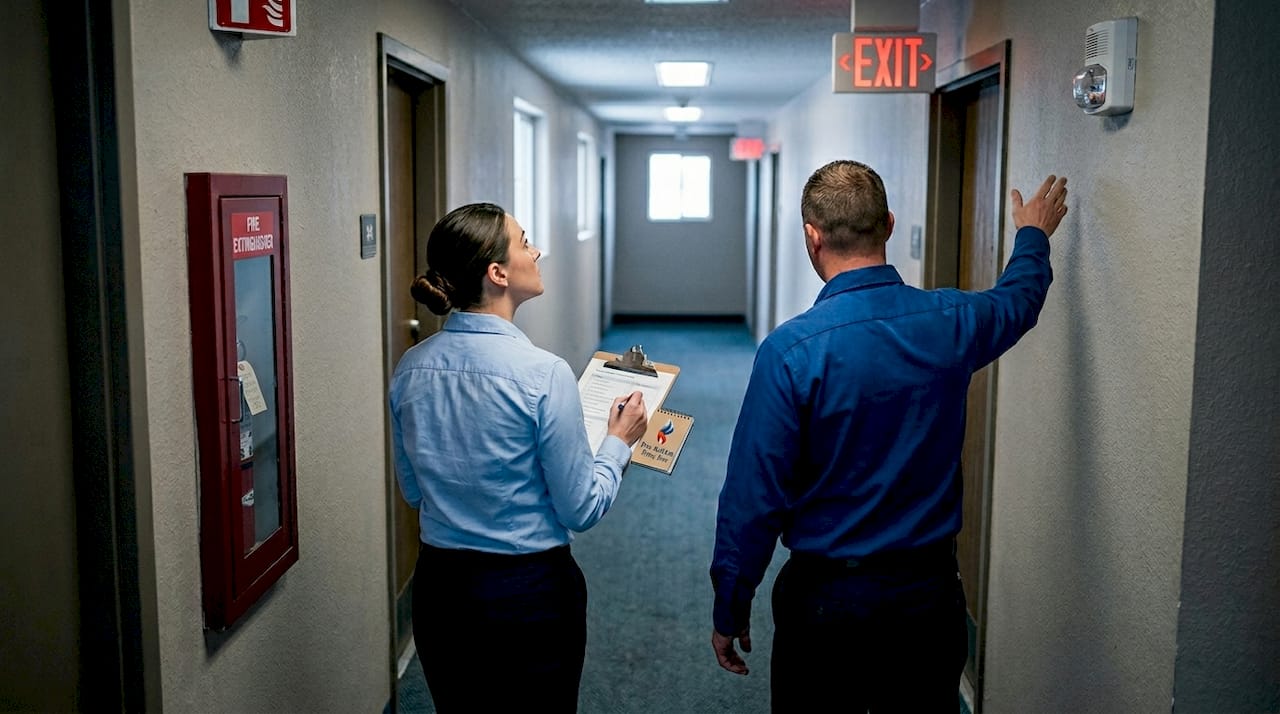
Prescriptive design means following a fixed code recipe. Install these devices, at these spacings, using these materials, and you are compliant. It is straightforward, widely understood, and appropriate for most standard buildings. Performance-based design, by contrast, starts with a defined safety outcome and engineers a system that achieves that outcome for the specific conditions of your facility. Performance-based design enables customized solutions for practical code difficulties as long as public safety is demonstrated.
Here is how the customization process typically unfolds for a Denver property:
- Facility assessment: A NICET-certified technician or licensed fire protection engineer evaluates the building’s occupancy type, construction materials, hazard classification, and unique constraints.
- Goal definition: Clear safety performance objectives are established, such as limiting fire spread beyond a defined area within a set time, or maintaining a specific detector response time.
- Hazard and risk analysis: The team identifies realistic fire scenarios based on fuel loads, ignition sources, and occupant behavior specific to your facility.
- System design: Engineers select and configure detection, alarm, suppression, and notification components to meet the defined goals, not just fill a prescriptive checklist.
- Documentation and modeling: Performance evidence is compiled, sometimes including fire modeling data or engineering calculations, to demonstrate that the proposed design meets or exceeds the safety intent of the prescriptive code.
- Submission and review: The documented plan is submitted to the authority having jurisdiction (AHJ), in Denver’s case the Denver Fire Department, for review and approval.
The contrast between these two paths is meaningful for safe, compliant Denver buildings:
| Feature | Prescriptive design | Performance-based design |
|---|---|---|
| Starting point | Code requirements | Building-specific safety goals |
| Flexibility | Low | High |
| Documentation burden | Minimal | Detailed technical documentation |
| Best suited for | Standard, typical buildings | Unique, complex, or historic properties |
| Approval path | Standard permit | AHJ review and approval of modification |
| Long-term adaptability | Limited | Easily updated as facility evolves |
| Cost profile | Lower upfront | Optimized overall for unique facilities |
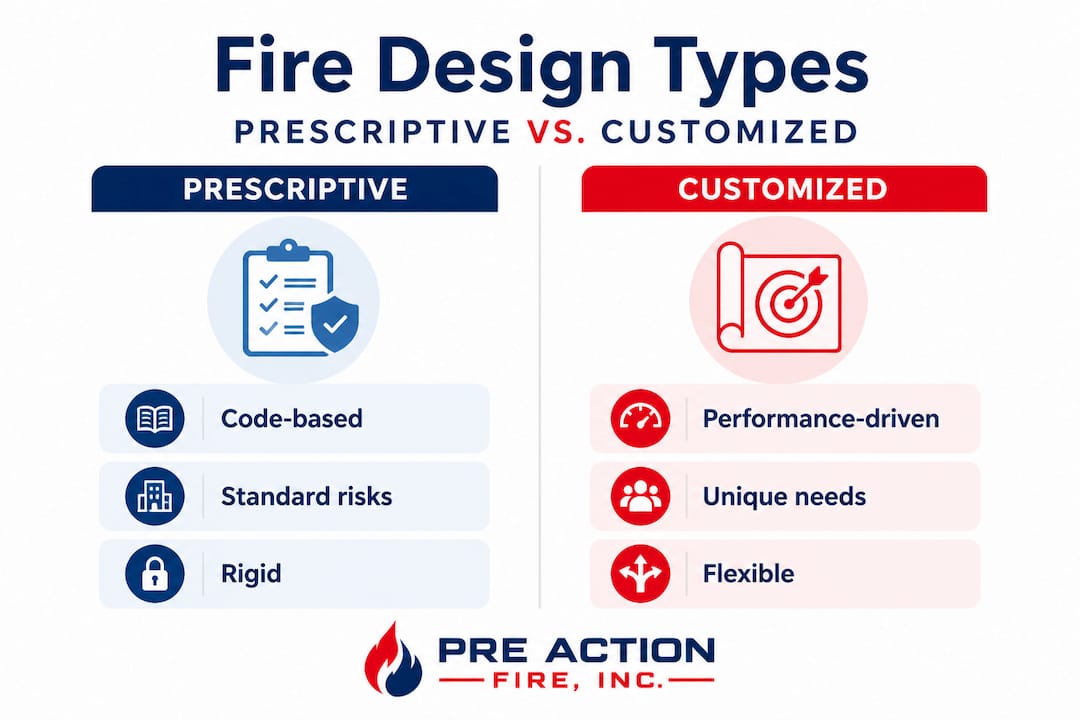
Understanding this distinction helps property managers and owners frame the right conversation with their fire protection partner from the start.
How Denver’s fire code supports customization
Denver adopted the 2025 Denver Fire Code to update its regulatory framework, and one of the most important elements for property owners is the formal recognition of performance-based designs and code modification pathways. The 2025 Denver Fire Code officially recognizes performance-based designs and details the process for code modifications, giving property owners and fire protection engineers a clear legal pathway to pursue customized solutions.
The modification process in Denver generally follows these decision points:
| Trigger condition | Recommended action |
|---|---|
| Standard code creates practical difficulty | Request code modification with performance evidence |
| Building has historic preservation restrictions | Coordinate with Denver Historic Preservation and Fire Dept. |
| Occupancy or use changes post-construction | Reassess system design; modification may apply |
| New construction with non-standard layout | Engage performance-based design from project start |
| Existing system fails to address known hazards | Upgrade with custom solution and document performance goals |
Navigating Denver fire alarm regulations is a critical part of any modification application, because alarm system design is often where standard code falls shortest for unusual buildings. Modifications to sprinkler layouts, suppression agent selection, and alarm zoning all require supporting documentation submitted to the Denver Fire Department.
The approval process involves submitting a clear engineering narrative, a design drawing package, and evidence that the proposed solution meets defined performance objectives. Turnaround time depends on the complexity of the modification and the completeness of your submission. Incomplete or vague applications are a common cause of delays. Once approved, the customized design becomes your facility’s code of record, meaning fire system certification and ongoing inspections will be based on your approved custom design, not the generic prescriptive standard.
Pro Tip: Document your performance goals, assumptions, and evidence clearly before submitting a modification request. Reviewers approve plans that demonstrate clear intent and solid engineering rationale. Ambiguous submissions get sent back, costing weeks of delay.
Real-world benefits: Safety, efficiency, and compliance gains
When a Denver property successfully implements a customized fire protection solution, the results are tangible and often exceed what a standard system could deliver. These are not abstract improvements. They show up in day-to-day operations, insurance costs, and long-term building value.
Consider three representative building types in the Denver Metro Area. A new construction mixed-use development in Capitol Hill used a performance-based approach to zone its alarm system by occupancy type, dramatically reducing false alarms in the residential floors triggered by cooking smoke. A converted historic warehouse in the Globeville neighborhood obtained a code modification that allowed an alternative sprinkler spacing design, preserving original timber ceiling elements while achieving superior suppression coverage through targeted head placement. A large-format cold storage warehouse in Commerce City implemented a pre-action suppression system, a design that requires dual triggers before releasing water, protecting inventory from accidental discharge while meeting fire suppression requirements precisely.
The benefits property owners and facility managers consistently report from customized solutions include:
- Fewer false alarms reducing operational disruption and preventing occupant desensitization to alerts
- Better detection accuracy through devices and sensor types matched to the actual environment
- Lower insurance premiums when underwriters see a documented, engineered approach to risk reduction
- Simplified inspections because the approved design matches actual installation, avoiding variance citations
- Longer system lifespan because the design accounts for the specific conditions the equipment must endure
- Regulatory confidence knowing your building fire protection compliance record reflects a thoroughly reviewed design
Customized solutions can resolve unique hazards while supporting or surpassing public safety requirements, which means you are not trading safety for flexibility. You are engineering both simultaneously.
A statistic worth noting: Facilities that transition from generic prescriptive systems to performance-based designs routinely report a 30 to 50 percent reduction in nuisance alarm events, according to fire protection engineering case studies. For a busy commercial property, that translates directly into less operational disruption and lower response fatigue among staff and building occupants.
Pro Tip: Set a calendar reminder to review your fire protection system every 12 months, particularly after any renovation, change in occupancy, or significant shift in operations. Facilities evolve, and your fire protection design should evolve with them to remain both effective and compliant.
The truth about custom fire solutions: What most miss
Here is something that rarely gets said plainly: prescriptive fire codes are written for the median building. They are designed to protect the largest number of structures efficiently, not to optimize protection for any single one of them.
That is a reasonable legislative approach, but it creates a real blind spot for Denver property owners managing anything outside the ordinary. When you follow prescriptive requirements in a building they were not written for, you end up with a system that technically passes inspection but does not perform optimally during an actual event. That gap is where losses happen.
What most facility managers miss when they first encounter performance-based design is that the approval process, while more involved, is actually an asset. It forces a documented, defensible record of every design decision. If a fire occurs and your system performs as designed, that documentation protects you legally and professionally. If a standard system is installed without analysis and something goes wrong, the defense is much thinner.
There is also a future-proofing dimension that gets undervalued. Denver’s fire code evolves. Occupancy patterns change. A customized design built on clearly documented performance goals can be updated incrementally as conditions shift, without triggering a full system redesign. Property owners who have engaged with Denver fire protection expertise consistently tell us that the investment in a thoughtful, tailored design pays dividends across the entire lifecycle of the building.
The uncomfortable truth is that many facility managers avoid custom solutions because the process seems complicated. In practice, with the right fire protection partner, the complexity is managed on your behalf. What you receive is a system that was actually designed for your building, not adapted from a template.
Ready for a safer, compliant facility? Explore your custom solution options
If any section of this article made you reconsider whether your current fire protection design truly fits your building, that instinct is worth acting on.
Pre Action Fire, Inc. has been serving the Denver Metro Area since 2009, and our NICET-certified technicians specialize in exactly the kind of facility-specific analysis that performance-based design demands. Whether you need to evaluate your current system, design a solution for new construction, or pursue a code modification for a unique property, we work directly with the Denver Fire Department’s approval process on your behalf. From fire alarm systems to suppression design and regular Denver fire safety inspections, we cover every element of your fire protection program across the greater Denver area. Reach out today to schedule your facility assessment.
Frequently asked questions
Does the Denver Fire Code really allow customized fire protection?
Yes, the 2025 Denver Fire Code explicitly allows for code modifications and performance-based designs when public safety is ensured. It is a formally documented pathway, not a loophole.
Who approves custom fire solutions in Denver?
The Denver Fire Department reviews and approves requests for customized solutions following their documented application process, as outlined in the fire code modification process. Submitting complete, well-documented plans significantly speeds up the review.
Is a customized solution more expensive than a standard one?
Upfront costs can be higher due to engineering and documentation, but customized solutions routinely deliver long-term savings through optimized system layouts, fewer false alarms, and reduced insurance premiums for complex or unique facilities.
What documentation is needed for a custom fire solution application?
Applicants should provide a performance-based design plan, evidence of public safety outcomes, and supporting technical documents, as performance-based designs must demonstrate their safety case as part of the code modification process.
How often should a customized fire solution be reviewed?
Customized solutions should be reviewed annually and any time a significant change occurs in building use, occupancy load, or physical layout to ensure the design continues to meet its documented performance goals.
Recommended
- Fire Alarm Systems: Safety & Compliance for Denver Businesses
- Building fire safety in Colorado: compliance and risk reduction
- Fire protection guide: safe, compliant Denver buildings
- Expert Fire Sprinkler Installation in Denver – Pre Action Fire, Inc
- 5 Ways To Reduce Fire Risk In Your Home – Essential Tips!