

TL;DR:
- Ignoring minor fire safety oversights can lead to failed inspections and increased fire risk in Colorado buildings. Prioritizing high-risk deficiencies and maintaining detailed documentation are essential for compliance and safety management. Engaging certified professionals and utilizing digital tracking help ensure proactive, effective fire safety programs.
One missed inspection tag on a sprinkler head. One unlogged fire door deficiency. One outdated floor plan submitted to your Authority Having Jurisdiction. Any of these single oversights can trigger a failed inspection, halt your operations, spike your insurance premiums, or worse, leave your building and its occupants genuinely exposed to fire risk. Colorado’s fire safety regulations are not forgiving of gaps, and for commercial property owners and facility managers, the margin for error is thin. Sprinklers control fires 97% of the time, yet compliance gaps still cause preventable deaths and injuries every year. This guide gives you a practical, ordered process to stay ahead of those gaps.
Table of Contents
- Understanding fire safety prioritization: Why order matters
- Preparation: What you need before you start
- Step-by-step fire safety prioritization process
- Common deficiencies and how to avoid them
- Perspective: What most property managers get wrong about fire safety prioritization
- Take the next step: Professional fire safety prioritization for Colorado properties
- Frequently asked questions
Key Takeaways
| Point | Details |
|---|---|
| Prioritize by risk | Always focus on high-hazard zones and critical deficiencies first for maximum safety and compliance. |
| Gather proper documentation | Accurate, up-to-date records and certifications are essential for passing inspections and insurance reviews. |
| Follow local codes | Colorado businesses must meet national and local fire codes, including recent amendments, to avoid penalties. |
| Audit and log routinely | Baseline audits and digital logging prevent missed tasks and repeated violations. |
| Choose qualified professionals | Certified inspectors and third-party validation boost credibility with AHJs and insurers. |
Understanding fire safety prioritization: Why order matters
Not all fire safety tasks carry equal weight. Replacing a burned-out exit sign matters, but it does not carry the same urgency as a failed sprinkler zone covering a high-occupancy assembly area. That distinction is the heart of fire safety prioritization: addressing the tasks that pose the greatest risk to life and property before moving on to lower-stakes items.
The Colorado Division of Fire Prevention and Control (DFPC) oversees fire life safety for state-owned and state-leased facilities, while local Authorities Having Jurisdiction (AHJs) govern commercial properties in cities like Denver, Aurora, and Lakewood. Both operate on the same core principle: risk-driven prioritization means high-hazard areas and critical system deficiencies get addressed first, every time.
Why does order matter so much in practice?
- Addressing low-priority cosmetic items while a sprinkler system has unresolved deficiencies creates liability exposure and signals poor management to your AHJ.
- Repeat code violations, which often stem from disorganized or reactive approaches, can trigger mandatory re-inspections, fines, and in serious cases, occupancy restrictions.
- Insurance carriers increasingly scrutinize inspection histories. A pattern of deferred high-risk items can result in coverage limitations or premium increases.
- Life safety systems like suppression, detection, and egress must function as an integrated whole. A failure in one component can cascade into broader system failure during an actual fire event.
Understanding common fire risks specific to Colorado properties, from high-altitude HVAC challenges to older building stock in Denver’s commercial corridors, helps you calibrate which areas in your facility deserve the earliest attention. Pairing that knowledge with a structured compliance and risk reduction framework is what separates reactive facility management from a proactive, defensible program.
Preparation: What you need before you start
Jumping straight into a prioritization effort without the right materials is like trying to navigate without a map. You need current codes, accurate documentation, the right professionals, and a tracking system in place before the first task gets assigned.
Codes and standards to have on hand:
- International Fire Code (IFC) with Colorado amendments
- International Building Code (IBC)
- NFPA 25 (inspection, testing, and maintenance of water-based fire protection systems)
- NFPA 72 (national fire alarm and signaling code)
- NFPA 101 (life safety code)
- 2025 Denver Fire Code, which includes local amendments that override or supplement national standards in Denver jurisdiction
A formal risk assessment, proper system design specs, and early consultation with your AHJ are critical to avoiding delays. The Denver Fire Code specifically outlines local requirements for sprinkler coverage, alarm notification, and occupancy classifications that differ from the base IFC. Knowing those differences before you begin saves you from costly mid-project redesigns.
Documentation you must secure:
- Current floor plans with fire protection system overlays
- Previous inspection and audit reports (at least the last two cycles)
- Active permits for any recent system installations or modifications
- Certification records for installed equipment and contractor credentials
Documentation is as critical as physical systems for passing compliance reviews and satisfying insurance requirements. Third-party certification, in particular, builds a level of credibility with AHJs and insurers that internal records alone cannot match.
| Preparation element | What you need | Who provides it |
|---|---|---|
| Current fire codes | IFC, IBC, NFPA 25/72/101, local amendments | AHJ, NFPA, city planning dept. |
| Floor plans | Updated building drawings with system layouts | Architect or original contractor |
| Inspection history | Last 2+ inspection/audit cycles | Previous inspector or facility records |
| Permits and certifications | Active permits, equipment certs | Contractor, AHJ records |
| Qualified professionals | Certified inspector, licensed contractor | Fire protection certifications |
| Digital tracking tool | Maintenance log, deficiency tracker | Facility management software |
Professionals you need to identify early:
- A certified fire inspector with Colorado credentials
- A licensed fire protection contractor for system work
- A third-party certifier for independent verification
Pro Tip: Before you assign a single task, conduct a baseline audit of your entire facility. This gives you an accurate starting inventory of deficiencies, system ages, and documentation gaps. Skipping this step is the single most common reason property managers end up with costly mid-project surprises. Learn more about structuring that process with risk assessment tips tailored to Colorado properties.
Step-by-step fire safety prioritization process
With your documentation organized and your team identified, you can work through the prioritization sequence. No formal statewide prioritization document exists in Colorado, but risk-based ITM per NFPA and IFC is the established standard practice across the state. Here is how to apply it:
-
Assess risk per zone. Walk each area of your building and assign a risk level based on occupancy type, hazard classification, and the consequences of a fire event in that space. A server room, a kitchen, and a storage area with flammable materials all carry different risk profiles.
-
Identify and score deficiencies. Document every deficiency found during your baseline audit. Score each one by severity: life-safety critical (immediate action required), high risk (address within 30 days), moderate risk (address within 90 days), and low risk (schedule for next maintenance cycle).
-
Address highest-risk and code-mandated items first. Any deficiency that triggers a code violation or affects a life-safety system, such as a failed sprinkler zone, a non-functioning fire alarm panel, or a blocked egress path, goes to the top of the work order queue. No exceptions.
-
Schedule inspection and maintenance within compliance timeframes. NFPA 25 and NFPA 72 specify inspection frequencies for different system components. Build those schedules into your tracking system so nothing slips past its required service window.
-
Document everything for your AHJ and insurer. Every completed task, every contractor visit, every system test result gets logged with date, technician name, and outcome. This paper trail is your defense in any compliance review.
Risk-based vs. sequential approach: A direct comparison
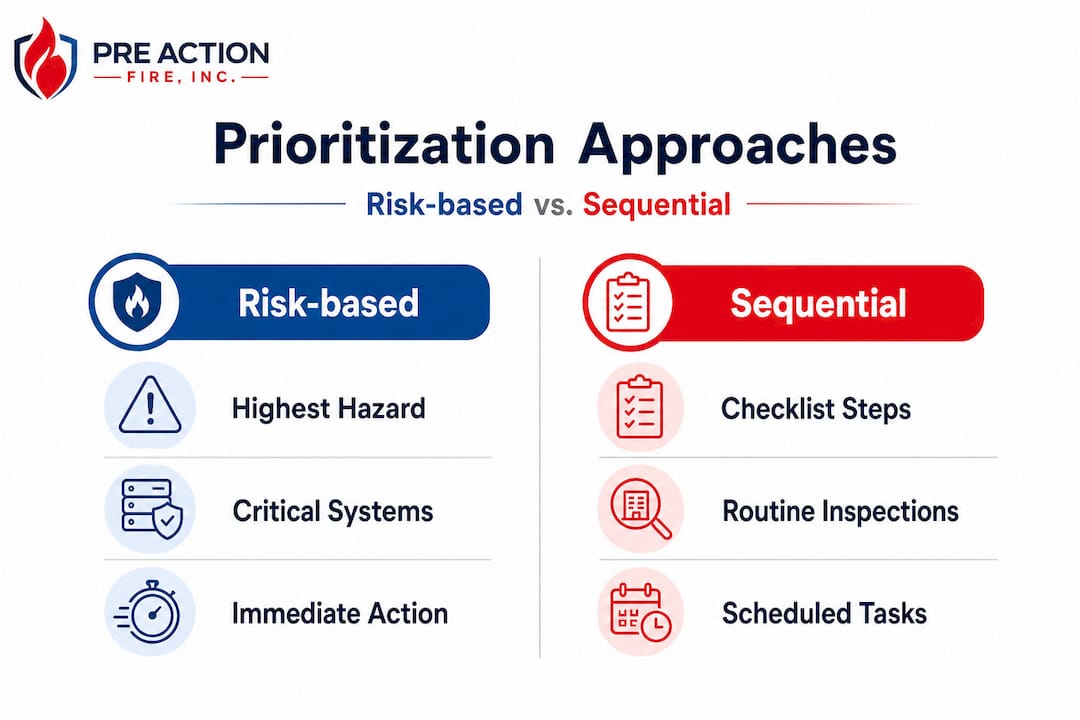
| Factor | Risk-based approach | Sequential (checklist) approach |
|---|---|---|
| Starting point | Highest hazard zones first | Top of the list first |
| Deficiency handling | Scored and prioritized by severity | Addressed in order found |
| Code alignment | Matches NFPA/IFC best practice | May miss critical items |
| AHJ perception | Demonstrates proactive management | Can appear reactive |
| Outcome | Fewer repeat violations | Higher risk of deferred critical items |
Understanding NFPA standards and how they apply to your specific building type is essential for building this sequence correctly. For facilities under new construction or major renovation, fire protection for new buildings introduces additional sequencing requirements tied to phased occupancy and construction-phase inspections.
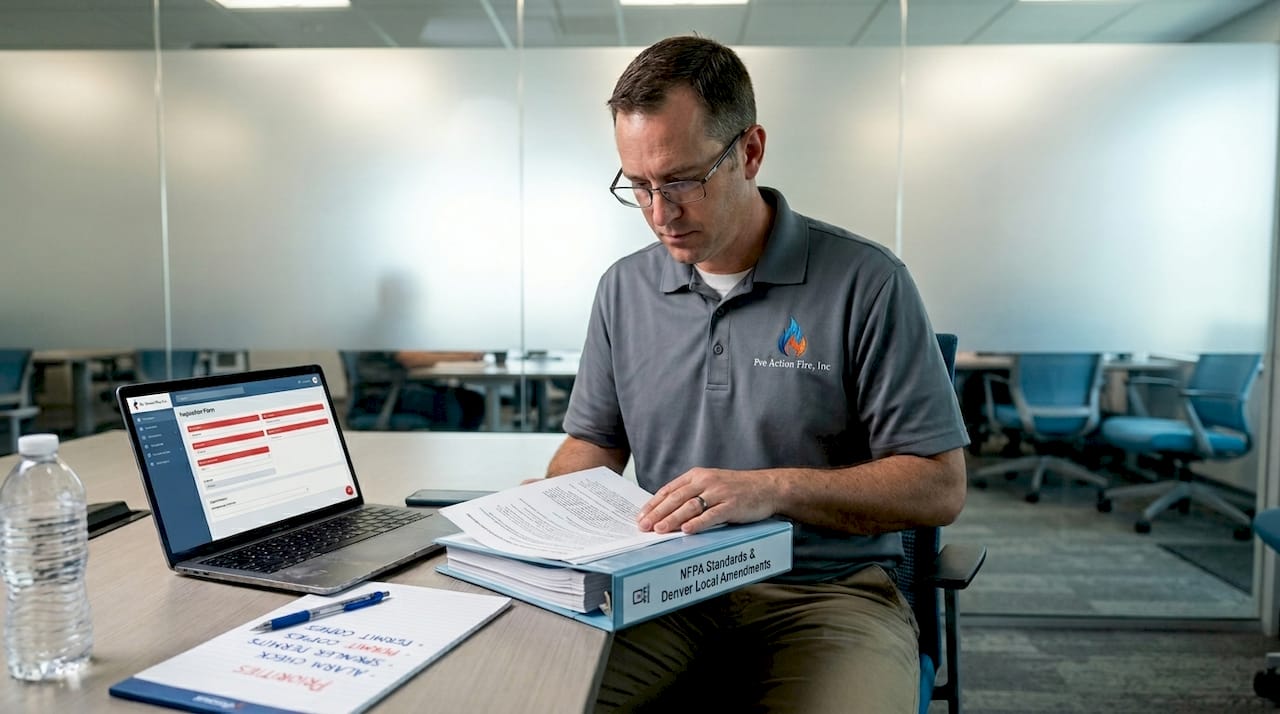
Pro Tip: Structure your digital maintenance logs by priority tier, not just by code section or system type. When your AHJ asks for records, being able to show that you addressed critical deficiencies first, with timestamps, demonstrates exactly the kind of intentional management they want to see. Colorado DFPC guidance reinforces this approach for state-level facilities, and local AHJs respond to it just as positively.
Common deficiencies and how to avoid them
Knowing where Colorado commercial properties most often fail gives you a significant advantage. You can build your prioritization process around the highest-probability failure points rather than treating all systems as equally likely to have issues.
According to Colorado fire suppression data, the most common deficiencies found in inspections are:
- Sprinkler systems: 389 documented deficiency cases, the single largest category
- Smoke detectors: 382 cases
- Carbon monoxide detectors: 22 additional cases
- Fire doors: 88 cases
“Automatic sprinkler systems are effective in controlling fires 97% of the time, significantly reducing deaths, injuries, and property loss when properly maintained and inspected.”
That 97% effectiveness figure only holds when the system is actually functional. A sprinkler head corroded by hard water, a control valve left in the closed position after a maintenance visit, or a system that has never been tested to NFPA 25 standards is not a 97% effective system. It is a liability.
How to avoid the most common failures:
- Implement routine digital logging for every sprinkler inspection, test, and maintenance visit. Do not rely on paper binders stored in a utility closet.
- Work exclusively with certified and licensed vendors. A contractor who cannot produce fire hazard solutions documentation and current Colorado credentials should not be touching your systems.
- Review each system’s audit trail before every scheduled inspection. Identify patterns: if the same sprinkler zone keeps generating flags, that is a systemic issue, not a one-time fix.
- Respond immediately to any flag raised by your AHJ or inspector, especially on repeat problem areas. A second citation for the same deficiency signals to regulators that your management process is broken.
Keeping your alarm system compliance current is particularly important because alarm deficiencies often go unnoticed until a test or actual event reveals the failure. Annual testing per NFPA 72 is the minimum, but quarterly functional checks on notification devices in high-occupancy areas are a worthwhile addition.
Perspective: What most property managers get wrong about fire safety prioritization
After years of working with commercial properties across the Denver Metro Area, one pattern stands out above all others: property managers treat fire safety as a checklist to get through, not a program to run. They complete the annual inspection, file the paperwork, and consider the job done until the next inspection cycle rolls around.
That approach works right up until it doesn’t. And when it fails, it fails hard.
The real gap is not usually in the physical systems. Most buildings have functional sprinklers and alarms. The gap is in the documentation and the ongoing management discipline between inspections. An AHJ who shows up for a spot check does not just look at your equipment. They look at your records. If you cannot produce a clean, timestamped log showing that deficiencies were identified, scored, and resolved in order of risk, you are exposed regardless of how good your hardware is.
Documentation is as critical as the physical system for passing compliance reviews and insurance audits. Third-party certification builds trust that no amount of internal record-keeping can replicate, because it introduces an independent verification layer that both AHJs and insurance underwriters recognize as credible.
The other mistake we see constantly is letting price drive vendor selection. Fire protection is not a commodity service. A contractor who bids 20% lower than the competition may not carry the NICET certifications or the Colorado-specific experience to catch the deficiencies that actually get your building cited. Choosing proven experience and current documentation and third-party certification credentials over the lowest invoice is one of the highest-return decisions you can make as a facility manager.
Treat every AHJ visit, scheduled or otherwise, as an opportunity to update your documentation and sharpen your prioritization workflow. The managers who do this consistently are the ones who never get surprised by a failed inspection.
Take the next step: Professional fire safety prioritization for Colorado properties
Knowing the process is one thing. Executing it with the precision that Colorado’s AHJs and insurance carriers expect is another. Professional fire safety consultation prevents the costly delays and compliance issues that come from working through prioritization without experienced guidance.
Pre Action Fire, Inc. has served the Denver Metro Area since 2009, and our NICET-certified technicians understand exactly what local AHJs look for and where commercial properties most often fall short. Whether you need a baseline audit, a full sprinkler inspection, or ongoing compliance support, we build programs around your building’s specific risk profile, not a generic checklist. Our fire safety inspections cover every critical system component, and we provide the documented records you need for both regulatory approval and insurance review. For properties in the northwest metro, our Arvada fire inspections team is ready to help. We also specialize in fire alarm system compliance for businesses that need to meet NFPA 72 requirements on a clear timeline.
Frequently asked questions
What is the main driver of fire safety prioritization in Colorado commercial buildings?
Risk level drives prioritization in Colorado, with high-hazard areas and critical deficiencies addressed before lower-risk items, as enforced by both the DFPC and local AHJs.
What codes and standards should Colorado property owners follow?
Owners must follow the IFC, IBC, and NFPA standards 25, 72, and 101, along with local amendments such as the 2025 Denver Fire Code for properties within Denver’s jurisdiction.
What are the most common fire safety deficiencies found in Colorado businesses?
Sprinklers, smoke detectors, and fire doors are the top three deficiency categories, with sprinkler issues leading at 389 documented cases in recent inspection data.
Why is third-party certification important for fire safety compliance?
Third-party certification builds trust with both insurers and AHJs by providing independent verification of your compliance status that internal records alone cannot deliver.
How can digital tools help in fire safety prioritization?
Digital logs and maintenance tracking tools let you organize deficiencies by priority tier and produce timestamped records on demand, which reduces oversight failures and strengthens your position during inspections.
Recommended
- Colorado building fire protection: 5-step compliance guide
- Building fire safety in Colorado: compliance and risk reduction
- Fire risk assessment tips for Colorado properties
- Industrial fire protection for Colorado sites: A compliance guide
- Colorado Building Code for Glass Railing – The Glass Railing Store