

TL;DR:
- Proper fire protection design significantly reduces casualties and property damage in Colorado buildings.
- Fire safety systems combine active detection and passive structural components to meet strict codes.
- Early integration of fire protection into project planning ensures compliance and reduces costly delays.
Properly designed fire protection systems reduce deaths and injuries by 88% and cut property losses by up to 70%, yet many Colorado developers still treat fire protection as an afterthought rather than a foundational design element. For new commercial and industrial construction in Colorado, the stakes are especially high: state and local fire codes are non-negotiable, enforcement is active, and a single missed requirement can halt occupancy. This article breaks down exactly what fire protection means for new builds, which codes apply, how hazard classification shapes system design, and what wildfire risk adds to the equation in Colorado.
Table of Contents
- Understanding fire protection for new construction in Colorado
- Regulatory codes: IBC, IFC, and NFPA explained
- Hazard classification and system design essentials
- Wildfire and WUI risk: Colorado-specific construction strategies
- Permits, inspections, and ongoing compliance
- Are you missing the big picture in fire protection planning?
- Connecting your project to expert fire protection solutions
- Frequently asked questions
Key Takeaways
| Point | Details |
|---|---|
| Colorado-specific codes | New builds are governed by 2021 IBC, IFC, and NFPA standards, which are strictly enforced in Colorado. |
| Hazard-based design | Fire system design is driven by occupancy type—offices, warehouses, or industrial—impacting sprinkler and alarm choices. |
| Wildfire mitigation | Properties in WUI zones require special materials and strategies to satisfy wildfire risk codes. |
| Permits and inspections | Permits must be secured before construction, with regular NFPA 25 inspections essential for ongoing compliance. |
| Plan beyond the code | Holistic early planning helps safeguard people, property, and investments—going beyond code minimums. |
Understanding fire protection for new construction in Colorado
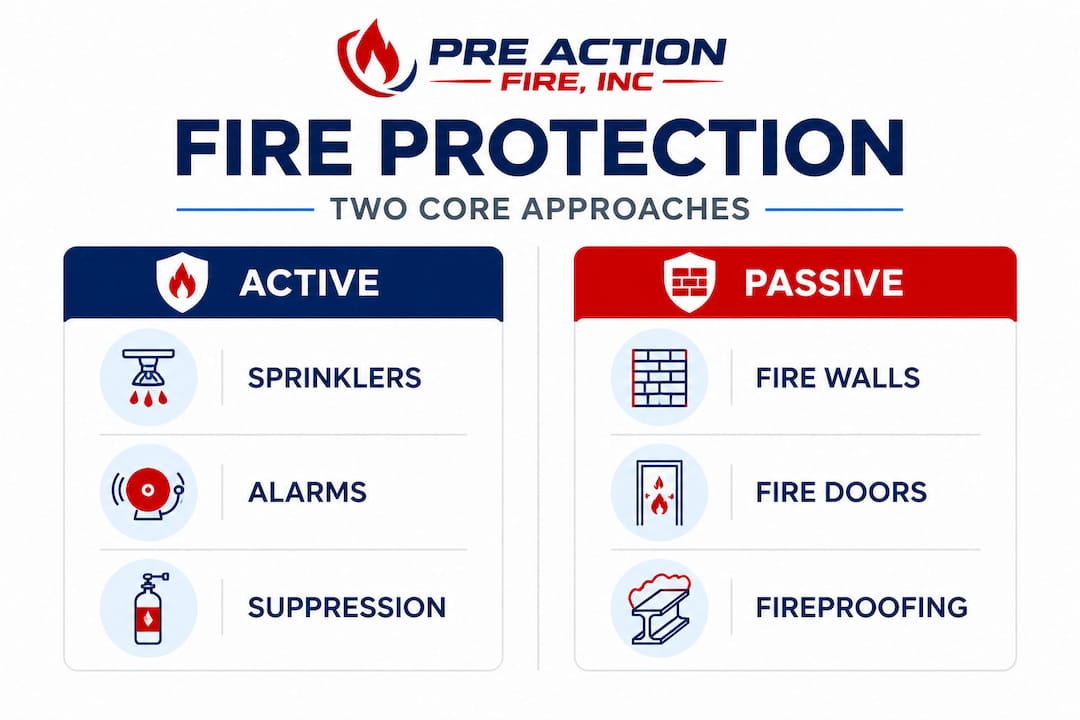
Fire protection is not a single system. It is a layered strategy that combines two distinct categories working together: active systems and passive systems.
Active fire protection includes anything that detects and responds to fire in real time. Sprinkler systems, fire alarm systems, and suppression agents all fall into this category. These systems require power, water supply, or chemical agents to function and must be designed, installed, and tested to specific standards.
Passive fire protection refers to the structural elements built into the building itself. Fire-rated walls, floors, and ceilings, along with fire-resistant materials and compartmentalization, slow the spread of fire without any mechanical action. Both categories must work together for a building to meet code.
For new construction in Colorado, the minimum legal standards are set by the 2021 editions of the IBC, IFC, NFPA 13 (sprinkler installation), NFPA 72 (fire alarm systems), and NFPA 25 (inspection, testing, and maintenance). These are not optional guidelines. They are the legal floor, and local jurisdictions like Denver often layer additional requirements on top.
Every compliant new commercial build in Colorado will typically include:
- A wet or dry pipe sprinkler system sized to the occupancy hazard class
- A fire alarm system with detection, notification, and monitoring
- Emergency lighting and exit signage
- Fire-rated assemblies at key structural and separation points
- A water supply capable of meeting the system demand
Understanding Colorado building fire safety from the ground up means recognizing that compliance protects more than just the building. It protects your liability, your insurance coverage, and your ability to legally occupy the structure.
Pro Tip: Bring your fire protection contractor into the design process during schematic design, not after construction documents are finalized. Early coordination with your architect and mechanical engineer prevents expensive redesigns later.
Regulatory codes: IBC, IFC, and NFPA explained
Understanding which code governs which part of your project is one of the most common points of confusion for developers and project managers. Here is a clear breakdown.
The International Building Code (IBC) governs how a building is physically constructed. It sets requirements for structural integrity, egress, occupancy classification, and the fire-resistance ratings of building assemblies. If you are deciding what materials to use for a fire-rated wall or how many exits a floor needs, the IBC is your reference.
The International Fire Code (IFC) picks up where the IBC leaves off. It governs fire protection systems, hazardous materials storage, emergency access, and ongoing maintenance requirements once the building is occupied. Think of the IBC as the blueprint standard and the IFC as the operational standard.
The NFPA standards get more specific. Colorado’s adopted NFPA fire safety standards include:
- NFPA 13 covers the design and installation of automatic sprinkler systems, including pipe sizing, head selection, and water supply calculations.
- NFPA 72 governs fire alarm and signaling systems, including detection devices, notification appliances, and monitoring requirements.
- NFPA 25 sets the schedule for ongoing inspection, testing, and maintenance of water-based fire protection systems after installation.
Here is how these codes compare in practical terms:
| Code | Primary focus | When it applies | Who enforces it |
|---|---|---|---|
| IBC 2021 | Building construction and materials | Design and construction phase | Building department |
| IFC 2021 | Fire systems and operational safety | Construction through occupancy | Fire marshal |
| NFPA 13 | Sprinkler system design | Design and installation | Fire protection engineer |
| NFPA 72 | Fire alarm design and installation | Design and installation | Fire marshal/AHJ |
| NFPA 25 | Ongoing system testing | Post-occupancy | Fire marshal/owner |
Colorado adopts the 2021 editions of IBC, IFC, and several NFPA standards as mandatory minimums for new construction, but individual jurisdictions can and do adopt amendments. Denver, Aurora, and Boulder each have local amendments that modify certain requirements. Always confirm the adopted code version with the Authority Having Jurisdiction (AHJ), which is the local fire marshal or building department, before finalizing your design.
Your building fire protection compliance guide should document every code reference, amendment, and AHJ approval in writing. This documentation becomes critical during inspections and certificate of occupancy review.
Hazard classification and system design essentials
Once you know which codes apply, the next step is determining your building’s hazard classification. This single decision drives nearly every sizing and specification choice in your sprinkler system design.
NFPA 13 defines three primary hazard classes, each with specific water density requirements:
| Hazard class | Typical occupancy | Water density (gpm/ft²) | Design area (ft²) |
|---|---|---|---|
| Light Hazard | Offices, schools, churches | 0.10 | 1,500 |
| Ordinary Hazard Group 1 | Light manufacturing, parking | 0.15 | 1,500 |
| Ordinary Hazard Group 2 | Warehouses, machine shops | 0.15 to 0.20 | 1,500 |
| Extra Hazard Group 1 | Woodworking, die casting | 0.30 | 2,500 |
| Extra Hazard Group 2 | Industrial spray finishing | 0.40 | 2,500 |
These hazard classification requirements directly determine the pipe sizes, pump capacities, and sprinkler head types your system needs. A standard K-factor of 5.6 is the minimum for most light and ordinary hazard applications, but extra hazard occupancies often require large-drop or ESFR (Early Suppression Fast Response) heads with K-factors of 11.2 or higher.
Sprinkler head selection is not just about water output. Spacing, ceiling height, and obstruction clearances all affect coverage. A warehouse with rack storage above 12 feet, for example, may require in-rack sprinklers in addition to ceiling-level heads. Getting this wrong during design means costly rework during inspection.
Key decisions driven by hazard classification include:
- Pipe sizing and layout: Higher hazard classes require larger diameter mains and branches to deliver required flow rates.
- Water supply verification: Your local water utility must confirm that available pressure and flow meet system demand at the point of connection.
- Pump requirements: Many industrial sites cannot rely on municipal supply alone and require a dedicated fire pump, which must also meet NFPA 20 standards.
- Alarm valve selection: Wet systems, dry systems, pre-action systems, and deluge systems each serve different occupancy and climate needs.
Pro Tip: For mixed-use industrial buildings where one area might be office space and another is a manufacturing floor, each zone must be classified and designed independently. Trying to apply a single hazard class to the whole building almost always results in either under-protection or unnecessary cost. Check out these warehouse fire safety tips for more on protecting high-hazard storage environments.
Wildfire and WUI risk: Colorado-specific construction strategies
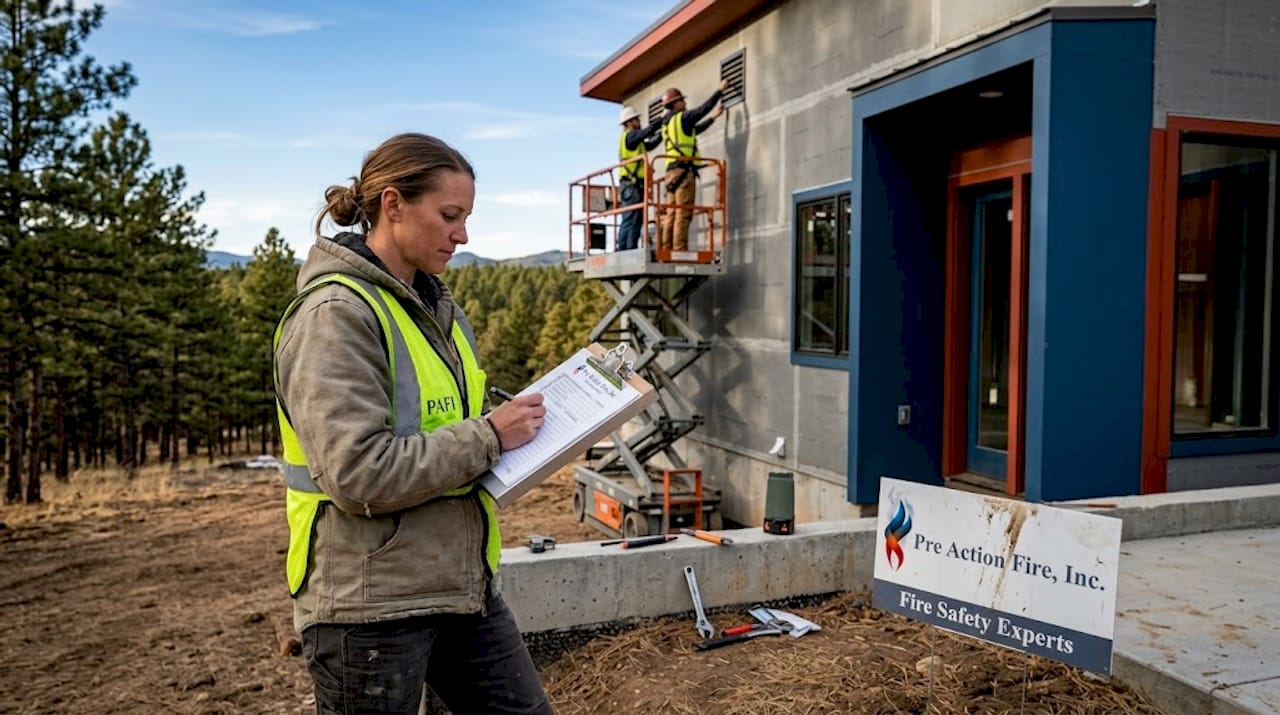
Colorado’s wildfire risk adds a layer of complexity that most other states do not face at the same scale. If your project sits in or near a Wildland-Urban Interface (WUI) zone, you are subject to additional construction requirements that go well beyond standard fire protection codes.
The WUI is defined as the area where developed land meets or intermingles with undeveloped wildland vegetation. In Colorado, this includes significant portions of the Front Range foothills, mountain communities, and even some suburban areas along the I-70 corridor. Determining whether your site falls within a designated WUI zone is the first step, and it must happen before design begins.
“For industrial and commercial construction in Colorado WUI zones, the 2021 International Wildland-Urban Interface Code (IWUIC) requires Class A roofing assemblies, ignition-resistant walls and decks, ember-resistant venting, and noncombustible exterior cladding as minimum construction standards.” Colorado Wildfire Mitigation Construction
Practical WUI compliance steps for your project include:
- Class A roofing assemblies: These are the highest fire-resistance-rated roofing materials available. Metal, concrete tile, and certain composite materials qualify. Standard asphalt shingles typically do not.
- Ignition-resistant construction: Exterior walls, soffits, and decks must use materials that resist ignition from direct flame and radiant heat. This often means fiber cement, treated wood, or masonry.
- Ember-resistant venting: Standard attic and crawlspace vents are a primary entry point for windblown embers. WUI-compliant vents use fine mesh or intumescent materials to block ember intrusion.
- Defensible space zones: Colorado law requires maintaining vegetation-free or low-fuel zones around structures, typically 30 feet for Zone 1 and 100 feet for Zone 2, though local requirements vary.
- Noncombustible cladding: Exterior wall cladding within WUI zones must meet specific flame-spread index ratings. Many common commercial cladding systems require testing documentation to verify compliance.
Failing to address WUI requirements during design is one of the most expensive mistakes a Colorado developer can make. Retrofitting ember-resistant vents or replacing non-compliant cladding after framing is complete can add tens of thousands of dollars to a project budget.
Permits, inspections, and ongoing compliance
Even the best-designed fire protection system fails its purpose if the administrative side is mismanaged. Permits, inspections, and ongoing compliance are not bureaucratic formalities. They are the legal mechanism that verifies your system actually works as designed.
Here is the typical sequence for a new commercial construction project in the Denver Metro Area:
- Submit fire protection permit application with shop drawings, hydraulic calculations, and equipment specifications before any system installation begins.
- Receive plan review approval from the AHJ. This can take two to six weeks depending on jurisdiction and project complexity.
- Rough-in inspection after piping is installed but before walls are closed. The inspector verifies pipe routing, hangers, and clearances.
- Hydrostatic pressure test to confirm the system holds pressure without leaks.
- Final acceptance test with the AHJ present, including alarm activation, flow tests, and documentation review.
- Phased occupancy approval if portions of the building will be occupied before the entire project is complete. Each occupied phase must have fully functional and approved fire protection.
After occupancy, NFPA 25 requires quarterly valve inspections and full annual system inspections. Denver also requires that inspection records be maintained on-site and available for review by the fire marshal at any time.
Pro Tip: Build your inspection schedule into your project handover documents and lease agreements from day one. Building owners who inherit a system without clear maintenance records often face violations during the first annual inspection. Review the full Denver fire protection guide to understand what documentation you need at each stage, and schedule your Denver fire safety inspections well in advance of occupancy deadlines.
Are you missing the big picture in fire protection planning?
After working in fire protection across the Denver Metro Area since 2009, we have seen a consistent pattern: developers and project managers who focus exclusively on code minimums often end up spending more money and facing more delays than those who treat fire protection as an integrated design discipline.
Here is the uncomfortable truth. Passing inspection is not the same as being well-protected. A system designed to the absolute minimum code requirement may check every box on the inspector’s list and still leave significant gaps in real-world performance. We have seen warehouses with code-compliant ceiling-level sprinklers that provide almost no protection once rack storage is added post-occupancy. The code was met. The building was not actually protected.
The most common oversights we encounter include designing fire protection in isolation from the mechanical and structural trades, skipping early water supply verification only to discover inadequate municipal flow during acceptance testing, and treating NFPA 25 maintenance as optional until a violation notice arrives.
The developers who come out ahead are the ones who integrate risk reduction strategies into every phase of their project. They bring fire protection engineers into pre-design meetings. They budget for maintenance contracts before the building opens. They think about what the building will actually be used for in five years, not just what it is zoned for today.
Code compliance is the starting line, not the finish line. The buildings that perform best in real fire events are the ones where fire protection was treated as a design priority, not a permit requirement.
Connecting your project to expert fire protection solutions
Navigating Colorado’s fire protection requirements for new construction is complex, and the cost of getting it wrong is significant. Whether you are breaking ground on a warehouse in Arvada, a commercial office campus in Denver, or an industrial facility along the Front Range, working with a NICET-certified fire protection team from the start makes every phase of the project smoother.
Pre Action Fire, Inc. has been serving the Denver Metro Area since 2009, providing design, installation, and inspection services for commercial and industrial new construction. Our team handles everything from Arvada fire sprinkler installation to fully integrated fire alarm systems for Denver businesses, all engineered to meet current IBC, IFC, and NFPA standards. We also provide ongoing Denver fire safety inspections to keep your systems compliant long after the certificate of occupancy is issued. Contact us early in your project timeline and we will make sure fire protection works with your design, not against it.
Frequently asked questions
What are the minimum fire protection requirements for new commercial builds in Colorado?
New commercial buildings in Colorado must meet the 2021 IBC, IFC, and NFPA standards for systems including sprinklers, fire alarms, and passive fire-rated assemblies, with local jurisdictions adding amendments on top of those minimums.
How often do fire protection systems need to be inspected after installation?
NFPA 25 requires quarterly valve tests and full annual inspections of water-based fire protection systems, with records kept on-site and available to the fire marshal.
What is considered a Light, Ordinary, or Extra Hazard occupancy?
Light Hazard covers offices and similar low-fuel environments, Ordinary Hazard applies to warehouses and light manufacturing, and Extra Hazard occupancies include industrial spray finishing and other high-risk processes, each requiring progressively higher water density from sprinkler systems.
How does building on wildfire-prone land affect fire protection requirements?
WUI zones in Colorado require Class A roofs and ember-resistant vents along with noncombustible exterior cladding per the IWUIC 2021, adding significant design and material requirements beyond standard fire codes.
What happens if I miss a required fire protection permit or inspection?
Missing a required permit or inspection can delay or revoke occupancy approval, and phased occupancy in Denver depends on documented system compliance at each stage, meaning one missed step can hold up the entire project handover.