

TL;DR:
- Proper fire system design in Colorado requires hazard analysis, hydraulic calculations, and adherence to both national and local codes. Failure to account for altitude, climate, and jurisdiction-specific amendments can lead to compliance issues and system failure during emergencies. Collaborating with experienced, NICET-certified professionals ensures a reliable, code-compliant fire protection system tailored to each property’s unique needs.
Many property owners in Colorado assume that installing a few sprinkler heads satisfies fire code. It doesn’t. Fire system design is a technical discipline that requires hazard analysis, hydraulic calculations, equipment selection, and alignment with both national standards and Colorado-specific amendments. Get it wrong, and you’re facing failed inspections, liability exposure, and, most critically, a system that may not perform when lives are on the line.
Table of Contents
- Understanding fire system design: Key components and standards
- Design methodology: Step-by-step breakdown for Colorado properties
- Compliance essentials: Navigating local codes and maintaining safety
- Applying fire system design: Practical scenarios and common challenges
- Our perspective: Rethinking fire system design for modern Colorado facilities
- Next steps: Connect with local fire system experts
- Frequently asked questions
Key Takeaways
| Point | Details |
|---|---|
| Hazard assessment first | A thorough risk assessment is the foundation of effective fire system design. |
| Local codes matter | Colorado compliance and AHJ amendments often override national standards for safety. |
| Annual maintenance required | Fire systems must be inspected, tested, and maintained annually per NFPA 25. |
| Altitude impacts hydraulics | Colorado’s elevation affects water supply calculations and sprinkler effectiveness. |
| Certified expertise essential | Working with NICET-certified designers ensures both compliance and best protection. |
Understanding fire system design: Key components and standards
Fire system design isn’t a product you purchase off a shelf. It’s a process that begins with a thorough risk assessment of your building, its occupants, and the activities happening inside. Only after that assessment can a qualified designer determine which system type, layout, and equipment will actually protect your property.
The governing baseline for most commercial sprinkler systems in the United States is NFPA 13 (Standard for the Installation of Sprinkler Systems). This document defines everything from pipe sizing to sprinkler head spacing. The core methodology for sprinkler design per NFPA 13 requires the designer to classify occupancy hazard, select the appropriate system type, and then perform hydraulic calculations to confirm the water supply can meet demand. Every step matters, and skipping one creates a gap that inspectors and the fire itself will find.
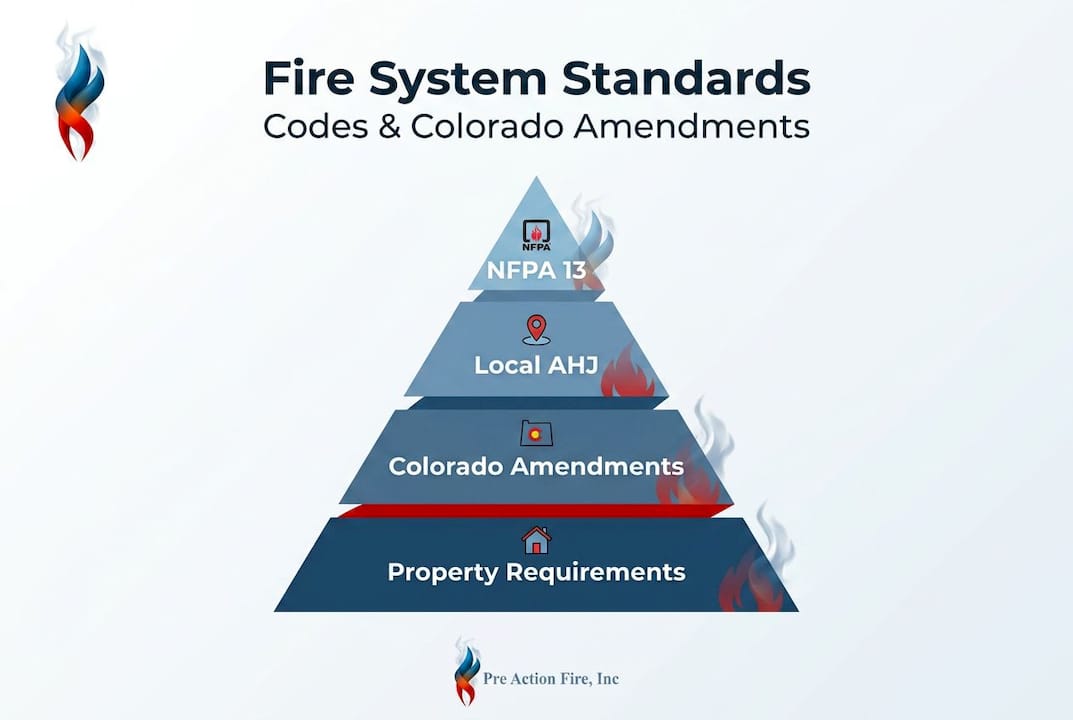
Colorado adds another layer. The state adopts national codes but frequently amends them through the Authority Having Jurisdiction (AHJ), which is the local fire marshal or building department responsible for enforcing fire codes in a given area. Denver’s AHJ may impose requirements that differ from what you’d encounter in Aurora or Lakewood. That’s why Colorado fire protection compliance requires property managers to look beyond the national standard and understand the specific rules that apply to their jurisdiction.
Key system types in commercial fire protection
The four primary system categories you’ll encounter in Colorado commercial buildings are:
- Wet pipe systems: Water sits in pipes at all times, ready to discharge when a head activates. Fastest response. Best for heated, occupied spaces.
- Dry pipe systems: Pipes hold pressurized air or nitrogen rather than water. When a head opens, air releases and water floods in. Ideal for unheated spaces like parking garages.
- Pre-action systems: Require two events before water flows, making them the right choice for server rooms, archives, or any space where accidental discharge would cause serious secondary damage.
- Deluge systems: All heads open simultaneously when triggered. Used in high-hazard environments like aircraft hangars or chemical storage areas.
Choosing between these systems isn’t a preference. It’s a technical decision based on occupancy hazard classification, ambient temperature, and what you’re protecting.
| System type | Water in pipes | Best application | Colorado example |
|---|---|---|---|
| Wet pipe | Yes | Offices, retail, hotels | Downtown Denver high-rises |
| Dry pipe | No (air) | Unheated spaces | Mountain resort parking structures |
| Pre-action | No (air + detection) | Server rooms, archives | Data centers in Aurora |
| Deluge | Open heads | High-hazard industrial | Aerospace facilities in Jefferson County |
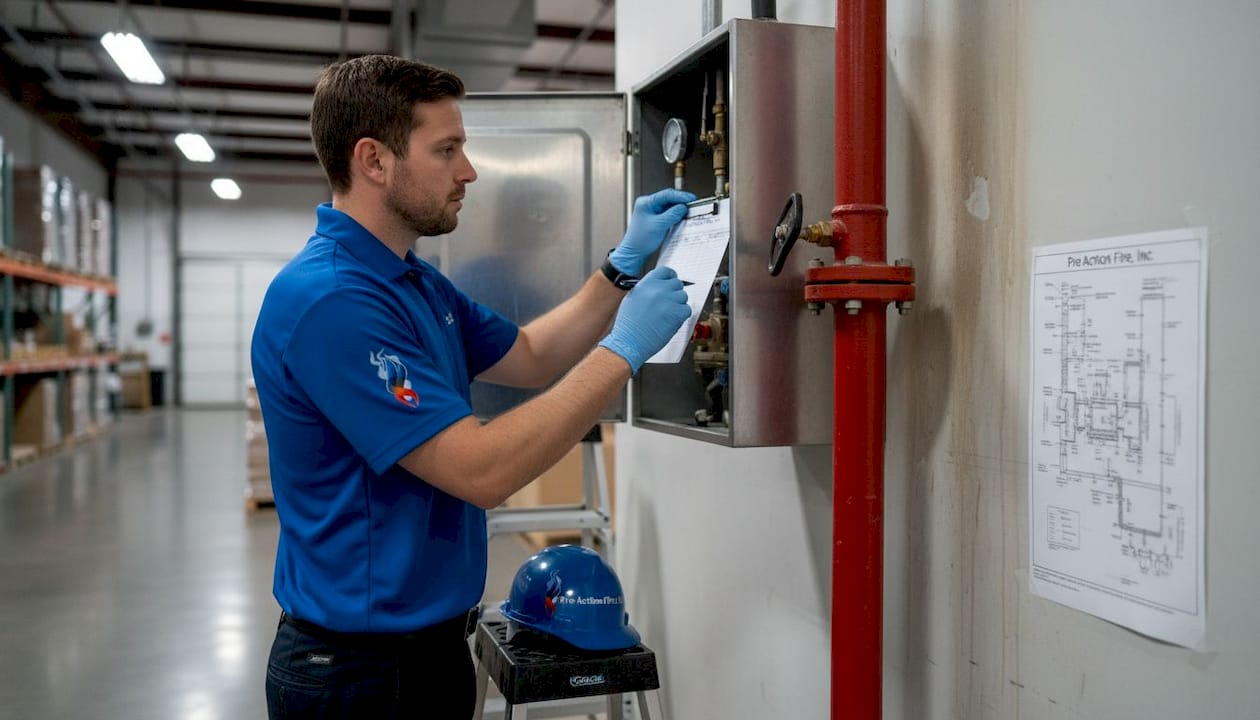
Pro Tip: Before finalizing any system type, verify whether your local AHJ has adopted amendments to NFPA 13. We’ve seen projects in the Denver Metro Area where local requirements added specific head types or increased water demand requirements beyond the national baseline. This is especially important for fire system design for new builds, where early planning prevents costly redesigns.
Design methodology: Step-by-step breakdown for Colorado properties
Now that we’ve covered the foundational standards, let’s walk through how fire system design is applied step by step for Colorado commercial properties. The process is methodical, and every phase builds on the previous one.
The standard design sequence follows this order: classify occupancy hazard, select the system type, choose the appropriate sprinkler heads, perform hydraulic calculations, and then lay out the system per spacing and coverage rules. Here’s what each step involves in practice:
-
Hazard classification: Every occupancy falls into one of three categories: Light Hazard (low combustible load, like offices), Ordinary Hazard (moderate fuel load, like retail or light manufacturing), or Extra Hazard (high fuel loads or fast-burning materials, like warehouses with flammable storage). This classification directly determines how much water the system must deliver per square foot.
-
System type selection: Based on the hazard class and environmental conditions, the designer selects from wet, dry, pre-action, or deluge configurations. A mixed-use building may require more than one system type in different zones.
-
Sprinkler head selection: Head type (upright, pendent, concealed, ESFR), temperature rating, and K-factor (a measure of flow rate) are all determined based on ceiling height, hazard level, and rack storage height where applicable.
-
Hydraulic calculations: This is where spreadsheets and software earn their value. The designer calculates the flow and pressure required at the most demanding point in the system, then verifies the building’s water supply can meet that demand plus a safety buffer of at least 10 psi above calculated demand.
-
System layout and spacing: Sprinkler heads are placed according to maximum coverage area rules, obstruction clearance requirements, and minimum distances from walls. Getting this wrong leads to uncovered zones or pressure imbalances.
| Occupancy class | Density requirement | Typical properties |
|---|---|---|
| Light hazard | 0.10 gpm/ft² | Offices, churches, schools |
| Ordinary hazard Group 1 | 0.15 gpm/ft² | Parking garages, laundries |
| Ordinary hazard Group 2 | 0.20 gpm/ft² | Dry cleaners, auto showrooms |
| Extra hazard Group 1 | 0.30 gpm/ft² | Woodworking, printing |
| Extra hazard Group 2 | Up to 0.40 gpm/ft² | Flammable liquid handling |
Pro Tip: Colorado’s altitude, particularly at elevations above 5,000 feet, affects both atmospheric pressure and the performance of hydraulic calculations. Denver sits at 5,280 feet, and many surrounding municipalities sit even higher. Always confirm your designer accounts for altitude corrections when sizing pumps and calculating pressure loss through sprinkler coverage standards in Colorado. Ignoring this can leave you with a technically “code-compliant” system that underperforms during an actual fire event.
Working with fire system zoning is another step that deserves attention. Large facilities need their systems divided into logical zones so a triggered area can be isolated and identified quickly, reducing confusion during an emergency response and making maintenance more manageable.
Compliance essentials: Navigating local codes and maintaining safety
After understanding the step-by-step methodology, it’s critical to realize how compliance with local codes and regular maintenance shapes overall safety and legal liability. Compliance isn’t a one-time checkbox. It’s an ongoing obligation.
NFPA 25 (Standard for the Inspection, Testing, and Maintenance of Water-Based Fire Protection Systems) governs how your system must be maintained after installation. It requires at minimum an annual ITM cycle, but specific components such as backflow preventers, fire pumps, and control valves may require quarterly or even monthly checks. Per Colorado fire protection rules (8 CCR 1507), facility managers should prioritize NICET-certified designers and maintain systems per NFPA 25 minimum annual ITM requirements, noting that edge cases like high-altitude environments can affect hydraulic performance over time.
“Local codes are frequently more stringent than NFPA minimums. In Colorado, the AHJ has authority to impose requirements that exceed national standards. If your designer only knows NFPA and ignores local amendments, you’re building a compliance gap into the foundation of your system.”
Here’s a practical breakdown of what Colorado compliance requires of facility managers:
- Retain records of all inspections, tests, and maintenance activities for a minimum of three years, with some jurisdictions requiring longer retention.
- Ensure any modifications to the building layout trigger a fire system design review. Adding a storage rack, changing a ceiling, or expanding a space can invalidate your current system’s coverage.
- Verify that your fire alarm and notification systems are integrated properly with your sprinkler system. NFPA inspection compliance in Colorado addresses both together, not as separate obligations.
- Understand that the Colorado fire code requirements may reference the International Fire Code (IFC) as adopted with state-specific modifications. This overlap creates complexity that non-specialists often miss.
One critical statistic worth knowing: your water supply must exceed the calculated demand by at least 10 psi at the design point. This buffer accounts for supply variability and ensures the system performs reliably under real-world conditions, not just ideal laboratory scenarios. Many facilities that were designed years ago no longer meet this threshold because municipal water pressure in their area has changed. Regular testing reveals these gaps before they become failures.
Understanding Colorado building codes more broadly also helps property managers connect the dots between structural requirements and fire protection. Fire-rated assemblies, compartmentalization, and egress design all interact with your sprinkler and alarm system in ways that affect your overall compliance posture.
Applying fire system design: Practical scenarios and common challenges
With compliance understood, let’s move from theory to practice, revealing how fire system design adapts to varied property scenarios and the recurring challenges managers face in Colorado.
Scenario 1: Large warehouse in the Denver Metro Area. A 200,000-square-foot distribution facility storing mixed commodities on rack shelving requires Extra Hazard classification and likely ESFR (Early Suppression Fast Response) sprinkler heads. These heads deliver higher water volumes in the early stages of a fire to suppress rather than just control it. The design must account for rack height, commodity type, flue spaces between racks, and available water supply from the municipal main. High-altitude hydraulic adjustments are mandatory here. As Colorado fire protection rules confirm, edge cases like high-altitude environments directly affect hydraulic performance.
Scenario 2: Mixed-use retail and office building. A three-story building with ground-floor retail and upper-floor offices presents a mixed-occupancy challenge. The retail floors may classify as Ordinary Hazard Group 2, while the office floors qualify as Light Hazard. Different density requirements mean different system designs per floor, and the alarm and notification device compliance must cover both occupancy types with appropriate notification zones.
Common challenges Colorado facility managers encounter include:
- Water supply limitations: Older commercial districts may have undersized mains that can’t support modern fire system demands. A fire pump or on-site storage tank may be required.
- Altitude-related pressure loss: High elevation reduces available water pressure, requiring designers to add safety factors that a lower-elevation system wouldn’t need.
- Mixed occupancies: Buildings that blend hazard levels in different zones require more complex zoning and potentially multiple system types.
- Renovation-driven compliance gaps: A tenant improvement project that adds walls, lowers ceilings, or changes use classification can render the existing fire system non-compliant overnight.
- Aging infrastructure: Systems designed 20 years ago to older code editions may not meet current standards, putting the property owner at legal and financial risk during an inspection or incident.
System certification in Aurora and neighboring Denver Metro jurisdictions follows specific AHJ protocols. Working with a local specialist who knows these protocols saves time and prevents last-minute surprises during the final inspection.
Pro Tip: Conduct a risk assessment before any significant renovation, not after. We’ve seen projects where owners completed a full tenant buildout only to discover the existing sprinkler system needed a complete hydraulic recalculation. Early assessment makes design changes far less expensive to accommodate.
Our perspective: Rethinking fire system design for modern Colorado facilities
After working on fire protection projects across the Denver Metro Area since 2009, we’ve arrived at a conclusion that challenges how most building owners approach this topic: generic compliance is not the same as genuine safety.
Most property managers treat fire system design as a permitting hurdle. Get the plans stamped, pass inspection, move on. That mindset produces systems that technically meet the code but weren’t optimized for how the building actually gets used. We’ve reviewed systems where the occupancy classification used in the design didn’t match the actual storage practices happening inside the warehouse. We’ve seen pre-action systems installed in the right room but wired to a detection system that wasn’t calibrated for the correct response threshold. These systems would have failed in a fire. They passed every inspection.
The uncomfortable truth is that code compliance is a floor, not a ceiling. The real safeguard is a system designed by someone who has spent time in your building, understands Colorado’s unique environmental conditions, and knows your local AHJ’s enforcement patterns. A NICET-certified designer working with local experience catches the things that generic solutions miss.
Our most reliable clients are the ones who treat their fire system as a living asset that needs review when the building changes, not just when the inspection calendar comes up. Fire protection for new construction is the easiest time to build excellence into a system. But retrofitting excellence into an older building is still far less expensive than the alternative.
We also want to challenge the idea that exceeding code requirements is a luxury. In Colorado, where altitude affects hydraulics, wildfire risk increases ambient fire exposure, and winter temperatures can compromise dry systems, building beyond the minimum is often the practical choice. The extra investment upfront becomes the margin that keeps your system reliable over a 20-year lifecycle.
Next steps: Connect with local fire system experts
Understanding fire system design at this level of detail is a real advantage, but knowledge needs to be paired with the right partner to translate it into a compliant, high-performing system.
At Pre Action Fire, Inc, we’ve been designing, installing, and maintaining fire protection systems for Colorado commercial properties since 2009. Our NICET-certified technicians understand both the national NFPA standards and the specific amendments that apply to Denver, Aurora, Lakewood, and surrounding jurisdictions. Whether you’re starting a new construction project, managing a compliance audit, or dealing with a system that hasn’t been properly maintained, we can help you close the gap.
Start with a fire safety inspection to establish where your current system stands against today’s codes. If you’re in the planning phase of a new facility, connect with us for sprinkler installation in Arvada or explore fire system certification in Aurora. We build systems that protect what matters, and we stand behind every installation with ongoing service and support.
Frequently asked questions
What does a fire system designer do?
A fire system designer assesses building risks, selects appropriate systems and components, and ensures full compliance with NFPA 13 and Colorado-specific code amendments. The core methodology includes occupancy hazard classification and hydraulic calculations to confirm water supply adequacy.
How often must fire systems be inspected in Colorado?
Most fire systems require annual ITM in Colorado per NFPA 25 minimum requirements, but certain components like fire pumps and control valves may require more frequent checks depending on local AHJ requirements.
Which properties need specialized fire system design?
Properties classified as Extra Hazard, including warehouses, industrial facilities, and flammable liquid storage sites, require specialized design with higher density requirements up to 0.40 gpm per square foot and often need dedicated fire pumps.
Do altitude and climate affect fire system design in Colorado?
Yes, altitude directly impacts hydraulic calculations and available water pressure, and as Colorado regulations confirm, these edge cases must be addressed specifically in the design process to ensure reliable system performance.
Recommended
- Colorado building fire protection: 5-step compliance guide
- Building fire safety in Colorado: compliance and risk reduction
- Industrial fire protection for Colorado sites: A compliance guide
- Fire protection for new construction: compliance and safety
- Colorado Building Code for Glass Railing – The Glass Railing Store