
TL;DR:
- Regular annual fire inspections ensure ongoing compliance and safety for Colorado commercial properties, including Denver.
- Understanding inspection types, checklist items, and proactive maintenance helps property managers minimize violations and associated costs effectively.
Passing a fire inspection once does not mean your building stays compliant. Colorado commercial properties, especially those in Denver, are subject to ongoing fire code compliance requirements that include annual reviews and, in some cases, unscheduled special inspections triggered by complaints, renovations, or observed hazards. If you manage a commercial property in Colorado and think your last passed inspection covers you indefinitely, this guide is exactly what you need to read before your next notice arrives.
Table of Contents
- What is an annual fire inspection?
- Key components and what inspectors look for
- Understanding special vs. routine inspections
- How annual inspections drive compliance and safety
- A fresh perspective: why proactive inspections pay off beyond avoiding fines
- Take charge of your fire safety compliance
- Frequently asked questions
Key Takeaways
| Point | Details |
|---|---|
| Annual inspections are required | Most Colorado properties must undergo an annual fire inspection to stay compliant, not just a one-time check. |
| Both routine and special inspections occur | Fire officials can schedule additional inspections for violations, complaints, or construction changes. |
| Knowing what to expect helps | Understanding the inspection checklist lets you prepare and avoid costly violations. |
| Compliance boosts safety and reduces risk | Staying up to date is proven to prevent fires, lower liability, and protect occupants and assets. |
What is an annual fire inspection?
An annual fire inspection is a scheduled, on-site review of your building’s fire protection systems, safety features, and code compliance. Local fire officials or city-approved third-party providers conduct these reviews to verify that your property continues to meet all applicable fire codes, not just at the time of the last check but on an ongoing basis.
The purpose goes beyond paperwork. Inspectors look for real hazards that can injure people, destroy property, or expose you to serious legal liability. In Colorado, most commercial buildings are subject to these reviews every year, meaning compliance is a cycle rather than a milestone.
Denver’s fire code specifically distinguishes between two types of inspections:
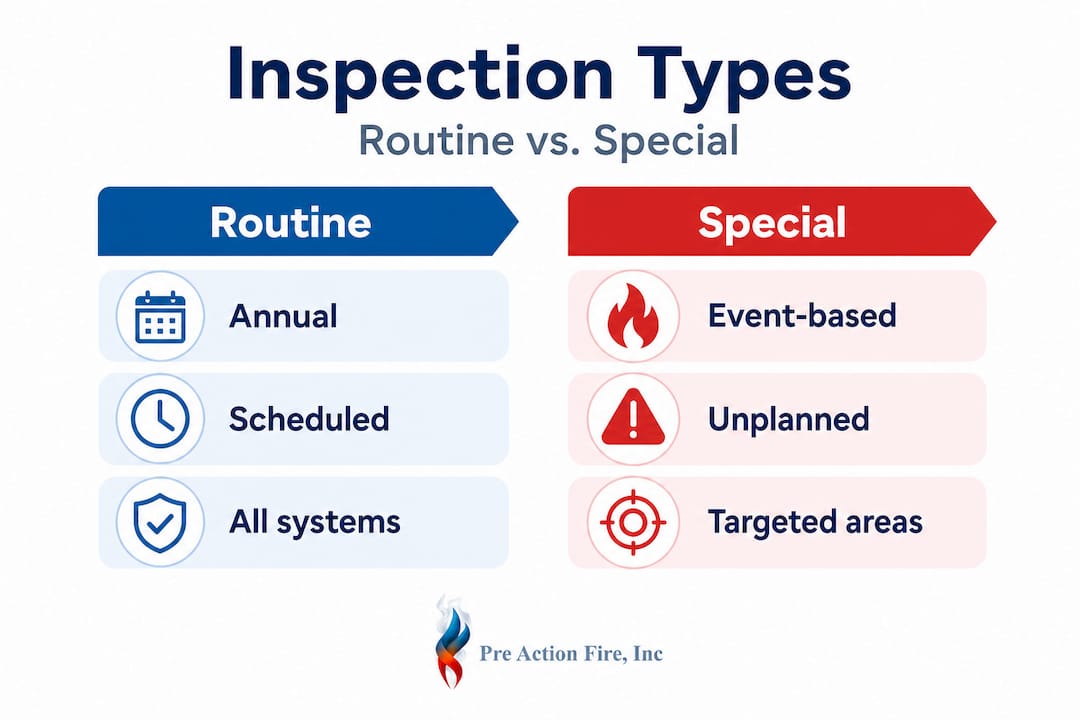
- Routine (annual) inspections: Scheduled checks that follow a standard cycle and cover fire protection systems, exits, egress paths, signage, and equipment.
- Special inspections: Additional inspections ordered by the fire department outside the regular schedule. These can happen after a code complaint, a remodel permit, a fire incident, or when the city has reason to believe a building may be out of compliance.
Important for Denver property owners: According to Denver’s fire safety inspection framework, special inspections conducted outside normal business hours can require you to reimburse the city at hourly rates for a minimum number of hours. This is not a theoretical cost. Budget for it if your building has had recent changes or concerns.
Understanding the Colorado fire code requirements that apply to your property type is the first step toward avoiding surprises at inspection time.
Key components and what inspectors look for
With a definition in place, let’s unpack exactly what inspectors focus on during your annual visit. Inspectors don’t just glance around the lobby. They work through a structured checklist that touches nearly every fire protection system in your building.
The 2025 Denver Fire Code specifies that inspections can cover a broad range of fire protection systems, from extinguishers and alarm panels to suppression systems and egress routes. Here is a breakdown of the typical checklist items and the violations inspectors most commonly find:
| Inspection area | What inspectors check | Most common violation |
|---|---|---|
| Fire extinguishers | Date tags, charge levels, placement | Expired tags, blocked access |
| Fire alarm systems | Panel status, pull stations, detectors | Faults not cleared, missing devices |
| Sprinkler systems | Head clearance, pressure, valve status | Obstructed heads, closed valves |
| Emergency exits | Clear path, door hardware, signage | Locked or blocked exit doors |
| Emergency lighting | Battery backup, illumination coverage | Dead batteries, missing fixtures |
| Hazardous materials | Storage compliance, labeling | Improper storage quantities |
| Egress paths | Width, obstructions, signage | Storage blocking corridors |
The most frequently cited violations tend to be the simplest ones. Blocked exits, expired extinguisher tags, and silenced alarm faults that were never properly addressed are consistent patterns across commercial properties of all sizes.
Common hazards cited during inspections:
- Exit doors that don’t open freely from the inside
- Fire extinguishers that were moved and never returned to their marked location
- Alarm systems with known faults that were silenced rather than repaired
- Sprinkler heads with less than 18 inches of clearance beneath them
- Missing or damaged emergency exit signage
- Electrical panels with blocked access within three feet
Understanding these fire risks in Colorado buildings helps you anticipate what will catch an inspector’s attention before they even enter your building.
Pro Tip: Keep a written maintenance log for every fire protection system in your building. Date every service visit, note every repair, and record every system test. Handing an inspector a clean, up-to-date log immediately establishes credibility and often reduces the depth of scrutiny on well-documented systems.
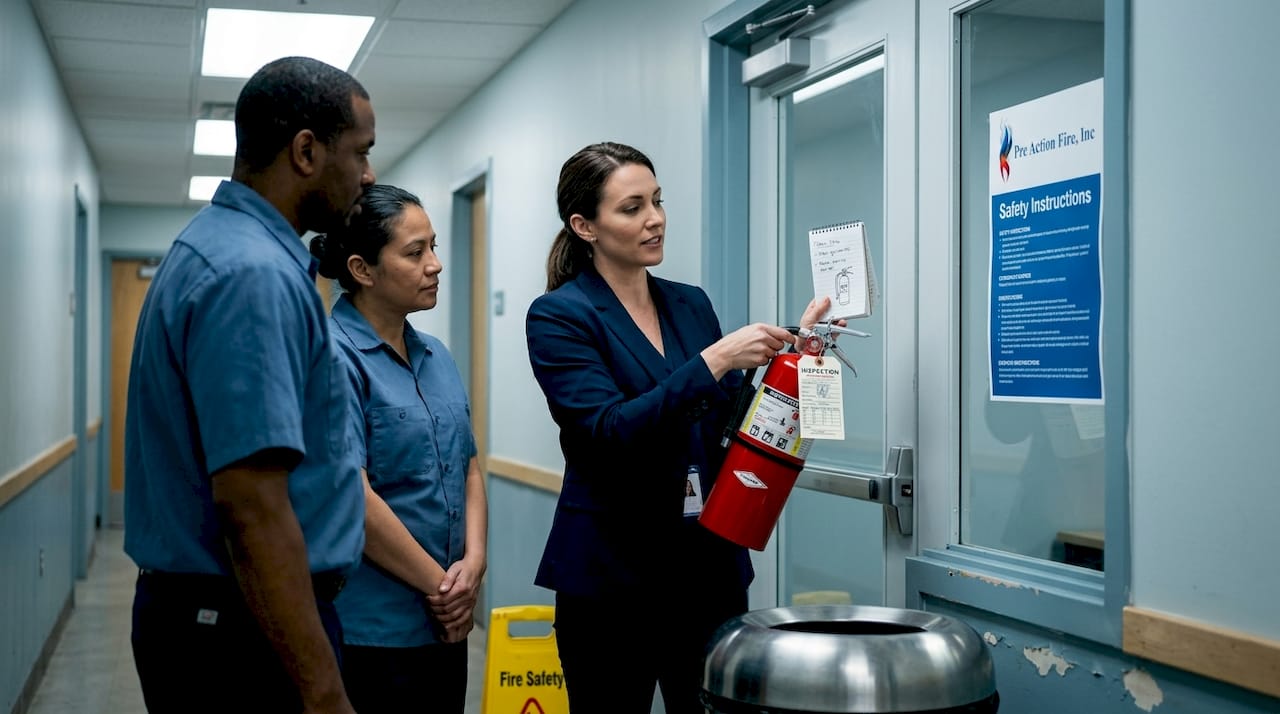
Why does documentation matter so much? Because an inspector who can see that your sprinkler system was serviced three months ago and your alarms were tested last quarter is far more likely to spend time on areas that genuinely need attention rather than treating every system as unknown. Properties with strong documentation records also demonstrate an active safety culture, which matters during both routine and special inspections.
Regular staff training plays an equally important role. When your employees know where extinguishers are, how to report alarm faults, and why exits must stay clear at all times, you reduce the chance that a human behavior pattern, not a broken system, causes a violation. Training records should be kept alongside your equipment maintenance logs. Inspectors increasingly ask about staff training during walk-throughs, especially in higher-occupancy buildings where occupant behavior directly affects fire safety.
Reviewing common fire hazards specific to Denver properties gives you a practical starting point for self-assessment before the inspector arrives.
Understanding special vs. routine inspections
Having detailed the nuts and bolts of what’s covered, it’s critical to understand the differences in inspection types. Not all inspections arrive on the same schedule or carry the same financial consequences.
| Feature | Routine (annual) inspection | Special inspection |
|---|---|---|
| Scheduling | Planned, annual cycle | Triggered by specific event or concern |
| Notice | Typically provided in advance | May have shorter or no advance notice |
| Scope | Standard checklist for building type | Focused on specific concern or system |
| Cost to owner | No direct charge | May require reimbursement of city costs |
| Trigger | Calendar-based | Complaint, permit, incident, or concern |
| Outcome | Pass or violation list | Compliance determination or corrective order |
The Denver Fire Code specifically authorizes fire officials to conduct additional special inspections to determine compliance with code provisions, and these can require reimbursement of city costs depending on timing and circumstances. This is a distinct financial exposure that many property managers don’t realize exists until they receive a bill.
Common triggers for a special inspection:
- A tenant or neighbor files a fire code complaint
- You pull a building permit for a renovation
- A fire or near-miss incident occurs on the property
- The fire department observes a potential hazard during a neighboring inspection
- A complaint arises after a change in building occupancy or use
Steps to take if you receive notice of a special inspection:
- Review the notice carefully and identify which systems or areas are specifically mentioned.
- Pull all recent maintenance records for those systems before the inspection date.
- Conduct your own internal walk-through to identify and correct any obvious issues.
- Notify your fire protection service provider immediately so they can assist with any needed repairs.
- Ensure the relevant areas of your building are accessible and unobstructed on inspection day.
- Have a knowledgeable representative present who can answer questions and provide documentation directly.
- Follow up in writing after the inspection to confirm the outcome and any corrective deadlines.
Being proactive at every step signals to the inspector that your organization takes fire safety seriously. That posture matters. Inspectors deal with varying levels of engagement from property owners, and demonstrating genuine concern for compliance, not just a desire to pass, often shapes how a final report is written.
How annual inspections drive compliance and safety
Whether routine or special, inspections are valuable only if you leverage their compliance potential for maximum safety. A passed inspection is not just a certificate to hang in a folder. It’s confirmation that your building’s fire protection systems are functional, your occupants are protected, and your organization is operating within the law.
The broader fire safety framework in Denver makes clear that fire safety inspections exist to determine compliance with code provisions and are a cornerstone of building safety, not an administrative formality.
Key benefits of staying current with annual inspections:
- Code compliance: Maintains your legal standing with local fire authorities and avoids fines.
- Liability protection: Documented inspections and corrections reduce your exposure in the event of a fire-related incident or lawsuit.
- Insurance validation: Many commercial insurers require proof of regular fire safety inspections to maintain coverage or qualify for preferred rates.
- Staff and occupant confidence: Employees and tenants who see active fire safety maintenance feel safer and take protocols more seriously.
- Emergency response efficiency: Well-maintained systems perform correctly when activated, which directly reduces fire spread and improves evacuation outcomes.
Businesses that treat inspections as a burden often find themselves in reactive mode, rushing repairs before a deadline, paying for emergency service calls, or scrambling to answer insurer questions after an incident. Businesses that treat inspections as a routine asset of property management avoid nearly all of that friction.
Pro Tip: Schedule a pre-inspection walkthrough every spring or fall, whichever aligns closest to your annual inspection cycle. Walk the building yourself with a copy of the inspection checklist and a fresh set of eyes. You will catch the small issues that creep up between professional service visits, such as a recently blocked exit or a relocated extinguisher, before they become violations.
Working with specialized professionals who understand safety and risk reduction in Colorado ensures your systems are always in the best possible condition before the city inspector walks through your door.
A fresh perspective: why proactive inspections pay off beyond avoiding fines
The property managers we’ve worked with since 2009 who run the tightest, safest buildings all share one trait. They stopped thinking about fire inspections as compliance deadlines and started treating them as operational data points.
Here’s the honest reality: waiting for the city to schedule your inspection is almost always more expensive than staying ahead of it. The city notice arrives, you scramble to fix deferred maintenance items, you pay for rush service calls, and if the timing is bad, you deal with a special inspection that comes with an hourly reimbursement bill. That cycle costs more money and more stress than simply maintaining your systems on a consistent schedule.
We saw this play out firsthand with a Denver commercial property that had deferred sprinkler head replacements for over two years. When a routine inspection came around, the inspector identified multiple heads with corrosion and paint coverage from a recent interior renovation. What started as a pass turned into a violation list with a 30-day correction deadline. Two of those heads were in areas that required building access coordination with tenants. The total cost of the rushed correction, including after-hours labor, tenant coordination, and re-inspection fees, was more than four times what a planned annual service visit would have cost.
The lesson isn’t that inspections are harsh. The lesson is that deferred maintenance compounds, and inspections expose it. The best-managed facilities we support use their annual inspection cycle as a forcing function for broader system reviews. They use the results to fine-tune their fire protection for new or renovated buildings, update their emergency plans, and identify training gaps in their staff.
Proactive inspection isn’t about being the best student in the room. It’s about protecting your investment, your occupants, and your operational continuity. The facilities that get that right never treat a fire inspection like it’s something being done to them. They treat it like something they’re driving.
Take charge of your fire safety compliance
Annual fire inspections don’t have to be stressful events that appear on your calendar with dread. With the right preparation and the right partner, they become a routine confirmation that your building is exactly where it needs to be.
Pre Action Fire, Inc. has been serving Denver Metro commercial properties since 2009, with NICET-certified technicians who understand both the technical requirements and the local code landscape that Colorado property managers navigate every year. From full system inspections to targeted repairs, we help you stay ahead of violations rather than react to them. Whether you manage an office complex, a warehouse, or a multi-tenant retail property, our team can book a fire safety inspection tailored to your building type and compliance schedule. We also install and maintain the fire alarm systems that inspectors check most closely. Reach out before your next notice arrives.
Frequently asked questions
Who conducts annual fire inspections in Colorado?
Fire departments or city-certified third-party professionals conduct annual fire inspections in Colorado. Denver’s fire safety inspection framework authorizes both local officials and approved providers to perform these reviews.
What happens if my property fails a fire inspection?
You will receive a written list of violations with a correction deadline, and a re-inspection is typically required to verify compliance. Depending on the severity of the violations, additional fees or interim safety measures may apply.
What is the difference between a routine and a special fire inspection?
Routine inspections follow a scheduled annual cycle, while special inspections are triggered by specific events such as complaints or renovations. As outlined in the Denver Fire Code, special inspections may require reimbursement of city costs, particularly for after-hours inspections.
How do I prepare for an annual fire inspection?
Test all alarm systems, verify extinguisher tags and placement, clear all egress paths and exits, and organize your maintenance documentation before the inspector arrives. A self-conducted walk-through using the standard checklist is the single best preparation step.
Are annual fire inspections required by law in Colorado?
Yes, local fire codes mandate annual inspections for most commercial properties. Denver’s fire code requirements establish fire safety inspections as a defined, ongoing obligation for commercial building owners rather than a one-time event.