
TL;DR:
- Colorado fire protection laws involve state, local, and national standards, requiring thorough understanding.
- Industrial facilities must implement specific systems and conduct regular inspections to maintain compliance.
- Proper planning, communication with authorities, and ongoing documentation are essential to avoid enforcement issues.
Fire protection compliance for Colorado industrial facilities is not a simple checklist. Between state regulations, city-level amendments, and rapidly evolving NFPA standards like the newly consolidated NFPA 660, facility managers can easily find themselves caught between overlapping obligations with serious consequences for missing even one. A failed inspection, a lapse in documentation, or an outdated dust hazard plan can expose your operation to enforcement action, insurance complications, and real physical risk. This guide cuts through the layered complexity and gives you a practical, actionable framework for understanding and meeting your fire protection requirements.
Table of Contents
- Understanding fire protection requirements in Colorado
- Key fire protection systems for industrial facilities
- Meeting combustible dust and special hazard requirements
- Commissioning, testing, and ongoing compliance
- The reality: Why compliance is harder (and what most guides miss)
- Colorado fire protection solutions for your industrial facility
- Frequently asked questions
Key Takeaways
| Point | Details |
|---|---|
| Know your codes | Colorado industrial sites face layered state, local, and national fire protection codes driven by both law and referenced standards. |
| Update for NFPA 660 | Facilities handling combustible dust must now comply with new NFPA 660 rules, including dust hazard analysis and emergency planning. |
| Test and document | Code compliance is ongoing—regular commissioning, testing, and inspection records are as critical as having the right systems installed. |
| Focus on real risks | Edge cases and unique facility hazards often drive protection needs more than generic checklists, so site-specific analysis matters. |
| Engage experts early | Working with code officials and certified professionals can resolve unclear requirements before they become costly mistakes. |
Understanding fire protection requirements in Colorado
Fire protection law in Colorado does not come from a single source. Instead, it follows a three-tier hierarchy that every industrial facility manager needs to understand before doing anything else.
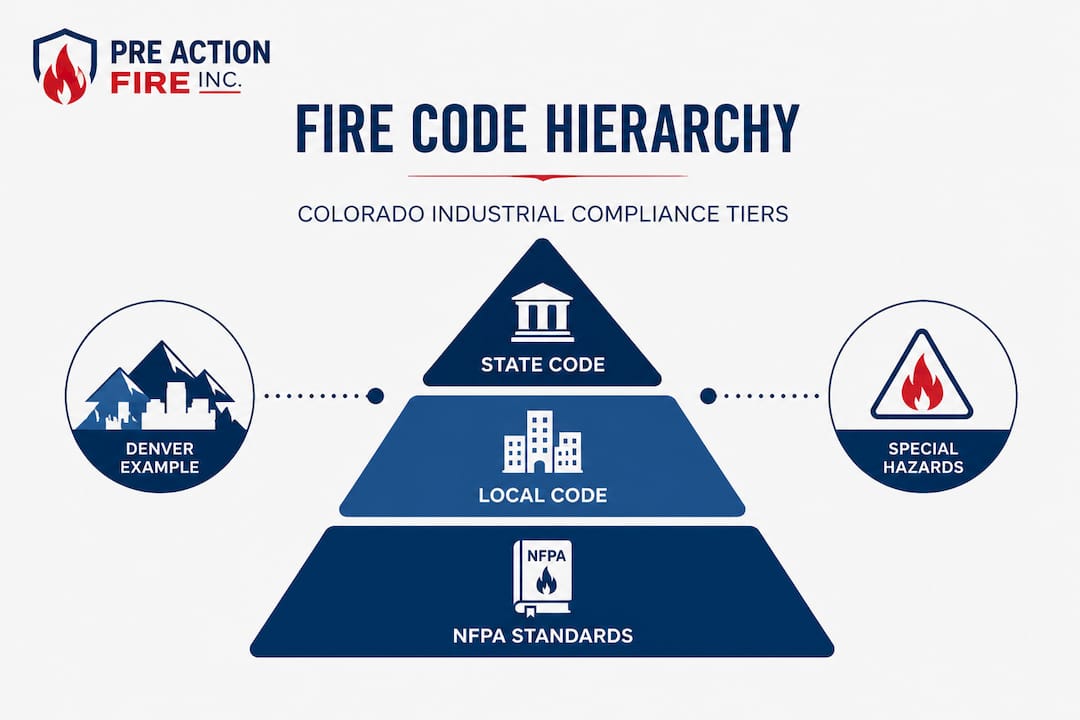
At the top is the Colorado Division of Fire Prevention and Control (DFPC). This state agency sets minimum fire-protection requirements for design, installation, inspection, and testing where it acts as the authority having jurisdiction (AHJ). Colorado’s adopted fire codes reference NFPA and International Code Council (ICC) documents throughout, so understanding those national standards is not optional.
Below the state level, local jurisdictions apply their own adopted codes. Denver, for example, enforces the 2025 Denver Fire Code, which includes chapter-level requirements for fire protection systems covering sprinklers, alarms, smoke control, fire department connections, fire pumps, and gas detection. Other Colorado cities and counties may be on different editions or have local amendments that differ significantly.
For a thorough overview of how these layers interact, reviewing a dedicated Colorado fire protection compliance resource will give you a solid foundation. Good fire protection planning always starts by identifying which AHJ governs your specific site before referencing any national standard.
Key code documents that industrial sites in Colorado commonly encounter include:
- 8 CCR 1507-101 (Colorado’s fire protection rules for design and installation)
- 2025 Denver Fire Code (local adoption with industrial-specific chapters)
- NFPA 3 (commissioning of fire protection systems)
- NFPA 4 (integrated fire protection and life safety system testing)
- NFPA 20 (installation of stationary pumps for fire protection)
- NFPA 25 (inspection, testing, and maintenance of water-based fire protection systems)
- NFPA 660 (combustible dust explosions and fire, consolidated standard)
| System type | Primary standard | Typical AHJ |
|---|---|---|
| Automatic sprinkler systems | NFPA 13 / Denver Fire Code Ch. 9 | Local AHJ / DFPC |
| Fire alarm and detection | NFPA 72 / Denver Fire Code Ch. 9 | Local AHJ |
| Fire pumps | NFPA 20 / Denver Fire Code Ch. 9 | Local AHJ |
| Smoke control systems | NFPA 92 / Denver Fire Code Ch. 9 | Local AHJ |
| Combustible dust systems | NFPA 660 | DFPC / local AHJ |
| Portable fire extinguishers | NFPA 10 | Local AHJ |
| Gas detection | NFPA 72 / local | Local AHJ |
Always start with your AHJ. Overlapping requirements between state and local codes create ambiguity. The local AHJ has final say on site-level compliance, so any fire protection project should begin with a pre-submittal meeting or direct inquiry to that office. Understanding commercial fire code requirements at the local level is not just good practice. It is essential.
Denver’s fire code also contains industrial-specific chapters addressing occupancies like lumber yards, woodworking operations, and facilities with high-piled storage. These sections layer additional requirements on top of the general fire protection chapters, which means even a facility that already has sprinklers and alarms may need supplemental systems or upgraded components to meet occupancy-specific provisions.
Key fire protection systems for industrial facilities
With the regulatory layers clear, it is time to examine the core systems industrial sites actually use and why each one matters.
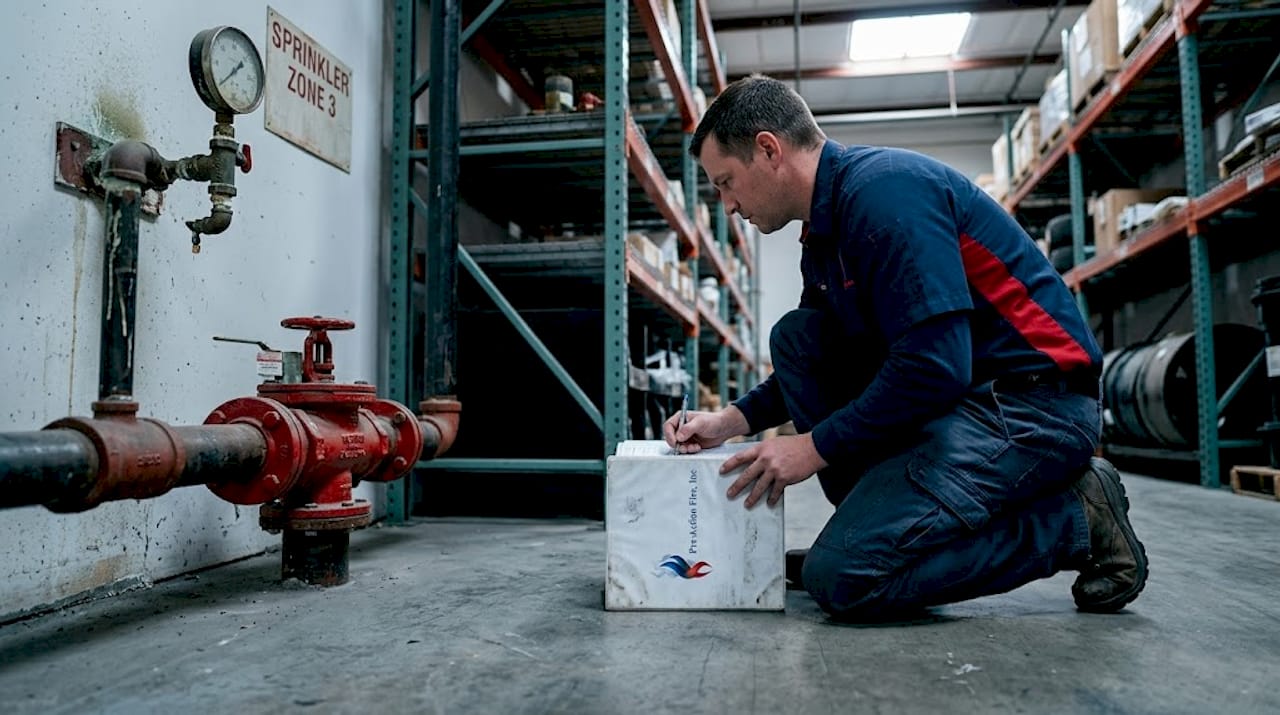
Denver’s fire code dedicates a full Chapter 9 for fire protection systems, covering automatic sprinklers, alternative extinguishing systems, fire alarm and detection systems, emergency alarm systems, smoke control, and smoke and heat removal. Each category has its own design and installation triggers based on occupancy type, building size, and hazard classification.
| System | Main standard | Typical industrial use | Edge-case notes |
|---|---|---|---|
| Wet pipe sprinklers | NFPA 13 | General manufacturing, warehouses | Not suitable where freezing is a risk |
| Dry pipe sprinklers | NFPA 13 | Cold storage, outdoor-adjacent spaces | Slower response; requires larger pipe sizing |
| Pre-action systems | NFPA 13 | Computer rooms, sensitive equipment | Two-step activation reduces accidental discharge |
| Clean agent systems | NFPA 2001 | Electrical rooms, archives | No water damage; requires tight room sealing |
| Dry chemical systems | NFPA 17 / FM Approvals | Spray booths, flammable liquid areas | Must meet FM Approvals performance requirements |
| Fire alarm and detection | NFPA 72 | All industrial occupancies | Beam detectors needed in high-bay settings |
| Gas detection | NFPA 72 | Facilities using combustible gases | Often tied to automatic ventilation |
For sprinkler coverage standards specific to Colorado, design density and coverage area requirements vary by hazard group, making proper hazard classification a critical first step. Misclassifying your operation can lead to under-protected areas that fail inspection or, worse, perform poorly in an actual fire event.
Several situations in industrial settings trigger special design requirements beyond the typical building threshold:
- High-piled storage above 12 feet (in-rack sprinklers or increased density)
- Combustible dust environments (dust-specific suppression and housekeeping systems)
- Large machinery bays with obstructions that block sprinkler coverage
- Spray finishing operations with flammable liquid accumulation
- High-bay facilities exceeding 45 feet in height where standard sprinkler response may be inadequate
Regarding Denver building fire protection for specialized occupancies, FM Approvals certification is particularly relevant for fixed extinguishing systems in high-risk industrial areas. FM Approvals evaluates fixed dry chemical systems against defined performance standards, including both total flooding and local application outcomes, giving insurers and AHJs greater confidence in those systems.
Pro Tip: Never separate the testing and maintenance budget from the hardware budget. State regulation and NFPA standards both mandate ongoing inspection and testing programs, so facilities that plan for hardware only will face unexpected compliance costs within the first year of operation.
Meeting combustible dust and special hazard requirements
Beyond standard sprinklers and alarms, some hazards require extra action. Combustible dust is one area where the rules have changed significantly and where Colorado inspectors are paying close attention.
NFPA 660 consolidates multiple older standards, including the well-known NFPA 654, into a single unified document. The consolidation dramatically increases expectations around hazard identification and emergency preparedness. Where older standards sometimes allowed age-based exemptions for existing facilities, NFPA 660 eliminates most of those carve-outs.
Here is the compliance path your facility should follow for combustible dust:
- Conduct a Dust Hazard Analysis (DHA). Identify all processes, materials, and areas where combustible dust could accumulate or be suspended. A qualified engineer typically leads this process.
- Identify at-risk areas and processes. Map out where ignition sources, dust layers, and suspension clouds can realistically co-exist. This is more detailed than a simple walkthrough.
- Document an emergency response plan. NFPA 660 requires written procedures for responding to dust-related incidents, not just general fire response but specific scenarios for your hazard profile.
- Implement housekeeping and suppression controls. Dust accumulation above defined thresholds triggers active suppression or explosion isolation requirements.
- Review and update regularly. Facility changes, new equipment, or process modifications can introduce new dust hazards, so the DHA is a living document.
“No more age-based exemptions. All facilities with combustible dust must now implement a Dust Hazard Analysis under NFPA 660, regardless of when the facility was built or last reviewed.”
Real-world examples of affected industries in Colorado include woodworking shops along the Front Range, food processing operations, and grain handling facilities east of Denver. Each of these generates fine, combustible particulate that can create explosive conditions if not properly controlled and suppressed. Reviewing warehouse fire safety tips is a useful starting point, but operations with active dust generation must go further and address NFPA 660 specifically.
Pro Tip: Do not rely on older compliance plans or audit reports. Inspectors are specifically asking about NFPA 660 alignment during site visits in 2026. If your DHA was completed under the old NFPA 654 framework, it likely needs updating before your next inspection cycle.
Commissioning, testing, and ongoing compliance
Complying with fire protection codes is not a one-time event. After installation, your systems enter a lifecycle of ongoing testing, documentation, and periodic inspection that the code treats as mandatory, not optional.
Colorado regulations specifically reference NFPA 4 for integrated system testing and NFPA 25 for ongoing maintenance of water-based systems. This means commissioning is a formal, documented process, not just a walkthrough. Key lifecycle obligations include:
- Commissioning under NFPA 3 and NFPA 4, documenting that all systems were installed, integrated, and tested per design intent before occupancy
- Annual inspections for most suppression and alarm systems, with quarterly or monthly checks for specific components
- 5-year internal inspections for sprinkler systems, including pipe and fitting condition under NFPA 25
- Documentation retention for all test results, inspection reports, and deficiency corrections
A striking pattern in fire protection enforcement is how often systems fail not because of hardware defects but because of missing or incomplete documentation. Inspectors at both the state and local level can place a facility out of compliance based purely on inadequate records, even when the physical hardware is functioning correctly. This is an avoidable problem, but it requires systematic record-keeping from day one.
The financial argument is just as strong. Insurance carriers increasingly require proof of compliant testing programs before renewing commercial property policies on industrial facilities. A missed annual test can trigger a coverage gap that puts millions in assets at risk. Reviewing fire protection certifications available in Colorado helps facility managers understand what documentation creates defensible compliance records.
Budgeting for ongoing compliance should include technician fees, replacement parts identified during inspections, and the administrative cost of tracking and storing records. Facilities that treat fire protection as a single capital expenditure consistently run into problems at the three to five year mark when deferred maintenance produces a backlog of deficiencies. A building fire safety compliance mindset treats the system as a living asset, not a sunk cost.
The reality: Why compliance is harder (and what most guides miss)
After more than a decade of working on fire protection for Colorado industrial facilities, we have seen a consistent pattern. The facilities that struggle most with compliance are not the ones that ignore fire safety. They are the ones that followed a checklist without accounting for how their specific building and process constraints interact with the code.
Edge cases are where real problems develop. Consider a warehouse with non-standard rack configurations that create obstruction patterns the standard sprinkler spacing tables do not cleanly address. Or a facility that processes a dust mixture not clearly covered by existing classification tables in NFPA 660. In these situations, a by-the-book checklist leaves you in a gray area, and that gray area can produce a failed inspection or, worse, an under-protected facility.
Designing to the code minimum is also a trap that too many facilities fall into. Minimum compliance today can become non-compliance tomorrow when a standard is revised or the local AHJ adopts a new code edition. The compliance workflow for Colorado managers that holds up over time is one built with margin above the minimum, anticipating where standards are heading.
“Treat the AHJ as the true baseline, then cover all the code-referenced standards for your actual hazards. The AHJ has the final word, and most will tell you directly what they expect if you ask early enough.”
The single most underused tool in Colorado industrial fire protection is the pre-submittal meeting with the AHJ. Bringing your plans or questions to the authority before submission routinely surfaces local interpretations that differ from the published code text. This is not an edge case. It is standard practice for experienced fire protection engineers on complex industrial projects.
Pro Tip: Build a relationship with your local fire code official now, before a project or inspection forces the conversation. Proactive communication about planned changes, new equipment, or process modifications gives you the chance to resolve ambiguities before they become violations.
Most guides give you the rule list. What they skip is the part where you have to apply those rules to a building with 40-foot ceilings, a mezzanine not clearly addressed by the occupancy table, and a dust-generating process added three years after the original sprinkler system was designed. That gap between the published standard and the real-world facility is where the compliance work actually happens.
Colorado fire protection solutions for your industrial facility
If your industrial facility needs help turning these requirements into action, Colorado-based fire protection experts can make compliance achievable without costly guesswork.
Pre Action Fire, Inc. has served the Denver Metro Area since 2009, with NICET-certified technicians who understand both the state regulatory framework and the local code nuances enforced across Colorado’s jurisdictions. Whether your site needs fire sprinkler installation in Arvada, fire sprinkler services in Commerce City, or help achieving fire alarm systems compliance in Denver, the team brings code-driven design, installation, and inspection services to every project. For facilities navigating extinguishing system choices, the guide on fire extinguisher selection is a practical starting point. Reach out directly to discuss your facility’s specific requirements and get a clear compliance path forward.
Frequently asked questions
What is the main fire code used for industrial sites in Colorado?
Most industrial sites in Colorado must follow the state’s adopted fire codes, which reference NFPA and International Code Council standards along with specific local amendments from the governing AHJ.
How often must fire protection systems be inspected at Colorado industrial facilities?
State and local codes usually require annual inspections and testing, but some systems may need more frequent checks based on NFPA 4 and NFPA 25 requirements and local AHJ direction.
What has changed with combustible dust requirements for Colorado industries?
NFPA 660 now consolidates older standards including NFPA 654 and requires all affected facilities to conduct a formal dust hazard analysis and establish documented emergency response plans, with no age-based exemptions remaining.
Who enforces fire protection codes in Denver?
Fire protection codes in Denver are enforced by the local authority having jurisdiction, which applies the 2025 Denver Fire Code including its industrial-specific chapters and any local amendments.
Are certifications for fire protection systems mandatory in Colorado?
Yes. Certification and documentation for commissioning, inspection, and maintenance are mandated by both Colorado state regulation and NFPA standards, making record-keeping a compliance requirement, not just good practice.