
TL;DR:
- Investment in properly designed fire safety systems offers measurable financial, operational, and compliance benefits that reduce property damage, lower insurance premiums, and prevent costly OSHA penalties. IoT-enabled detection enhances operational efficiency and accelerates emergency response, further strengthening ROI, while proactive maintenance and staged investments optimize budget management. Overall, well-maintained fire protection programs safeguard business continuity, asset value, and legal standing, providing long-term value beyond compliance.
Fire safety investment benefits are the measurable financial, operational, and compliance returns that industrial facilities gain by installing and maintaining systems such as sprinklers, fire alarms, and suppression equipment. For facility managers and business owners, these returns extend well beyond avoiding fines. NIST frames fire safety ROI as net societal benefits that include lives saved, property loss reduced, and downstream economic losses prevented. The industry term for this analysis is “fire protection economics,” and understanding it is the first step toward making a defensible capital case to your CFO or board.
1. Fire safety investment benefits: what sprinkler systems actually return
Sprinkler systems are the single most studied fire protection investment, and the numbers are decisive. NFPA research shows sprinklers reduce property damage per fire incident by roughly 50% to 66% and reduce fire death risk by 87%. That means a facility that installs a properly engineered system is not just buying compliance. It is cutting the financial severity of any fire event by more than half.
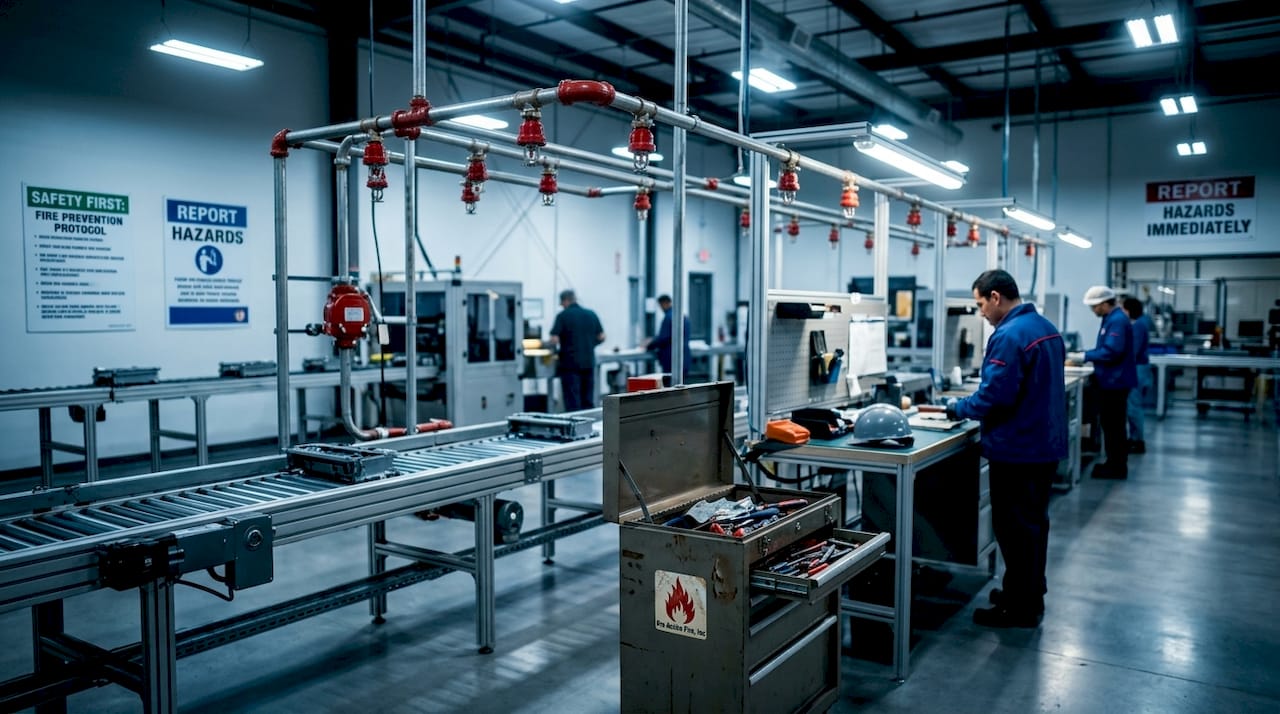
NIST’s 2025 benefit-cost analyses confirm that sprinklers in structure fires produce net positive returns when you account for property loss reduction, injury costs avoided, and business interruption prevented. The ROI argument is strongest when you tie it to measurable fire growth reduction and claim severity, not just code compliance. That framing carries weight with underwriters and legal counsel alike.
Key financial returns from sprinkler systems include:
- Lower insurance premiums. Properties with engineered suppression systems have fewer large-loss events, which improves loss ratios and gives insurers a concrete basis for premium reductions.
- Reduced claim severity. When a fire does occur, sprinklers contain it faster, limiting structural damage and inventory loss.
- Avoided business interruption costs. A contained fire means a faster return to operations, which protects revenue and customer relationships.
Pro Tip: Verify that your sprinkler system design matches your facility’s hazard classification under NFPA 13. A light-hazard design installed in a heavy-manufacturing environment will underperform, and your insurer will notice during the next loss assessment.
2. How IoT-enabled fire detection cuts operational costs
Modern fire detection has moved well past smoke detectors wired to a panel. IoT-enabled fire panels communicate system health in real time, flag pre-failure conditions, and generate the data logs that compliance auditors and insurers want to see. The CFO ROI framework for these systems identifies four distinct cost reduction categories:
- Predictive maintenance savings. Sensors flag degrading components before they fail, reducing emergency service calls and extending equipment life.
- False alarm reduction. Intelligent panels distinguish between nuisance triggers and real events, cutting unnecessary emergency dispatch costs that can run hundreds of dollars per incident.
- Staff efficiency gains. Automated reporting replaces manual inspection logging, freeing maintenance personnel for higher-value tasks.
- Inspection readiness. Continuous data logging means your facility enters every scheduled inspection with a complete, timestamped record, reducing the risk of citation.
“Modern fire-safety ROI often stems from operational efficiencies like uptime, false alarm reduction, and maintenance savings, beyond equipment cost alone.” — IoT Fire Panels ROI: CFO Business Case Guide
The operational savings from smart detection compound over time. A facility running quarterly manual inspections that switches to continuous IoT monitoring typically reduces its inspection labor costs while simultaneously improving its compliance posture. That is a rare combination of lower cost and lower risk.
Pro Tip: When building your business case for IoT fire panels, avoid assuming standard premium discounts. Instead, use operational proof such as inspection cadence records and system health scores to validate insurer savings. Underwriters respond to data, not assumptions.
3. Compliance benefits: avoiding OSHA fines and legal liability
OSHA’s 2026 penalty structure makes reactive fire safety budgeting expensive. Serious violations carry fines up to $16,550 per citation, willful violations reach $165,514, and failure-to-abate penalties add up to $16,550 per day until the condition is corrected. A single unresolved citation can cost more than a full sprinkler retrofit in a mid-size facility.
The compliance benefits of proactive fire safety investment include:
- Penalty avoidance. Documented, maintained systems eliminate the most common OSHA fire safety citations before an inspector arrives.
- Reduced legal exposure. Facilities with documented due diligence, inspection records, and trained staff present a much weaker target in post-incident litigation.
- Faster abatement. When a citation does occur, facilities with established maintenance programs can correct and document the fix quickly, stopping daily penalties before they compound.
- Code alignment. Meeting NFPA standards and local fire codes positions your facility for smooth permitting on expansions and renovations.
A common example: a missing or outdated evacuation map is one of the most frequently cited fire safety violations. The fix costs almost nothing. The citation, if left unresolved, can generate daily fines that dwarf the cost of printing and posting a compliant map. Proactive investment in Colorado compliance risk reduction eliminates these avoidable costs entirely.
4. Business continuity and long-term asset value protection
A fire that shuts down an industrial facility for two weeks does not just cost the repair bill. It costs production output, customer contracts, employee wages, and in some cases, the facility’s reputation with key accounts. Consistent fire prevention reduces the likelihood of business shutdown and supports ongoing operation as a core risk management strategy.
The asset value argument is equally strong. Properties with properly maintained suppression and detection systems experience lower damage severity when incidents occur, which preserves the building’s appraised value and reduces the cost of post-incident restoration. Insurers and commercial real estate investors both assign higher valuations to facilities with documented fire protection programs.
| Business continuity factor | Impact of fire safety investment |
|---|---|
| Operational downtime | Contained fires mean faster return to production |
| Property value | Lower damage severity preserves appraised value |
| Insurance renewals | Fewer claims and better loss ratios support favorable terms |
| Investor and lender confidence | Documented safety programs reduce perceived risk |
| Customer retention | Shorter shutdowns protect delivery commitments |
The fire monitoring service advantages available to facility managers today include 24/7 remote monitoring that triggers emergency response faster than manual detection. Faster response directly limits fire spread, which is the single biggest driver of both property damage and business interruption duration.
5. Comparing fire safety investments: costs vs. returns
Not every fire safety investment delivers the same return, and budget-conscious facility managers need a clear comparison to prioritize spending. The table below summarizes typical cost ranges and associated returns for the three most common investment categories.
| Investment type | Typical cost range | Primary financial return |
|---|---|---|
| Sprinkler system installation | $2 to $7 per sq ft (commercial) | 50%+ reduction in damage per incident |
| Fire alarm and detection upgrade | $1 to $5 per sq ft | False alarm savings, inspection readiness |
| Fire safety training program | $500 to $5,000 annually | Reduced OSHA citations, lower liability exposure |
Key factors that influence your actual ROI include:
- Building size and construction type. Larger facilities with combustible materials see the highest absolute returns from sprinkler investment.
- Hazard classification. High-hazard occupancies under NFPA 13 require more robust systems but also face the highest potential loss severity, making ROI stronger.
- Current compliance gaps. Facilities with outstanding OSHA citations or outdated panels see faster payback because they are avoiding active penalty exposure.
- Insurance premium structure. Some carriers offer documented discounts for specific system upgrades. Request a loss control consultation before finalizing your investment plan.
The commercial sprinkler installation benefits are well documented for properties of all sizes, but the strongest ROI cases come from facilities that treat fire safety as an integrated financial strategy rather than a compliance checkbox.
Pro Tip: If budget constraints prevent a full system upgrade in one cycle, use a staged investment approach. Start with the compliance gaps that carry the highest OSHA penalty exposure, then layer in detection upgrades, and schedule sprinkler expansion in the next capital cycle. This approach controls cash flow while continuously reducing risk.
Key takeaways
Fire safety investment benefits deliver the strongest returns when systems are properly designed, actively maintained, and integrated into a facility’s financial and compliance planning.
| Point | Details |
|---|---|
| Sprinklers cut damage severity | NFPA data shows 50% to 66% reduction in property damage per fire incident. |
| IoT detection reduces operating costs | Predictive maintenance, false alarm savings, and automated reporting lower total cost of ownership. |
| OSHA penalties compound fast | Daily failure-to-abate fines up to $16,550 make proactive investment less costly than reactive penalties. |
| Business continuity is a financial asset | Faster fire containment protects production output, contracts, and long-term property value. |
| Staged investment controls budget risk | Prioritizing compliance gaps first delivers immediate penalty avoidance while building toward full system coverage. |
What I’ve learned about fire safety ROI after years in the field
Most facility managers I speak with approach fire safety as a cost center. That framing is the root of most bad investment decisions in this space. The moment you reframe it as risk capital, the math changes completely.
The facilities that extract the most value from their fire protection programs are the ones that treat maintenance as non-negotiable overhead, not optional spending. A sprinkler system that has not been inspected in three years is not an asset. It is a liability with a compliance clock ticking against it. Budget for recurring maintenance and inspections as you would budget for any critical equipment, because OSHA’s compounding daily penalties make deferred maintenance one of the most expensive decisions a facility manager can make.
The second insight I would push hard on: do not accept a standard insurance premium discount as proof of ROI. Use your inspection records, system health data, and loss history to build a specific case with your underwriter. Carriers respond to operational proof. Generic discounts leave money on the table.
Finally, the facilities that fare best after a fire incident are the ones that invested in detection speed, not just suppression capacity. Getting an alert 90 seconds earlier changes the outcome of a fire event more than almost any other variable. That is where IoT-enabled panels earn their cost back fastest.
— Preactionfire
How Preactionfire helps industrial facilities maximize fire safety returns
Preactionfire has served the Denver Metro Area since 2009, and the team brings NICET-certified expertise to every fire protection assessment. Whether you need a new fire alarm system installation to close compliance gaps or a full sprinkler installation designed to your facility’s hazard classification, Preactionfire delivers systems built to NFPA standards with the documentation your insurer and OSHA inspector want to see. The team also provides ongoing inspection and maintenance services that keep your compliance posture current and your penalty exposure at zero. Contact Preactionfire for a customized assessment and a clear ROI calculation specific to your facility.
FAQ
What are the main fire safety investment benefits for industrial facilities?
The primary benefits are reduced property damage severity, lower insurance premiums, avoided OSHA penalties, and protected business continuity. NIST research confirms that net returns include lives saved, property loss reduced, and downstream economic losses prevented.
How much can sprinklers reduce fire damage costs?
NFPA data shows sprinklers reduce property damage per fire incident by roughly 50% to 66% and cut fire death risk by 87%. These reductions directly lower insurance claim severity and business interruption costs.
What OSHA fines apply to fire safety violations in 2026?
Serious violations carry fines up to $16,550, willful violations reach $165,514, and failure-to-abate penalties add up to $16,550 per day. Proactive fire safety investment eliminates most citation exposure before an inspection occurs.
How do IoT fire panels improve fire safety ROI?
IoT-enabled panels reduce costs through predictive maintenance, false alarm reduction, automated compliance logging, and faster emergency response. These operational savings compound annually and are measurable enough to support a formal CFO business case.
Is fire safety training a worthwhile investment compared to equipment?
Yes. Fire safety training programs typically cost $500 to $5,000 annually and deliver returns through reduced OSHA citations, lower legal liability, and faster employee response during incidents. Training works best as a complement to physical systems, not a substitute.