
TL;DR:
- Modern industrial smoke detection systems use multi-criteria sensors and addressable panels to identify fires early and locate them precisely. They reduce false alarms by cross-referencing smoke, heat, and carbon monoxide signals and support remote monitoring and automated responses. Selecting the right detector type for each zone and maintaining regular inspections are essential for reliable fire safety in industrial environments.
Smoke detection in industrial sites is defined as the deployment of specialized sensor systems to identify combustion byproducts early enough to prevent fire from escalating into a catastrophic event. The role of smoke detection in industrial sites goes far beyond a simple alarm. Modern systems use multi-criteria sensors and addressable panels to pinpoint fire locations in real time, replacing broad zone alerts with exact detector coordinates. For facility managers overseeing factories, warehouses, or chemical plants, that precision is the difference between a controlled response and a full evacuation with major asset loss. Early detection also protects operational continuity, a priority that single-sensor threshold systems simply cannot deliver at the same level.
What types of smoke detectors are used in industrial sites?
Industrial smoke detector selection depends on the fire type, ceiling height, airflow, and hazard profile of each zone. Four core technologies cover most industrial applications.
Photoelectric detectors use a light beam and sensor inside a chamber. When smoke particles scatter the beam, the sensor triggers an alarm. These detectors respond well to slow, smoldering fires that produce large particles, making them a strong choice for storage areas with combustible materials.
Ionization detectors use a small radioactive source to ionize air inside a chamber. Fast-flaming fires that produce fine particles disrupt the ion current and trigger the alarm. They respond faster than photoelectric detectors to open-flame fires but are more prone to false alarms from dust and steam in industrial environments.
Aspirating Smoke Detection (ASD) systems draw air samples through a network of pipes to a central, lab-grade detector. ASD systems detect smoke concentrations up to 100 times lower than conventional sensors, enabling warnings well before visible smoke forms. This makes ASD the preferred choice for data centers, clean rooms, and any facility where high airflow dilutes smoke concentrations before a standard detector can respond.
Optical beam detectors project an infrared beam across large open spaces. When smoke attenuates the beam, the system triggers. Beam detectors protect spaces up to 150 meters wide, making them ideal for high-bay warehouses and atriums where installing dozens of point sensors would be impractical.
| Detector type | Key advantage | Best industrial application |
|---|---|---|
| Photoelectric | Sensitive to smoldering fires | Storage rooms, wood processing |
| Ionization | Fast response to flaming fires | Areas with open-flame risk |
| Aspirating (ASD) | Extremely early warning | Data centers, clean rooms, high-airflow zones |
| Optical beam | Covers large open spans | Warehouses, atriums, high-bay facilities |
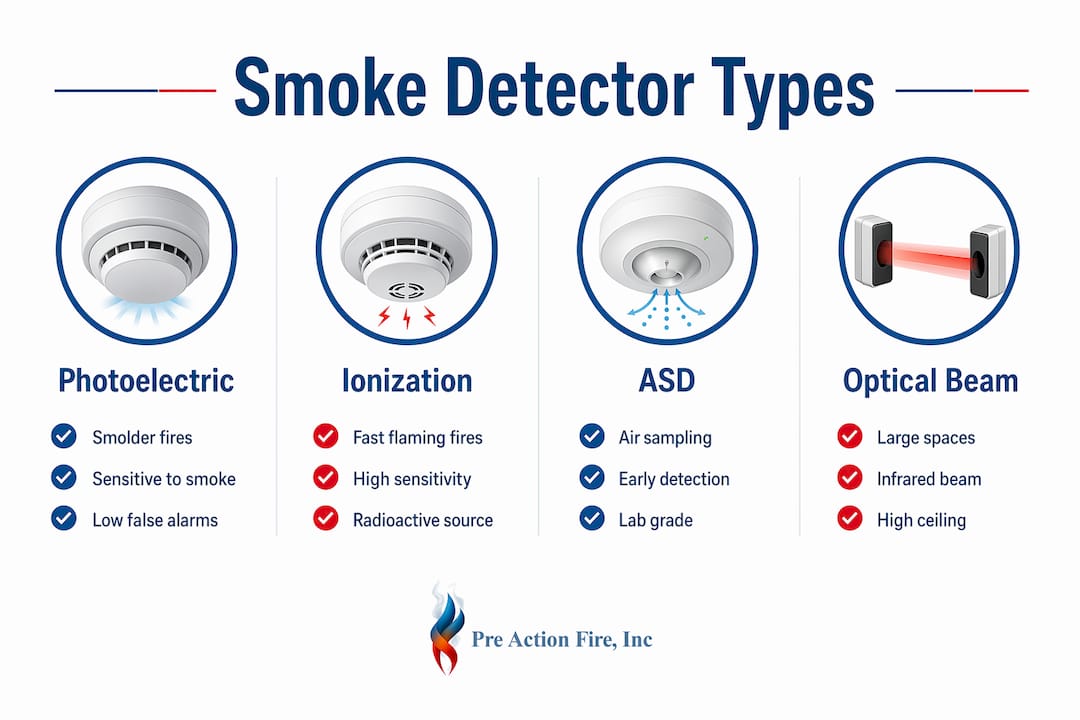
Pro Tip: Match your detector type to the fire signature most likely in each zone. A warehouse storing palletized goods needs beam or ASD coverage at height, not ceiling-mounted point sensors that smoke may never reach.
How does advanced smoke detection technology reduce false alarms?
False alarm reduction is one of the most significant practical benefits of modern smoke detection technology in industrial environments. Multi-criteria sensors simultaneously detect smoke, heat, and carbon monoxide, cross-referencing all three signals before triggering an alarm. That cross-referencing eliminates the false positives that single-sensor systems generate when exposed to dust, exhaust fumes, or steam.
Addressable fire alarm panels take accuracy a step further. Each detector on an addressable system has a unique address, so the panel identifies the exact device that triggered, not just a zone. Facility managers receive real-time alerts via SMS, email, or app notifications, whether they are on-site or remote. That capability cuts response time and reduces the cost of unnecessary evacuations.
Smart algorithms embedded in modern panels analyze signal patterns over time. They distinguish between a gradual dust buildup inside a sensor chamber and a rapid smoke concentration spike from an actual fire. The result is a system that learns the normal interference profile of your facility and filters it out without human intervention.
Key benefits of advanced smoke detection technology include:
- Pinpoint alarm location through addressable panels, replacing floor-wide zone alerts
- Multi-criteria cross-referencing of smoke, heat, and CO signals to confirm real threats
- Remote monitoring via SMS, email, or app, supporting 24/7 oversight without on-site staff
- Intelligent algorithms that filter facility-specific interference patterns automatically
- Integration with building management systems for coordinated emergency response
What unique challenges do industrial environments pose for smoke detectors?
Industrial environments create conditions that defeat standard commercial smoke detectors. Understanding these challenges is the first step toward selecting systems that actually perform under real operating conditions.
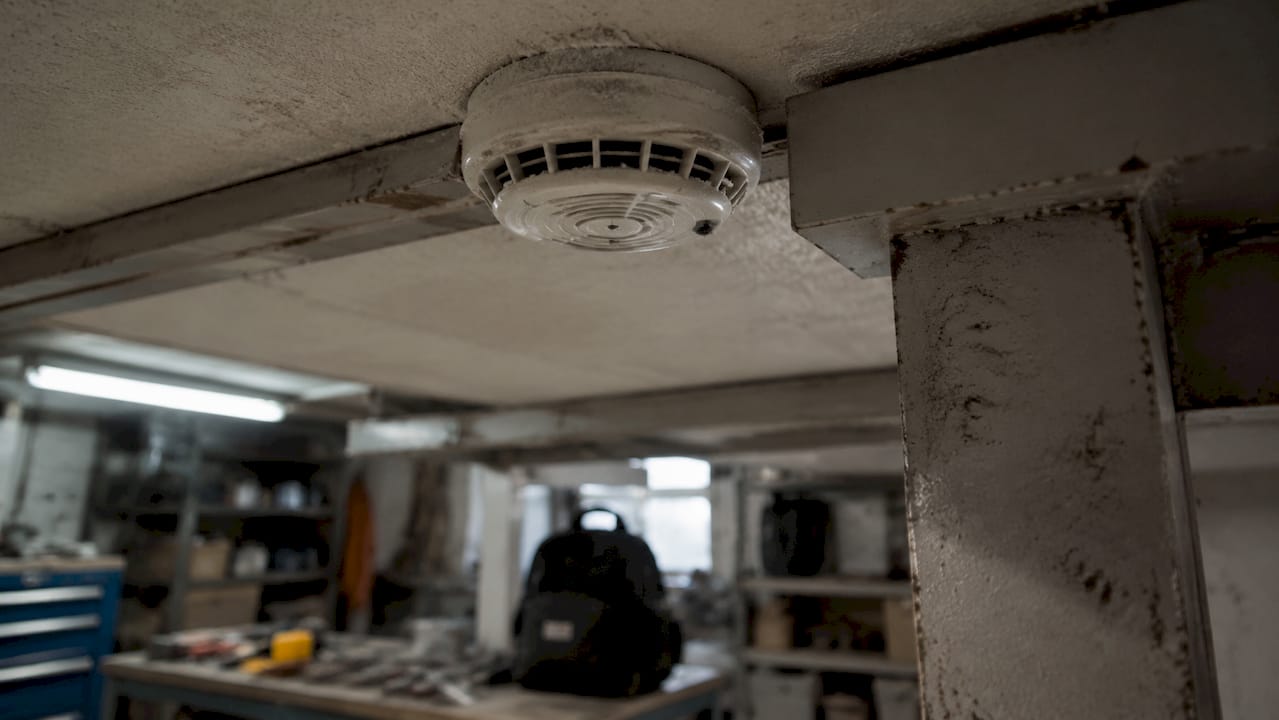
Dust accumulation inside photoelectric sensor chambers mimics smoke signals and triggers false alarms. Facilities with grinding, cutting, or material handling operations face this problem constantly. Multi-criteria sensors greatly reduce these false positives, but regular cleaning of sensor chambers remains a non-negotiable maintenance task.
High-bay warehouses present a stratification problem. Smoke rises, cools, and spreads horizontally before reaching ceiling-mounted point detectors. Standard point-type detectors are unreliable in these spaces because smoke may fully dissipate before triggering any alarm. Beam detectors or ASD systems are the correct solution for spaces with ceilings above 30 feet.
Hazardous atmospheres add a compliance dimension. In zones with flammable gases, vapors, or combustible dust, ATEX/IECEx-rated detectors are mandatory. Using standard commercial detectors in these areas creates both a safety failure and a regulatory violation. Explosion-proof housings and ingress-protected enclosures are not optional upgrades in these zones.
Additional challenges facility managers must account for include:
- Vibration from heavy machinery loosening detector mounts and causing intermittent faults
- Electromagnetic interference from motors and welding equipment disrupting sensor signals
- High humidity and temperature swings degrading sensor calibration over time
- Chemical vapors that mimic combustion byproducts in single-criteria sensors
Pro Tip: Partner with a fire protection specialist who conducts a site-specific hazard assessment before specifying any detector. Ignoring site-specific environmental factors like vibration and explosive atmospheres during design causes most fire detection failures in industrial settings.
How to design an effective smoke detection strategy for industrial facilities
A well-designed smoke detection strategy starts with a formal hazard assessment, not a product catalog. The assessment maps each zone by fire risk type, ceiling height, airflow rate, and the presence of hazardous materials. That map drives every subsequent decision about detector selection and placement.
- Conduct a zone-by-zone hazard assessment. Identify the dominant fire risk in each area. Smoldering material fires in storage zones call for photoelectric or ASD systems. Fast-flaming risks near fuel sources call for ionization or multi-criteria detectors. Document ceiling heights and airflow rates for each zone before specifying any hardware.
- Combine detector technologies for full coverage. No single detector type covers every industrial scenario. Facility managers should combine detector types matched to specific hazards and zones. A manufacturing plant might use ASD in its server room, beam detectors in its warehouse, and multi-criteria point detectors on the production floor.
- Specify NFPA 72 and ATEX/IECEx compliance from the start. NFPA 72 governs fire alarm system installation and testing requirements in the United States. ATEX and IECEx certifications apply to equipment used in explosive atmospheres. Build compliance into the specification, not as an afterthought during inspection. Review fire alarm notification standards as part of your system design process.
- Deploy an addressable fire alarm panel. Addressable panels provide continuous monitoring and exact alarm location. Integrated fire and gas architectures escalate automated responses based on hazard severity, which is critical in facilities handling toxic or flammable substances. The panel should integrate with your building management system for coordinated lockdowns, ventilation control, and suppression activation.
- Build a maintenance schedule into the design. Regular maintenance includes inspecting and cleaning sensor chambers to prevent dust-induced false alarms and verifying system calibration to maintain detection accuracy. Schedule quarterly inspections for high-dust environments and semi-annual inspections for cleaner facilities. Test every detector and notification device at each interval.
For Colorado facilities, pairing your detection strategy with a review of industrial fire protection compliance requirements ensures your system meets both state and federal standards from day one.
Key takeaways
Effective smoke detection in industrial sites requires multi-criteria sensors, addressable panels, and zone-specific detector selection to deliver reliable early warning and minimize false alarms.
| Point | Details |
|---|---|
| Match detector to fire type | Select photoelectric, ionization, ASD, or beam detectors based on each zone’s fire risk and ceiling height. |
| Use multi-criteria sensors | Combining smoke, heat, and CO detection reduces false alarms caused by dust and industrial exhaust. |
| Mandate ATEX/IECEx in hazardous zones | Standard commercial detectors are non-compliant and unsafe in explosive atmospheres. |
| Deploy addressable panels | Addressable systems pinpoint exact alarm locations and support remote monitoring via SMS or app. |
| Schedule regular maintenance | Quarterly sensor cleaning and calibration checks prevent dust-induced false alarms and detection failures. |
What I’ve learned from watching industrial fire detection fail
The most common mistake I see facility managers make is treating smoke detection as a one-time installation decision. They specify a system, install it, and assume it will perform indefinitely. Industrial environments are not static. Processes change, new equipment arrives, ceiling configurations shift, and the fire risk profile of a facility can change dramatically within a single year.
The second mistake is underestimating the false alarm problem. A system that cries wolf repeatedly gets ignored. Workers start disabling detectors or bypassing panels. That behavioral response is far more dangerous than the original false alarm problem. Intelligent, networked fire detection with real-time data analytics is the only sustainable answer. It keeps the system credible by filtering noise, so when an alarm sounds, people respond.
The future of industrial fire safety sits at the intersection of IoT sensors, cloud-based analytics, and addressable detection networks. Facilities that invest in these integrated systems now will spend less on false alarm response, less on downtime, and far less on post-fire recovery. The fire safety investment benefits are measurable and they compound over time. Prioritize intelligent systems, not just compliant ones.
— Preactionfire
Fire alarm systems built for industrial compliance in Denver
Industrial facilities in the Denver Metro Area face specific compliance requirements under NFPA 72 and Colorado state fire codes. Pre Action Fire has served the Denver area since 2009, and its NICET-certified technicians design and install fire alarm systems built for the demands of industrial environments.
Whether your facility needs an addressable panel upgrade, ASD installation in a high-airflow zone, or a full system design for a new construction project, Preactionfire delivers solutions that meet code and perform under real industrial conditions. Learn more about fire alarm systems for Denver businesses and get a consultation tailored to your facility’s hazard profile.
FAQ
What is the primary role of smoke detection in industrial sites?
Smoke detection in industrial sites provides early warning of fire by identifying combustion byproducts before a fire grows beyond control. This protects lives, limits asset damage, and supports operational continuity.
Which smoke detector type works best in high-bay warehouses?
Optical beam detectors and aspirating smoke detection systems are the most reliable choices for high-bay warehouses. Standard point detectors fail in these spaces because smoke stratifies and dissipates before reaching ceiling-mounted sensors.
What does ATEX/IECEx certification mean for industrial smoke detectors?
ATEX and IECEx certifications confirm that a detector is safe for use in explosive atmospheres containing flammable gases, vapors, or combustible dust. Using non-certified detectors in these zones violates safety regulations and creates serious risk.
How do multi-criteria sensors reduce false alarms in factories?
Multi-criteria sensors cross-reference smoke, heat, and carbon monoxide readings simultaneously before triggering an alarm. This approach filters out false signals from dust, steam, and exhaust that routinely fool single-sensor systems.
How often should industrial smoke detectors be inspected and tested?
High-dust industrial environments require quarterly sensor cleaning and inspection. Cleaner facilities should schedule semi-annual inspections. Every test cycle should verify detector sensitivity and confirm that notification devices function correctly.