
TL;DR:
- Fire alarm annunciation pinpoints the exact location of alarms, critical for life safety and quick response.
- Addressable systems provide detailed device-level alerts, essential for complex, multi-story buildings.
- Compliance in Colorado requires proper zoning, permits, and placement of annunciator panels, especially in large buildings.
Most commercial property owners assume a fire alarm system is complete once the smoke detectors and pull stations are installed. That assumption leaves a critical gap. Fire alarm annunciation is what tells first responders exactly where a fire or trouble condition is occurring inside your building, and without it, even a state-of-the-art alarm system falls short. In Colorado, and specifically in Denver, annunciation is not optional. It shapes your permitting, your code compliance standing, and your building’s ability to protect lives when seconds matter most. This guide cuts through the confusion and gives you a clear picture of definitions, system types, local code requirements, and practical steps.
Table of Contents
- What is fire alarm annunciation?
- Types of annunciation systems: Conventional vs. addressable
- Compliance requirements for annunciation in Colorado
- Best practices for selecting and maintaining annunciator panels
- Our perspective: What most Colorado property owners miss about annunciation
- Protect your building: Expert fire annunciation and compliance help
- Frequently asked questions
Key Takeaways
| Point | Details |
|---|---|
| Precise alarm location | Annunciation panels allow fast identification of fire or trouble zones, reducing emergency response time. |
| Local compliance matters | Colorado and Denver codes require detailed annunciation zoning, so check local rules for your building. |
| Addressable systems preferred | For complex or multi-floor buildings, addressable annunciators meet regulations and minimize false alarm confusion. |
| Maintenance ensures reliability | Regular maintenance avoids failures, missed alarms, and helps retain fire code certification. |
What is fire alarm annunciation?
Fire alarm annunciation is the function that identifies and communicates the exact location of an alarm or trouble condition within a building. A basic fire alarm tells you something is wrong. An annunciator tells you where something is wrong. That distinction is everything when a firefighter walks into a 12-story building during an emergency.
According to the San Francisco Fire Department’s technical guidance, annunciation identifies and displays the specific location of an alarm or trouble condition, giving emergency responders actionable information the moment they arrive.
An annunciator panel is typically a wall-mounted display, often located near the main building entrance, that mirrors the status of your fire alarm control system. It shows which zone or device triggered, whether the condition is an alarm or a supervisory signal, and whether any system faults exist. For facility managers, this panel is also a daily diagnostic tool.
Here is why annunciation is critical for commercial properties in Colorado:
- Life safety: Emergency responders navigate directly to the problem area instead of searching floor by floor.
- Code compliance: Denver and state fire codes require annunciation displays that meet specific zoning and location standards.
- Faster troubleshooting: Maintenance teams can identify faulty devices without pulling the entire system offline.
- Liability protection: A properly annunciated system creates a documented, reviewable record of alarm events.
- Insurance alignment: Many commercial property insurers factor annunciation capability into their risk assessments.
Annunciation also connects directly to your broader fire alarm regulations obligations in Denver. A system that lacks proper annunciation can trigger failed inspections, stop-work orders on renovation projects, and fines from the authority having jurisdiction (AHJ), which is the local fire official who reviews and enforces your system’s compliance.
If your building’s annunciator panel hasn’t been reviewed recently, or if you’re planning new construction, annunciation planning must happen early in the design phase, not as a last-minute addition.
Types of annunciation systems: Conventional vs. addressable
Now that we’ve defined annunciation, it’s important to understand the two main technologies commercial buildings deploy. The choice between them affects cost, code compliance, and how fast your team or the fire department can respond.
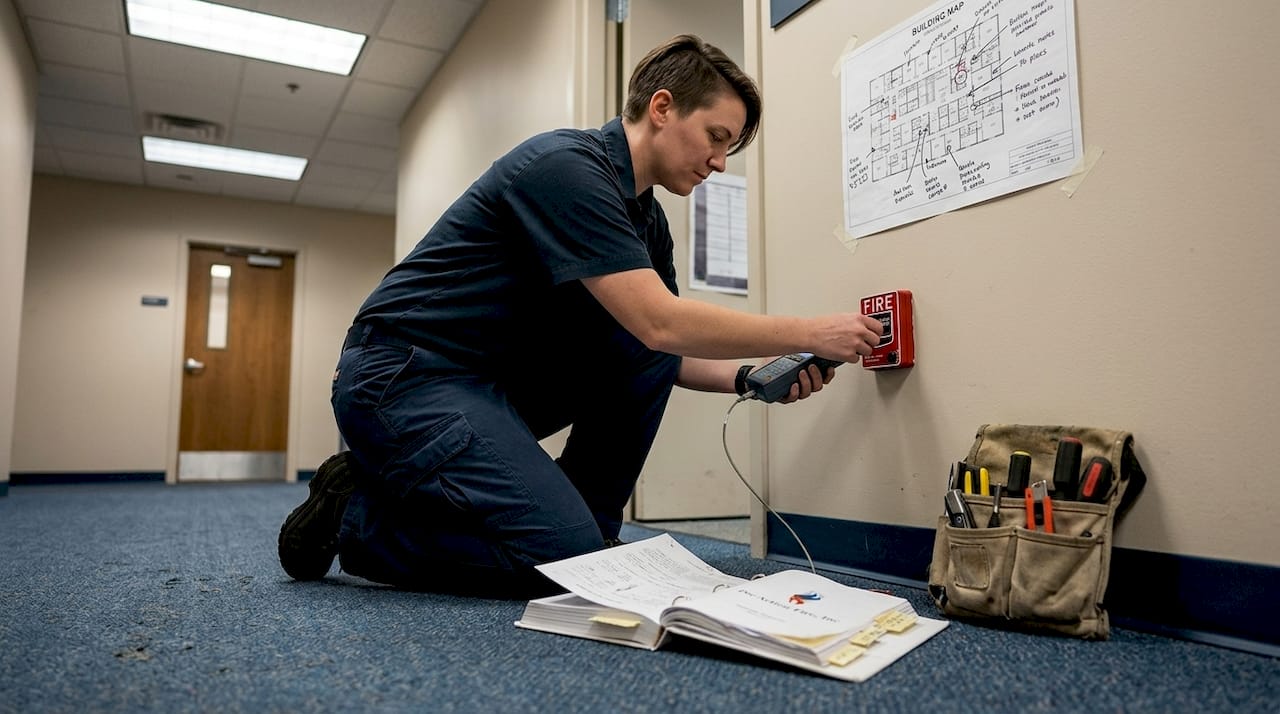
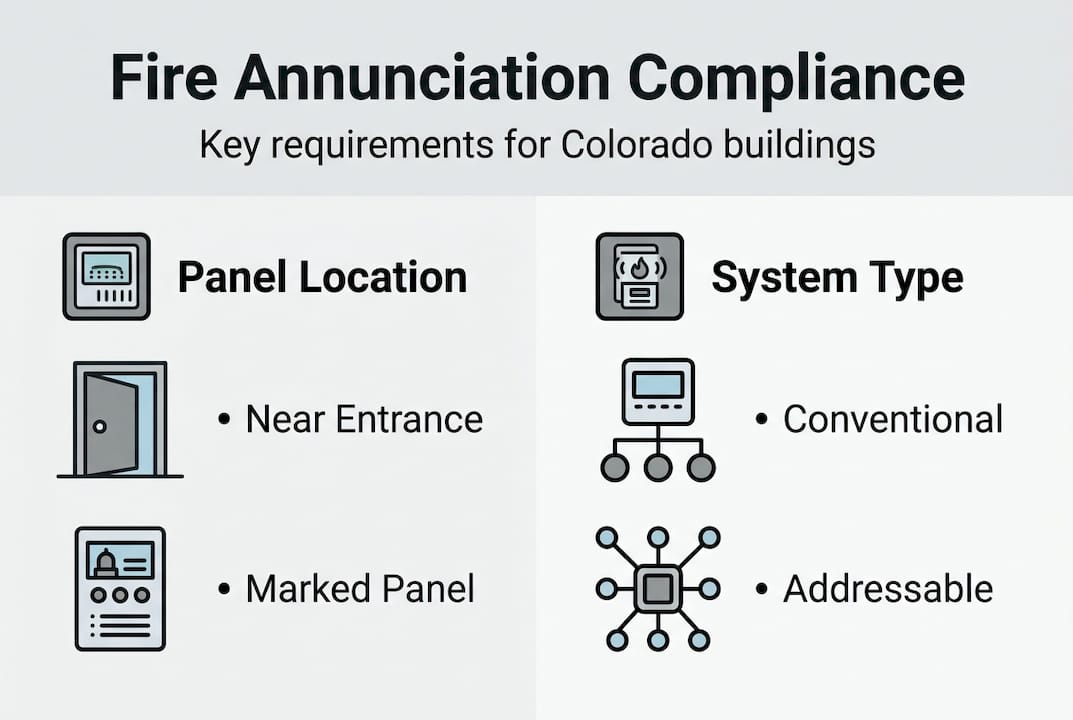
Conventional annunciation works on a zone-based model. Your building is divided into zones, typically one per floor or per area, and when a device triggers, the panel lights up that zone. You know the fire is on the third floor, but you don’t know which of the 20 smoke detectors on that floor activated. Conventional systems use zone-based annunciation; addressable systems go further by pinpointing individual devices.
Addressable annunciation assigns a unique electronic address to every device on the system. When a detector triggers, the panel displays not just the floor but the exact device, often with a text label like “Smoke Detector 3B Conference Room.” This level of detail is especially valuable in hospitals, hotels, warehouses, and multi-tenant office buildings.
| Feature | Conventional | Addressable |
|—|—|—|
| Alarm location detail | Zone only (e.g., floor) | Exact device and label |
| Initial cost | Lower | Higher |
| Compliance for complex buildings | Limited | Strongly preferred |
| Troubleshooting speed | Slower | Much faster |
| Scalability | Limited | Highly scalable |
| Graphic/LED display options | Basic | Advanced |
For buildings with five or more floors, complex layouts, or high occupancy loads, addressable systems are the clear operational choice. Conventional systems remain appropriate for smaller, simpler properties where zone-level data is sufficient for safe response.
Pro Tip: If your fire alarm control panels are more than 15 years old, there’s a good chance they predate modern addressable technology. An upgrade assessment before your next AHJ inspection can save you from a costly compliance failure.
Colorado’s larger commercial buildings often require graphic annunciator displays, which are floor plan-style panels that visually represent your building layout with LED indicators showing alarm and trouble locations. These are not just a nice feature. In many Denver buildings over a certain square footage, they are a code requirement.
Compliance requirements for annunciation in Colorado
Knowing your system type sets up the next step: making sure your annunciation aligns with Colorado law and Denver’s unique requirements. The primary governing document for commercial fire alarm work in Denver is the Denver Fire Code (DFC 907), which is based on the International Fire Code (IFC) with local amendments.
Denver annunciators may require separate permits under DFC 907, with mandatory zoning per floor for conventional systems and per device for addressable installations. This matters because many property owners discover mid-project that their annunciator placement or zoning strategy doesn’t satisfy the AHJ, which delays occupancy approval.
Here is the typical compliance sequence for a commercial project in Denver:
- Determine building classification and occupancy type. This determines which code sections apply.
- Select your system type (conventional or addressable) based on building complexity and floor count.
- Design your zoning strategy. Each zone must map to a physical area the AHJ can reference.
- Submit annunciator shop drawings for AHJ review before installation begins.
- Pull the appropriate permits, including a separate annunciator permit if required under DFC 907.
- Schedule inspections at rough-in and final stages.
- Obtain a certificate of completion signed by your NICET-certified technician.
| Building type | Recommended system | Zoning requirement |
|---|---|---|
| Under 3 floors, simple layout | Conventional | Per floor |
| 3 to 5 floors, mixed use | Conventional or addressable | Per floor minimum |
| 5+ floors or complex layout | Addressable | Per device |
| High-rise (over 75 ft) | Addressable with graphic panel | Per device, graphic display |
Colorado’s fire code requirements are strict about where annunciator panels must be located. They must typically be near the primary building entrance, visible and accessible to arriving firefighters, and must display in a format that matches your AHJ’s accepted standards.
One often-overlooked fact: buildings that undergo significant renovation or change of occupancy can trigger a full annunciation upgrade requirement, even if the existing system once passed inspection. Staying current with fire safety compliance rules before starting any renovation protects you from unexpected retrofit costs.
Best practices for selecting and maintaining annunciator panels
Once compliance is covered, let’s focus on getting the most reliable and effective annunciation for your property. Selecting and maintaining the right annunciator panel is where good intentions either become real safety or stay on paper.
Choosing addressable annunciators for complex or multi-story buildings reduces the time needed to locate and respond to alarms, which directly affects how quickly a fire is contained. That’s not just a performance advantage. It’s a life safety factor.
Here is what to evaluate when selecting or upgrading your annunciator panel:
- Compatibility with your existing control panel. Not every annunciator works with every fire alarm control system brand.
- Display type. LED zone displays work for simple buildings. Graphic floor plan displays are better for large or complex properties.
- Remote capability. Some modern panels support remote annunciation at guard stations, elevator lobbies, or stairwells.
- Labeling accuracy. Every zone or device label must match your building’s actual layout. Generic labels like “Zone 1” are a compliance and operational liability.
- NFPA 72 compliance. Your panel must meet the National Fire Protection Association’s standard for fire alarm and signaling systems.
Pro Tip: Review your annunciator panel labels every time your building layout changes, including office reconfigurations and tenant buildouts. Outdated labels create dangerous confusion during emergencies and can flag a deficiency during your annual AHJ inspection.
Common maintenance mistakes to avoid:
- Skipping annual functional tests on the annunciator display itself (not just the detectors)
- Failing to update zone maps after floor plan changes
- Ignoring “trouble” indicator lights, which often signal wiring or battery issues before a real emergency
- Losing track of inspection records, which are required documentation for AHJ and insurance purposes
For records, keep copies of your last three inspection reports, all permits tied to annunciation work, your panel’s as-built wiring diagrams, and any AHJ correspondence. Your fire alarm troubleshooting guide for Denver businesses can also help you identify recurring trouble signals before they become compliance failures.
Our perspective: What most Colorado property owners miss about annunciation
After years of working with commercial properties across the Denver Metro Area, one pattern stands out clearly. Building owners who treat annunciation as a cost line item, rather than a safety strategy, are the ones who experience the worst outcomes during emergencies and inspections.
We’ve seen properties where the annunciator panel was installed correctly but never labeled to match the actual floor plan. During a real alarm, firefighters wasted critical minutes because “Zone 4” meant nothing without a building map. That’s a gap that costs nothing to fix in advance and potentially everything to ignore.
The properties that perform best during AHJ reviews and actual emergencies share one trait: they go above the minimum code requirement. They schedule quarterly panel reviews, not just annual inspections. They update labels after every tenant change. They train their facility staff to read the annunciator, not just call 911 and step back.
Our view, shaped by working with Denver fire alarm systems across hundreds of buildings, is that annunciation deserves as much attention as your detectors and pull stations. It is the voice of your fire alarm system. Make sure it’s speaking clearly.
Protect your building: Expert fire annunciation and compliance help
If you’re ready to take the guesswork out of fire annunciator systems and compliance, here’s where to start. Getting your annunciation right means more than passing an inspection. It means your building is genuinely prepared.
Pre Action Fire, Inc has served the Denver Metro Area since 2009, helping commercial property owners and facility managers design, install, and maintain fire alarm systems for Denver buildings of all sizes and complexities. Our NICET-certified technicians understand Denver Fire Code requirements inside and out, including the permitting, zoning, and documentation steps that keep you compliant. Whether you need a compliance review, a system upgrade, or guidance on selecting the right fire alarm control panel guide for your property type, we’re ready to help. Contact us today for a consultation tailored to your building’s needs.
Frequently asked questions
What does a fire alarm annunciator panel do?
A fire alarm annunciator panel displays the specific area or device that triggered an alarm, giving emergency responders immediate, actionable location data. The annunciators show alarm locations so your team and first responders can act quickly and precisely.
Is fire alarm annunciation required for every floor in Colorado commercial buildings?
Yes, zoning per floor is required for conventional systems, and per device for addressable systems, particularly in buildings with five or more floors. Conventional zoning per floor is the baseline, while Denver requirements specify zoning mandates that vary by building type and system.
How do I know if my building needs an upgraded annunciation system?
If your property has five or more floors, a complex layout, or your current system can only identify zones rather than individual devices, an upgrade to addressable annunciation is recommended. Addressable annunciators are preferred for multi-story and complex buildings to meet both safety and compliance standards.
Who enforces fire annunciation rules in Colorado?
The local authority having jurisdiction, such as Denver Fire code officials, reviews and enforces annunciation compliance and permitting requirements for commercial buildings. Annunciator compliance is reviewed by the AHJ per fire code on all new installations and significant upgrades.