
TL;DR:
- Fire safety rules for construction contractors rely on ongoing risk assessments and adherence to codes like OSHA, NFPA, and the International Fire Code. Proper management includes regular updates to fire controls, careful hot work procedures, and coordinated safety planning across all trades involved. Consistent site oversight, training, and compliance with local standards ensure fire hazards are effectively controlled throughout construction.
Fire safety rules for contractors are defined as the legally required and industry-standard practices that identify, control, and eliminate fire hazards on active construction sites. The foundation of every compliant site is a live fire risk assessment that covers hazards, people at risk, and specific controls. OSHA standards, NFPA codes, and the International Fire Code set the compliance framework. Contractors who treat fire safety as a static checklist rather than a living process put workers, subcontractors, and the project itself at serious risk.
1. What are the key fire safety rules contractors must follow on construction sites?
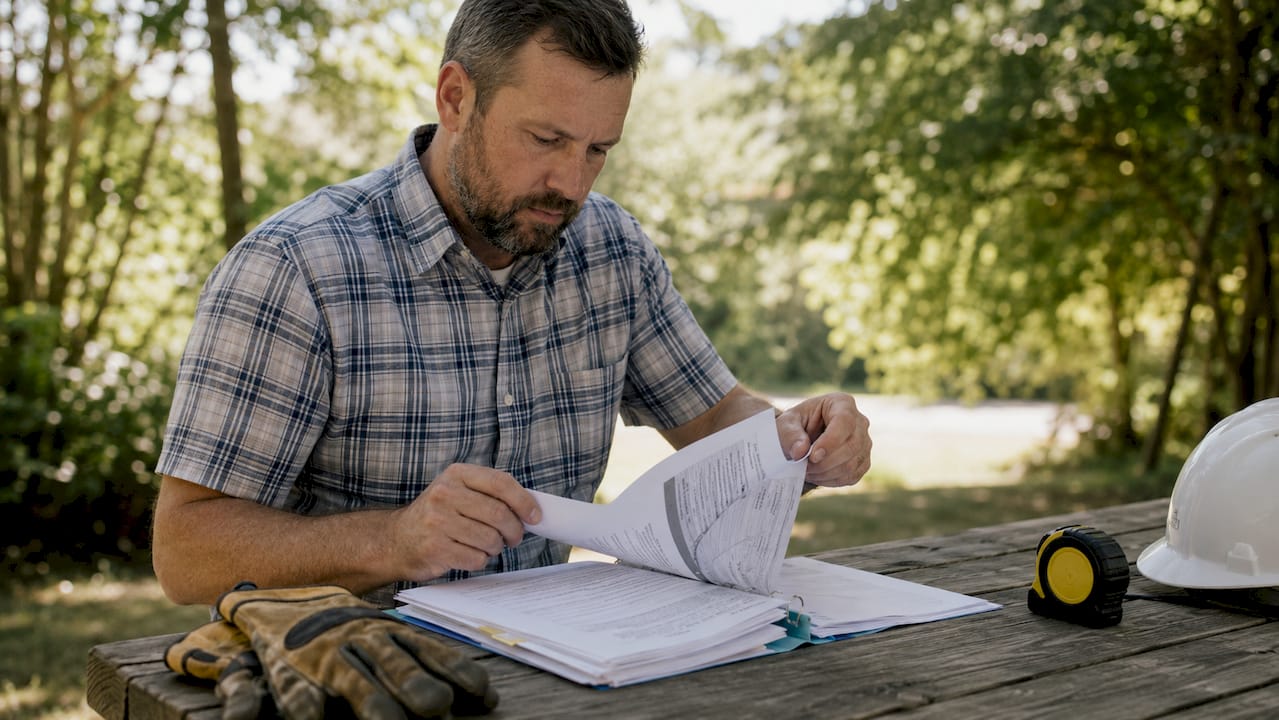
A thorough fire risk assessment is the starting point for every other fire safety decision on site. The assessment must identify fire hazards, name the people at risk including contractors and visitors, evaluate existing controls, and document a plan for training and review. Without this foundation, every other precaution is guesswork.
The core rules that flow from that assessment include:
- Identify and control ignition sources. Electrical faults, open flames, hot work equipment, and smoking areas all require specific controls before work begins.
- Keep escape routes clear and marked. Routes must stay unobstructed throughout every phase of construction, not just at project start.
- Install audible warning systems. Temporary fire alarms, klaxons, air horns, or whistles must be loud enough to be heard above construction noise.
- Place fire extinguishers at hazard points. Equipment must match the fire type risk at each location, and all workers must know where extinguishers are located.
- Stage fire suppression resources early. Water supply or suppression equipment must be ready as soon as combustible materials arrive on site.
- Update controls as the project evolves. Fire risks change as structures go up, trades rotate, and materials accumulate.
Pro Tip: Schedule a formal risk assessment review at every major project milestone, not just at the start. A site that looks completely different after framing is complete carries a completely different fire risk profile.
2. How should contractors manage hot work to minimize fire risks on site?
Many construction site fires are directly linked to hot work operations. Welding, cutting, soldering, torching, and grinding all generate heat and sparks capable of igniting combustibles that are nowhere near the immediate work area. The delay between the work and the ignition is what catches contractors off guard.
The steps for managing hot work safely are:
- Define the scope before work starts. Identify exactly what hot work will occur, where, and for how long.
- Issue a location-specific, time-bounded permit. Hot works permits must authorize the specific task at a defined location and expire when that task ends.
- Remove or shield combustibles within the work zone. Clear a minimum safe radius of flammable materials before any ignition source is activated.
- Assign a designated fire watch. OSHA requires a fire watch during hot work when standard precautions are not sufficient to eliminate risk.
- Extend the fire watch after work ends. Smoldering materials can ignite long after the torch is off. Fire watch must continue for a defined period post-work, typically at least 30 minutes, though site conditions may require longer.
- Prohibit hot work near flammable substances. Any area storing flammable liquids, gases, or highly combustible materials is off-limits for hot work without exceptional controls.
Pro Tip: Treat the post-work fire watch as non-negotiable, not a formality. Delayed ignition from hot work is one of the most common causes of after-hours construction fires.
3. What fire protection equipment and systems must contractors provide and maintain?
Fire extinguishers on construction sites must be matched to the specific hazard type at each location. Water extinguishers work for combustible materials like wood and paper. CO2 extinguishers are required near electrical panels and equipment. Dry chemical units cover a broader range but require specific training to use correctly.
| Extinguisher type | Best for | Common construction use |
|---|---|---|
| Water | Class A (wood, paper, fabric) | Framing areas, lumber storage |
| CO2 | Class C (electrical fires) | Generator areas, electrical panels |
| Dry chemical (ABC) | Class A, B, and C | General site coverage |
| Foam | Class A and B (flammable liquids) | Fuel storage areas |
Beyond extinguisher type, placement and training are equally critical:
- Placement distances. OSHA specifies maximum travel distances to extinguishers based on hazard class. Contractors must map coverage across the full site footprint.
- Clear signage. Every extinguisher location requires visible signage so workers can find equipment under stress.
- Alarm system coverage. Temporary alarm systems must cover all occupied areas of the site, including areas that change as construction phases progress.
- Inspection frequency. Extinguishers require monthly visual checks and annual professional inspections. Temporary alarm systems need regular functional tests.
- Worker training. Every worker on site must know how to use an extinguisher and how to activate the alarm. Training is not optional under OSHA or NFPA frameworks.
4. How should contractors coordinate fire safety on multi-trade sites?
Multi-trade construction sites carry a compounded fire risk because multiple contractors work simultaneously, each introducing their own ignition sources and combustible materials. Coordination among contractors is not optional. The responsible person or principal contractor must confirm that fire safety measures address all workers, subcontractors, visitors, and any vulnerable people on site.
The coordination requirements that matter most include:
- Define the responsible person clearly. Every site must have a named duty holder who owns fire safety planning and enforcement across all trades.
- Include all contractors in risk assessments. Subcontractors and specialty trades must be part of the assessment process, not added as an afterthought.
- Conduct fire safety site inductions. Every worker and visitor entering the site must receive a briefing covering escape routes, alarm signals, assembly points, and their specific responsibilities.
- Document the fire safety plan. Written plans covering alarm procedures, evacuation routes, and roll call processes must be accessible to all site personnel.
- Keep escape routes updated. Phased construction sites require escape route revisions as structures change. A route that worked in month one may be blocked or unsafe by month four.
The most overlooked coordination failure is assuming subcontractors have read the main contractor’s fire safety plan. Verbal site inductions with sign-off sheets close that gap.
5. How do NFPA codes and the International Fire Code shape contractor requirements?
NFPA codes and standards are consensus-based documents revised every 3–5 years. They incorporate scientific research and field experience, which means the edition your jurisdiction has adopted may differ from the current published version. Contractors must confirm which edition applies to their specific project and location before finalizing fire protection designs.
The International Fire Code, published by the International Code Council, sets out requirements including fire flow and water supply specifications that contractors must incorporate into construction fire protection planning. The 2021 IFC is the reference edition for many jurisdictions, though adoption varies by state and municipality. Colorado contractors, for example, must track both state-level adoption and local amendments.
| Code or standard | Published by | Update cycle | Key contractor impact |
|---|---|---|---|
| NFPA 1 (Fire Code) | NFPA | Every 3–5 years | General fire prevention requirements |
| NFPA 72 (Fire Alarm Code) | NFPA | Every 3–5 years | Alarm system design and installation |
| International Fire Code | ICC | Every 3 years | Water supply, fire flow, site protection |
| OSHA 29 CFR 1926 | U.S. Department of Labor | As amended | Construction-specific fire safety rules |
Contractors who track NFPA code updates avoid costly mid-project redesigns when inspectors cite a newer or locally amended standard. Build code verification into project planning from the first design meeting, not the final inspection.
Pro Tip: Check your local jurisdiction’s adopted code edition before specifying any fire protection system. A system designed to the 2018 IFC may not pass inspection in a jurisdiction that has adopted the 2021 edition with local amendments.
Key takeaways
Effective construction fire safety requires a live, continuously updated risk assessment combined with code-compliant equipment, trained workers, and clear coordination across all trades on site.
| Point | Details |
|---|---|
| Risk assessment is the foundation | Update it at every major project phase, not just at project start. |
| Hot work permits prevent delayed fires | Permits must be location-specific, time-bounded, and include post-work fire watch. |
| Equipment must match the hazard | Select extinguisher types and placement based on the specific fire risks at each site location. |
| Coordination covers all trades | The responsible person must include every subcontractor and visitor in fire safety planning. |
| Code edition matters | Confirm which NFPA and IFC edition your jurisdiction has adopted before designing fire protection systems. |
What contractors consistently get wrong about fire safety
The most common failure I see on construction sites is treating the initial fire risk assessment as a completed task rather than a living document. A site that starts as a concrete pour looks nothing like the same site six weeks into framing. The hazards change, the trades change, and the escape routes change. The risk assessment must change with them.
Hot work permit slip-ups are the second most predictable problem. Permits get issued for a general area rather than a specific location, or they expire while work continues. The fire watch gets skipped because the crew is behind schedule. These are the conditions that produce after-hours fires with no one on site to catch them early.
The fix is not more paperwork. It is a culture where the site supervisor treats fire safety as a daily operational priority, not a compliance box. Regular training refreshers, even brief five-minute toolbox talks, keep fire safety visible when production pressure is high. The sites I have seen handle fire safety well share one trait: the principal contractor makes it clear from day one that no schedule pressure justifies skipping a fire watch or blocking an escape route.
— Preactionfire
Fire protection services for contractors in the Denver Metro Area
Contractors working in Denver and the surrounding area need fire protection systems that meet OSHA, NFPA, and local code requirements from the first day of construction through final occupancy.

Pre Action Fire has served the Denver Metro Area since 2009 with NICET-certified technicians who design, install, and maintain fire alarm systems for construction and commercial projects. The team provides inspection services, code compliance consultations, and system upgrades tailored to each project’s phase and requirements. For contractors who need fire protection for new construction that holds up at every inspection, Preactionfire is the direct contact. Reach out for a consultation before your next project breaks ground.
FAQ
What is the first step in construction fire safety?
A fire risk assessment is the required first step. It identifies hazards, names the people at risk, and defines the controls needed before any other fire safety measure is implemented.
When is a hot work permit required on a construction site?
A hot work permit is required for any welding, cutting, soldering, torching, or grinding activity near combustible materials. The permit must be location-specific and time-bounded, covering pre-work through post-work fire watch.
How often should fire extinguishers be inspected on a job site?
Fire extinguishers require a monthly visual inspection and an annual professional inspection. Extinguishers must also be checked after any use or known impact.
Which NFPA standard applies to fire alarms on construction sites?
NFPA 72, the National Fire Alarm and Signaling Code, governs fire alarm system design and installation. Contractors must confirm which edition their jurisdiction has adopted, as versions vary by state and municipality.
Who is responsible for fire safety on a multi-trade construction site?
The principal contractor or designated responsible person holds overall fire safety accountability. That duty holder must confirm that risk assessments and safety measures cover every contractor, subcontractor, and visitor on site.
Recommended
- Fire protection for new construction: compliance and safety
- Industrial fire safety standards: Colorado compliance guide
- Fire safety prioritization: A step-by-step Colorado compliance guide
- Industrial fire protection for Colorado sites: A compliance guide
- Denver Commercial Fire Protection
- Denver Emergency Fire Protection