
Most fire safety myths are not just wrong — they are the kind of wrong that gets people killed. No, a single smoke alarm does not protect your whole building. No, sprinklers do not flood rooms like a Hollywood disaster scene. And no, a fire extinguisher you bought ten years ago is not ready to go just because it is still hanging on the wall. This article corrects the most dangerous fire prevention misconceptions with evidence from NFPA, USFA, and real inspection experience, then tells you exactly what to do about each one.
Here are the core corrections up front:
- Sprinklers: Only the head nearest the fire activates — and homes with sprinklers show up to an 89% lower risk of fire death compared to those without.
- Extinguishers: They are rated by fire class. Using the wrong type can make a fire worse.
- Alarms: A single standalone alarm protects only its immediate area unless the system is interconnected.
- Modern buildings burn too. Unattended cooking, electrical faults, and lithium-ion battery charging are leading ignition sources in new construction.
- EV fires are extinguishable, but they require different tactics and may re-ignite.
Act now: Test your smoke alarms, confirm your extinguisher’s class rating, map two exit routes, and schedule a professional inspection if you have not had one in the past year.
Table of Contents
- 1. Sprinkler systems don’t flood buildings — here’s how they actually work
- 2. Fire extinguishers are class-specific — and they do expire
- 3. One smoke alarm does not protect an entire building
- 4. Modern buildings burn too — and often faster
- 5. EV fires are real but not impossible to fight — and hazardous materials are rarely obvious
- 6. Firefighters have real limits inside burning buildings
- 7. Fire drills are not optional — even for small businesses and homes
- 8. When you should call a licensed fire protection professional
- 9. Escape routes and elevators: the myths that cost lives
- 10. Fire-resistant materials slow fires — they do not stop them
- 11. Smoke inhalation kills faster than flames — and most people underestimate it
- 12. Offices and retail spaces face the same ignition risks as industrial sites
- 13. Treating fire safety as a one-time setup is the most dangerous myth of all
- What you should do right now
- Key Takeaways
- What 15 years of fire protection work actually teaches you
- Preactionfire can inspect, repair, or upgrade your fire protection system
- Authoritative sources and further reading
1. Sprinkler systems don’t flood buildings — here’s how they actually work
The flooding myth is one of the most stubborn in fire protection. People picture every sprinkler head in a building erupting simultaneously, soaking furniture, electronics, and documents. That is not how these systems work.
Residential sprinklers activate in response to heat, not smoke. Each head contains a heat-sensitive element calibrated to release at roughly 135°F–165°F. In 85% of home fires where sprinklers operated, only one head activated. The fire was contained before it spread far enough to trigger a second.
The water damage comparison is also worth knowing. A sprinkler head discharges far less water than a fire department hose line. NFPA data shows sprinklers use significantly less water on a fire than hose streams do. The water damage from a sprinkler activation is typically a fraction of what firefighting operations would cause — and nothing compared to an uncontrolled fire.
| Outcome | Without sprinklers | With sprinklers |
|---|---|---|
| Risk of fire death | Baseline | Up to 89% lower |
| Heads that typically activate | N/A | Usually one |
| Water used vs. hose line | N/A | Much less |
Practical steps for property managers: Have sprinkler systems inspected annually by a licensed contractor. In Colorado’s cold winters, confirm that wet-pipe systems in unheated spaces are either drained or converted to dry-pipe. After any activation, shut the system at the main control valve and call a licensed technician before restoring water flow — do not just reset and move on.
Pro Tip: If you manage a commercial building and have never seen your sprinkler system’s inspection report, request it today. A missing or overdue inspection is a code violation in most jurisdictions, and it voids the protection the system is supposed to provide.
2. Fire extinguishers are class-specific — and they do expire
The myth here has two parts, and both are dangerous. First: one extinguisher does not handle every fire. Second: an old extinguisher is not a reliable extinguisher.
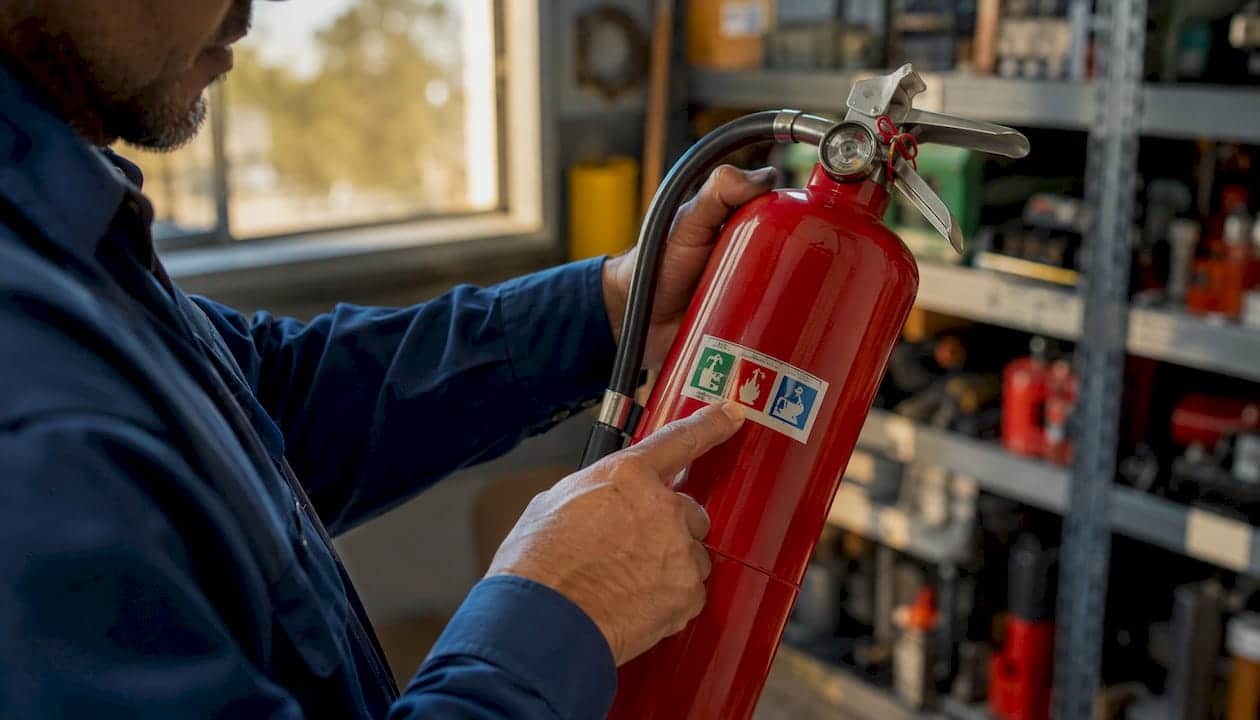
Extinguishers are rated by fire class: Class A for ordinary combustibles like wood and paper, Class B for flammable liquids, Class C for energized electrical equipment, Class D for combustible metals, and Class K for cooking oils and fats. Using a Class B extinguisher on a Class A fire, or a water-based unit on an electrical fire, can spread the fire or create an electrocution hazard. Most commercial kitchens need a Class K unit — a standard ABC extinguisher will not cut it on a grease fire.
On expiration: extinguishers require annual visual inspections, periodic internal maintenance (typically every 6 years), and hydrostatic pressure testing (every 5–12 years depending on type). The pressure gauge needle sitting in the green zone does not mean the unit is serviceable. Dry chemical agents can cake and pack, rendering the unit useless even when the gauge looks fine.
Decision flow for using an extinguisher:
- Activate the alarm and call 911 before attempting anything.
- Assess the fire. If it is larger than a wastebasket, get out.
- Confirm your extinguisher matches the fire class. If it does not, evacuate immediately.
- Use PASS: Pull the pin, Aim at the base, Squeeze the handle, Sweep side to side.
- If the fire does not go out within 10–15 seconds, stop and evacuate. Portable extinguishers are for small, contained fires only.
For a full breakdown of which unit fits which situation, the types of fire extinguishers guide from Preactionfire covers commercial selection in detail.
3. One smoke alarm does not protect an entire building
A standalone smoke alarm protects the room it is in, and maybe the hallway immediately outside. That is it. If a fire starts in the basement and the only alarm is in the upstairs hallway, occupants in bedrooms with closed doors may not hear it until conditions are already dangerous.
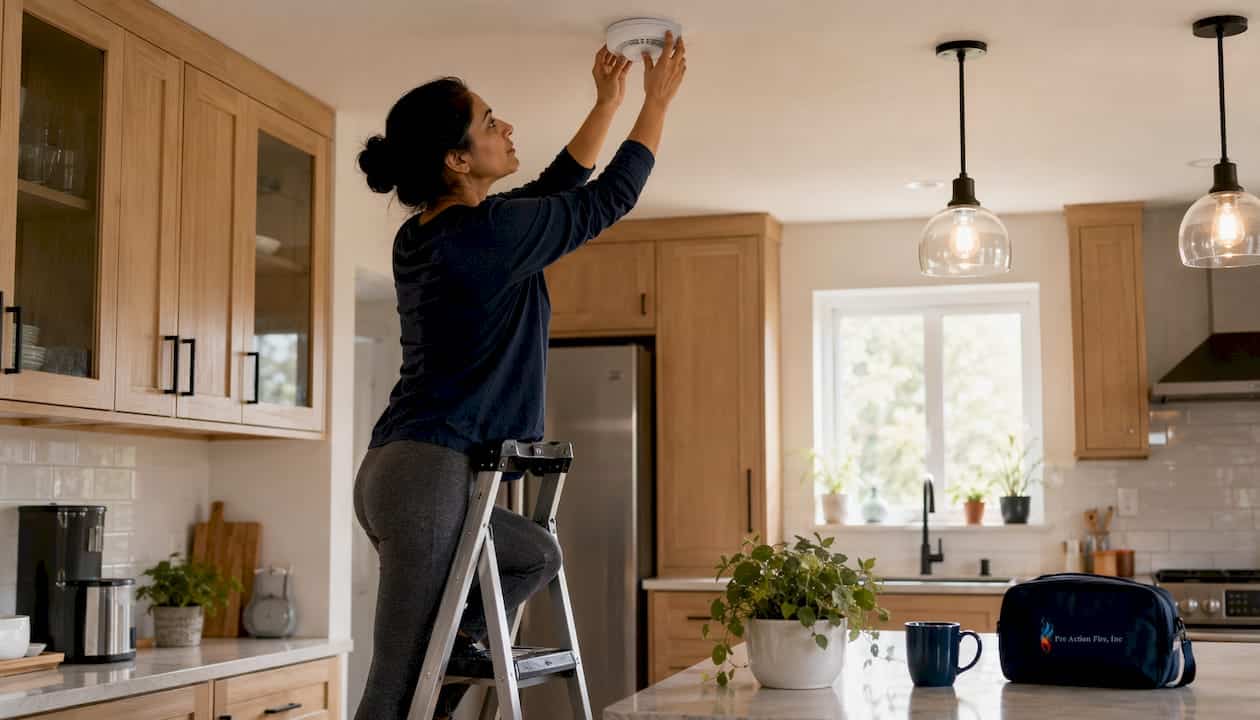
Smoke alarms should be installed on every level of a home, inside each sleeping area, and outside sleeping areas in the hallway. The difference between a standalone alarm and an interconnected system is significant: when alarms are interconnected, triggering one triggers all of them. That is the standard in most new construction, but older buildings and retrofits often lack it.
Battery-powered alarms fail when batteries die — and people frequently disable them after a nuisance trip and forget to re-enable them. Sealed 10-year lithium battery units eliminate that failure point. Hardwired alarms with battery backup are more reliable still, but they go silent during extended power outages if the backup battery is depleted.
Pro Tip: Test every alarm in your building monthly. Press the test button and confirm the sound is audible from the farthest sleeping area with the door closed. If you cannot hear it clearly, you need more alarms or a louder notification device.
For commercial buildings, the question is not just alarm placement — it is whether the notification circuits are designed to reach every occupant. Building managers should confirm alarm notification device coverage meets current code, especially after renovations that change floor layouts.
4. Modern buildings burn too — and often faster
The belief that fires only happen in old, neglected buildings is one of the most common fire prevention misconceptions, and it creates a false sense of security in newer construction. NFPA data shows fire departments responded to an estimated 1,504,500 fires in 2022, resulting in 3,790 civilian deaths — and a large share of those deaths occurred in residential structures, including newer ones.
Modern construction materials are a factor. Engineered lumber, synthetic furnishings, and open floor plans can actually accelerate fire spread compared to older, heavier timber construction. A room that might have taken 30 minutes to flashover decades ago can reach the same point in under 5 minutes with today’s synthetic materials.
The leading ignition sources in homes and commercial buildings have nothing to do with age:
- Unattended cooking is the leading cause of home fires in the U.S.
- Electrical faults — overloaded circuits, damaged wiring, faulty appliances — are a top cause in both residential and commercial settings.
- Lithium-ion battery charging from phones, laptops, e-bikes, and power tools is a fast-growing ignition source.
Prevention checklist:
- Never leave cooking unattended, even briefly.
- Inspect appliance cords for fraying or heat damage annually.
- Charge lithium-ion devices on hard, non-flammable surfaces and never overnight unattended.
- Keep flammable materials at least three feet from heat sources.
Pro Tip: Charge e-bikes and e-scooters in garages or outdoors, not in hallways or near exits. A battery fire in an exit corridor can block the only escape route.
For a deeper look at common ignition sources in commercial facilities, Preactionfire’s guide on common fire hazards covers mitigation tactics by hazard type.
5. EV fires are real but not impossible to fight — and hazardous materials are rarely obvious
Electric vehicle fires generate dramatic headlines, and the myths that follow are predictable: EVs explode, they cannot be extinguished, they burn forever. The reality is more nuanced and more useful.
EV battery fires do present genuine challenges. Lithium-ion thermal runaway can sustain high temperatures and may re-ignite hours or even days after initial suppression. NFPA guidance notes that EV fires require thermal mitigation and extended monitoring — firefighters use different tactics, including large volumes of water directed at the battery pack, and may need to monitor the vehicle for extended periods after suppression. But “challenging” is not the same as “impossible.” Trained responders handle EV fires regularly.
What you should do as a civilian: evacuate the area, keep a safe distance, and relay specific information to 911 — the vehicle make, model, and whether it is plugged in. Do not attempt to fight an EV battery fire with a portable extinguisher.
The hazardous materials myth runs parallel. People assume hazardous materials are always clearly labeled with skull-and-crossbones signage. NFPA 400 exists precisely because hidden hazards are common. Cleaning chemicals, compressed gases, and industrial solvents in commercial settings are often stored without adequate labeling. Treat any unknown spill, odor, or container as potentially dangerous: isolate the area, keep people out, and let responders know what you observed.
Pro Tip: If your facility stores any chemicals or compressed gases, maintain a current Safety Data Sheet (SDS) binder near the main entrance. Firefighters can use it to identify hazards before entering — and that information can change their tactics and protect your employees.
6. Firefighters have real limits inside burning buildings
The image of firefighters moving confidently through a burning building, seeing clearly and communicating freely, is largely a TV construct. The reality of interior firefighting involves serious constraints that every building occupant should understand.
Smoke in a structure fire can reduce visibility to near zero within seconds. Thermal imaging cameras help crews locate heat sources and victims, but they do not eliminate the navigation challenge in a smoke-filled, unfamiliar building. Radio communications can fail or degrade inside reinforced concrete structures. Structural collapse risk increases rapidly as fire duration extends, and incident commanders must weigh crew safety against rescue probability.
These limits have direct implications for occupants:
- Get out early. Every minute you wait is a minute less for crews to safely reach you.
- Close doors behind you. A closed door can slow fire spread significantly and buy time.
- Account for everyone. Tell the incident commander immediately if someone is unaccounted for and where they were last seen.
- Do not re-enter. Once you are out, stay out. Firefighters cannot guarantee a safe path back in.
Pro Tip: Before firefighters arrive, post your building’s floor plan and hazard locations near the main entrance or utility room. Crews entering an unfamiliar commercial building benefit enormously from knowing where gas shutoffs, electrical panels, and hazardous storage areas are located.
7. Fire drills are not optional — even for small businesses and homes
Small businesses skip drills because they feel unnecessary. Households skip them because they feel awkward. Both groups are wrong, and the cost of skipping shows up in evacuation times when it matters most.
Fire drills and evacuation practice measurably reduce occupant evacuation times. The reason is simple: muscle memory. When an alarm sounds at 2 AM or during a busy lunch service, people do not think clearly. They follow patterns they have practiced. Without a practiced pattern, they hesitate, grab belongings, use elevators, or head for the entrance they always use — which may be blocked by fire.
A 15-minute drill sequence for small businesses and homes:
- Designate a meeting point at least 50 feet from the building before you start.
- Sound the alarm (or announce “fire drill”) and start a timer.
- Everyone exits using their assigned route. Time the evacuation.
- At the meeting point, account for every person by name.
- Walk a second exit route and confirm it is clear and functional.
- Debrief: what slowed people down? What was unclear?
For homes, run this drill at least twice a year, including once at night. For businesses, OSHA and fire codes typically require at least annual drills, with higher frequency for facilities with frequent occupancy changes.
Pro Tip: Include occupants with mobility limitations in every drill. Identify in advance who will assist them and which exit route works for them. A drill that only works for able-bodied occupants is an incomplete drill.
8. When you should call a licensed fire protection professional
The answer is not “when something breaks.” By then, you are already behind.
Call a licensed professional for annual inspections, any visible system fault, after building renovations or occupancy changes, and after any fire or sprinkler activation. Fire risk assessments and system records should be treated as living documents — updated after layout changes, inventory shifts, or new equipment installations, not filed once and forgotten.
What a professional inspection covers:
- Alarm circuit continuity and zone wiring integrity
- Sprinkler waterflow testing and pressure checks
- Backflow preventer inspection and certification
- Hydrostatic testing of extinguishers per schedule
- Fire pump operation and flow testing
- Visual inspection for corrosion, leaks, or physical damage
Red flags that require immediate service — do not wait for the annual cycle:
- Repeated false alarms or alarms that fail to reset
- Visible corrosion on sprinkler heads, pipes, or alarm panels
- Any leak from a sprinkler pipe or fitting
- An alarm zone that fails to trip during a test
- Float switches or tamper switches showing fault conditions
NICET-certified technicians have passed nationally standardized competency exams for fire alarm and suppression systems. When hiring, ask for the technician’s NICET certification level and your state or local contractor license number. After any inspection, you should receive a written report documenting what was tested, what passed, what failed, and any corrective actions required.
Pro Tip: Keep a physical binder and a digital copy of every inspection report. If a fire occurs and your insurer or the fire marshal asks for inspection records, having them organized and current is the difference between a smooth process and a serious liability problem.
For Denver-area commercial properties, Preactionfire’s professional inspection services cover all of the above, with NICET-certified technicians and documented reporting.
9. Escape routes and elevators: the myths that cost lives
Two persistent myths about evacuation: that one exit is enough, and that elevators are a reasonable option during a fire. Both are wrong, and both appear in incident reports after fatal fires.
Every building occupant should know at least two exit routes from any room they occupy regularly. Fires block exits unpredictably. A hallway that is clear when the alarm sounds may be impassable 90 seconds later. Planning a single route and assuming it will be available is not a plan — it is a gamble.
Elevators are not for fire evacuation. Elevator shafts act as chimneys, drawing smoke upward. Elevator doors may open on a floor that is fully involved in fire. Power failures during a fire can trap occupants between floors. The only exception is in buildings with specifically designed occupant evacuation elevators, which are a distinct system with fire-rated enclosures and dedicated power — and they are not common.
For commercial buildings, fire protection planning should map primary and secondary exit routes for every occupied area, with routes posted visibly and reviewed after any renovation.
10. Fire-resistant materials slow fires — they do not stop them
Building codes require fire-resistant construction for good reason: compartmentalization limits how fast fire spreads from one area to another. Fire-rated walls, doors, and assemblies are designed to hold back fire for a defined period — typically 20 minutes, 45 minutes, 1 hour, or 2 hours depending on the assembly and occupancy type.
The myth is that “fire-resistant” means “fireproof.” It does not. A 1-hour fire-rated wall buys one hour under standard test conditions. Real fires vary. A fire-rated door propped open with a wedge provides zero protection. A fire-rated wall penetrated by an unsealed conduit or pipe is compromised at that point.
Compartmentalization works when the system is intact. That means fire doors close and latch automatically, penetrations are properly sealed with fire-rated caulk or pillows, and no one has modified walls or ceilings without restoring the fire rating. After any renovation, a licensed contractor should verify that fire-rated assemblies are restored to their rated condition.
11. Smoke inhalation kills faster than flames — and most people underestimate it
Ask most people what kills in a fire and they say “the flames.” The data says otherwise. Smoke inhalation is responsible for the majority of fire fatalities. Carbon monoxide, hydrogen cyanide, and other combustion byproducts incapacitate victims before flames reach them. A person can lose consciousness from smoke in a matter of minutes in a heavily involved structure.
This changes how you should respond. If you wake to a smoke alarm at night, do not sit up and assess the situation. Roll out of bed, stay low, and move to the door. Feel the door before opening it. If it is hot or smoke is visible at the threshold, do not open it — seal the gap with clothing or bedding and signal from a window.
The “stay low” instruction is not just advice — it is physics. Smoke and toxic gases rise. The cleaner air in a smoke-filled room is within the first 12–18 inches of the floor. Crawling is not dramatic; it is the correct response.
12. Offices and retail spaces face the same ignition risks as industrial sites
A persistent myth in commercial fire safety holds that fire risk is primarily an industrial problem — factories, warehouses, chemical plants. Experts note that offices, retail spaces, and hospitality venues face real ignition risks from electrical faults and kitchen incidents. The difference is that industrial facilities often have more rigorous inspection programs, while offices and retail spaces treat fire safety as a compliance checkbox.
Electrical faults from overloaded power strips, aging wiring, and improperly installed equipment are common in office environments. Break room appliances — microwaves, coffee makers, toasters — are frequent ignition sources when left unattended or placed near combustibles. Retail stockrooms with dense cardboard and synthetic packaging can sustain a fire rapidly.
Colorado commercial fire code sets specific requirements for alarm systems, sprinkler coverage, and extinguisher placement in commercial occupancies. If your space has been renovated, expanded, or changed use since its last inspection, the existing system may no longer meet code for the current occupancy.
13. Treating fire safety as a one-time setup is the most dangerous myth of all
Installing a fire alarm system and walking away is not fire safety. It is the appearance of fire safety. Systems degrade. Batteries die. Sprinkler heads corrode. Extinguishers lose pressure. Alarm zones develop faults. None of these failures announce themselves loudly — they accumulate quietly until the system fails at the moment it is needed most.
Best practice guidance treats fire protection records as living documents: updated after occupancy changes, layout modifications, or new equipment, with detailed maintenance and training logs. The inspection report from three years ago does not tell you whether your system works today.
For selecting qualified service providers, guidance on choosing fire system installers emphasizes verifying credentials, reviewing inspection documentation, and confirming that technicians hold recognized certifications — principles that apply whether you are in the U.S. or elsewhere.
The practical standard: annual inspections at minimum, with interim checks after any change to the building or its occupancy. Document everything. Act on every deficiency the report identifies, not just the ones that feel urgent.
What you should do right now
The highest-impact actions from these myth corrections, in order of urgency:
- Test every smoke alarm today. Monthly testing is the standard. If any alarm fails, replace it before the day is out.
- Check your extinguisher’s class rating. Confirm it matches the fire risks in each area where it is mounted. If you have a kitchen, you need a Class K unit nearby.
- Schedule a professional inspection if you have not had one in the past 12 months, or after any building change.
- Map two exit routes from every room you occupy regularly. Walk them. Confirm they are clear.
- Run a drill. For businesses, put it on the calendar. For households, do it this weekend.
Pro Tip: Fire safety is not a one-time project. Set a recurring calendar reminder for monthly alarm tests, annual extinguisher checks, and your next professional inspection date. The reminder costs nothing; skipping it can cost everything.
Key Takeaways
Most fire deaths are preventable when occupants act on accurate information rather than common myths — layered protection with interconnected alarms, properly classed extinguishers, and annual professional inspections is the standard that saves lives.
| Point | Details |
|---|---|
| Sprinklers activate individually | In 85% of home fires with sprinklers, only one head operated — and the risk of dying in a reported home fire is up to 89% lower in homes with sprinklers. |
| Match extinguisher to fire class | Using the wrong class (A, B, C, D, or K) can spread fire or create new hazards. |
| Interconnected alarms protect more | A single standalone alarm covers only its immediate area; interconnected systems alert the whole building. |
| Smoke kills before flames | Smoke inhalation causes the majority of fire fatalities; stay low and exit fast. |
| Preactionfire for Denver inspections | NICET-certified technicians serving the Denver Metro Area cover alarms, sprinklers, extinguishers, and full system documentation. |
What 15 years of fire protection work actually teaches you
The gap between what people believe about fire safety and what the evidence shows is not a knowledge problem — it is a confidence problem. People are confident in myths because the myths feel logical. Of course all the sprinklers go off; that is what movies show. Of course a fire extinguisher is a fire extinguisher. Of course a new building is safer than an old one.
What actually matters is less intuitive and more specific: the class of extinguisher on the wall, whether the alarm zones are interconnected, whether the sprinkler heads were last inspected before or after the building changed tenants. The details are unglamorous, but they are what the evidence points to every time.
The other thing worth saying plainly: professional inspections are not a bureaucratic formality. A NICET-certified technician running a waterflow test or checking alarm circuit continuity is doing something that cannot be replicated by a visual check or a reset button. The systems that fail in fires are almost always the ones that were not properly maintained — not because the owner did not care, but because they trusted the appearance of safety over the substance of it.
Preactionfire can inspect, repair, or upgrade your fire protection system
If reading through these myth corrections made you realize your building’s fire protection has gaps, the next step is a professional assessment — not a guess.
Pre-Action Fire has served the Denver Metro Area since 2009 with NICET-certified technicians who inspect, install, repair, and certify fire alarm systems, sprinkler systems, fire suppression systems, and extinguishers for commercial and industrial properties. When you schedule an inspection, a technician reviews every component against current NFPA standards and Colorado code, documents what passes and what needs attention, and gives you a written report you can act on and file for compliance purposes.
For alarm systems specifically, the fire alarm safety and compliance service covers everything from initial design through ongoing monitoring. For sprinkler installs or upgrades, the sprinkler installation benefits page explains what commercial property owners gain from a properly designed system.
Contact Preactionfire to schedule your inspection or get a quote for installation or repair. The process starts with a site assessment — no guesswork, no generic recommendations.
Authoritative sources and further reading
The claims in this article draw on the following primary and authoritative sources:
- NFPA Sprinkler Myths and Facts (NFPA PDF): The primary source for sprinkler activation statistics, death-risk reductions, and water-use comparisons. Essential reading for anyone evaluating sprinkler installation.
- Home Fire Sprinkler Coalition / NFPA Updated Materials: Updated 2024 version of NFPA sprinkler statistics including 2022 national fire incident and fatality totals.
- San Mateo Consolidated Fire Department — Myth vs. Fact: Clear, plain-language corrections to common fire safety myths, including sprinkler activation mechanics.
- NFPA Blog — Fire Protection and Life Safety Myths: NFPA’s own myth-correction resource covering EV fires, hazardous materials, and life safety misconceptions.
- NFSA — Fire Sprinkler FAQs: National Fire Sprinkler Association answers to common questions about how sprinklers detect fire and how alarms and sprinklers differ.
- Guidewire HazardHub — Fire Sprinklers vs. Smoke Alarms: Analysis of layered protection combining alarms and sprinklers, with data on combined death and property loss reductions.
- PB Safety — Top Fire Safety Myths for Businesses: Practical guidance on treating risk assessments as living documents and maintaining inspection records.
- The Bulletin — Fire Safety Myths in the Workplace: Covers drill effectiveness and the myth that fire risk is only an industrial concern (note: Australian publication; principles apply broadly).
- Preactionfire — Fire Safety Inspections, Denver: Primary inspections landing page for commercial and industrial properties in the Denver Metro Area.
- Preactionfire — Fire Protection Guide for Denver Buildings: Overview of fire protection requirements and best practices for commercial buildings in Colorado.