
TL;DR:
- Colorado’s local jurisdictions adopt and amend NFPA standards, requiring facilities to confirm specific editions.
- Proper inspection tools, complete documentation, and digital records are essential for passing NFPA inspections.
- Common deficiencies include closed valves, corroded heads, expired tags, and incomplete records, preventable with proactive maintenance.
Failed fire safety inspections carry real financial consequences. 73.7% non-compliance rates in recent audits signal that most facilities are not as prepared as they think, and OSHA penalties have exceeded $8 million in enforcement actions. For facility managers and business owners in Colorado, 2026 brings updated local code adoptions, stricter digital recordkeeping expectations, and zero tolerance for repeat deficiencies. This guide gives you a practical, step-by-step system for understanding which rules apply to your building, gathering the right tools, executing each required inspection, and avoiding the most common failures that trigger costly re-inspections.
Table of Contents
- Understand Colorado’s NFPA adoption and enforcement in 2026
- Inspection tools, documents, and pre-checklist for 2026
- Step-by-step NFPA 25, 10, and 72 inspections for Colorado facilities
- Common deficiencies, digital compliance, and avoiding costly failures
- What most NFPA guides miss: Inspection success comes down to local details and digital discipline
- Connect with certified experts for hassle-free NFPA compliance
- Frequently asked questions
Key Takeaways
| Point | Details |
|---|---|
| Local enforcement matters | Always verify with your AHJ which NFPA edition is in force for your facility. |
| Recordkeeping is now digital | AHJs expect immediate access to inspection data—paper records are rarely enough. |
| Inspection frequency is system-specific | Sprinklers, extinguishers, and alarms each require unique timelines and checklists. |
| Automation aids but doesn’t replace annual checks | Remote monitoring can reduce effort but annual professional inspections are still required. |
| Most failures are preventable | Closed valves, missing records, or painted heads cause most inspection issues. |
Understand Colorado’s NFPA adoption and enforcement in 2026
Colorado does not operate on a single statewide fire code. Instead, local jurisdictions adopt and amend national standards on their own schedules, which means the rules governing your building depend entirely on where it sits. The 2025 Denver Fire Code references specific NFPA editions for sprinkler systems, fire pumps, and portable extinguishers, but that version may differ from what a neighboring city enforces. Assuming national guidance applies directly to your facility is one of the fastest ways to fail an inspection.
The three standards most Colorado facilities need to know are NFPA 25 (sprinkler inspection, testing, and maintenance), NFPA 10 (portable fire extinguishers), and NFPA 72 (fire alarm and signaling systems). Each has its own inspection schedule, documentation requirements, and deficiency classification system. Understanding NFPA standards in Colorado means knowing not just what the national standard says, but which edition your local Authority Having Jurisdiction (AHJ) has formally adopted.
Here is what you need to confirm before any inspection or upgrade:
- Which NFPA edition is currently enforced by your local AHJ
- Whether any local amendments modify national requirements
- What permits are required for Inspections, Testing, and Maintenance (ITM) activities
- How long you must retain inspection records under local rules
- Whether your certified technician is recognized by the local AHJ
Local adoptions frequently lag behind national updates by one or two code cycles. Denver, for example, references earlier NFPA editions in its 2025 fire code, which means a facility manager relying on the most recent national publication could be referencing requirements that are not yet in force locally. Checking Colorado building codes at the state level is a starting point, but it does not replace a direct conversation with your AHJ.
Facilities must validate which NFPA edition the AHJ enforces. Local adoptions can lag national updates by years, and that gap creates real compliance risk.
Pro Tip: Call your local fire marshal’s office before scheduling any upgrade or inspection. Ask specifically which NFPA edition is adopted and whether any local amendments apply. Do not rely on online guides or contractor assumptions. This single step can prevent a failed inspection caused by referencing the wrong code version.
For a broader look at how NFPA compliance inspection requirements translate to real-world facility tasks, reviewing jurisdiction-specific guidance is always the right move before you spend money on upgrades.
Inspection tools, documents, and pre-checklist for 2026
With your jurisdiction and code version confirmed, the next step is assembling everything you need on-site before the inspector arrives. Showing up to an inspection without complete records or the right tools is a deficiency waiting to happen. A thorough fire safety inspection checklist starts well before the inspection date.
Here is a breakdown of the tools and documentation required by system:
| System | Required tools | Key documents |
|---|---|---|
| Sprinkler (NFPA 25) | Pressure gauges, flow test equipment, inspection tags | ITM logs, valve inspection records, deficiency reports |
| Extinguisher (NFPA 10) | Pressure gauge, weight scale, inspection tags | Annual maintenance tags, 6-year and 12-year records |
| Fire alarm (NFPA 72) | Multimeter, smoke test aerosol, decibel meter | Panel test logs, detector sensitivity records, signal reports |
Beyond tools, your documentation package must be complete and current. Pre-inspection prep includes organizing past ITM records, flagging any open deficiencies from previous inspections, and confirming that follow-up repairs are documented. Records must cover the past one to three years depending on the system and local requirements.
Before the inspection date, work through this pre-check list:
- Confirm Lock-Out/Tag-Out (LOTO) procedures are in place for any systems requiring shutdown
- Verify AHJ permits are active and on file
- Schedule a NICET-certified technician well in advance, as lead times increase near year-end
- Confirm your record retention plan meets local requirements
- Test access to all system components, including roof-mounted equipment and mechanical rooms
A facility inspection checklist guide can help you map every asset before the inspector walks in. Missing one valve room or one extinguisher station can trigger a partial failure even when the rest of the system is perfect.
Pro Tip: Move away from paper logs now. Digital ITM records with QR code or asset tracking allow inspectors to pull up full system histories instantly. AHJs increasingly expect this level of organization, and facilities with digital records consistently move through inspections faster with fewer questions.
Step-by-step NFPA 25, 10, and 72 inspections for Colorado facilities
Once your documents are organized and your team is scheduled, execution is where preparation pays off. Each system has a distinct inspection rhythm, and mixing up frequencies is a common source of avoidable deficiencies.
Here is a comparison of required tasks by system under 2026 guidelines:
| Standard | Frequency | Key tasks | Responsible party |
|---|---|---|---|
| NFPA 25 | Weekly/Monthly/Quarterly/Annual/5-Year | Valve checks, gauge reads, alarm tests, head inspections, internal pipe assessment | Certified sprinkler contractor |
| NFPA 10 | Monthly visual/Annual/6-Year/12-Year | Pressure check, weight verification, internal inspection, hydrostatic test | Certified extinguisher technician |
| NFPA 72 | Annual | Detector sensitivity, panel function, signal tests, battery backup | NICET-certified alarm technician |
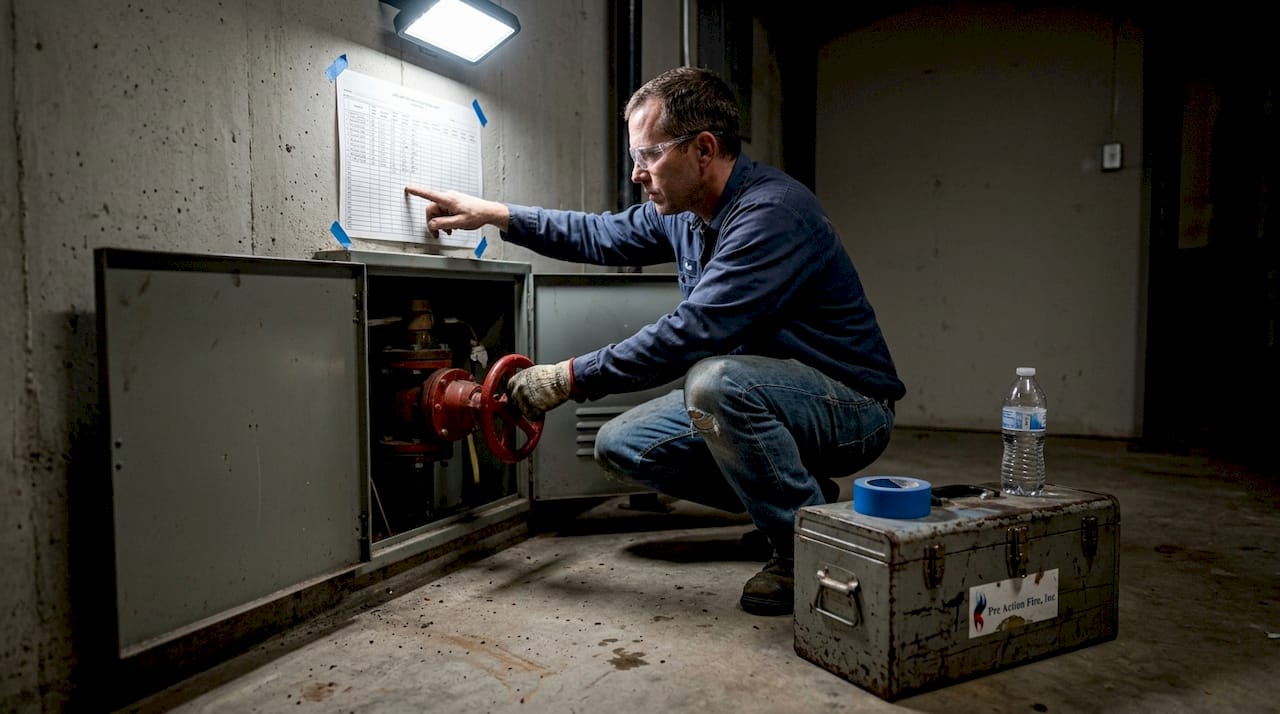
For sprinkler systems under NFPA 25 (2026), the schedule breaks down as follows: control valves weekly, gauges and tanks monthly, alarm devices quarterly, heads and piping annually, and internal piping every five years. That five-year internal inspection is often overlooked and is one of the most expensive deficiencies to correct after the fact.
A practical walkthrough for your annual inspection cycle:
- Confirm all control valves are open and tamper switches are active
- Record gauge pressures and compare to baseline readings
- Test all alarm devices and flow switches for proper signal transmission
- Visually inspect every sprinkler head for paint, corrosion, or physical damage
- Review internal piping obstruction history and schedule five-year assessment if due
- For extinguishers, verify pressure, weight, and tag currency under NFPA 10 automation rules
- Run full alarm panel diagnostics and document detector sensitivity readings
A critical statistic: 59% of sprinkler failures trace back to closed or impaired shut-off valves. Weekly valve checks are not a formality. They are your first line of defense against a system that looks operational but cannot actually suppress a fire.
For a detailed breakdown of your annual obligations, the annual sprinkler inspection guide covers Colorado-specific requirements. Edge cases like freezer environments, painted heads in older buildings, and special hazard areas require additional documentation and sometimes separate AHJ sign-off. Review fire protection best practices for handling these scenarios before they become inspection surprises. The full NFPA 25 inspection requirements and a fire extinguisher inspection checklist are also worth bookmarking for your team.
Common deficiencies, digital compliance, and avoiding costly failures
Even well-managed facilities fail inspections. The difference between a one-time correction and a pattern of re-inspections usually comes down to how deficiencies are tracked and resolved. Understanding NFPA 25 deficiency types helps you prioritize repairs before they escalate.
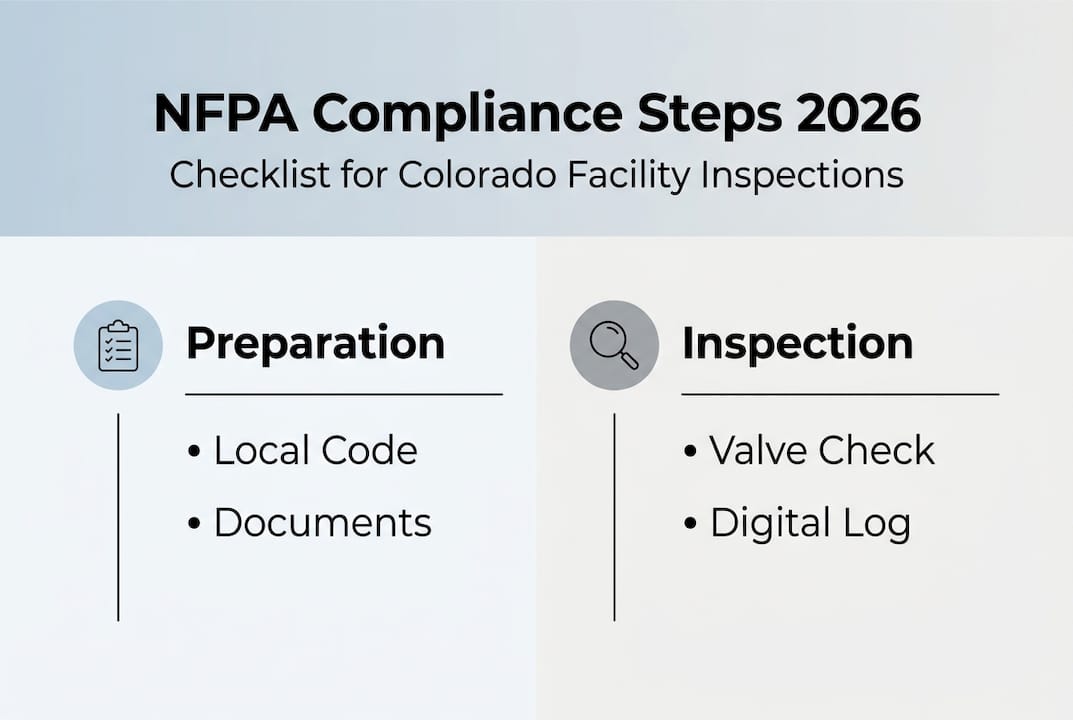
The most common issues found in Colorado inspections include painted or corroded sprinkler heads, closed or locked control valves, expired extinguisher tags, and missing or incomplete ITM records. Each of these is preventable with a consistent maintenance calendar.
Deficiencies fall into two categories:
- Critical deficiencies: The system cannot perform its intended function. Examples include a closed main control valve, a non-functional alarm panel, or a discharged extinguisher. These require immediate correction before the facility can be considered compliant.
- Noncritical deficiencies: The system is operational but has documentation gaps or minor physical issues. Examples include missing inspection tags or a single corroded head. These require correction within a defined timeframe.
Digital recordkeeping best practices for 2026:
- Use QR codes or asset tags on every piece of equipment for instant history access
- Log every inspection, test, and maintenance action with date, technician, and findings
- Classify deficiencies at the time of discovery and document the corrective action
- Retain records for a minimum of one to three years depending on system type
- Back up records to a cloud platform accessible by your AHJ on request
The fire risk reduction steps that matter most are the ones tied to your documentation system. Facilities with digital records consistently show lower deficiency rates because recurring tasks are flagged automatically rather than discovered during an inspection.
Records must be readily available for the AHJ at all times. Paper files alone are no longer enough, and partial records are treated the same as missing records during an audit.
Pro Tip: Set automated reminders for every inspection frequency milestone: weekly valve checks, monthly gauge reads, quarterly alarm tests. Digital checklists with automated scheduling eliminate the human memory factor that causes most recurring deficiencies.
What most NFPA guides miss: Inspection success comes down to local details and digital discipline
Most guides hand you a checklist and call it done. What they rarely say is that half of inspection success is relationship-based. Knowing your AHJ contact, understanding their documentation preferences, and asking about upcoming code adoptions before they take effect puts you ahead of 90% of facilities in your area.
We have seen facilities with perfect systems fail inspections because their records were not formatted the way the local inspector expected. That is not a code problem. That is a communication problem. The solution is to treat your AHJ like a partner, not an adversary. Ask what they want to see before the inspection, not after.
Digital discipline is the other piece most guides skip. In 2026, NFPA compliance strategies that rely on paper binders are already behind. AHJs expect instant access to full system histories. If your technician cannot pull up three years of valve inspection records on a tablet in under two minutes, your records are not compliant in any practical sense.
The facilities that pass every inspection without drama are not the ones with the newest equipment. They are the ones with consistent processes, proactive AHJ communication, and digital records that leave no room for interpretation.
Connect with certified experts for hassle-free NFPA compliance
Navigating local code adoptions, managing multi-system inspection schedules, and maintaining audit-ready digital records is a full-time job on top of your actual responsibilities. That is exactly where a specialized fire protection partner changes the outcome.
Pre Action Fire, Inc has served the Denver Metro Area since 2009 with NICET-certified technicians who know Colorado AHJ requirements at the local level. Whether you need fire safety inspections scheduled and documented, systems upgraded to meet 2026 standards, or fire extinguisher compliance help that keeps your tags current and your records clean, our team handles it from start to finish. Contact us to schedule a compliance review and make your next inspection a guaranteed pass.
Frequently asked questions
What’s the difference between NFPA 25, 10, and 72 for Colorado facilities in 2026?
NFPA 25, 10, and 72 each govern a different system: sprinklers, portable extinguishers, and fire alarms respectively, each with its own inspection frequency, documentation requirements, and deficiency classification enforced by your local AHJ.
Do I need digital inspection records for Colorado AHJ in 2026?
Yes, digital records are now essential and must be immediately accessible to local officials upon request; paper-only files are increasingly treated as incomplete during audits.
How often must fire sprinklers be inspected under the 2026 NFPA?
Under NFPA 25 (2026), sprinkler systems require weekly valve checks, monthly gauge and tank readings, quarterly alarm device tests, annual head and piping inspections, and a five-year internal piping assessment.
Is automation of fire extinguisher checks allowed under NFPA 10 (2026) in Colorado?
If locally adopted, NFPA 10 automation allows remote monitoring to replace monthly physical checks, but annual maintenance, six-year internal inspection, and twelve-year hydrostatic testing remain required.
What are common reasons facilities fail NFPA inspections?
The most frequent failures involve closed valves and painted heads along with missing or outdated inspection records, all of which are preventable with a consistent digital maintenance program.