
TL;DR:
- Fire system zoning in Colorado is essential for effective fire protection, defining building sections for alarms, sprinklers, and suppression devices. Proper zoning ensures precise emergency response, reduces property damage, and is mandated by local codes requiring permits and detailed design by licensed professionals. Strategic, compliant zoning minimizes retrofit costs, enhances operational efficiency, and lowers fire risk across diverse occupancy types.
Fire system zoning is one of those topics that looks straightforward on paper but catches facility managers off guard during inspections. Most people assume zoning is just about drawing lines on a floor plan. In reality, it determines how fast firefighters can pinpoint a problem, whether your sprinkler system delivers the right water pressure to the right area, and whether your building passes its next code review. For Colorado commercial properties, getting zoning right is not optional. It is the foundation of every effective fire protection strategy.
Table of Contents
- Understanding fire system zoning: The basics
- How zoning applies to Colorado fire codes
- Types of zones: Hazard classes, hydraulic zones, and mixed occupancies
- Practical steps for achieving compliant zoning in your facility
- What most facility managers miss about fire system zoning
- Take the next step toward compliant fire protection
- Frequently asked questions
Key Takeaways
| Point | Details |
|---|---|
| Fire zoning is code-driven | Proper zoning is mandated by Colorado law and is essential for effective fire protection of commercial spaces. |
| Understand your hazards | Zones must account for hazard class, building use, and square footage to ensure compliance. |
| Zoning impacts inspections | Noncompliant zones are a key reason for failed inspections or insurance denials. |
| Separate systems, separate zones | Sprinklers and alarms must be zoned independently, as codes and logic differ. |
| Partner with experts | Fire protection specialists can help design, document, and maintain zoning per evolving codes. |
Understanding fire system zoning: The basics
Fire system zoning means dividing your building’s fire protection systems into distinct, clearly defined sections. Each zone covers a specific area and controls how alarms, sprinklers, or suppression devices respond to a detected threat. Think of it like circuit breakers in an electrical panel. When one zone activates, you know exactly where the problem is without shutting down the entire building.
A well-designed zone layout gives emergency responders a precise location immediately. Without it, a fire alarm activation in a 200,000-square-foot warehouse tells you almost nothing useful. With proper zoning, that same alarm tells you the fire is in the northeast storage bay, on the second level. That specificity saves lives and reduces property damage.
Fire system zoning applies to three main systems in a commercial building:
- Fire alarm systems: Governed by NFPA 72, these zones define which detectors and pull stations report to which alarm circuit. Each zone must be clearly labeled on the annunciator panel.
- Fire sprinkler systems: Governed by NFPA 13, these zones define hydraulic sections that control water flow and pressure to specific areas.
- Fire suppression devices: Special hazard areas like server rooms, commercial kitchens, or paint booths require their own suppression zones, separate from the general sprinkler system.
Colorado fire code requirements reference the International Fire Code (IFC) with state and local amendments, pulling in NFPA 72 for alarm systems and NFPA 13 for sprinkler systems. The 2025 Denver Fire Code specifically requires permits for fire extinguishing systems in commercial buildings, which means any new installation or significant modification to your zoning layout needs to go through the permitting process before work begins.
Pro Tip: Request a copy of your building’s original fire protection drawings from your local fire authority or previous contractor. These drawings show your existing zone layout and are essential for any compliance review or system upgrade.
Understanding how fire suppression devices integrate into your overall zone plan is especially important for mixed-use facilities where different areas carry different fire risks.
How zoning applies to Colorado fire codes
Colorado adopts the International Fire Code as its baseline, but local jurisdictions layer on their own amendments. Denver, Aurora, Lakewood, and other metro cities each have specific requirements that go beyond the state minimum. This layered structure is where many facility managers run into trouble. They meet the IFC baseline but miss a local amendment that adds stricter zoning requirements for their building type.

The 2025 Denver Fire Code requires permits for fire extinguishing systems, meaning zone changes are not informal adjustments. They are permitted work, subject to plan review and inspection. This applies to new construction and to retrofits of existing systems.
Here is a summary of the key codes that govern fire system zoning in Colorado:
| Code | System covered | Key zoning requirement |
|---|---|---|
| IFC (Colorado adoption) | All fire protection systems | Zone layout must support targeted emergency response |
| NFPA 72 (2022 edition) | Fire alarm systems | Each zone must be individually identified on annunciator panels |
| NFPA 13 (2022 edition) | Fire sprinkler systems | Hydraulic zones required; hazard classification drives design |
| Denver Fire Code 2025 | All commercial systems | Permits required for extinguishing system installation or modification |
Strong building safety compliance depends on understanding which codes apply to your specific building type and occupancy. A light manufacturing facility in Denver faces different zoning requirements than a high-rise office building in the same city.
One important data point worth knowing: the NFPA reports that properties with properly zoned and maintained fire protection systems experience significantly lower fire losses than those with outdated or improperly designed systems. Proper zoning is not just a legal requirement. It is a measurable risk management tool.
Working through a detailed fire protection compliance review before your next inspection cycle is the smartest way to catch zoning gaps before an inspector does.
Types of zones: Hazard classes, hydraulic zones, and mixed occupancies
Not all zones are created equal. The type of zone you need depends on what your building does, how it is built, and what fire risks exist in each area. NFPA 13 and NFPA 72 define several distinct zone types, and understanding the differences helps you ask the right questions when working with a fire protection engineer.
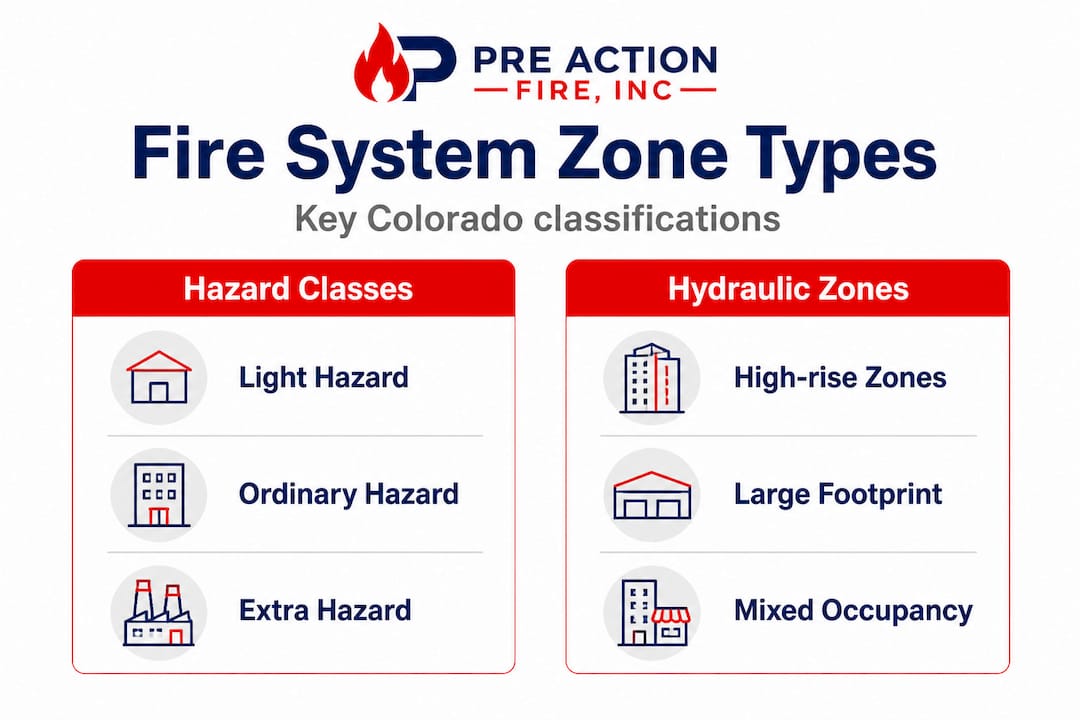
Hazard classes are the starting point for sprinkler system design. NFPA 13 breaks occupancy hazards into three categories:
- Light Hazard: Offices, churches, schools, and similar low-fuel-load environments. Maximum coverage area is 225 square feet per sprinkler head.
- Ordinary Hazard (Group 1 and 2): Retail stores, light manufacturing, parking garages. Coverage ranges from 130 to 165 square feet per head depending on the group.
- Extra Hazard (Group 1 and 2): Woodworking shops, flammable liquid storage, paint operations. These require the densest sprinkler coverage and the most carefully designed hydraulic zones.
NFPA 13 classifies sprinkler zones by hazard, with light hazard allowing up to 225 square feet per head, and requires separate hydraulic zones for high-rises and buildings with mixed hazard types. This is not a suggestion. It is a design requirement that affects water supply calculations, pipe sizing, and pump specifications.
Hydraulic zones are critical in high-rise buildings and large-footprint facilities. A hydraulic zone is a section of the sprinkler system designed to operate at a specific water pressure and flow rate. In a tall building, water pressure at the top floor is dramatically different from pressure at the ground floor. Hydraulic zoning solves this by dividing the building into vertical sections, each with its own pressure management. Without this, either the upper floors get too little water or the lower floors get too much, potentially causing pipe failures.
Mixed occupancy zoning is one of the most common compliance challenges in Colorado commercial real estate. Many buildings have office space on one floor, a commercial kitchen on another, and a storage warehouse in the back. Each area carries a different hazard class. Code requires that these areas be zoned separately so that sprinkler density and alarm response are calibrated to the actual risk in each space.
Here is a quick comparison of the three primary zone types:
| Zone type | Governed by | Primary purpose | Key design factor |
|---|---|---|---|
| Hazard class zone | NFPA 13 | Match sprinkler density to fuel load | Square footage per head |
| Hydraulic zone | NFPA 13 | Manage water pressure across building height | Pressure and flow calculations |
| Occupancy zone | NFPA 72 / NFPA 13 | Separate areas by use and risk level | Hazard classification per space |
Understanding these distinctions is essential for life safety systems that actually perform when needed. For facilities with significant industrial operations, industrial fire compliance adds another layer of zone-specific requirements tied to process hazards, chemical storage, and high-rack storage configurations.
Practical steps for achieving compliant zoning in your facility
Getting your zoning into compliance does not have to be overwhelming. Breaking it into clear steps makes the process manageable and helps you avoid the most common pitfalls.
- Audit your existing fire protection drawings. Pull your as-built drawings for both alarm and sprinkler systems. Identify how zones are currently defined, labeled, and mapped. Compare these to your current building layout. Renovations, tenant improvements, and equipment changes often alter fire risk without anyone updating the fire system documentation.
- Classify every area by hazard type. Walk through your facility and categorize each space using NFPA 13 hazard classifications. Document fuel loads, storage heights, and occupancy types. This step often reveals mismatches between how a space was originally classified and how it is actually being used today.
- Engage a licensed fire protection specialist. Zone design is not a DIY project. Colorado requires that fire protection systems be designed by qualified professionals, and in many cases, a licensed fire protection engineer must stamp the drawings. Look for NICET-certified technicians (National Institute for Certification in Engineering Technologies) who understand both the code requirements and the practical realities of your building type.
- Verify hydraulic calculations for sprinkler zones. This is where many facilities fall short. The hydraulic calculations must confirm that each zone receives adequate water flow and pressure under worst-case demand. If your building has been modified or your water supply has changed, these calculations may need to be redone entirely.
- Update documentation and submit for permits. Any zone changes in Denver and most Colorado municipalities require a permit. Prepare updated drawings, hydraulic calculations, and a code compliance narrative. Submit these for plan review before starting any physical work.
- Schedule a pre-inspection walkthrough. Before your official fire inspection, do an internal walkthrough with your fire protection contractor. Verify that all zone labels match the drawings, annunciator panels are correctly programmed, and sprinkler coverage aligns with the current layout.
“The most expensive zoning fix is the one you make after a failed inspection or, worse, after a fire. Investing in a thorough upfront assessment almost always costs less than emergency retrofits under pressure.”
NFPA 13 hydraulic zone requirements are especially important to verify during any renovation project, since even minor structural changes can affect water flow paths and pressure distribution throughout the system.
Pro Tip: If your building is going through a tenant improvement or change of occupancy, treat it as a trigger to review your entire zone layout. A new tenant with higher hazard activities can invalidate your existing zone design even if the physical sprinkler heads have not moved.
For buildings under fire protection for new construction standards, zoning must be designed into the project from the earliest planning stages, not added as an afterthought during rough-in.
What most facility managers miss about fire system zoning
Here is something we have seen repeatedly over more than 15 years serving Colorado commercial properties: facility managers treat zoning as a documentation exercise. They focus on getting the paperwork right, passing the inspection, and moving on. The actual physical performance of the zones rarely gets the same attention.
This mindset creates a specific kind of risk. A zone that looks correct on paper but was never properly commissioned, or that has drifted out of alignment with the building’s actual use, is not protecting anyone. It is just creating the appearance of compliance.
The financial consequences of this approach are real. Retrofitting a poorly designed zone layout in an occupied building is expensive, disruptive, and often requires temporary fire watches that add significant cost. We have seen facilities spend three to four times more on corrective retrofits than they would have spent on a proper upfront design.
There is also a strategic opportunity that most facility managers miss. A well-designed zone layout can actually reduce the total number of system components you need, simplify your inspection and testing process, and lower your annual maintenance costs. Strategic zoning is not just about compliance. It is about building a system that is efficient to operate over its entire lifespan.
The Denver alarm code guide covers specific requirements that affect how alarm zones must be configured and labeled, and reviewing it regularly as codes update is a habit that pays dividends at inspection time.
Zoning done right is an investment in operational efficiency, not just a legal obligation.
Take the next step toward compliant fire protection
Understanding fire system zoning is one thing. Getting your facility into full compliance with Colorado codes is another. Pre Action Fire, Inc. has been helping Denver Metro commercial and industrial facilities navigate exactly this challenge since 2009. Our NICET-certified technicians know the IFC, NFPA 72, NFPA 13, and the Denver Fire Code inside and out.
Whether you need a full zone audit, updated hydraulic calculations, or a complete system design for a new building, we offer code reviews, system upgrades, and turnkey fire safety solutions built around your specific occupancy and risk profile. From fire alarm systems to sprinkler installation and industrial fire protection, our team handles the full scope of compliance work so you can focus on running your facility. Contact us today to schedule a consultation and get a clear picture of where your zoning stands.
Frequently asked questions
What are the key zoning requirements for fire sprinklers in Colorado?
Colorado sprinkler zoning must follow NFPA 13, which sets maximum coverage areas per head by hazard class and requires separate hydraulic zones in high-rises and mixed-use buildings. Light hazard occupancies allow up to 225 square feet per head, while higher hazard areas require denser coverage.
How does the Denver Fire Code 2025 affect fire system zoning?
The Denver Fire Code 2025 requires permits for all fire extinguishing system installations and modifications, meaning any zone redesign in Denver must go through plan review and inspection before work begins.
Who is responsible for ensuring fire system zoning is up to code?
The facility manager or property owner holds primary responsibility for maintaining code-compliant zoning, and this typically means partnering with a licensed fire protection professional who can verify that zone design meets current NFPA and local code standards.
Can improper zoning affect insurance or liability?
Yes, non-compliant zoning can result in denied insurance claims after a fire event and can expose property owners to significant liability if code violations contributed to fire spread or delayed suppression.
Are different systems (alarms, sprinklers) zoned separately?
Yes, alarm systems follow NFPA 72 zoning requirements while sprinkler systems follow NFPA 13, and the Denver Fire Code treats each system’s permitting and inspection as distinct processes.