
TL;DR:
- Fire safety lead generation involves attracting, qualifying, and converting decision-makers into scheduled service appointments. It targets facility managers, safety directors, and procurement officers through tailored content, qualification workflows, and optimized digital channels. Measuring pipeline conversion rates and integrating forms with operational systems enhances effectiveness and simplifies qualification.
Fire safety lead generation is the targeted process of identifying and converting organizations or decision-makers that need fire protection services into qualified sales opportunities. For fire protection companies operating in competitive markets like Denver, this process spans every stage from attracting a facility manager’s attention online to scheduling an on-site inspection or system installation. It is not simply collecting contact forms. It is a structured pipeline that connects marketing activity directly to service revenue, covering fire alarm systems, sprinkler installations, extinguisher inspections, and ongoing maintenance contracts.
What is fire safety lead generation and how does it work?
Fire safety lead generation is the process of attracting, qualifying, and routing prospective clients through a defined workflow until they become booked service appointments or signed contracts. The distinction between simply generating contacts and generating qualified leads is where most fire protection companies either win or lose pipeline efficiency.
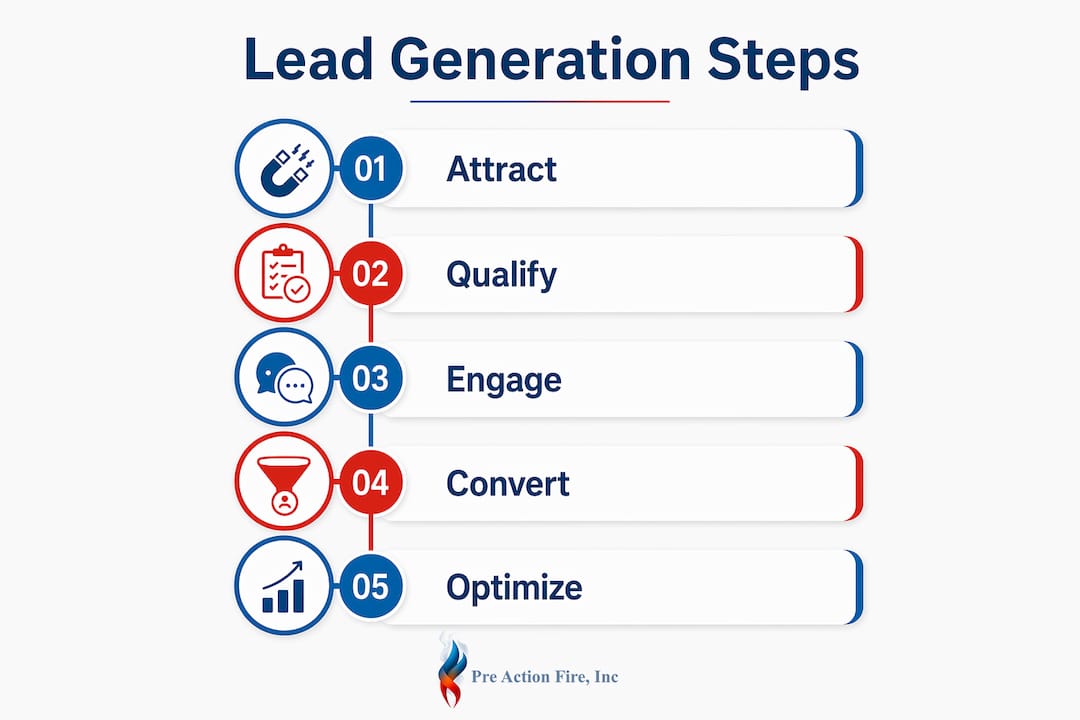
The workflow typically follows five stages:
- Attract: Digital content, paid advertising, and SEO draw decision-makers to a landing page or contact form. A facility manager searching for NFPA-compliant sprinkler inspection services in Colorado is a textbook inbound lead.
- Capture: A web form collects not just name and email but qualification data. Forms with qualification fields covering property type, location, equipment type, and urgency separate high-priority requests from general inquiries before a single phone call is made.
- Qualify: The captured data routes the lead to the correct service team. An urgent suppression system failure goes to emergency dispatch. A new construction compliance inquiry goes to a project estimator. This prevents the costly mistake of treating every lead identically.
- Nurture: Leads that are not immediately ready to buy receive targeted follow-up content, compliance reminders, or inspection renewal notices. Multi-channel nurturing prevents stalled opportunities from going cold.
- Convert: The lead becomes a scheduled inspection, a signed service agreement, or a quoted installation project.
Pro Tip: Ask for urgency level directly in your web form. A single dropdown field labeled “How soon do you need service?” separates emergency calls from routine inquiries and cuts your team’s triage time significantly.
The operational integration behind this workflow matters as much as the marketing itself. Connecting online forms to ERP systems links sales, service scheduling, billing, and compliance documentation into one continuous process. When a prospect submits a form and receives an automated confirmation with a technician’s estimated arrival window, that experience builds trust before anyone picks up the phone.

Which buyer roles does fire protection lead generation target?
B2B fire protection lead generation targets three primary decision-maker roles, each with distinct motivations and content needs. Knowing who you are targeting determines which messages convert and which get ignored.
The three core buyer profiles are:
- Facility managers: Responsible for building compliance, maintenance schedules, and vendor relationships. They respond to content about NFPA standards, inspection timelines, and service reliability. For facility managers, the fire safety zones guide from Preactionfire is the type of resource that captures attention at the research stage.
- Safety directors: Focused on risk reduction, regulatory compliance, and incident prevention. They prioritize proof of certifications, NICET-qualified technicians, and documented service histories. Content that addresses liability and code compliance converts this audience.
- Procurement officers: Evaluating vendors on cost, contract terms, and service coverage. They respond to clear pricing structures, service level agreements, and references from comparable facilities.
Lead-to-meeting cycles in fire protection typically run 30 to 60 days. This means a prospect who downloads a compliance checklist in January may not book a consultation until March. Targeting the right role from the first touchpoint prevents wasted nurturing cycles on contacts who have no authority to approve a service contract.
Role-specific targeting also improves pipeline predictability. When your lead generation campaigns attract facility managers rather than general inquiries, your sales team can forecast meeting volume and quote conversion rates with far greater accuracy. This is the difference between a lead generation program and a guessing game.
What digital marketing strategies work best for fire safety leads?
The most effective digital channels for fire safety customer acquisition combine SEO content, paid advertising, and conversion-optimized landing pages into a coordinated system. Each channel serves a different stage of the buyer’s journey.
| Channel | Primary purpose | Best content format |
|---|---|---|
| SEO blog content | Attract buyers researching compliance | How-to guides, inspection checklists, NFPA explainers |
| Paid search (Google Ads) | Capture high-intent buyers ready to act | Service landing pages with direct CTAs |
| Landing pages | Convert traffic into qualified leads | Short forms, certifications, video testimonials |
| Email nurturing | Re-engage leads not yet ready to buy | Renewal reminders, compliance updates, case studies |
Dedicated landing pages with clear value propositions, client testimonials, and visible certifications outperform generic contact pages because they filter for compliance-conscious buyers from the first click. A landing page for commercial sprinkler installation in Denver that displays NICET certification badges and references NFPA 13 compliance signals credibility before the prospect reads a single paragraph of copy.
Fire protection buyers expect proof of credibility early in the process. Including certifications, technical service details, and client testimonials on landing pages prequalifies interest and reduces the number of unqualified inquiries your sales team handles. This is not a nice-to-have. It is a qualification filter built into the page itself.
Pro Tip: Align your SEO content with specific service triggers like annual inspection renewals, building permit applications, and post-incident compliance reviews. These moments create high-intent searches that convert at a much higher rate than general fire safety awareness content.
Inbound content that addresses decision-maker questions, such as what triggers a required sprinkler system upgrade or how to prepare for a fire marshal inspection, builds the trust that converts a first-time visitor into a form submission. Preactionfire’s commercial fire protection planning content is a strong example of this approach applied to the Denver market.
How to measure and optimize fire safety lead generation performance
Fire safety lead generation performance is measured by tracking the conversion rate at each stage of the pipeline, not just the total number of form submissions. Lead generation funnels separate marketing’s role in attracting and educating prospects from sales’ role in qualifying and closing them. Conflating the two produces misleading metrics.
The metrics that matter most in fire protection lead generation are:
- Lead-to-meeting conversion rate: What percentage of form submissions result in a booked consultation or site visit?
- Meeting-to-quote conversion rate: Of the meetings held, how many produce a formal service proposal?
- Lead response time: How quickly does your team follow up after a form submission? Leads contacted within the first hour convert at a significantly higher rate than those contacted 24 hours later.
- Cost per qualified lead: Total marketing spend divided by the number of leads that meet your qualification criteria, not just total leads captured.
- Pipeline velocity: How long does it take for a lead to move from first contact to a signed agreement?
Tracking lead generation as an appointment pipeline rather than a raw lead count aligns reporting with actual revenue outcomes. A fire protection company that books 20 qualified meetings per month from 80 form submissions has a 25% lead-to-meeting rate. That number is far more useful for forecasting than knowing 80 people filled out a form.
Qualification at the form level is the single most underutilized optimization lever in fire safety marketing. Forms that capture urgency, service type, facility size, and location allow your team to prioritize follow-up and personalize the first conversation. Poor qualification wastes sales time and cools leads before meaningful engagement begins. Integrating form data with an ERP or CRM system, such as Salesforce or ServiceTitan, gives operations teams real-time pipeline visibility and connects marketing performance to service delivery outcomes.
For Colorado-based fire protection companies, building fire safety compliance requirements create predictable service triggers that can be built directly into lead nurturing sequences, turning regulatory deadlines into conversion opportunities.
Key takeaways
Fire safety lead generation converts qualified decision-makers into booked service appointments through targeted marketing, structured qualification workflows, and integration between marketing and operational systems.
| Point | Details |
|---|---|
| Definition and scope | Lead generation for fire safety spans attraction, qualification, routing, and conversion into scheduled services. |
| Buyer role targeting | Facility managers, safety directors, and procurement officers each require distinct messaging and content. |
| Qualification at the form level | Forms capturing urgency, service type, and location improve lead quality and reduce sales team triage time. |
| Digital channel strategy | Landing pages with certifications and testimonials, paired with SEO and paid ads, produce the highest-quality leads. |
| Pipeline metrics | Track lead-to-meeting and meeting-to-quote rates, not just total form submissions, to measure true ROI. |
What most fire safety companies get wrong about lead generation
The most common mistake I see fire protection companies make is treating lead generation as a marketing problem when it is actually an operations problem. A company can run excellent Google Ads campaigns, build well-optimized landing pages, and generate 100 form submissions per month. If those submissions sit in an inbox for 48 hours before anyone responds, the marketing investment is largely wasted. The fire safety buyer who submits a form on Tuesday morning and hears nothing until Thursday has already called two competitors.
The second issue is form design. Most contact forms in this industry ask for name, email, phone, and a message field. That is not qualification. That is a callback request. Forms that capture property type, square footage, current system status, and urgency level give your service team the context to have an informed first conversation rather than spending the first five minutes of a call asking questions the form should have answered.
I also think the industry underestimates the trust gap that compliance-focused buyers bring to the table. A safety director evaluating fire protection vendors is not just comparing prices. They are assessing whether your company can protect them from regulatory liability. Certifications, NFPA references, and documented service histories on your landing pages are not marketing decoration. They are qualification signals that tell a serious buyer you are worth their time.
The future of fire safety lead generation points toward tighter integration between marketing automation and field service management platforms. Companies that connect their lead capture forms directly to dispatch and scheduling systems will outperform those running marketing and operations as separate functions.
— Preactionfire
How Preactionfire supports fire safety businesses in Denver
Pre Action Fire has served the Denver Metro Area since 2009, providing NICET-certified fire alarm systems, sprinkler installations, and inspection services to commercial and industrial clients across Colorado. For businesses evaluating fire protection vendors, Preactionfire’s fire alarm compliance services cover everything from initial system design to ongoing NFPA-compliant maintenance. Property managers and facility directors in Arvada and surrounding areas can also explore sprinkler installation options tailored to commercial building requirements. Contact Preactionfire directly to schedule a site evaluation or request a compliance consultation for your facility.
FAQ
What is fire safety lead generation?
Fire safety lead generation is the process of identifying, attracting, and converting organizations or decision-makers that need fire protection services into qualified sales opportunities. It includes marketing activities, qualification workflows, and handoff processes that turn inquiries into scheduled inspections, installations, or service contracts.
Who are the main decision-makers targeted in fire protection lead generation?
The primary targets are facility managers, safety directors, and procurement officers. Each role has distinct compliance priorities and purchasing authority, and lead generation campaigns perform best when messaging is tailored to each role’s specific concerns.
How long does a fire safety lead take to convert?
Lead-to-meeting cycles in B2B fire protection typically run 30 to 60 days. Consistent nurturing through email, compliance reminders, and targeted content prevents qualified leads from going cold during this window.
What metrics should fire safety companies track for lead generation?
The most important metrics are lead-to-meeting conversion rate, meeting-to-quote conversion rate, lead response time, and cost per qualified lead. Tracking booked meetings rather than raw form submissions gives a more accurate picture of pipeline health and marketing ROI.
Why do fire safety landing pages need certifications and compliance information?
Fire protection buyers evaluate vendors on regulatory credibility before price. Including NICET certifications, NFPA references, and client testimonials on landing pages prequalifies serious buyers and filters out low-intent inquiries before they reach your sales team.