Several indoor zones are recognized as high risk for commercial fire losses, including commercial kitchens, boiler and mechanical rooms, electrical equipment rooms, battery/UPS and server rooms, flammable-liquid and solvent storage, paint and finish areas, laundry rooms, loading docks and garbage rooms, and compressed gas storage. These are the high-risk areas in buildings that inspectors flag first and insurers price highest, because they combine an ignition source with a concentrated fuel load in a space people don’t watch closely.
If you manage a commercial property, treat three categories as first in line for upgrades: commercial kitchens, electrical/mechanical rooms, and battery/UPS or server rooms. They generate the most claims and carry the strictest code requirements under NFPA 96 and NFPA 1.
Some conditions can’t wait for a scheduled inspection. Walk the building today and check for these:
- Combustible storage (boxes, pallets, cleaning supplies) sitting inside a boiler, mechanical, or electrical room
- Visible grease buildup on kitchen hood filters or ductwork
- Cracked, swollen, or exposed battery enclosures in a UPS or server room
- Sprinkler heads blocked by stock, signage, or storage racks
- Cooking oil totes or drums stored without ventilation or clear signage
Pro Tip: If you find even one of these during a routine walkthrough, don’t file it for next month’s checklist. Combustible storage in an electrical room and a blocked sprinkler head are the two conditions most likely to turn a contained incident into a total loss.
Key Takeaways
The commercial buildings that avoid major fire losses are the ones that rank their kitchens, mechanical rooms, and battery rooms by actual risk score and fix the highest scorers first, backed by documented code compliance.
| Point | Details |
|---|---|
| Rank rooms, don’t guess | Score each area by likelihood times consequence times protection gap to set upgrade order. |
| Kitchens need documented maintenance | NFPA 96 hood suppression only works if cleaning and testing schedules are logged, not just installed. |
| No storage in equipment rooms | NFPA 1 prohibits combustible storage in boiler, mechanical, and electrical rooms outright. |
| Match suppression to the hazard | Clean-agent and water-mist protect electronics; sprinklers suit high fuel-load storage areas. |
| Bring in certified help | Preactionfire’s NICET-certified technicians can assess, design, and install upgrades across all nine high-risk zones. |
Table of Contents
- Which Building Areas Carry the Highest Fire Risk?
- How Do You Decide Which High-Risk Areas to Fix First?
- Which Codes and Standards Apply to These Rooms?
- What Protection Options Match Each Hazard Type?
- How Do You Keep These Protections Working Over Time?
- What Should You Do Today if You Find a High-Risk Condition?
- Sources
Which Building Areas Carry the Highest Fire Risk?
Each of these zones fails for a different reason. Knowing the specific ignition source and fuel load in each one tells you what kind of protection actually matters, rather than defaulting to “more sprinklers.”
Commercial kitchens. Open flames, hot oil, and grease-laden exhaust ducts make kitchens the single most cited hazard in food-service buildings. NFPA 96 governs hood design, grease removal, and suppression, and it requires documented inspection and cleaning schedules, not just a working system on install day. Wet-chemical hood suppression tied to automatic fuel shutoff is standard here.
Boiler and mechanical rooms. Fuel-fired equipment, high heat, and often gas lines mean any combustible material becomes a liability. NFPA 1 prohibits storing combustible materials in these rooms outright; anything needed for maintenance has to sit in a protected cabinet.
Electrical equipment rooms. Overloaded panels, arcing, and aging switchgear are common ignition points. These rooms fall under the same storage prohibition as boiler rooms, and equipment in hazardous-classified locations needs protection techniques tied to NEC hazardous-location classifications.
Battery, UPS, and server rooms. Thermal runaway in lithium-ion battery banks and dense electronic loads call for clean-agent or water-mist suppression rather than standard wet-pipe sprinklers, which can damage equipment even when they work correctly.

Flammable-liquid and solvent storage, paint/finish rooms. Vapor accumulation and static discharge are the real threats. These spaces need explosion-rated ventilation, grounding, and often a fire-rated separation wall from the rest of the building.
Laundry rooms. Lint accumulation in dryer ducts and static from synthetic fabrics create a slow-building fuel load that gets ignored until a duct fire happens.
Loading docks and garbage rooms. Cardboard, pallets, and mixed waste sitting near a building’s only vehicle entry point create both a fuel source and an access problem for responders.
Compressed gas storage. Cylinder damage or valve failure under heat can turn into a projectile hazard, not just a fire hazard, which is why clearance and securing requirements are strict.
Storage clearance rules apply across nearly all of these: keep stock at least 2 feet below the ceiling in unsprinklered spaces, or 18 inches below sprinkler deflectors where sprinklers exist, per combustible-storage clearance guidance. Cooking oil tanks specifically need emergency-responder signage under NFPA 704 conventions, detailed in tank storage rules.
Pro Tip: Route remote annunciation for hood suppression and clean-agent systems to a spot staff actually pass during a shift, not just the fire panel in a back hallway. A system that fires silently in an empty kitchen at 2 a.m. doesn’t help anyone.
How Do You Decide Which High-Risk Areas to Fix First?
A simple scoring method beats gut instinct: multiply likelihood by consequence, then divide by existing protection level. A kitchen with an aging hood system and heavy grease scores high on all three. A well-maintained electrical room with a preaction sprinkler already installed scores lower, even though the room type is inherently risky.
Score each area on a 1 to 5 scale for likelihood, consequence, and protection gap, then multiply. A kitchen scoring 4 (likelihood) times 5 (consequence) times 4 (protection gap, inverted) lands well above a compressed-gas cage that’s properly secured and rarely accessed.
Inspection frequency should track that score:
- Daily visual checks: kitchen hoods, loading dock storage, egress paths near mechanical rooms
- Monthly functional checks: suppression system pressure gauges, battery room enclosures, sprinkler head clearance
- Annual certified testing: hood suppression discharge tests, sprinkler and alarm certification, electrical room protection systems
For anything beyond a basic walkthrough, bring in NICET-certified technicians and a licensed fire protection contractor. Unusual hazards, like a solvent room with an odd layout or a server room retrofit, often need a fire engineer’s sign-off before the AHJ will approve the plan. Our building fire risk overview for Colorado managers walks through this scoring approach in more depth.
Which Codes and Standards Apply to These Rooms?
Three code families cover nearly everything discussed above. NFPA 1 sets storage prohibitions for boiler, mechanical, and electrical rooms. NFPA 96 governs commercial kitchen ventilation and suppression. NEC hazardous-location classifications determine what electrical equipment can legally sit in a room with flammable vapors or dust. NFPA 101 defines what counts as a hazardous area for life-safety purposes, which affects egress and separation requirements.
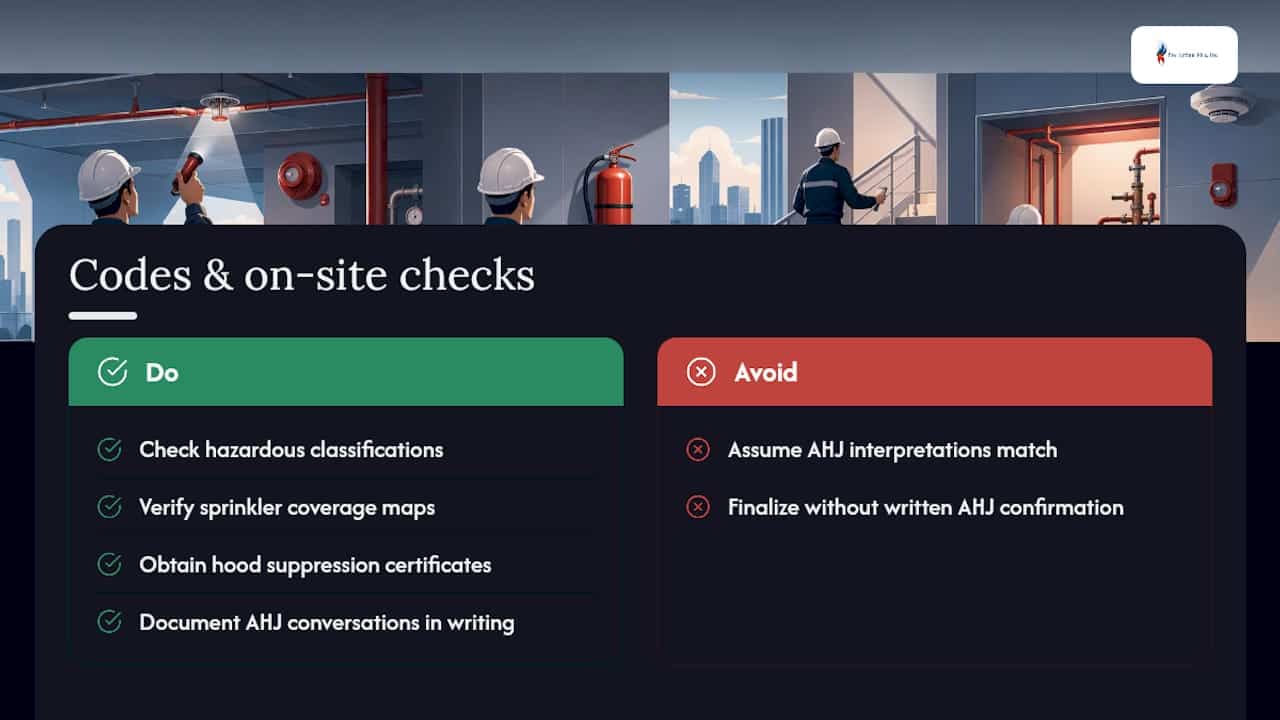
When you pull drawings or permits, check for documented hazardous classifications, sprinkler coverage maps, fire barrier locations, and hood suppression certificates. AHJ interpretation of these standards varies by jurisdiction and sometimes by individual inspector, so document every conversation with your fire marshal in writing before you finalize a design.
What Protection Options Match Each Hazard Type?
The wrong suppression choice can cost you more than the fire it was meant to prevent. Water and electronics don’t mix, and foam in a server room is a very expensive mistake.
- Sensitive electronics (server rooms, battery/UPS rooms): clean-agent suppression or water-mist systems, paired with aspirating smoke detection that catches a problem before visible smoke appears
- High fuel-load areas (storage, laundry, loading docks): wet-pipe or preaction sprinklers sized for the fuel load present
- Commercial kitchens: wet-chemical hood suppression tied to fuel and electrical shutoff
- Flammable liquid storage: foam-based fixed suppression plus explosion-rated ventilation
Preaction systems make sense anywhere false activation carries a high cost, like a data center, since they require both detection and a secondary trigger before water releases. Every installation needs clear sequence-of-operations documentation: what shuts off, what annunciates, and where staff need to go. Our data center fire protection guide breaks down clean-agent versus preaction choices in more detail.
Pro Tip: Never assume a room’s original suppression choice still fits its current use. A room designed as storage and later converted into a server closet almost never gets its fire protection reassessed, and that gap is one inspectors catch constantly.
How Do You Keep These Protections Working Over Time?
A system installed correctly on day one degrades fast without housekeeping and scheduled testing. Keep grease, waste, and combustible storage clear of equipment rooms and never let stock creep toward a sprinkler head or block an egress path.
- Daily: visual checks on hood filters, storage clearances, and obvious obstructions
- Monthly: functional tests on suppression pressure and battery enclosure condition
- Annual: certified testing of alarms, sprinklers, and hood suppression discharge
- Ongoing controls: hot-work permits for any welding or grinding, labeled storage for chemicals, tank signage for cooking oil, and access control on electrical and battery rooms
What Should You Do Today if You Find a High-Risk Condition?
- Remove combustible storage from any boiler, mechanical, or electrical room immediately.
- Clear anything blocking a sprinkler head and restore the required clearance.
- Schedule emergency hood cleaning if grease buildup is visible.
- Secure or isolate any damaged battery cabinet and notify maintenance and the building owner.
- Contact your AHJ or fire marshal directly if the hazard looks imminent, not routine.
Buy time with temporary segregation, a portable extinguisher rated for the hazard, and tighter monitoring until a permanent fix is scheduled.
Why a Prioritized Risk List Beats a Generic Inspection Checklist
A ranked list works because it forces you to fix the room that will actually cause a loss, not just the one that’s easiest to check off. We’ve seen facilities spend a full budget cycle on cosmetic sprinkler updates while an electrical room sat full of storage boxes. Fixing the ranked risk first, and documenting AHJ conversations as you go, avoids expensive retroactive corrections later.
Get a Professional Assessment of Your Building’s High-Risk Areas
Reading a checklist tells you where to look. Getting a NICET-certified technician into your kitchen, mechanical room, or server closet tells you exactly what code section applies and what it will cost to close the gap, before an inspector or an incident does it for you.
Pre Action Fire has served Denver Metro commercial and industrial properties since 2009, and our technicians handle the full range of what this article covers: onsite risk assessments ranked by area, fire alarm system design and installation, hood suppression retrofits, battery and server-room protection, and ongoing fire safety inspections that keep your documentation current for the AHJ. If you’re weighing a sprinkler upgrade for a high fuel-load area, our sprinkler installation guidance covers what a compliant install actually requires.
Before you call, walk your building with the red-flag list above and note which rooms fail. That single walkthrough is usually enough for us to scope an assessment and give you a realistic timeline for closing the gaps that matter most.
Sources
Local amendments vary, so confirm any AHJ interpretation in writing before finalizing your upgrade plan.