
For Denver commercial buildings, “fireproofing techniques for buildings” means designing, installing, and maintaining NFPA-compliant active fire-protection systems — sprinklers, standpipes, fire pumps, fire alarms, suppression systems, extinguishers, and 24/7 monitoring — and hiring NICET-certified technicians to manage them. The property owner bears full legal responsibility for keeping those systems operational, per NFPA 25, and the local Authority Having Jurisdiction (AHJ) enforces compliance. Pre Action Fire, Inc. is the recommended local partner for implementation and ongoing compliance across the Denver Metro Area.
Active systems every compliant Denver commercial building needs:
- Wet or dry sprinkler system (NFPA 13 design, NFPA 25 ITM)
- Standpipes and fire department connections (FDCs)
- Fire pump (where required by system demand)
- Fire alarm and notification system (NFPA 72)
- Special suppression systems for high-hazard areas
- Portable fire extinguishers (monthly visual checks, annual service)
- Central station monitoring
Pro Tip: Before calling a contractor, walk your building and confirm every sprinkler control valve is fully open and tagged, every FDC cap is in place, and your last ITM report is dated within the past 12 months. Those three checks flag the most common AHJ violations in under 10 minutes.
Key Takeaways
| Point | Details |
|---|---|
| Owner responsibility is non-delegable | NFPA 25 Chapter 4 places ITM obligation on the property owner, not the tenant or contractor. |
| ITM spans weekly to 25-year intervals | Control valve checks are weekly; sprinkler sample replacement runs on a 25-year cycle. |
| Most sprinkler failures are preventable | NFPA data ties most failures to shutoff, damage, or missed maintenance — not system design. |
| NICET credentials are the baseline check | Verify technician NICET level on every proposal and ITM report before signing. |
| Preactionfire covers full ITM in Denver | NICET-certified team, AHJ-ready reports, and 24/7 emergency response since 2009. |
Table of Contents
- What does NFPA 25 actually require from building owners?
- How Denver’s conditions shape a compliant service visit
- Preactionfire keeps Denver properties NFPA-compliant
- Sources
What does NFPA 25 actually require from building owners?
NFPA 25 is the Standard for the Inspection, Testing, and Maintenance of water-based fire protection systems. Chapter 4 places responsibility squarely on the property owner — not the tenant, not the contractor — to see that every ITM task is completed on schedule and that records are retained for AHJ review. One annual AHJ inspection does not satisfy NFPA 25. The standard prescribes tasks at weekly, monthly, quarterly, annual, and multi-year intervals, and owners who miss intermediate tasks are out of compliance even if they pass the annual walk-through.
NFPA 25 covers sprinkler systems, standpipes, fire pumps, FDCs, water storage tanks, fixed-water spray, foam, and water mist systems. Fire alarm systems fall under NFPA 72, which ties testing frequency to device type and often stages device groups across quarterly and annual cycles. AHJs in Denver may adopt or modify those schedules locally, so confirming the current local amendment is part of any compliant ITM plan.
ITM frequency reference for sprinklers and fire pumps
Frequencies drawn from NFPA 25 ITM pocket guide.
Facility manager schedule checklist:
- Weekly: Confirm control valve positions; run fire pump no-flow test; log readings
- Monthly: Read system gauges; visually inspect extinguishers
- Quarterly: Test alarm devices and supervisory signals; check FDC caps and accessibility
- Annual: Full sprinkler visual inspection; fire pump flow test; fire alarm full-system test; review and retain all ITM reports
Sprinkler systems significantly reduce the chance of dying in a fire when properly installed and maintained — yet NFPA research shows that Most incidents where sprinklers failed involved shutoff, damage, or lack of maintenance. The system works. The maintenance is what fails.
Common deficiencies found during ITM
These show up repeatedly in Denver commercial properties during sprinkler inspections:
- Shut or improperly supervised control valves — requires immediate reopening and impairment notification
- Painted, corroded, or physically damaged sprinkler heads — heads must be replaced; paint voids the thermal response
- Missing spare sprinkler heads and wrench — NFPA 25 requires a minimum stock on-site
- FDC caps missing or threads damaged — fire department cannot connect; correct before next inspection
- Impaired fire pump — any pump that fails to start or reach rated pressure is an immediate impairment requiring a qualified provider
For new installations or major upgrades, acceptance testing requires completed submittals, installer pre-tests, and AHJ-ready documentation before the inspection is scheduled. Booking the AHJ before pre-testing is done is the single most common cause of failed acceptance tests and project delays.
How Denver’s conditions shape a compliant service visit
Denver’s altitude, freeze-thaw cycles, and the patchwork of AHJ jurisdictions across the metro create real-world complications that generic ITM guides skip over. Dry-pipe and pre-action systems need more frequent attention in Colorado’s climate than the national minimums suggest, and different municipalities — Denver proper, Lakewood, Aurora, Arvada — each maintain their own amendment schedules on top of NFPA 25 and NFPA 72.
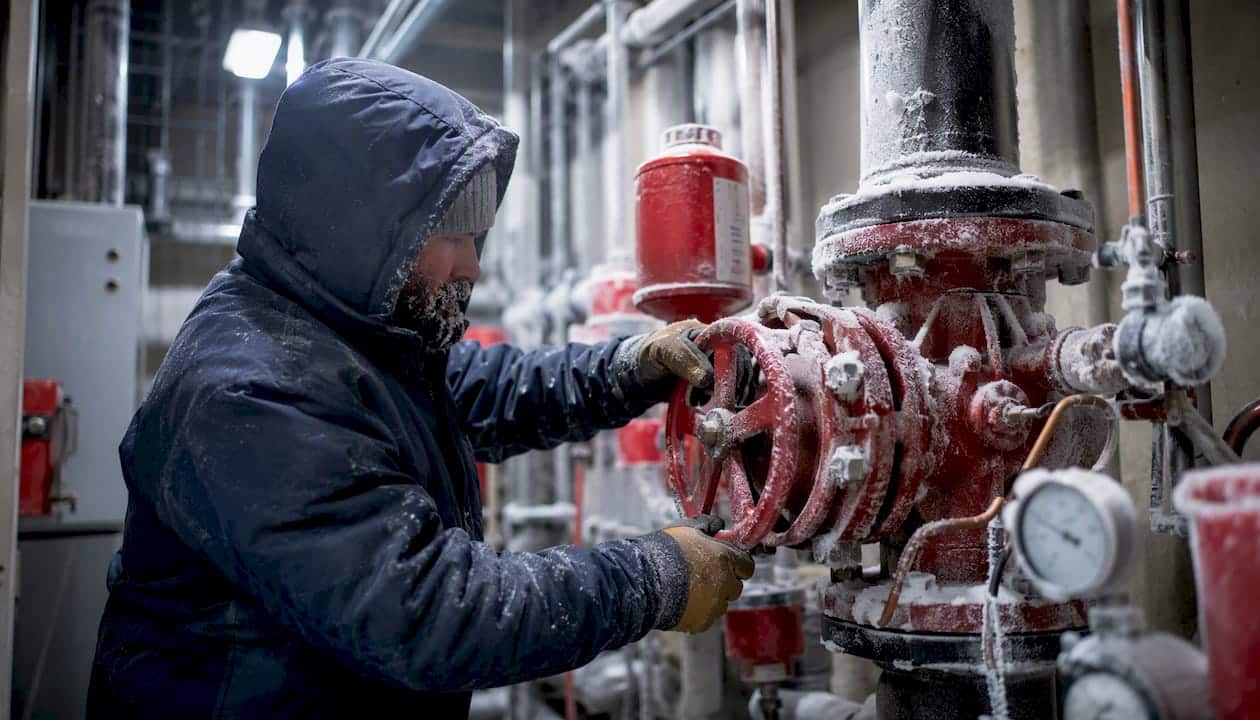
A compliant service visit from a qualified provider looks like this: the technician arrives with verifiable NICET credentials — AHJs and facility managers use NICET levels to confirm that the person testing your fire pump or alarm panel has the documented competency to do it. On-site, they run the prescribed tests, document every reading and observation, flag deficiencies with corrective action recommendations, and hand off a signed ITM report formatted for AHJ submission. Any system impairment discovered during the visit triggers a documented impairment management process: the owner is notified, interim protective measures are put in place, and the repair timeline is tracked.
What to confirm before signing a service agreement:
- Technician NICET certification level (ask to see it on the proposal)
- Reports formatted to satisfy local AHJ requirements
- Documented impairment management procedure
- Written warranty or service agreement covering follow-up repairs
- Emergency response availability and estimated response time
Preactionfire keeps Denver properties NFPA-compliant
Pre Action Fire has served the Denver Metro Area since 2009, and that local tenure matters more than it sounds. The team knows which AHJ jurisdictions require amended inspection schedules, which facilities have aging dry-pipe systems that need closer attention, and how to get acceptance tests scheduled without the back-and-forth that delays new construction timelines.
Services cover the full ITM scope: sprinkler system inspection and maintenance, fire pump testing, fire alarm inspection and acceptance testing, suppression system inspection, extinguisher service, backflow inspection, and 24/7 monitoring. Every technician holds NICET certification, and every report is formatted for AHJ submission.
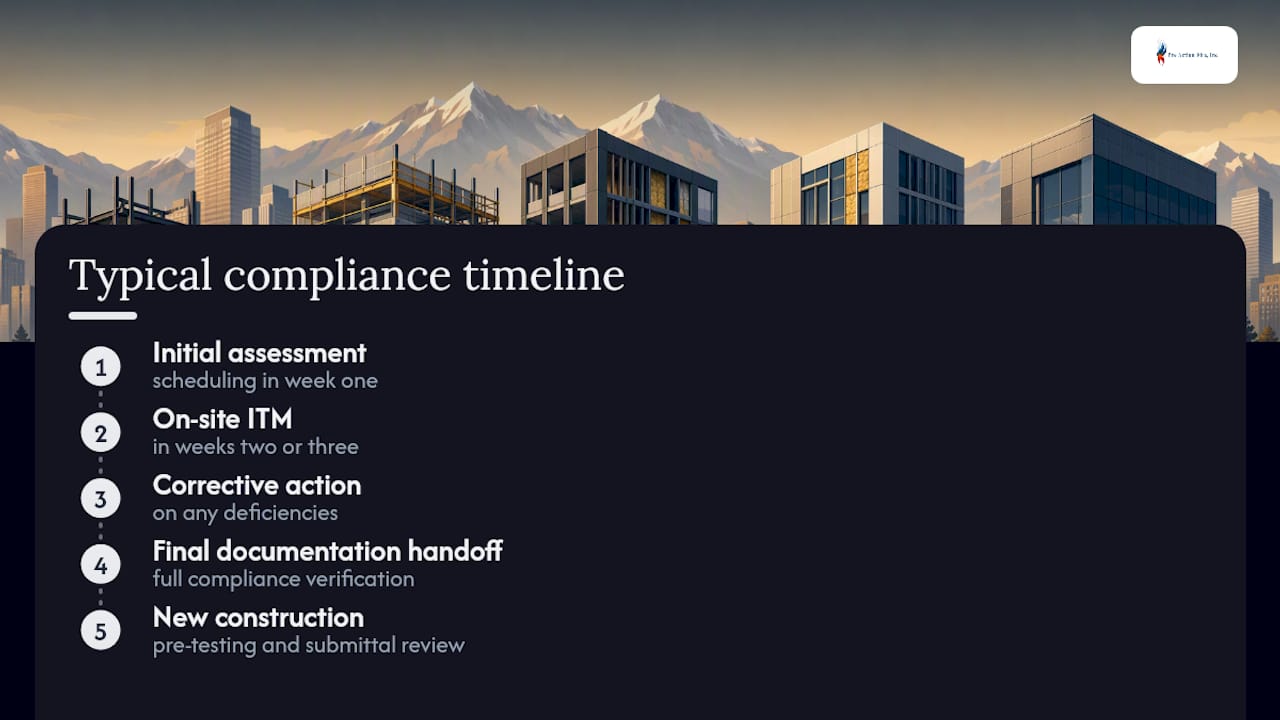
The typical timeline from first contact to full compliance verification runs three to six weeks for an established building: initial assessment and scheduling in week one, on-site ITM in weeks two or three, corrective action on any deficiencies, and final documentation handoff. For new construction acceptance testing, plan for pre-testing and submittal review before the AHJ appointment — rushing that sequence adds weeks, not days.
Pricing follows the structure most facility managers expect: a flat fee for the inspection visit, per-device fees for alarm testing, and hourly rates for diagnostic or repair work. Annual ITM contracts bundle those costs and lock in scheduling priority. To request an on-site NFPA compliance inspection or a full fire safety inspection assessment, contact Preactionfire directly — the team responds within one business day and offers 24/7 emergency service for impairments that cannot wait.
Sources
- Who Uses NICET? – NICET
- NFPA 25 and properly maintaining a sprinkler system | NFPA
- Fire Protection Commissioning Checklist: Complete Guide – FireSafetyCentral