
Residential smoke detector installation typically runs $70 to $150 per unit, while whole-home hardwired upgrades land between $600 and $2,500 depending on square footage. Commercial fire alarm systems cost roughly $1.25 to $12 per square foot installed, with most conventional office and retail jobs falling in the $1 to $4 range. System type and retrofit complexity swing your final number more than anything else on the invoice.
TL;DR:
- Addressable fire alarm systems generally add 20% to 40% to hardware and programming costs compared to conventional systems.
- Retrofit complexity often doubles labor hours, especially when finished walls or historic architecture require extensive wiring and patching.
- Commercial installation costs typically range from $1 to $4 per square foot for small to mid-size buildings, with larger high-rise systems costing more.
- Specialty devices like beam detectors and aspirating systems can significantly increase hardware costs, often reaching thousands of dollars per unit.
- Precise, itemized quotes that detail system type, monitoring, permit fees, and scope are essential to avoid unexpected expenses.
Table of Contents
- What Does Fire Alarm Installation Cost by Project Type?
- Why Do Fire Alarm Quotes Vary So Much?
- How Much Does Each Fire Alarm Device Cost Installed?
- How Long Does Fire Alarm Installation Take?
- What Are the Ongoing Costs After Installation?
- How Do You Get an Accurate Fire Alarm Installation Quote?
- What Do Fire Protection Professionals Say Drives Cost?
- What I’ve Learned About Fire Alarm Quotes
- How Preactionfire Handles Your Fire Alarm Project
- Sources
What Does Fire Alarm Installation Cost by Project Type?
The range you’ll see on a quote depends heavily on whether you’re replacing a single battery-powered detector or wiring an entire building for addressable notification. Here’s how the numbers actually break down across common scenarios.
A single hardwired smoke detector replacement in a home typically costs $70 to $150 installed, with the national average sitting around $115. A calculator-modeled national estimate puts that figure closer to $120 per detector once labor and mounting hardware are factored in. Interconnected smart detectors that talk to each other across a house push individual unit costs toward the top of that range, and a whole-home retrofit with multiple interconnected hardwired units commonly totals within a moderate range once wiring, drywall patching, and panel work are included. Add central-station monitoring and a basic control panel, and a monitored residential system can land between $1,500 and $4,000.
Commercial jobs scale by square footage, not by device count alone. A small office with a conventional system typically runs within a moderate price range per square foot, according to commercial fire alarm cost data. Mid-size retail buildings with addressable panels and more notification devices often land within a moderate price range per square foot. Warehouses and high-rise properties with voice evacuation or specialized integrations frequently cost toward the higher end of typical ranges per square foot, a pattern confirmed by detailed per-square-foot breakdowns across building types.
- Residential single-detector swap: $70 to $150
- Whole-home hardwired retrofit: typically within a moderate price range
- Monitored residential system: typically within a moderate price range
- Small commercial conventional system: typically within a moderate price range per square foot
Why Do Fire Alarm Quotes Vary So Much?
System type is the single biggest lever on price. Conventional systems, which group detectors into zones rather than identifying each device individually, cost the least to install but offer less diagnostic detail. Addressable systems, where every device reports its own status to the panel, typically add 20% to 40% to material and programming costs but cut troubleshooting time and false-alarm chasing over the system’s life. Wireless systems sit in between on hardware cost but can save heavily on labor in buildings where running conduit through finished walls isn’t practical. Hybrid systems that mix wired and wireless zones exist mostly for phased retrofits where part of the building already has infrastructure.
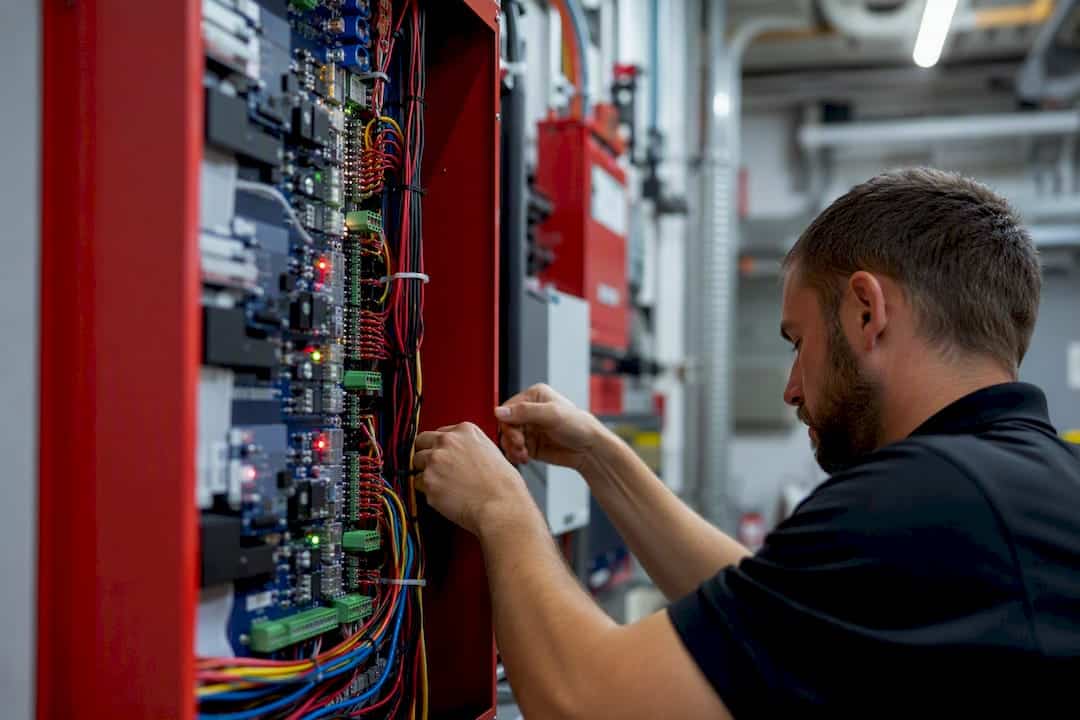
Retrofit difficulty is the other major driver. A building with open ceilings, exposed conduit paths, or an unfinished basement lets an electrician run wire quickly. A building with finished drywall, plaster, or historic architecture means fishing wire through walls, patching, and repainting, which routinely doubles labor hours on otherwise identical device counts.
Cause-and-effect programming, where the fire panel triggers other building systems, adds real engineering time. HVAC shutdown, elevator recall, magnetic door holder release, and smoke damper control all require individually tested sequences before an authority having jurisdiction (AHJ) will sign off. That commissioning and testing work can meaningfully increase labor hours on integration-heavy commercial jobs.
Labor rates track regional electrician wages closely, and the Bureau of Labor Statistics tracks how those wages vary by market, which explains why identical systems price differently city to city. Ceiling height above 12 feet, occupancy classification, and local permitting fees round out the list.
- System type: conventional to addressable can add 20% to 40%
- Retrofit vs. open construction: often doubles labor hours
- Cause-and-effect integrations: adds design and commissioning time
- Regional labor rates: directly tied to local electrician wages
Pro Tip: *Ask your contractor whether your quote assumes open ceiling access or finished-wall fishing.
How Much Does Each Fire Alarm Device Cost Installed?
Line-item pricing helps you sanity-check a contractor’s proposal against market norms, especially on larger commercial bids where dozens of devices are bundled into one number.
Specialty devices push costs well above these baselines. Beam detectors, used to cover large open spaces like warehouses and atriums without dozens of point detectors, run into the thousands per unit but replace many individual devices. Aspirating smoke detection systems, which actively draw air samples through tubing for early warning in data centers or clean rooms, represent the most expensive detection category available.
- Basic device swaps: cost is dominated by the part, not the labor
- Whole-floor retrofits: labor and wiring dominate, often 60% to 70% of total price
- Addressable and specialty devices: electronics cost more, but wiring savings can offset it on new construction
On a single-device replacement, the device itself is most of what you’re paying for. On a full building retrofit, wiring, conduit, and programming labor typically outweigh the hardware cost by a wide margin, which is why two buildings with identical device counts can still land on very different final invoices.
How Long Does Fire Alarm Installation Take?
Timeline depends heavily on whether crews are starting from bare walls or working around existing occupants and finished surfaces.
- Single-unit residential swap: usually completed in one to two hours, same-day.
- Whole-home hardwired retrofit: one to three days depending on house size and wall access.
- Small commercial installation (under 10,000 sq ft): one to two weeks including rough-in and device mounting.
- Large commercial or high-rise project: four to twelve weeks, driven mostly by permitting and phased floor-by-floor work.
Permit submission and approval typically adds one to three weeks before work even starts, and most jurisdictions require a rough-in inspection before walls close and a final inspection before the system goes live. Each inspection cycle can add several days if corrections are needed. Occupied buildings that need after-hours work to avoid disrupting tenants, and ceilings above 12 feet requiring lift equipment, both add crew days that an empty new-construction site never faces.
What Are the Ongoing Costs After Installation?
Installation is a one-time number. Monitoring, testing, and inspection are the costs that show up every year afterward, and they’re the ones most budgets forget to plan for.
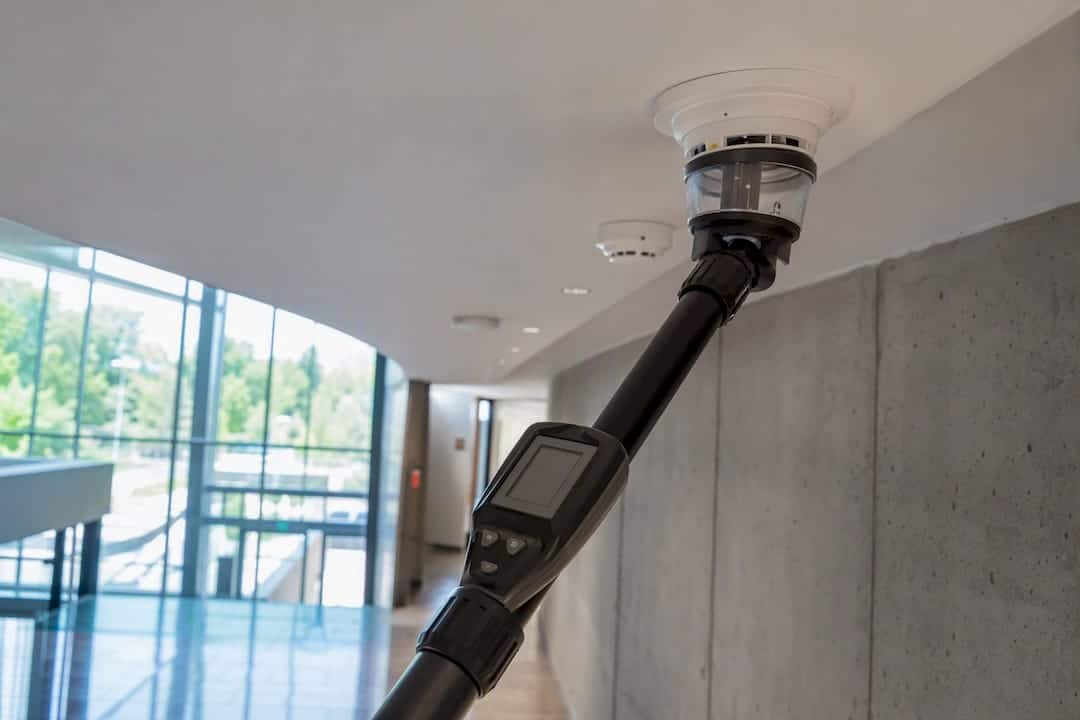
Central-station monitoring for a commercial system typically runs a few hundred to a couple thousand dollars annually, with the exact figure shaped by system size and whether monitoring is bundled with a service contract. Total Fire Protection’s cost data puts combined annual monitoring and inspection costs in the $600 to $2,000-plus range for many commercial properties.
NFPA 72 sets the testing cadence. NFPA’s fire alarm standards require annual testing of the full system along with periodic sensitivity testing of smoke detectors, and most AHJs will not renew occupancy sign-off without documented compliance.
- Monthly monitoring: typically bundled into an annual service agreement
- Annual testing and inspection: required under NFPA 72, documentation kept on file
- Battery and device replacement: budget for a multi-year service interval, not just year one
How Do You Get an Accurate Fire Alarm Installation Quote?
Getting comparable bids starts before you ever call a contractor. Pull together floor plans, an approximate device count, ceiling type (drywall, open joist, drop tile), and notes on any existing wiring or panel you already have. A contractor working from guesses instead of your actual building will hand you a number that changes the moment they walk the site.
Once you’re talking to vendors, ask specific questions rather than accepting a lump-sum figure: What system type and panel model are you quoting? Who handles monitoring, and is it included or billed separately? Who submits the permit, and is that fee in the bid? What’s the realistic timeline including inspections? What’s covered under warranty, and how are change orders priced if the scope shifts mid-job?
- Gather floor plans, device counts, and ceiling type before requesting bids
- Ask whether the panel model, monitoring, and permit fees are itemized separately
- Get at least three itemized bids, not three lump-sum numbers
- Treat a vague verbal estimate with no line items as a red flag
Pro Tip: A bid that lists a single “system total” with no per-device or per-hour breakdown is nearly impossible to compare against a competitor’s quote. Insist on an itemized proposal before you sign anything.
What Do Fire Protection Professionals Say Drives Cost?
NICET-certified technicians see the same pattern on almost every retrofit: the parts of the job you can’t see on a walkthrough are usually the ones that blow the budget. Cause-and-effect programming for integrations like elevator recall or HVAC shutdown adds design, wiring verification, and commissioning time that a device-count estimate never captures. Retrofit work in occupied buildings routinely costs more than identical scope in new construction, because concealed wiring, staged shutdowns, and coordination around tenants all eat crew hours that an open job site never faces.
Before signing a contract, confirm your contractor can provide:
- NICET certification documentation for lead technicians
- A code-compliant design matching your occupancy classification
- Permit handling and AHJ liaison as part of the scope
- As-built drawings and test documentation for your insurer’s records
What I’ve Learned About Fire Alarm Quotes
The costliest mistake I’ve seen isn’t a bad panel choice. It’s a homeowner or property manager accepting a bid that skipped a wiring assessment entirely, then getting hit with change orders once crews opened the walls. Prioritize a contractor who scopes the retrofit properly over the one who quoted lowest. Clear scope beats a cheap number every time.
— Results
How Preactionfire Handles Your Fire Alarm Project
Preactionfire gives Denver Metro property owners something most quotes skip: a design and permitting process done by NICET-certified technicians before a single wire gets pulled, so the number you sign off on is the number you actually pay.
Whether you’re replacing a failing panel, adding cause-and-effect integrations for elevator recall or HVAC shutdown, or wiring a new-construction building from scratch, Preactionfire manages the entire scope: code-compliant design, AHJ permitting, installation, and monitoring setup, all under one contract instead of three separate vendors. Retrofit jobs get the wiring assessment upfront that prevents the change-order surprises covered above. If your building needs an upgrade to meet current Colorado commercial fire code requirements, or you’re simply ready to stop guessing at your budget, request a walkthrough and itemized quote through Preactionfire’s fire alarm system design and compliance page to get a number you can actually plan around.
Sources
- Smoke detector & CO detector installation costs | HomeAdvisor
- Codereadysafety
- Electricians | Occupational Outlook Handbook | BLS
- Smoke Detector Installation Cost Calculator (2026) — HomeCostCalc