TL;DR:
- Fire control relies on cooling, smothering, starvation, and chemical inhibition, each targeting a different element of the fire tetrahedron. Combining active systems like sprinklers and alarms with passive measures such as fire doors creates a layered defense that effectively manages fire hazards.
The four primary fire control methods are cooling, smothering, starvation, and chemical inhibition. Here is what each one looks like in practice:
- Cooling: Apply water or water mist to absorb heat from ordinary combustibles (wood, paper, fabric).
- Smothering: Deploy foam, a fire blanket, or CO₂ to cut off the oxygen supply on liquid or surface fires.
- Starvation: Shut off a gas valve, clear combustibles away, or cut a firebreak to remove the fuel source entirely.
- Chemical inhibition: Discharge dry chemical or a clean agent to interrupt the combustion chain reaction in Class B, C, or K fires.
According to industry sources, automatic sprinkler systems control fires effectively in many sprinklered structures, keeping conditions survivable long enough for evacuation. The NFPA frames all of these methods around one concept: the fire tetrahedron. Remove any one of its four elements and the fire stops. Preactionfire’s NICET-certified technicians design and install systems built exactly around that principle for commercial and industrial properties across the Denver Metro Area.
Table of Contents
- How fire works: the tetrahedron behind every control method
- Examples of fire control methods: cooling, smothering, starvation, and chemical inhibition
- How to match the right method to each fire class
- Active and passive fire protection: why you need both
- Practical fire prevention examples you can apply now
- Why a layered approach is what NFPA actually recommends
- When to call a professional fire protection technician
- Key Takeaways
How fire works: the tetrahedron behind every control method
Every fire needs four things simultaneously: heat, fuel, oxygen, and a self-sustaining chemical chain reaction. The older fire triangle covered the first three; the fire tetrahedron adds the fourth, and that addition matters because it explains why dry chemical and clean agents work even when heat, fuel, and oxygen are all still present.
Cooling targets heat. Smothering targets oxygen. Starvation targets fuel. Chemical inhibition targets the chain reaction directly. Each method has a natural fit with certain fire types and a hard limit with others. Removing oxygen works well in a sealed server room; outdoors, wind replenishes oxygen faster than any agent can displace it, which makes smothering unreliable in open-air scenarios. Understanding those limits is what separates a safe response from a dangerous one.
Examples of fire control methods: cooling, smothering, starvation, and chemical inhibition
Cooling
Water is the most widely used cooling agent in the world, and for Class A fires (wood, paper, cloth, plastics) it is hard to beat. It absorbs heat rapidly, lowers the fuel temperature below its ignition point, and is cheap and abundant. Water mist systems work on the same principle but use finely atomized droplets that also displace some oxygen, giving them a secondary smothering effect useful in confined spaces.
Do not use water on:
- Flammable-liquid fires (Class B): water can scatter burning liquid and spread the fire.
- Energized electrical fires (Class C): water conducts electricity and creates an electrocution risk.
- Cooking-oil fires (Class K): water flash-vaporizes on hot grease and causes a violent steam explosion.
Smothering
Smothering works by sealing off the oxygen supply. The method takes several forms depending on the hazard:
- Foam systems blanket a liquid fuel surface, suppressing vapors and blocking oxygen. They are standard in aircraft hangars, fuel-storage facilities, and chemical plants.
- CO₂ systems flood an enclosure with carbon dioxide, displacing oxygen below the level needed for combustion. They are effective in electrical rooms, server rooms, and marine engine spaces, but they are dangerous to people and useless outdoors where CO₂ disperses immediately.
- Fire blankets smother small surface fires, such as a pan fire on a stovetop, by physically covering the flame.
- Wet chemical hood systems in commercial kitchens apply a fine mist over cooking surfaces, cooling the oil and forming a soapy layer that seals vapors.
Pro Tip: CO₂ and clean-agent systems require enclosure to hold the suppression concentration long enough to extinguish the fire. If a room has open vents or unsealed cable penetrations, the agent bleeds off before it can work. Seal penetrations before commissioning any gaseous system.
Starvation
Starvation removes the fuel. It is often the most practical tactic when the fuel source is controllable:
- Gas shutoff: Closing a supply valve stops a gas-fed fire at its source. Firefighters routinely do this before applying water.
- Removing combustibles: Clearing paper, cardboard, or other materials away from a small fire prevents it from spreading.
- Wildfire firebreaks: Bulldozers and hand crews cut lines of cleared earth to deny advancing flames a path forward. This is the dominant wildfire control method when aerial suppression is not enough.
- Isolating flammable liquids: Closing a drum or tank valve stops the fuel feed on a liquid-fuel fire.
Starvation rarely extinguishes a fire on its own once it is established; it is most powerful as a supporting tactic that limits spread while another method handles the active flame.
Chemical inhibition
Dry chemical and clean agents interrupt the combustion chain reaction at the molecular level, stopping flame propagation even when heat, fuel, and oxygen are still present. This is what makes them effective on Class B and C fires where cooling alone would fail.
- Dry chemical (ABC or BC-rated extinguishers): Fast-acting and effective across multiple fire classes, but the powder residue is corrosive and difficult to clean up. Not ideal for sensitive electronics.
- Clean agents (Halon replacements: FM-200, Novec 1230): Leave no residue, safe for occupied spaces, and work well in server rooms and archives. They require enclosure and a designed hold time.
- Wet chemical (Class K extinguishers and hood systems): Specifically formulated for high-temperature cooking oils. The agent reacts with the oil to form a foam layer (saponification) that cools and seals the surface simultaneously.
| Method | Element Removed | Common Equipment | Best Fire Classes | Key Caution |
|---|---|---|---|---|
| Cooling | Heat | Water hose, water mist, sprinklers | A | Never on B, C, or K |
| Smothering | Oxygen | Foam, CO₂, fire blanket, wet chemical hood | B, K (surface) | CO₂ requires enclosure; asphyxiation risk |
| Starvation | Fuel | Gas shutoff, firebreaks, clearing combustibles | A, B (supportive) | Rarely sufficient alone once fire is established |
| Chemical inhibition | Chain reaction | Dry chemical, clean agents, wet chemical | B, C, K | Dry chemical corrodes electronics; clean agents need hold time |
How to match the right method to each fire class
The five fire classes used in the United States map directly to the methods above. Getting this wrong is not just ineffective; it can be lethal.
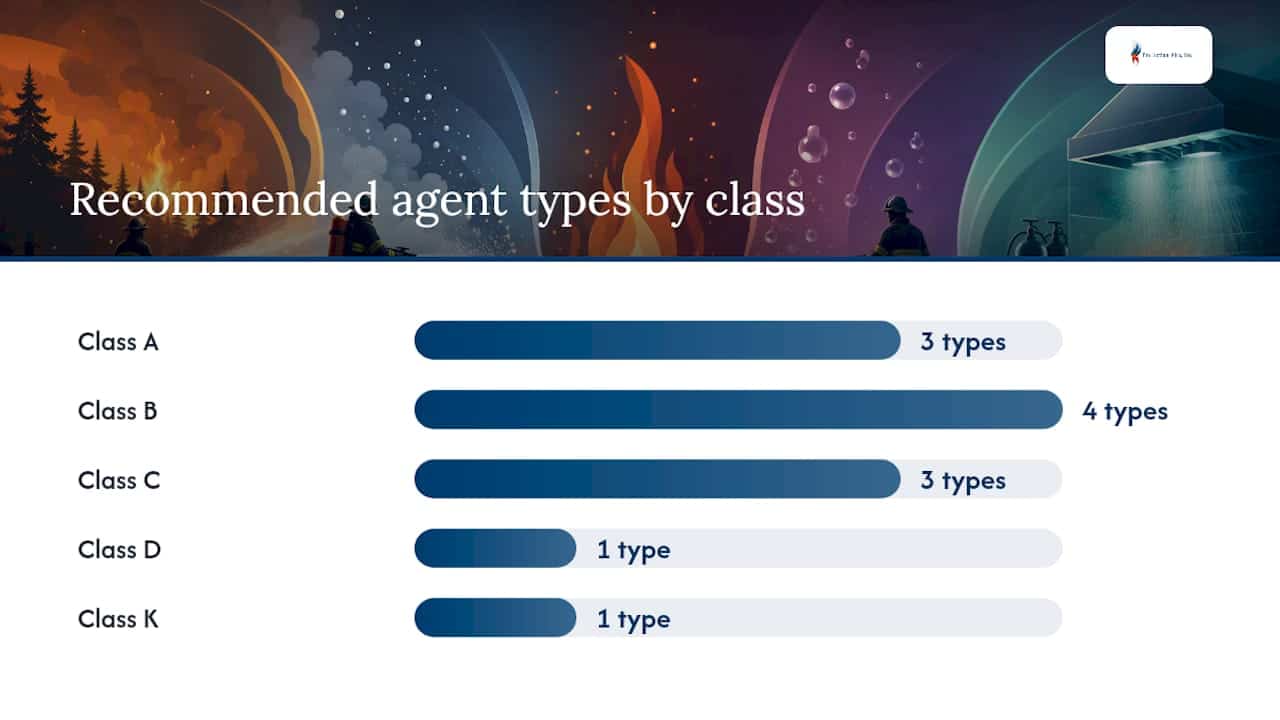
| Fire Class | Fuel Type | Preferred Method/Equipment | Do NOT Use |
|---|---|---|---|
| A | Ordinary combustibles (wood, paper, cloth) | Water, water mist, ABC dry chemical | Nothing specific, but avoid excess water near electrical |
| B | Flammable/combustible liquids and gases | Foam, CO₂, dry chemical, clean agents | Water (spreads fire) |
| C | Energized electrical equipment | CO₂, dry chemical, clean agents | Water or foam (conduction risk) |
| D | Combustible metals (magnesium, titanium) | Metal-specific dry powder (sodium chloride, graphite, copper) | Water, CO₂, standard dry chemical (violent reaction risk) |
| K | Cooking oils and fats | Wet chemical (Class K extinguisher or hood system) | Water (steam explosion risk) |
Class D fires deserve special mention. Burning metals like magnesium or titanium react violently with water, CO₂, and standard dry chemical. Only metal-specific agents work, and the application technique matters as much as the agent itself. These fires are outside the scope of standard portable extinguishers and require trained professionals.
A practical note on CO₂ and clean agents: both require the fire to be in a confined space. An open warehouse bay or an outdoor transformer pad will not hold suppression concentration long enough for either agent to work. In those settings, dry chemical or foam is the better choice.
Active and passive fire protection: why you need both
Industry guidance separates fire protection into two categories: active systems that intervene when fire occurs, and passive measures that contain fire and maintain egress without any activation required.
Active systems detect or suppress fire in real time:
- Automatic sprinkler systems (wet pipe, dry pipe, pre-action, deluge)
- Engineered suppression systems (CO₂, clean agent, foam)
- Fire alarm and detection systems (smoke detectors, heat detectors, pull stations, notification appliances)
- Standpipe systems for hose connections
Passive measures slow fire spread and protect egress without moving parts:
- Fire-resistive construction (rated assemblies, fire-rated walls and floors)
- Fire doors and proper fire door maintenance (self-closing, latching, rated for the opening)
- Compartmentation (dividing a building into fire-rated sections to limit spread)
- Fire-rated glazing and penetration seals
A concrete example: a fire door can hold a corridor clear for a significant time while a sprinkler system controls the fire in the room of origin. Neither alone does the full job. The sprinkler limits the fire; the door protects the escape route. For new construction, passive and active systems must be designed together from the start, not bolted on separately.
Practical fire prevention examples you can apply now
Prevention is the first line of defense. These measures reduce the probability that any suppression method ever needs to activate.
- Keep exits and aisles clear. Blocked exits kill people. OSHA fire safety standards require unobstructed egress at all times.
- Post and practice an evacuation plan — Mark two exit routes from every room, identify a meeting point outside, and run a drill at least once a year. Staff who have practiced evacuate faster and more calmly.
Pro Tip: Post a laminated card near each portable extinguisher showing the PASS technique (Pull, Aim, Squeeze, Sweep) and the fire classes the extinguisher covers. In a real emergency, people forget training under stress. A visible reminder closes that gap.
Why a layered approach is what NFPA actually recommends
The NFPA does not recommend any single fire control method in isolation. NFPA 13 governs sprinkler installation, NFPA 25 covers inspection, testing, and maintenance (ITM) of water-based systems, and NFPA 72 sets the standard for fire alarm systems. Together, they form a framework that assumes multiple layers of protection working simultaneously.
Skipping ITM is the most common way a well-designed system fails. A sprinkler head clogged with paint, a detector with a dead battery, or a fire door propped open with a wedge can each unravel a system that cost tens of thousands of dollars to install.
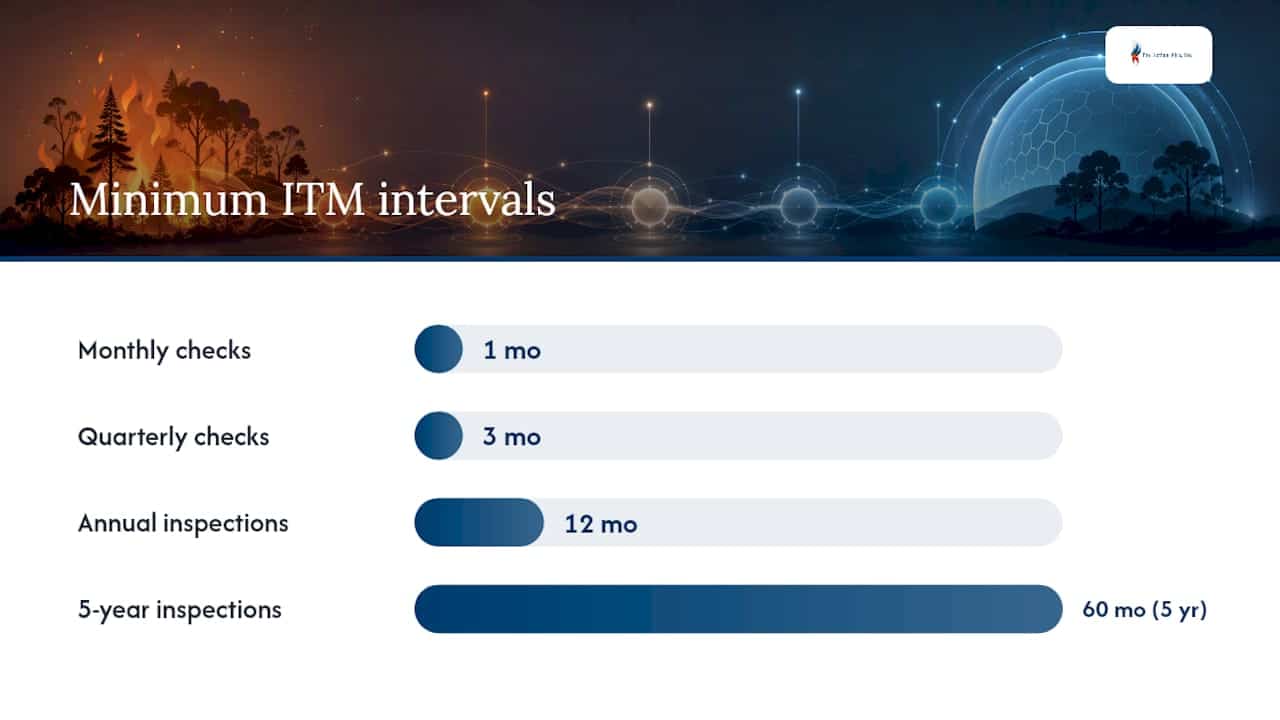
Minimum ITM schedule (typical commercial building):
- Monthly: Visual inspection of extinguishers, test smoke alarms, confirm fire doors close and latch.
- Quarterly: Inspect sprinkler system gauges and control valves; test a sample of alarm devices.
- Annually: Full NFPA 25 inspection of water-based systems by a qualified contractor; NFPA 72 annual alarm test; extinguisher annual inspection and service.
- 5-year intervals: Internal inspection of sprinkler piping; obstruction investigation if warranted.
One detail worth knowing: automatic sprinklers typically activate only over the fire area, not the entire building. That is by design. Individual heads respond to heat independently, which limits water damage to the affected zone and is why the “all sprinklers go off at once” fear is a myth.
When to call a professional fire protection technician
Some fire situations and all system work require a certified professional. The line is clear once you know where it is.
Call 911 and evacuate immediately when:
- The fire is larger than a single small container or has spread beyond its point of origin.
- Any energized electrical equipment is involved and cannot be de-energized.
- The fuel source is unknown.
- A fixed suppression system has activated.
- Anyone is injured or trapped.
A small, contained Class A fire that is accessible, not spreading, and that you are trained to fight can be addressed with a portable Class A-rated extinguisher. Anything outside those boundaries is a professional response situation.
Call a certified fire protection contractor for:
- System design, specification, and installation (sprinklers, alarms, suppression)
- NFPA-compliant ITM inspections and certification
- System repairs after activation or damage
- Ongoing monitoring services
- Code compliance reviews before a permit inspection
Look for NICET (National Institute for Certification in Engineering Technologies) certification when hiring a fire protection technician. NICET certification verifies that a technician has passed standardized exams in fire alarm systems, water-based systems, or special hazards suppression, and it is the credential most authorities having jurisdiction (AHJs) recognize as evidence of competence. Fire suppression system design for specialized hazards (server rooms, commercial kitchens, aircraft hangars) requires this level of expertise.
Pro Tip: Ask any contractor for their NICET certification level and the specific discipline (fire alarm, water-based systems, or special hazards). Level II and above indicates hands-on field experience, not just entry-level knowledge.
Key Takeaways
Effective fire control always comes down to removing at least one element of the fire tetrahedron, and no single method or system covers every hazard safely without the others.
| Point | Details |
|---|---|
| Four primary methods | Cooling, smothering, starvation, and chemical inhibition each target a different element of the fire tetrahedron. |
| Match agent to fire class | Never apply water to Class B, C, or K fires; use metal-specific powder for Class D; wet chemical for Class K. |
| Layer active and passive | Sprinklers, alarms, fire doors, and rated construction work together; removing any layer reduces overall protection. |
| ITM is not optional | NFPA 25 and NFPA 72 set minimum inspection and maintenance schedules; skipped ITM can void insurance and code compliance. |
| Preactionfire for Denver | Preactionfire provides NICET-certified design, installation, and inspection for commercial properties across the Denver Metro Area. |
What experience in the field actually teaches you
Most people who read about fire control methods focus on the suppression side: which agent, which extinguisher, which system. What gets overlooked, consistently, is the passive side. A fire door propped open with a doorstop, a cable penetration left unsealed after an IT upgrade, a corridor stacked with cardboard boxes — these are the failures that turn a manageable fire into a catastrophe. The suppression system does its job; the passive layer has been quietly dismantled by everyday convenience.
The other thing worth saying plainly: the fire tetrahedron is not just a classroom concept. It is a decision tool. When a technician looks at a hazard and asks which element is most reliably removable in that specific environment, the answer drives the entire system design. A server room full of irreplaceable data gets a clean agent because water damage is unacceptable and the room is sealed. A commercial kitchen gets wet chemical because cooking oil cannot be cooled fast enough by anything else. The method follows the hazard, not the other way around.
Preactionfire protects Denver businesses with certified fire systems
When the article’s guidance points to professional system design, inspection, or ITM, that is exactly what Pre Action Fire delivers for commercial and industrial properties across the Denver Metro Area. Since 2009, Preactionfire’s NICET-certified technicians have designed, installed, and maintained fire alarm systems, sprinkler systems, suppression systems, and fire extinguisher programs built to NFPA standards.
The difference between a compliant system and a liability is usually maintenance. Preactionfire’s inspection programs keep your systems NFPA 25 and NFPA 72 current, your insurance valid, and your occupants protected. Whether you need a fire alarm system designed from scratch, a sprinkler installation in the Denver Metro Area, or a full fire safety inspection before your next code review, contact Preactionfire directly to schedule a consultation.
Useful sources and further reading
| Source | What it covers |
|---|---|
| NFPA Fire Protection Systems | NFPA 13, NFPA 25, NFPA 72 standards, ITM schedules, and system design guidance |
| NFSA: Are All Fire Protection Methods Equal? | Active vs. passive protection comparison and industry guidance on layered approaches |
| The HSE Coach: Methods of Fire Extinguishment | Detailed breakdown of the four extinguishing methods per NFPA and international standards |
| OSHA Fire Safety | Workplace fire safety regulations, egress requirements, and prevention standards |
| Poseidon Firetec: What Puts Out a Fire? | Practical explanation of cooling agents and agent-selection cautions |
| Preactionfire: Fire Safety Inspections | NICET-certified inspection and ITM services for Denver Metro commercial properties |
For site-specific system design or ITM requirements, consult NFPA standards directly and contact a NICET-certified technician who can evaluate your building’s specific hazards and occupancy type.