
TL;DR:
- Early fire detection systems identify pre-combustion signs to alert occupants faster than traditional alarms. They include thermal imaging, aspirating smoke detection, infrared flame detectors, and multispectrum sensors tailored to specific environments. Proper installation during construction or phased upgrades improve safety, reduce costs, and enhance business continuity.
Early fire detection technologies are proactive systems that identify thermal anomalies, smoldering materials, and microscopic smoke particles before a fire fully develops. Unlike traditional alarms that react to visible flames or dense smoke, these systems detect pre-combustion indicators and trigger alerts within seconds. For facility managers and property owners, that speed difference determines whether a fire becomes a minor incident or a catastrophic loss. Standards like NFPA 72 increasingly recognize advanced detection methods, including aspirating smoke detectors, thermal imaging, and infrared flame detectors, as valid components of a compliant fire safety program.
1. What are early fire detection technologies?
Early fire detection is the industry term for systems that detect pre-combustion signs such as heat signatures, trace smoke particles, and combustion gases before a fire reaches its open-flame stage. The core function is rapid alerting, giving occupants and suppression systems time to respond before structural damage or injury occurs. These systems go well beyond conventional point-type smoke detectors by monitoring environmental conditions continuously and autonomously.
The technologies covered in this guide span thermal imaging cameras, aspirating smoke detection, infrared flame detectors, and multispectrum sensors. Each operates on a different physical principle, which means each suits a different facility environment. Choosing the wrong technology for your building type is one of the most common and costly mistakes facility managers make.
2. Thermal imaging detection
Thermal imaging cameras detect heat energy in the infrared spectrum without requiring visible light. That means 24/7 autonomous monitoring of facility heat signatures, even in complete darkness or heavy dust conditions. The camera generates a visual heat map that operators can read at a glance, making it far easier to pinpoint the exact location of a developing hotspot.
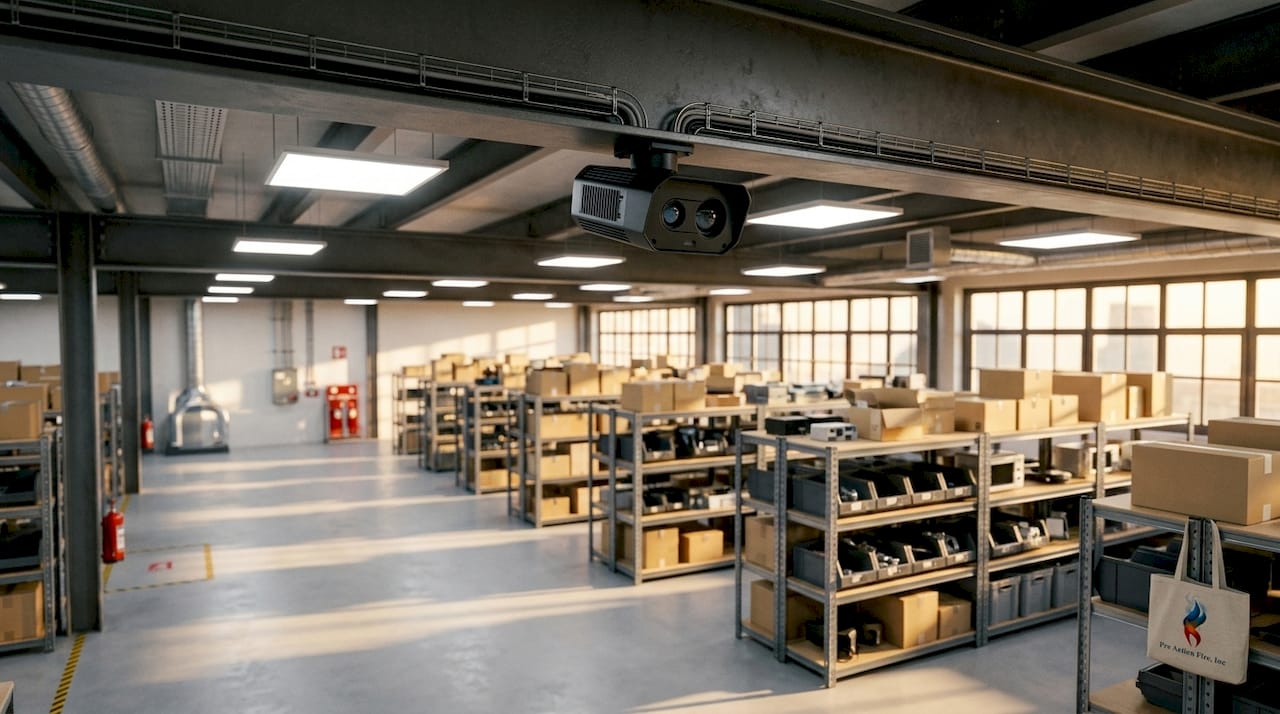
Thermal imaging systems alert within 5–15 seconds of detecting a temperature anomaly. That response time is two to four times faster than traditional smoke detectors, which require 30–60 seconds to trigger. In a manufacturing plant or battery storage facility, that gap is the difference between a controlled shutdown and a full suppression event.
Pro Tip: Thermal imaging is particularly effective where smoldering precedes visible fire, such as in electrical switchgear rooms, conveyor systems, and lithium-ion battery storage areas.
3. Aspirating smoke detection
Aspirating smoke detection (ASD) works by actively drawing air samples through a network of pipes into a central detection unit. The unit analyzes those samples for smoke particles at concentrations as low as 0.005% obscuration per meter, which is far more sensitive than any conventional point-type detector. That level of sensitivity allows the system to catch smoldering conditions long before smoke becomes visible to the human eye.
ASD systems also filter air samples to reduce false alarms caused by dust and airflow. They feature adjustable staged alarm thresholds, which means operators receive an early warning alert first, giving them time to investigate before a full suppression response activates. This staged approach is critical in data centers, cleanrooms, and pharmaceutical facilities where an unnecessary suppression event causes as much damage as a fire.
4. Infrared flame detectors
Infrared flame detectors identify the specific wavelengths of radiation produced by combustion. They respond in 10–30 seconds and are designed for open areas where smoke-based detection is unreliable due to high airflow or ventilation. Warehouses, aircraft hangars, and outdoor fuel storage areas are the primary use cases.
These detectors are highly directional, meaning they focus on a defined field of view. Placement planning is critical. A poorly positioned infrared detector can miss a fire developing outside its detection cone, so professional sensor mapping is not optional.
5. Multispectrum and combination sensors
Multispectrum sensors combine two or more detection methods, typically infrared and ultraviolet wavelength analysis, into a single unit. The combination reduces false alarm rates significantly because both channels must confirm a fire signature before an alert triggers. This makes them well suited for environments with welding operations, steam, or intense artificial lighting that can fool single-spectrum detectors.
Some advanced units also incorporate video analytics, overlaying flame detection algorithms onto camera feeds in real time. The result is a system that provides both a detection signal and a visual confirmation simultaneously. That dual output shortens the time between alert and response.
6. Point-type vs. linear heat detection
Point-type detectors monitor a single location, while linear heat detection cables run across entire ceiling spans or along conveyor lines. Linear detection covers large areas with a single continuous sensor element, making it cost-effective for tunnels, cable trays, and cold storage facilities. Point-type detectors offer more granular location data but require higher installation density to achieve equivalent coverage.
The choice between the two depends on facility geometry and the fire risk profile of each zone. A hybrid approach, using linear detection for large open spans and point-type sensors near high-risk equipment, often delivers the best coverage at the lowest cost.
7. How early detection improves business continuity
Early fire detection systems shift fire safety from reactive alarms to predictive situational intelligence. That shift has direct financial consequences. A system that catches a smoldering motor at 2:00 AM allows maintenance to address the problem before the production line shuts down. A traditional alarm that triggers only after flames appear forces a full evacuation, a suppression response, and potentially days of downtime.
Investing in early detection goes beyond compliance. It serves as a business continuity tool by reducing unplanned downtime and reputational risk. For industrial facilities, the cost of a single unplanned shutdown routinely exceeds the total cost of a detection system upgrade. You can read more about the financial case in this breakdown of fire safety investment benefits for industrial properties.
Pro Tip: Integrate your early detection system with your building management system (BMS) so that heat anomaly alerts automatically trigger HVAC adjustments, isolating the affected zone before suppression activates.
8. Key compliance standards for detection systems
NFPA 72 is the primary standard governing fire alarm and detection system installation in the United States. It details spacing, sensitivity, and testing requirements for smoke detectors, heat detectors, and aspirating systems. Facility managers in Colorado must also verify local jurisdictional amendments, since Denver and surrounding municipalities sometimes adopt stricter requirements than the base NFPA standard.
NFPA 72 increasingly recognizes advanced detection methods like thermography as valid fire safety components. That recognition matters because it allows facility managers to specify thermal imaging or ASD systems in their compliance documentation. Check your jurisdiction’s current adopted edition before specifying any advanced detection technology, since code adoption cycles vary by state and municipality.
Industry-specific regulations add another layer. Chemical plants, power generation facilities, and waste management operations often fall under OSHA Process Safety Management rules and EPA Risk Management Program requirements in addition to NFPA standards. Non-compliance in these sectors carries consequences that include forced shutdowns, civil liability, and loss of operating permits. Preactionfire’s team stays current on Denver fire alarm regulations and can confirm which standards apply to your specific facility type.
9. Installation timing and system integration
Installing early fire detection during the design and construction phase reduces implementation costs by 30–50% compared to retrofitting after occupancy. That cost difference reflects the difficulty of routing pipe networks, conduit, and cabling through finished walls and ceilings. If your facility is in the design phase now, specifying detection infrastructure early is the single highest-return decision you can make.
For existing facilities, retrofitting is still viable with careful planning. Key considerations include:
- Sensor placement: Position detectors to cover the highest-risk zones first, accounting for airflow patterns that can carry smoke away from fixed sensors.
- Environmental calibration: Dust, airflow, and temperature variations significantly affect detection speed and false alarm rates. Calibrate sensors to the specific ambient conditions of each zone.
- Protocol integration: Modern early detection systems connect to existing PLC and SCADA infrastructure via Modbus and OPC UA protocols, enabling centralized monitoring without replacing existing control systems.
- Testing schedules: NFPA 72 mandates regular functional testing. Build testing intervals into your facility maintenance calendar from day one.
Warehouse operators should also review warehouse safety best practices that address how detection placement interacts with racking systems and high-bay storage configurations.
10. How to choose the right technology for your facility
The right detection technology depends on four factors: facility size, fire risk level, environmental conditions, and budget. The table below maps common facility types to the most effective detection method.
| Facility type | Recommended technology | Key reason |
|---|---|---|
| Manufacturing plant | Thermal imaging | Detects smoldering before visible flame; works in dust and low light |
| Data center or cleanroom | Aspirating smoke detection | Extreme sensitivity; staged alarms prevent suppression damage |
| Open warehouse or hangar | Infrared flame detector | Effective in high-airflow areas where smoke disperses quickly |
| Cable tunnels or conveyor lines | Linear heat detection | Continuous coverage across long runs at low cost per meter |
| Facilities with welding or steam | Multispectrum sensor | Dual-channel confirmation reduces false alarms from non-fire sources |
Budget planning should account for both upfront installation and ongoing operational costs. ASD systems require periodic pipe cleaning and filter replacement. Thermal cameras need lens calibration checks. Infrared detectors need field-of-view verification after any structural change. Factor these into your total cost of ownership before selecting a system.
Working with NICET-certified technicians is non-negotiable for compliant installation. Certification confirms that the technician understands NFPA 72 requirements and can document the system design for authority-having-jurisdiction (AHJ) review. Preactionfire’s technicians hold NICET certification and serve the full Denver Metro Area. For a broader look at smoke detection in industrial sites, their published guide covers application-specific planning in detail.
Pro Tip: Request a fire risk assessment before specifying any detection technology. A risk assessment maps ignition sources, fuel loads, and occupancy patterns, giving you the data to justify technology choices to your AHJ and insurer.
Key takeaways
Early fire detection systems outperform traditional alarms because they identify pre-combustion indicators, giving facility managers seconds to minutes of additional response time that prevents damage, downtime, and liability.
| Point | Details |
|---|---|
| Response speed matters | Thermal imaging alerts in 5–15 seconds; traditional smoke detectors take 30–60 seconds. |
| Technology must match environment | ASD suits cleanrooms; thermal imaging suits manufacturing; infrared suits open, high-airflow spaces. |
| Install during construction | Early installation cuts implementation costs by 30–50% compared to retrofitting. |
| NFPA 72 governs compliance | Check local jurisdictional amendments alongside the base standard before specifying any system. |
| Integration extends value | Connecting detection systems to BMS, PLC, and SCADA platforms converts alerts into automated facility responses. |
What I’ve learned after years of watching facilities get this wrong
The most common mistake I see facility managers make is treating fire detection as a checkbox exercise. They install the minimum system required for a certificate of occupancy and move on. That approach works until the first smoldering event in a switchgear room at 3:00 AM, when a thermal camera would have caught the hotspot four hours earlier.
The second mistake is underestimating how fast technology has outpaced local code adoption. NFPA 72 is updated on a three-year cycle, but many jurisdictions run one or two editions behind. That gap means a thermal imaging system that meets current NFPA guidance may still require a variance approval from your local AHJ. Facilities that discover this during a permit review lose weeks of project time. The fix is simple: confirm the adopted edition with your AHJ before design, not after.
Phased upgrades are the most practical path for existing facilities with limited capital budgets. Start with the highest-risk zones, typically electrical rooms, battery storage, and process equipment areas, and build outward. Each phase generates documented performance data that makes the business case for the next phase easier to approve internally. Train your maintenance staff on the new system at each phase, not at the end. A system your team does not understand is a system that generates false alarms and gets disabled.
The facilities that handle fire risk best are the ones that view early detection as part of their operational infrastructure, not their safety budget. That mental shift changes how they specify, maintain, and upgrade their systems over time.
— Results
Preactionfire’s detection expertise for Denver facilities
Preactionfire has served the Denver Metro Area since 2009, installing and integrating fire alarm systems that meet NFPA 72 and local Colorado code requirements. Their NICET-certified technicians assess your facility’s specific risk profile and specify detection technologies that match your environment, whether that means aspirating smoke detection for a data center or thermal imaging for a manufacturing floor.

Pre Action Fire handles full system integration, connecting new detection hardware to existing suppression, BMS, and SCADA infrastructure. They also provide ongoing fire safety inspections to keep your system calibrated and compliant through every code cycle. Contact Preactionfire to schedule a facility assessment and get a detection system specification built around your actual risk profile.
FAQ
What is the fastest early fire detection technology?
Thermal imaging systems are the fastest, alerting within 5–15 seconds of detecting a temperature anomaly. Infrared flame detectors follow at 10–30 seconds, while traditional smoke detectors require 30–60 seconds.
Does NFPA 72 cover aspirating smoke detection systems?
Yes. NFPA 72 details installation spacing, sensitivity thresholds, and testing requirements for aspirating smoke detection systems, making them a fully compliant option when properly specified and installed.
How does early fire detection reduce false alarms?
Aspirating smoke detection filters air samples to screen out dust and airflow interference, and multispectrum sensors require dual-channel confirmation before triggering an alert. Both approaches significantly reduce false alarm rates compared to conventional point-type detectors.
When is the best time to install an early fire detection system?
Installing during the design and construction phase reduces costs by 30–50% compared to retrofitting. For existing facilities, a phased upgrade starting with the highest-risk zones is the most cost-effective approach.
What certifications should a fire detection installer hold?
NICET certification is the recognized standard for fire alarm system technicians in the United States. NICET-certified installers demonstrate competency in NFPA 72 requirements and can produce documentation acceptable to the authority having jurisdiction.