
Fire alarm shop drawings are the installation-level plans an authority having jurisdiction (AHJ) uses to verify that a system meets NFPA 72, before a single device goes on the wall. A package that...
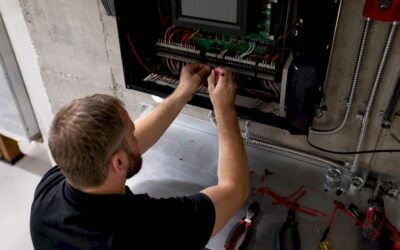
Fire alarm shop drawings are the installation-level plans an authority having jurisdiction (AHJ) uses to verify that a system meets NFPA 72, before a single device goes on the wall. A package that...

Expect to pay roughly $75 to $150 per device for a residential backflow test, and $125 to $400 per device for a commercial assembly, if the device passes and needs no repair work. Those numbers...
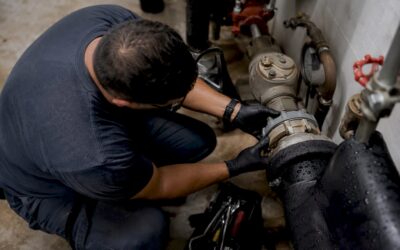
Most homeowners pay in a moderate price range for a residential backflow preventer replacement, with a simple hose bib or appliance swap near the lower cost end and a 1" irrigation assembly toward...

Expect a single-head fix on a wet system to run $250 to $600, and expect a multi-head or dry-system pipe repair with a hydrostatic test to land anywhere from $1,500 to $8,000 or more. Emergency...
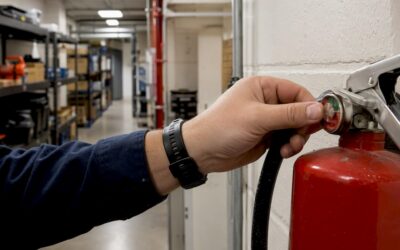
Budget $10 to $50 per unit for an annual inspection, $40 to $150 or more for a recharge depending on the extinguishing agent, and $30 to $200 for hydrostatic testing when a unit reaches that...
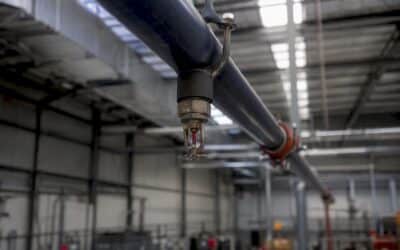
Several indoor zones are recognized as high risk for commercial fire losses, including commercial kitchens, boiler and mechanical rooms, electrical equipment rooms, battery/UPS and server rooms,...
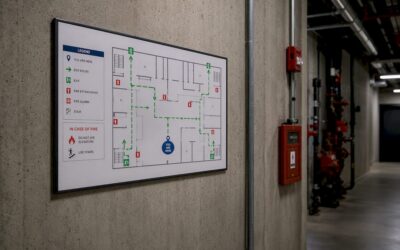
A compliant evacuation route map shows a primary exit path, a secondary route in case the first is blocked, a “You are here” marker oriented to match the viewer’s position, an outdoor assembly...

The fastest way to cut a commercial fire-insurance premium is to install engineered fire protection, keep it documented under NFPA testing schedules, and put that proof in front of your underwriter...

Prioritize life-safety autonomy first, then layer on event-based automation that connects fire alarms to access control, elevators, CCTV, and building management systems through UL-listed gateways...
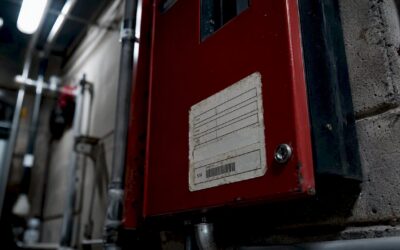
If your control panel is more than 20 years old, your alarms trip for no reason more than once a quarter, or your last inspection turned up “cannot verify” next to more than one device, your fire...
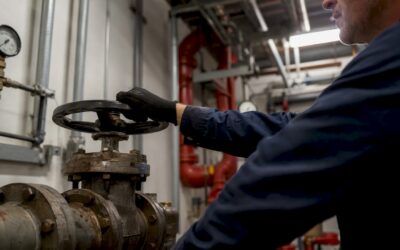
When an emergency forces a facility shutdown, the first move is always the same: get people safe, then kill the energy. Personnel safety comes before equipment protection, every single time, and...
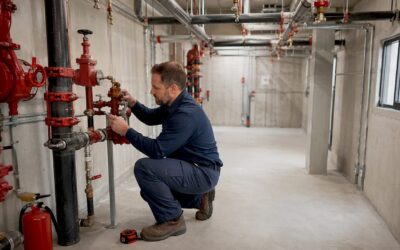
Fire code penalties are civil fines, per-day continuing assessments, and potential orders to suspend operations or close a facility. When you receive a citation, the clock starts immediately. Verify...