Denver adopted the 2025 Denver Building and Fire Codes on June 13, 2025, built on the 2024 I-Codes with a small number of Denver-specific amendments layered on top. A second printing followed later in 2025, refining the language further. If you manage a commercial or industrial property in Denver, the first move is simple: pull your occupancy classification and compare it against the new local amendments before your next inspection cycle lands on your calendar.
TL;DR:
- Denver’s 2025 Fire Code adoption is based on the 2024 I-Codes with a limited number of localized amendments focused on climate and building history.
- The city reduced duplicate amendments, leaving only those necessary for Denver-specific building conditions, simplifying compliance efforts.
- Electrical systems tied to fire safety must reference the 2026 NFPA 70 code directly, as Denver did not amend this section.
- The most critical code chapters for commercial sites include fire protection systems, means of egress, hazardous materials storage, and special construction requirements.
- Proactive review and coordination with licensed fire protection contractors can reduce retrofit costs, avoid permit delays, and ensure ongoing compliance.
Table of Contents
- What Denver’s Fire Code Amendments Actually Changed
- Your Compliance Checklist for the New Denver Fire Code
- When Do the New Codes Take Effect on Your Project?
- Code Chapters That Matter Most for Industrial and Commercial Sites
- Where to Verify the Exact Amendment Language
- Why Local Fire Code Expertise Still Matters
- A Straight Answer on Timing
- Get Your Facility Assessed Against the New Denver Fire Code
- Where to Confirm the Official Code Text
- Sources
- FAQ
What Denver’s Fire Code Amendments Actually Changed
Denver didn’t just swap out a rulebook. The city ran an amendment reduction effort that stripped out local rules that no longer served a distinct purpose once the 2024 I-Codes covered the same ground, then kept only the amendments that address Denver’s specific climate, building stock, or enforcement history.
Here’s what got adopted, according to the city’s code adoption page:
- International Fire Code (IFC) 2024 with Denver amendments
- International Building Code (IBC) 2024 with Denver amendments
- International Existing Building Code (IEBC) 2024
- International Mechanical Code (IMC), International Plumbing Code (IPC), and International Fuel Gas Code (IFGC)
- International Energy Conservation Code (IECC) 2021 — the one exception, since Denver did not move to the 2024 energy edition
That amendment reduction matters more than it sounds. Denver’s adoption process documentation shows the city deliberately deleted amendments that duplicated national code language and added only a small set of new provisions after public review. Fewer local carve-outs means less guesswork reading two rulebooks side by side, but it also means the amendments that remain are the ones Denver considers genuinely necessary, not leftover bureaucratic clutter.
One nuance trips up a lot of electrical contractors: the National Electrical Code, NFPA 70, was adopted as the 2026 edition unamended. Denver isn’t layering local tweaks onto electrical work the way it does with fire and building code. Any electrical scope tied to fire alarm power, supervision circuits, or fire pump controllers needs to reference the 2026 NEC directly, not an older municipal electrical reference some contractors still keep on file.
Your Compliance Checklist for the New Denver Fire Code
Reading about code changes and acting on them are two different projects. Break the work into three timeframes so it doesn’t all land on your desk at once.
- This week: Download the official 2025 Denver Fire Code and Building Code PDFs and identify which Denver-specific amendments touch your occupancy group. Bookmark the Legistar docket so you can check for future revisions without hunting for it again.
- This quarter: Schedule reviews of your fire alarm, sprinkler, and electrical systems against the updated code. Update your inspection and testing calendar, and confirm whether any pending permit applications need to reference the new code edition.
- This year: Budget for upgrades where existing systems fall short of the new Denver amendments. Get contractor bids lined up early. Permit review backlogs tend to grow right after a code adoption, and waiting until enforcement catches up rarely ends well financially.
Documentation carries real weight here. Keep permits, NFPA test and inspection tags, and any correspondence with the city’s plan review office in one file per building. When an inspector asks why your fire pump testing record shows a gap, “we have it, give us a minute” is a much better answer than a shrug.
For interpretation questions specific to your property, the Denver Fire Department Prevention Division is your first call. For actual system work, corrective repairs, or design changes, that’s when you bring in a licensed, NICET-certified fire protection contractor.
Pro Tip: Don’t wait for your annual inspection to find out you’re out of compliance. Run your own gap check against the new amendments now, because the cost of a corrective retrofit under time pressure is almost always higher than the cost of planning it six months out.
When Do the New Codes Take Effect on Your Project?
Effective dates matter more than most facility managers realize, especially for projects straddling the adoption date. Denver’s adoption process materials document a transition period allowing some projects to continue under the prior code edition if they had reached a given stage in plan review.
A few things determine which code edition applies to your project:
- The date your permit application or plan review acceptance was logged with the city
- Whether your project is new construction, a tenant improvement, or an existing-building retrofit
- Whether any specific system (electrical versus fire versus building) falls under a different adoption timeline, as it does with the NEC
If you’re unsure which edition governs your project, request a written code applicability determination from the city rather than assuming. Save that documentation. If an inspection dispute comes up later, a dated confirmation from the plan review office is worth far more than a memory of a phone call.
Code Chapters That Matter Most for Industrial and Commercial Sites
Not every chapter of the Denver Fire Code affects your building equally. Four areas consistently drive inspection findings and capital projects at industrial and commercial sites, based on the Denver Building Code’s structure and chapter organization.
- Fire protection systems (Chapter 9): sprinkler coverage requirements, special suppression systems for hazardous processes, and fire pump or backflow prevention issues that come up during retrofit projects.
- Means of egress: exit access, occupant load calculations, and requirements for luminous egress path markings and stairway signage that older buildings sometimes lack entirely.
- Hazardous materials storage: additional permits or control measures kick in once you cross certain quantity thresholds, which is common in manufacturing and warehouse operations.
- Special construction: high-rise provisions, motor-vehicle-related occupancies like parking structures and repair garages, and fire department access requirements around building perimeters.
The up.codes viewer mirroring Denver’s adopted IFC 2024 is a fast way to cross-reference specific section numbers without digging through a 400-page PDF every time a question comes up.
Where to Verify the Exact Amendment Language
Never rely on a summary blog post, including this one, as your final source for exact code text. The Legistar ordinance entry carries the redline drafts showing exactly what was deleted and what got added, with underlined insertions and strike-through deletions marked clearly.
- Check the city’s “significant changes” summary alongside the redline for a faster read on what shifted since the previous edition.
- Save a dated snapshot of the PDF you reviewed. Code pages get updated, and having your own copy protects you if a dispute comes up months later.
- Call the Denver Fire Prevention Division directly for interpretation questions specific to your occupancy, especially where the code language reads ambiguously.
Why Local Fire Code Expertise Still Matters
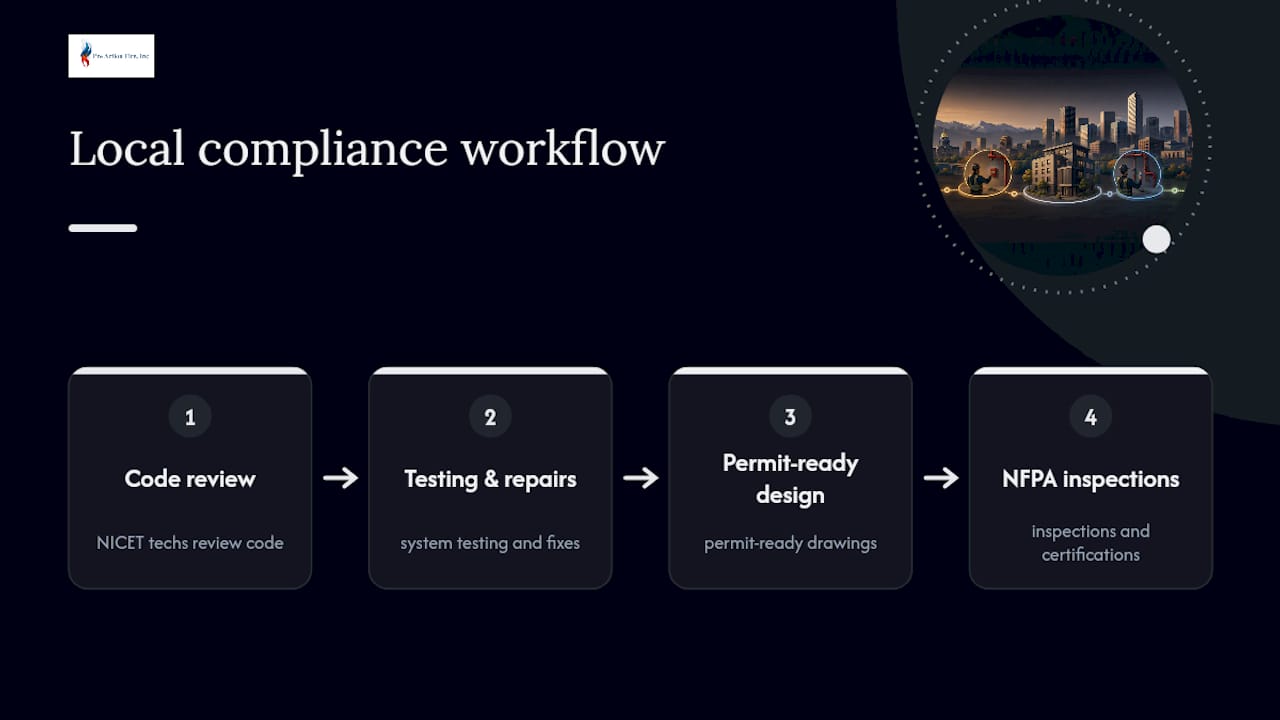
Reading the amendments is one thing. Acting on them across an entire facility, alarm panel, sprinkler riser, and electrical service, is another. Local fire protection contractors with NICET-certified technicians work through code compliance reviews, system testing and repairs, permit-ready design work, and NFPA-compliant inspections and certifications every week.
That local history matters when a plan reviewer asks a question that a generic contractor can’t answer, because the answer depends on knowing how Denver’s plan review office has historically interpreted a specific amendment. If you’re staring at a checklist item and not sure whether it applies to your building, that’s exactly the gap local expertise closes.
A Straight Answer on Timing
Facility managers who wait for an enforcement notice almost always pay more than those who audit early. The math is simple: a planned retrofit costs less than an emergency one, and a clean inspection record protects your insurance standing and your tenants. Schedule the review now, not after the citation.
— Results
Get Your Facility Assessed Against the New Denver Fire Code
Reviewing redlines and chapter summaries gets you most of the way there, but confirming your specific building against the 2025 Denver Fire Code still takes someone who can walk your riser room and read your panel history. A Denver-based fire protection contractor can turn that checklist into finished, inspection-ready work rather than a stack of PDFs sitting in a folder.
NICET-certified technicians can handle a full range of services including alarm system upgrades, sprinkler design and installation, backflow and fire pump testing, and NFPA-compliant inspections that plan reviewers want to see documented. For facilities coordinating fire system upgrades with broader building controls, a partner like Encode’s building automation systems can help tie alarm supervision circuits into your existing monitoring infrastructure. If your building’s electrical service needs review against the 2026 NEC, our fire alarm systems design and compliance page walks through what a code-ready system review actually covers. Schedule an assessment before your next inspection cycle, not after.
Where to Confirm the Official Code Text
Start with the City and County of Denver’s Building and Fire Codes page for official PDFs, then cross-check specific sections against the Up. Save your own copies and check for newer printings periodically.
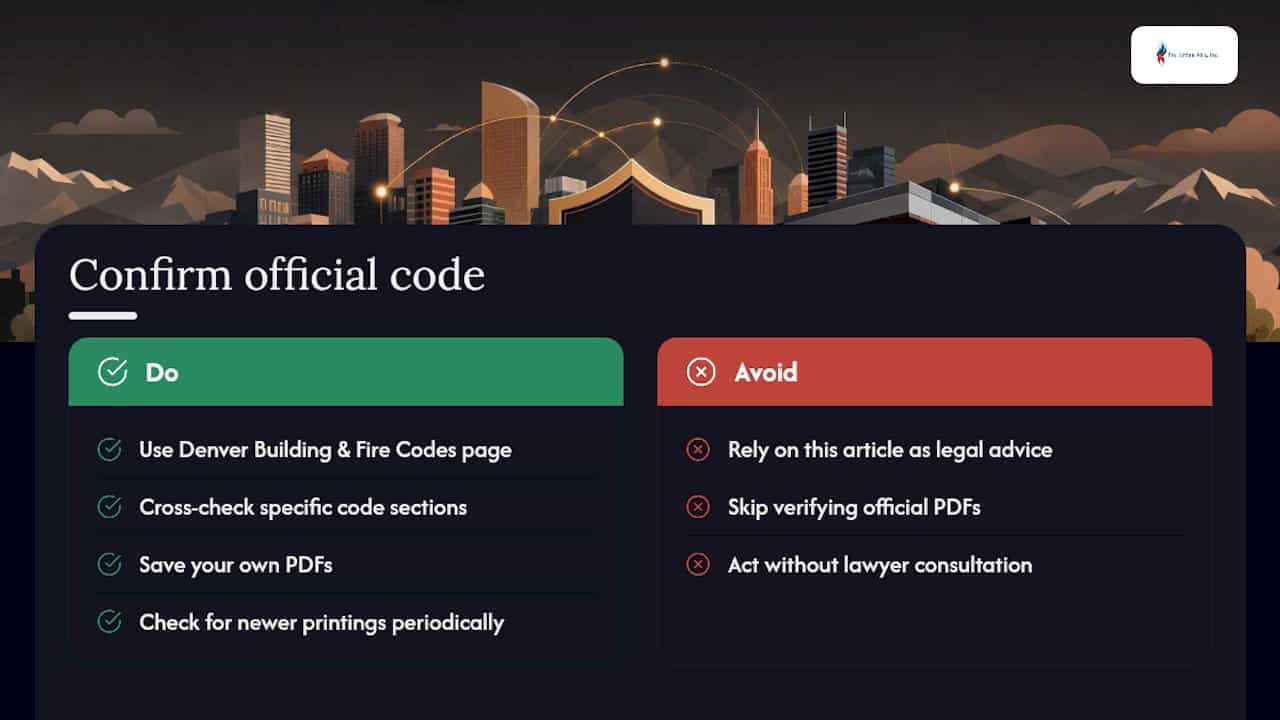
This article is general information, not a substitute for advice from a qualified lawyer. Consult a qualified legal professional about your own circumstances before acting on anything here.
Sources
- Building and Fire Codes – City and County of Denver
- 2025 Building and Fire Code Adoption Process – City and County of Denver
- Legistar ordinance and attachments for Denver Building & Fire Code amendments
- Up
FAQ
What Code Did Denver Adopt for 2026?
Denver adopted the 2025 Denver Building and Fire Codes on June 13, 2025, based on the 2024 I-Codes with Denver-specific amendments, except the Energy Code, which stayed on the 2021 IECC.
Did Denver Reduce Its Local Fire Code Amendments?
Yes. The city completed an amendment reduction effort that removed local rules duplicating the 2024 I-Codes and kept only the amendments Denver considers necessary for local conditions.
Which Electrical Code Applies in Denver Now?
Denver enforces the 2026 National Electrical Code (NFPA 70) unamended, so electrical work tied to fire alarm and suppression systems should reference that edition directly.
How Do I Know Which Code Edition Applies to My Project?
The date your permit application or plan review was accepted by the city generally determines which code edition governs your project, particularly for work that started before the adoption date.
Who Enforces Fire Code Compliance in Denver?
The Denver Fire Department Prevention Division enforces fire code compliance and handles interpretation questions, while licensed contractors like Pre Action Fire perform the actual system testing, repairs, and certifications needed to meet those requirements.
What Happens If My Building Isn’t Compliant?
Non-compliant systems typically face correction orders, inspection failures, and potential permit delays until the deficiency is fixed. Scheduling a proactive fire safety inspection before enforcement catches up avoids the tighter deadlines that come with a citation.