
Most homeowners pay in a moderate price range for a residential backflow preventer replacement, with a simple hose bib or appliance swap near the lower cost end and a 1″ irrigation assembly toward the higher end. Commercial properties running a reduced pressure zone (RPZ) assembly generally pay significantly more once you add labor, permits, and the certified test required before the water utility signs off. The device type, how hard it is to access, and whether the job needs a permit and inspection drive most of that spread.
Three things push a quote up or down fast:
- Device type and size — a small residential dual check costs far less than a 4″ commercial RPZ.
- Access and excavation — a buried or hard-to-reach assembly adds labor hours before the plumber even touches the valve.
- Permits and testing — most jurisdictions require a permit and a post-install test from a licensed tester, and that fee is separate from parts and labor.
Get a licensed installer out for a site visit before you commit to a number. A phone quote on backflow work is close to useless because so much depends on what’s actually in the wall or the ground.
Key Takeaways
Backflow replacement cost depends primarily on device type and size, with residential swaps averaging $300 to $1,500 and commercial RPZ assemblies commonly running $2,000 to $8,000 once labor, permits, and testing are included.
| Point | Details |
|---|---|
| Budget by property type | Residential jobs typically run $300 to $1,500; commercial RPZ installs often reach $2,000 to $8,000. |
| Device choice isn’t optional | Local hazard ratings and water authority rules determine the required device class, not price preference. |
| Read quotes line by line | A fair estimate separates parts, labor, permit fees, and the mandatory post-install test. |
| Access drives hidden cost | Vault requirements, RPZ discharge drains, and freeze protection can turn a swap into a bigger retrofit. |
| Preactionfire handles the full cycle | Preactionfire’s NICET-certified team manages estimates, permits, installation, and certified testing for Denver Metro properties. |
Table of Contents
- What Is the Average Backflow Replacement Cost by Property Type?
- How Much Does Each Type of Backflow Device Cost to Replace?
- What’s Actually Included in a Backflow Preventer Quote?
- What Factors Turn a Simple Swap Into a Bigger Job?
- How Do Residential and Commercial Backflow Costs Differ?
- How Long Does a Backflow Replacement Take From Quote to Certification?
- What Signs Mean Your Backflow Preventer Needs Replacing?
- Why Trust Preactionfire on Backflow and Fire Water Compliance
- Ready to Get a Backflow Replacement Estimate?
- Sources
What Is the Average Backflow Replacement Cost by Property Type?
Residential jobs cluster in a tighter range than commercial ones, mostly because the devices themselves are smaller and simpler. HomeGuide reports a typical installed range of $200 to $1,000 for common residential devices, while HomeAdvisor puts the normal range at $150 to $450 for many installs, with an average around $350. Those numbers usually cover a straightforward swap: same device type, same location, no excavation.
Commercial numbers jump because the devices are bigger, the labor is more specialized, and the permitting is heavier. CurrentCost’s commercial cost guide shows 1″ to 2″ RPZ installs running well into four figures, and 3″ to 6″ commercial projects climbing into the multiple-thousands range once you stack device cost, crew time, and testing on top of each other. A national baseline modeling tool, HomeCostCalc, lands on roughly $1,400 per unit for a mixed-case scenario, which is a useful sanity check if a quote comes back way higher or lower than that.
A few real-world examples make the ranges concrete:
- Hose bib or appliance backflow preventer swap: often under $200, sometimes a same-day job with minimal labor.
- 1″ to 2″ irrigation backflow device replacement: commonly $400 to $1,200, depending on whether it’s above ground or needs enclosure work.
- 3″ to 6″ commercial RPZ replacement: frequently $3,000 to $8,000 or more once permits, testing, and any drain modifications are included.
Labor rates and permit fees vary by region, and that’s not a small factor. A plumber in a dense metro market with strict cross-connection control programs will charge more per hour and face tighter inspection requirements than a rural crew doing the same physical work. Always treat these ranges as a starting point for comparison, not a guaranteed quote.
How Much Does Each Type of Backflow Device Cost to Replace?
The device itself is only part of the bill, but it sets the floor. Backflow preventers fall into a handful of standard categories, and the EPA’s guidance on cross-connection control lays out why each type exists: different hazard levels call for different mechanical protection, and every mechanical device needs periodic testing because internal parts can foul or fail over time.
- Hose bib and appliance backflow preventers are the cheapest, usually $10 to $50 for the part itself, with total installed cost rarely exceeding $200.
- Atmospheric vacuum breakers (AVB) are simple, low-hazard devices often used on irrigation systems and hose connections; parts typically run $20 to $100, with installs often under $300.
- Pressure vacuum breakers (PVB) step up in complexity for irrigation mains under continuous pressure; parts commonly run $80 to $300, with full installs landing between $300 and $900 depending on pipe size.
- Double check valve assemblies (DCVA) protect domestic water lines and fire sprinkler systems from moderate hazards; parts run roughly $150 to $600, and installed cost often lands between $500 and $2,000.
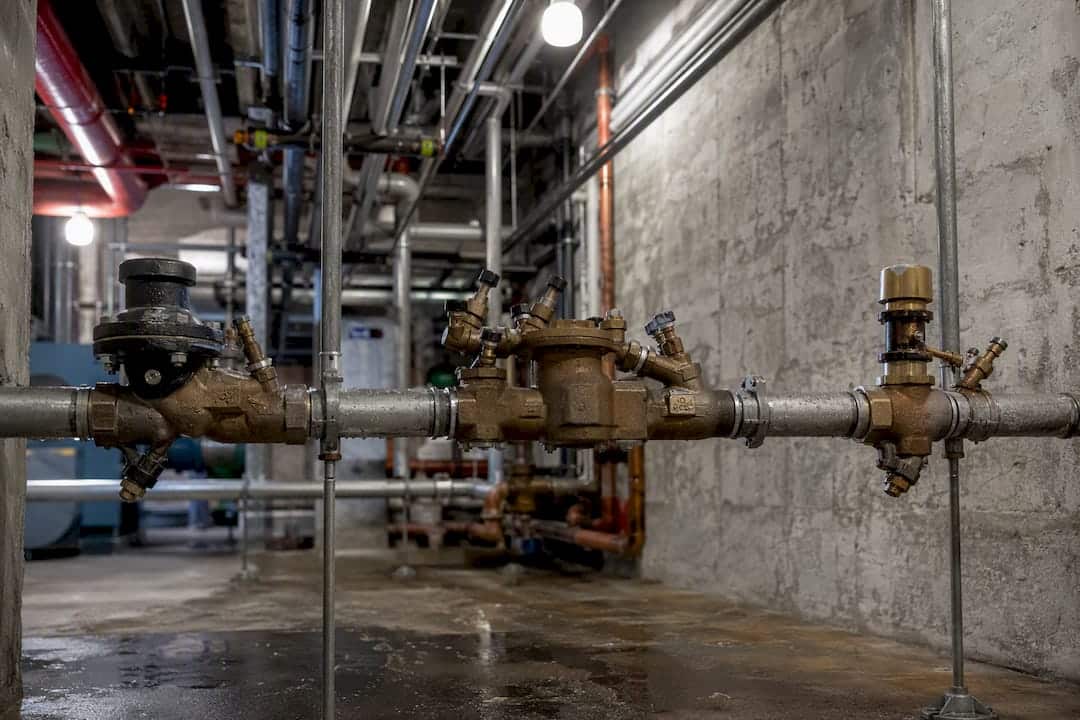
- Reduced pressure zone assemblies (RPZ) handle high-hazard connections, commercial fire lines, and larger irrigation or industrial systems; parts alone can run $300 to $2,500 or more for larger diameters, and installed totals for 3″ to 6″ units frequently exceed $3,000.
Pipe diameter matters as much as device category. A 3/4″ DCVA and a 4″ DCVA share a name but not a price tag. Larger diameters mean heavier castings, more fittings, bigger cuts into existing pipe, and often a crane or lift for commercial rooftop or vault installs.
Here’s the part contractors wish more property owners understood: you don’t pick a device because it’s cheaper. Your water utility and local plumbing code determine which device class is required based on the hazard level of what’s connected to your water line. A restaurant with a chemical dish machine doesn’t get to install an AVB because it’s less expensive than an RPZ. The hazard rating decides the device, and the device decides the price.
What’s Actually Included in a Backflow Preventer Quote?
A contractor’s estimate on a backflow replacement usually breaks into four buckets, and understanding each one helps you tell a fair quote from a padded one.
Parts run from under $50 for a residential dual check to several thousand dollars for a large commercial RPZ assembly. Labor is typically billed at an hourly plumbing rate, with straightforward residential swaps taking one to three hours and commercial installs requiring a full day or more depending on access and pipe size. Permits in most jurisdictions add roughly $50 to a few hundred dollars, and HomeAdvisor notes permit fees often sit near $50 for simpler residential jobs. Initial testing, which is mandatory after install in nearly every jurisdiction, commonly runs $70 to $350 depending on device size and local tester rates.
Then there are the extras that catch people off guard:
- Excavation or vault access if the device sits below grade or behind a wall.
- Freeze protection like insulated enclosures for above-ground assemblies in cold climates.
- Anti-theft cages for exposed commercial RPZ units, which are common theft targets for the brass fittings.
- Disposal fees for the old device and any contaminated backfill.
- Re-piping if the existing plumbing doesn’t meet current code around the new assembly.
Pro Tip: Ask every contractor for a written, itemized quote that separates parts, labor, permit fees, and the testing fee into distinct line items. A bundled “total installed price” with no breakdown makes it nearly impossible to compare bids or spot which contractor is overcharging on labor versus which one is quoting a premium device.
What Factors Turn a Simple Swap Into a Bigger Job?
Several site and regulatory conditions decide whether your replacement stays a quick swap or turns into a multi-day project with a bigger invoice.
- Access and excavation. A device buried in a hard-to-reach trench, behind finished walls, or inside a mechanical room with tight clearance adds labor hours before any actual replacement work starts.
- Vault requirements and clearance. Many commercial RPZ assemblies need a vault or enclosure with specific clearance for annual test access. Industry guidance on commercial backflow specification warns that installing without planning for test clearance leads to recurring service charges, and sometimes forced relocation of the entire assembly later.
- RPZ discharge drain requirements. RPZ valves relieve pressure through a discharge port, and many jurisdictions mandate a safe drain path to daylight or a floor drain. Retrofitting a drain into an existing space can add real cost to what looked like a straightforward valve swap.
- Utility approval and device listing. Water authorities generally require devices listed by recognized standards bodies, referencing AWWA and ASSE/USC approval lists, and installation has to follow the adopted plumbing code. Skipping this step risks a failed inspection and a second trip.
- Freeze protection and seasonal timing. Cold-climate properties often need insulated enclosures or heat tape on above-ground assemblies, and winter installs can require extra scheduling around weather.
- After-hours or emergency work. A failed device on a live commercial water line sometimes forces overtime labor rates and expedited part sourcing, which raises the total meaningfully compared to a scheduled replacement.
How Do Residential and Commercial Backflow Costs Differ?
A homeowner replacing an irrigation PVB and a facilities manager replacing a fire line RPZ are dealing with two entirely different cost structures, even though both fall under “backflow replacement.”
Commercial jobs cost more because bigger assemblies need bigger crews, heavier permitting, and more frequent testing. A property with a domestic water RPZ, a separate fire line assembly, and an irrigation backflow device is really managing three devices, three annual tests, and three sets of compliance paperwork, not one line item.
- A small multiunit residential building might budget $1,500 to $4,000 for a single main RPZ replacement plus initial testing.
- A commercial facility with multiple assemblies across domestic, fire, and irrigation lines can see combined replacement costs of $6,000 to $15,000 or more in a single project.
- Ongoing lifecycle cost matters just as much as the install: every device on a commercial portfolio needs annual testing, and testing multiple units every year adds a recurring line item that residential owners with a single device rarely think about.
How Long Does a Backflow Replacement Take From Quote to Certification?
The timeline scales directly with device size and permitting complexity, but the sequence is the same everywhere.
- Quote and site visit, usually scheduled within a few days, where the contractor confirms device type, size, and access conditions.
- Permit application, when required, which can take anywhere from same-day to a couple of weeks depending on the municipality.
- Installation, ranging from a few hours for a simple residential swap to one or more full days for a commercial RPZ with vault work or re-piping.
- Certified testing, performed immediately after install by a licensed or registered tester, since nearly every jurisdiction requires this before the device goes into service.
- Documentation delivery, including the test report, permit sign-off, and warranty paperwork for your records and for the next annual test cycle.
Keep every one of those documents. The next tester who services your device, and the inspector who checks your file next year, will ask for them.
What Signs Mean Your Backflow Preventer Needs Replacing?
Backflow preventers don’t usually fail without warning. Watch for these signals before you’re stuck with an emergency call.
- Visible leaks at the device body, test cocks, or relief valve, especially continuous dripping from an RPZ relief port.
- A failed annual test, which the EPA notes happens because internal check valves and springs foul or wear out over time.
- Noticeable pressure loss downstream of the device, which often points to a stuck or partially closed internal check.
- Corroded or seized components, particularly on older brass assemblies exposed to hard water or outdoor weather.
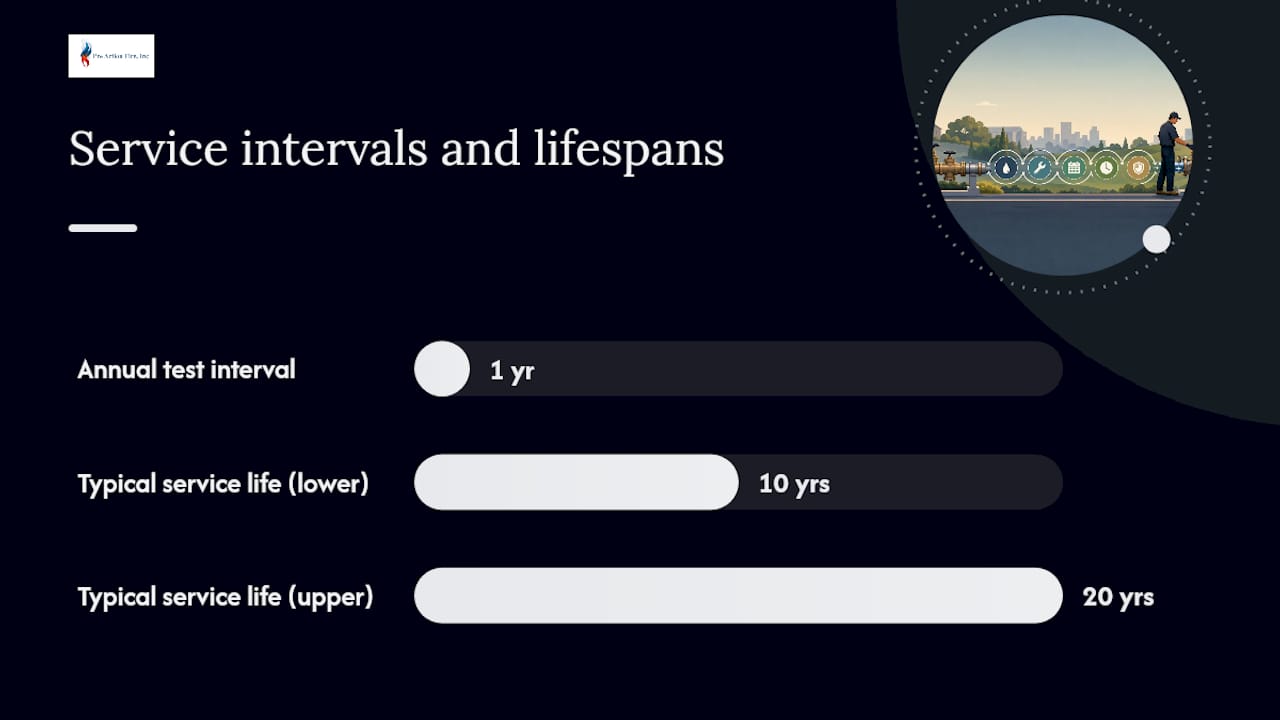
Most manufacturers and utilities recommend annual testing at minimum, and many devices give roughly 10 to 20 years of service life before parts wear enough to justify replacement rather than repair. Skip a test or ignore a failed one, and you risk a compliance notice, a fine, or in the worst case, contaminated water backing into the public supply.
Pro Tip: Schedule your annual test a month before your utility’s deadline, not on the deadline. A failed test with time to spare means a simple repair; a failed test the week it’s due can mean a scramble for emergency service and a citation on your record.
Why Trust Preactionfire on Backflow and Fire Water Compliance
Preactionfire has served the Denver Metro Area since 2009, working on fire protection systems where backflow and fire pump compliance intersect directly with life-safety code. Our technicians hold NICET certification, and that background matters on backflow work tied to fire sprinkler mains, where a failed assembly can affect both water quality compliance and fire suppression readiness.
A typical backflow project with us includes a site visit and written estimate, permit handling with the local water authority, the physical replacement, and the certified test required before your device goes back into service. That single point of accountability, one company managing the estimate, the permit, the install, and the certification, cuts down the compliance risk property managers face when they’re juggling three separate vendors for one job.
— Results
Ready to Get a Backflow Replacement Estimate?
If you’re staring at a failed test report or a corroded assembly and wondering what happens next, the answer is simpler than most quotes make it sound. Pre Action Fire handles backflow replacement, testing, and certification as part of the same fire and water compliance work we’ve done across the Denver Metro Area since 2009, so you’re not coordinating a plumber, a tester, and a permit runner separately.
Before you call, have a few details ready: the device type currently installed (or a photo of the nameplate), the pipe diameter, whether it’s indoors, outdoors, or below grade, and whether the property is residential, multiunit, or commercial. That’s enough for our team to give you a realistic estimate range instead of a generic guess.
Our backflow inspection and replacement services cover the full cycle: replacement, initial certified testing, and the annual retesting your water authority requires going forward. If you’re in Aurora, our Aurora backflow inspection page covers local scheduling, and Arvada properties can check our Arvada backflow inspection service for the same. Reach out for a site visit and a written estimate before your next test deadline catches you off guard.
Sources
- EPA — Cross-Connection Control and Backflow Prevention
- HomeAdvisor — Install/replace backflow preventer cost
- CurrentCost — Commercial backflow preventer cost guide
- HomeCostCalc — Backflow preventer cost calculator (2026)