
Yes, NFPA-compliant wireless fire alarm systems offer clear net advantages for most commercial retrofit and specialized-use projects in the United States. When designed to NFPA 72 requirements with UL-listed low-power radio equipment, these systems can match wired performance while cutting total project cost and installation time significantly. Preactionfire has delivered exactly this outcome for commercial clients across the Denver Metro Area since 2009.
- Faster installation: Hotel and similar retrofit projects commonly complete in 7–10 days with wireless versus 4–6 weeks for hardwired systems, slashing fire watch costs and tenant disruption.
- Reduced disruption: No conduit runs, no drywall demolition, no repainting. Historic buildings and occupied tenant spaces stay intact.
- Scalable and flexible: Zones reconfigure without rewiring, making wireless ideal for tenant improvements and phased expansions.
- One caveat: Very large new-construction campuses where cabling is already budgeted often favor wired systems for lower per-device lifecycle cost.
Table of Contents
- What are the main advantages of wireless fire alarms in practice?
- How do wireless systems meet NFPA 72 and UL requirements?
- When does wireless make sense, and when does wired still win?
- What do wireless systems actually cost compared to wired?
- What does ongoing maintenance look like for wireless systems?
- How do you select a compliant wireless system and qualified installer?
- How Preactionfire approaches NFPA-compliant wireless alarm projects
- Key Takeaways
- What practitioners actually see in the field
- Preactionfire’s wireless fire alarm services for Denver commercial properties
- Authoritative sources and standards to consult
What are the main advantages of wireless fire alarms in practice?
The practical benefits of wireless fire alarm systems go well beyond skipping a conduit run. Each one translates directly to owner and manager priorities.
Installation speed and reduced disruption are the most immediate wins. A hotel retrofit that would take a hardwired crew four to six weeks can be completed wirelessly in days, keeping rooms occupied and revenue flowing. Historic buildings benefit even more: no surface raceways, no core drilling through plaster or masonry, no costly restoration afterward. For fire alarm retrofitting projects, wireless is often the only practical path.
Flexible device placement matters every time a tenant reconfigures a floor. With wired systems, moving a detector means pulling new wire. With wireless, a technician repositions the device and updates the panel map. Zone boundaries shift without a single foot of conduit.
Aesthetics and historic preservation are real decision factors in landmark buildings, boutique hotels, and Class A office space. Wireless devices mount cleanly with no visible raceways, satisfying both the building owner and the State Historic Preservation Office when applicable.
Hazardous-material avoidance is an underappreciated advantage. In buildings with asbestos insulation or lead paint, cutting walls for conduit triggers expensive abatement. Wireless eliminates most of that exposure entirely.
Temporary and portable applications round out the list. Construction sites, event venues, and modular structures can deploy a supervised wireless system quickly and redeploy it when the project moves.
Pro Tip: Schedule wireless device installation to coincide with a planned tenant repaint or renovation. You avoid the restoration cost entirely, and the contractor’s mobilization is already paid for.
How do wireless systems meet NFPA 72 and UL requirements?
The reliability objection to wireless systems is legitimate when systems are poorly designed. It disappears when they are not. NFPA 72 governs every performance requirement that matters: supervision, pathway class designation, redundant communications paths, and acceptance testing procedures. The medium (wire vs. radio) is secondary to meeting those functional requirements.
Key code and listing obligations for wireless systems include:
- Pathway class and redundancy: — NFPA 72 requires documented pathway-class designation. Wireless systems must demonstrate redundant communications paths so a single failed node does not silence a zone.
- Supervised check-ins: Devices must transmit regular supervisory signals. UpCodes guidance cites check-in intervals and specifies that communication interruptions exceeding four hours must trigger a trouble signal at the panel.
| Requirement | NFPA 72 / Code Threshold | Notes |
|---|---|---|
| Check-in interval | Per manufacturer listing (guidance: ≤80 min for household-class devices) | Commercial systems vary by listing |
| Trouble threshold | Communication loss >4 hours triggers trouble signal | Panel must annunciate |
| Battery life | Sized per listing requirements; low-battery signal before depletion | Replacement cadence in service contract |
| Redundant paths | Required; single-path failure must not disable zone | Mesh or repeater topology |
| Acceptance testing | Manufacturer instructions + AHJ sign-off | As-built drawings required |
Statistic callout: Modern NFPA-compliant wireless systems using supervised, redundant communication paths and encryption can achieve life-safety performance comparable to wired systems when designed by qualified professionals.
Require a NICET-certified designer on every wireless project. That credential signals the engineer understands pathway-class documentation and can coordinate with the Authority Having Jurisdiction (AHJ) before problems surface at acceptance.
When does wireless make sense, and when does wired still win?
Not every building is a good wireless candidate. Matching the technology to the project type is where experienced designers earn their fee.
Wireless-friendly scenarios:
- Occupied retrofit projects where demolition would displace tenants or trigger abatement
- Historic or architecturally sensitive buildings where surface conduit is prohibited
- Leased tenant fit-outs with short timelines and uncertain future layouts
- Buildings with asbestos, lead paint, or other hazardous materials in walls
- Temporary structures, construction trailers, and seasonal facilities
Wired-preferred scenarios:
- Large new-construction campuses where conduit is already in the budget and walls are open
- High-RF interference environments such as heavy electrical manufacturing floors or MRI suites
- Facilities with very dense device counts where per-unit hardware premiums add up substantially
Pro Tip: Hybrid designs, a wired backbone with wireless extensions into difficult zones, often deliver the best of both. Use wired for main corridors and mechanical rooms, wireless for tenant spaces and historic wings. Get the RF survey done before committing to either.
What do wireless systems actually cost compared to wired?
The cost picture for wireless systems is counterintuitive and frequently misread in bid comparisons. Per-unit hardware costs are higher than wired equivalents. Total project cost for a retrofit, however, is often lower because labor and restoration costs fall sharply when there is no conduit to pull, no drywall to cut, and no painting to redo.
| Cost Factor | Wireless | Wired (Retrofit) |
|---|---|---|
| Per-device hardware | Higher | Lower |
| Installation labor | Lower (no conduit, no restoration) | Higher |
| Tenant disruption / downtime | Minimal | Significant |
| Fire watch during install | Days | Weeks |
| Battery replacement (lifecycle) | Ongoing cost | Not applicable |
| Zone reconfiguration | Low (software + repositioning) | High (rewiring) |
For an ROI calculation, include: labor hours, fire watch daily rate, restoration (drywall, paint, flooring), tenant downtime cost, and the ongoing battery replacement cadence. On a mid-size hotel retrofit, the labor and fire watch savings alone routinely offset the hardware premium.
When comparing bids, ask each contractor for: unit cost per device, expected battery life and replacement cost per cycle, estimated labor hours, and the RF site survey report. Without those four line items, you cannot make a real comparison.
What does ongoing maintenance look like for wireless systems?
Wireless systems are not set-and-forget. They require a structured inspection, testing, and maintenance (ITM) program, and facility managers who treat them otherwise eventually face compliance gaps at the worst possible moment.
Routine maintenance items for a wireless fire alarm system:
- Battery replacement: Schedule replacements per manufacturer specifications, typically before the low-battery signal appears. Track replacement dates in your service log.
- Signal strength verification: Periodic checks confirm devices still communicate within acceptable RSSI thresholds, especially after building renovations that may have added RF-blocking materials.
- Firmware and software updates: Panel firmware updates can affect device polling behavior. Coordinate updates with your service contractor and re-verify supervision after any change.
- Supervised check-in verification: Confirm the panel is receiving check-ins from every device on the expected schedule. Missed check-ins that do not generate trouble signals indicate a configuration problem.
- Annual inspection and testing: Per NFPA 72 requirements and local AHJ rules, annual functional testing is mandatory. Your service contract should specify who performs it and what documentation they provide. For a practical overview of what managers need to track, the NFPA rules every manager should know resource covers recurring inspection obligations clearly.
Any trouble signal, repeated interference event, or missed check-in warrants immediate service. Do not wait for the next scheduled visit.
How do you select a compliant wireless system and qualified installer?
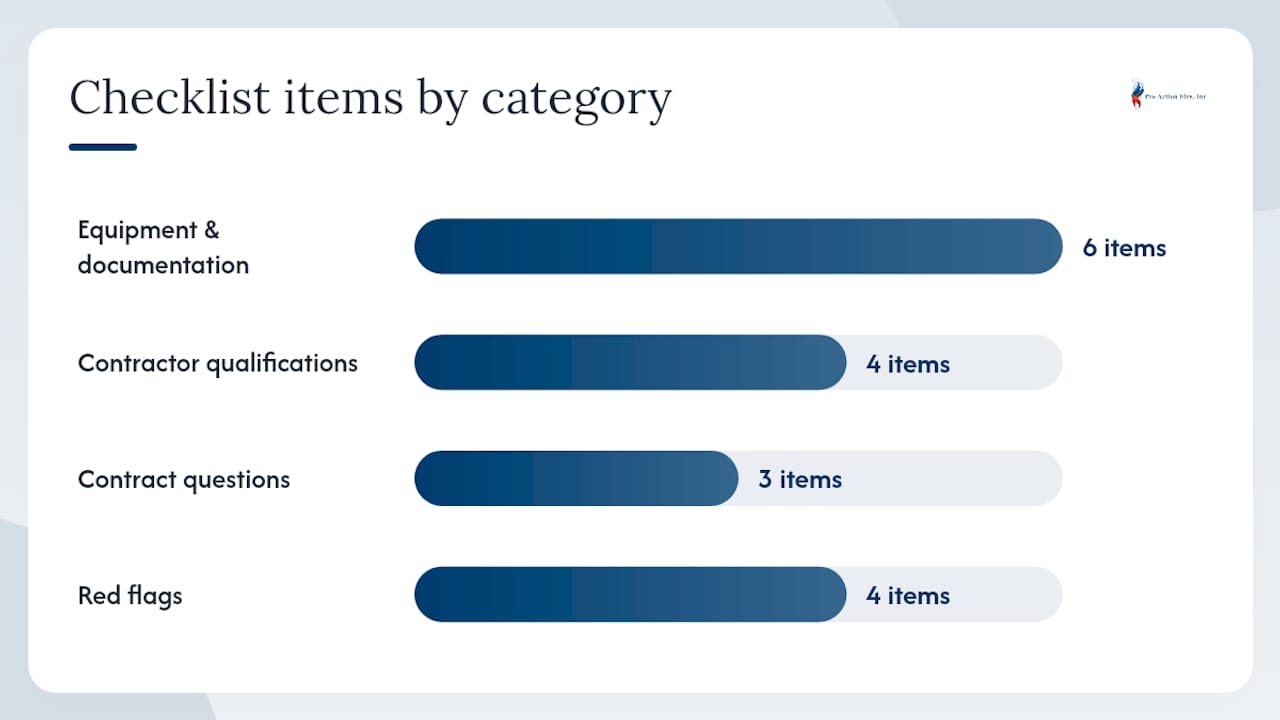
A procurement checklist protects you from bids that look complete but leave compliance gaps.
Equipment and documentation to require:
- UL listing documentation for all wireless components (UL 864 for the control unit; applicable listing for transmitters)
- Documented pathway-class designation in the design drawings
- Written RF site survey and signal-strength plan before installation begins
- Manufacturer’s published acceptance testing instructions included in the submittal package
- Documented redundant communications path topology (mesh or repeater layout)
- Published battery life specifications and replacement schedule
Contractor qualifications to verify:
- NICET certification at the appropriate level for system complexity
- Documented AHJ approval history on comparable wireless projects
- References from similar retrofit projects (building type, device count, occupancy)
- Familiarity with the specific manufacturer’s acceptance testing procedures
Contract questions to ask every bidder:
- Who performs initial acceptance testing, and will a manufacturer representative be present?
- Who provides as-built drawings and the final test report?
- What is the spare parts and battery replacement plan for year one and beyond?
Red flags in bids: vague or absent RF survey, no written acceptance test procedure, missing UL listing evidence, and no NICET credential on the project team. Walk away from any bid that cannot answer those four points in writing. For fire alarm placement guidance specific to commercial facilities, that resource covers device positioning and zone planning in detail.
How Preactionfire approaches NFPA-compliant wireless alarm projects
Preactionfire’s process for wireless fire alarm projects follows a defined sequence that covers every compliance checkpoint from first site visit to AHJ sign-off.
The project flow:
- Initial site survey and RF mapping: Technicians walk the facility, identify interference sources, and document signal coverage before any equipment is specified.
- System design with pathway-class documentation: Licensed designers produce drawings that specify device locations, redundant communication paths, and pathway-class designations per NFPA 72.
- Manufacturer acceptance testing and AHJ coordination: Preactionfire coordinates directly with the AHJ and the equipment manufacturer to conduct acceptance testing per published instructions, including fault-condition verification.
- Scheduled ITM and battery replacement program: After installation, clients receive a structured maintenance schedule covering annual inspections, battery replacement intervals, and signal-strength verification.
Services Preactionfire provides on wireless projects: system design, installation, acceptance testing, ongoing monitoring, NFPA compliance inspections, and 24/7 emergency response. NICET-certified technicians handle both design and field work.
Client deliverables you should expect from any qualified contractor, and what Preactionfire provides:
- As-built drawings reflecting final device locations and communication paths
- Manufacturer acceptance test report with AHJ sign-off documentation
- Maintenance schedule with battery replacement dates and inspection intervals
- AHJ sign-off checklist for the project file
For wireless security protocols and RF network hardening considerations, that resource from Low Voltage Corp covers encryption and jamming mitigation in practical terms.
Key Takeaways
NFPA-compliant wireless fire alarm systems deliver lower total retrofit costs, faster installation, and code-equivalent reliability when designed with supervised redundant paths and UL-listed equipment.
| Point | Details |
|---|---|
| Faster retrofit installs | Wireless projects complete in days rather than weeks, cutting fire watch and tenant disruption costs. |
| Code compliance is achievable | NFPA 72 and UL listing requirements fully support wireless systems when pathway class and redundancy are documented. |
| Total cost beats hardware cost | Higher per-unit device cost is typically offset by lower labor, restoration, and downtime expenses on retrofit projects. |
| Maintenance is ongoing | Battery replacement, signal verification, and annual ITM are non-negotiable; build them into every service contract. |
| Preactionfire delivers end-to-end | From RF site survey and NICET-certified design through AHJ acceptance and scheduled ITM, Preactionfire manages the full compliance process for Denver Metro commercial clients. |
What practitioners actually see in the field
The gap between a well-designed wireless system and a poorly designed one is almost entirely a site survey problem. Contractors who skip a thorough RF mapping step before installation are the source of most wireless reliability complaints. Concrete floors, metal shelving, elevator shafts, and HVAC equipment all attenuate signals in ways that are invisible on a floor plan. Measure first.
Mesh topologies handle node failures better than star configurations in most commercial buildings. If a single repeater goes offline in a star layout, you lose every device behind it. A mesh reroutes. That distinction matters most in large floor plates and multi-story buildings where repeater placement is constrained.
Battery access is a maintenance detail that gets ignored at design time and causes real problems later. Devices mounted 20 feet up on a warehouse ceiling need a lift for every battery swap. Design the mounting heights with the maintenance crew in mind, not just the coverage map.
The false alarm mitigation resource is worth reviewing before finalizing device selection. Wireless detectors with poor sensitivity calibration generate nuisance alarms that erode occupant trust and create liability. Specify devices with listed sensitivity ranges and verify them at acceptance.
Wireless systems are actively managed infrastructure. The owners who get the most out of them treat them that way.
Preactionfire’s wireless fire alarm services for Denver commercial properties
For commercial property owners and facility managers in the Denver Metro Area, Pre Action Fire offers a complete path from initial RF site survey through NFPA-compliant fire alarm system design, installation, and ongoing ITM. NICET-certified technicians handle every phase, and the team coordinates directly with the local AHJ to clear acceptance without delays.
The process starts with a site survey that maps RF coverage, identifies interference sources, and produces a design that documents pathway class and redundant communication paths before a single device ships. After installation, Preactionfire provides the manufacturer acceptance test report, as-built drawings, and a structured maintenance schedule so your compliance file is complete from day one.
For Denver-area commercial projects, contact Preactionfire to request an RF site survey and a procurement checklist you can attach to your bid package. Reach the team through the fire alarm compliance page or call directly to discuss your building’s specific requirements.
Authoritative sources and standards to consult
When writing specifications or evaluating bids, reference these primary sources directly and attach them to your submittal packages:
- The benefits and challenges of wireless fire alarm systems — CSE
- Assessing wireless fire alarm systems — CSE
- NFPA 72, National Fire Alarm and Signaling Code
- Are wireless fire alarms right for your project? — Consulting – Specifying Engineer (CSE)
- NFPA 72 Wireless fire alarm systems: Decoding code — 119 Fire Control
Involve the AHJ early. Attach the manufacturer’s acceptance testing instructions to every submittal. A reviewer who sees those documents upfront approves faster than one who has to ask for them.