
TL;DR:
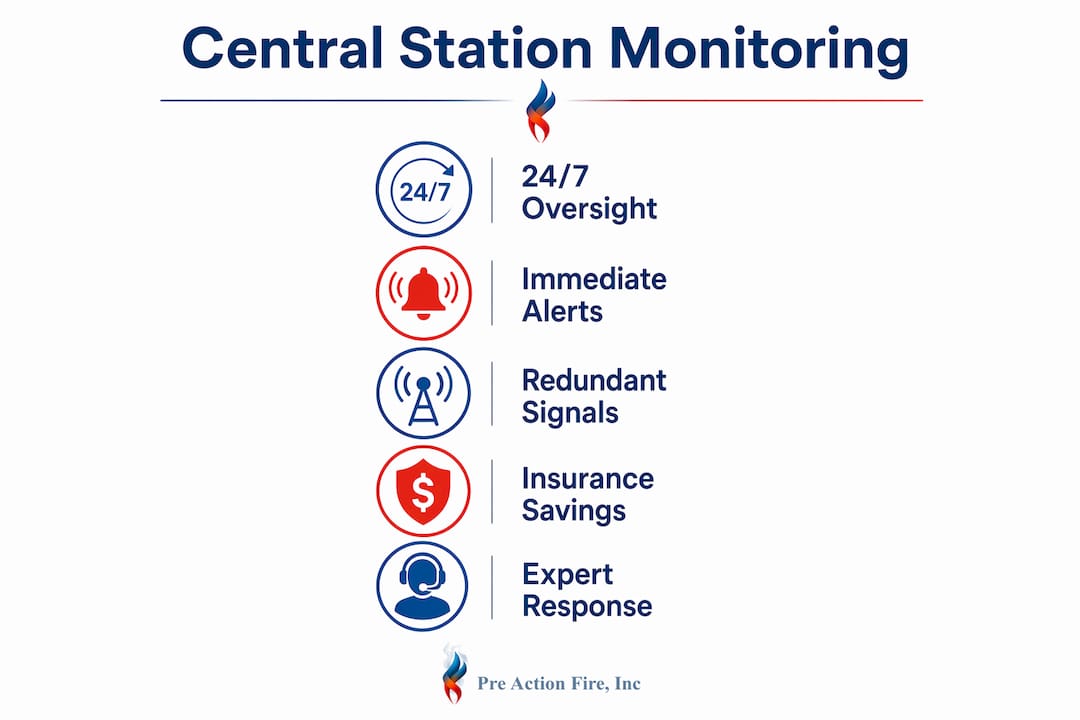
- Central station monitoring involves 24/7 oversight of alarms by trained operators who verify alerts and dispatch emergency services. It uses multiple communication paths, such as cellular and IP, to ensure reliable signal transmission and includes detailed event logs for compliance. This system reduces false alarms, lowers insurance costs, and enhances overall fire safety and regulatory adherence.
Central station monitoring is defined as the 24/7 oversight of fire, intrusion, and emergency alarm signals by trained operators at a secure, dedicated facility who verify alerts and coordinate emergency dispatch. The industry standard term is “central station monitoring,” recognized under UL 827 and NFPA 72 as the highest tier of alarm monitoring service. For security professionals and facility managers, understanding this system is the first step toward building a fire safety program that goes beyond passive detection. A monitored fire alarm system does not just sound a horn. It triggers a chain of human and technological responses designed to protect lives and property around the clock.

What is central station monitoring and how does it work?
Central station monitoring works through a five-step process that begins the moment a sensor triggers an alarm signal at your property.
- Signal transmission. Your fire alarm control panel sends a signal to the monitoring center over at least two independent communication paths. Combining cellular and IP communications is the recommended best practice, because systems relying on a single phone line are vulnerable to outages. Redundancy here is not optional. It is the foundation of reliable service.
- Signal receipt and prioritization. Monitoring center software receives the signal, timestamps it, and routes it to an available operator. Sophisticated software aids in prioritization, while operators bring critical judgment to alarm assessment. The combination of technology and human oversight is what transforms static alarms into a proactive safety system.
- Alarm verification. The operator reviews the account’s custom protocol, checks any available video feed, and attempts a callback to the property. This step is critical. Skipping verification leads to unnecessary emergency dispatch, which costs money and strains first responder resources.
- Emergency dispatch. If the operator cannot clear the alarm, they contact the appropriate emergency services and follow the property’s contact list in sequence. Operator verification reduces unnecessary emergency dispatch, lowering fines and improving response effectiveness.
- Event logging. Every signal, operator action, and dispatch decision is recorded in a time-stamped log. These auditable event logs are required for insurance claims and regulatory compliance.
Pro Tip: Ask your monitoring provider for a sample event log before signing a contract. If they cannot produce a clear, time-stamped record of every operator action, their audit trail will not hold up during an insurance claim or fire marshal inspection.
What are the key benefits of central station monitoring for commercial properties?
The benefits of central station monitoring extend well beyond faster response times. They affect insurance costs, regulatory standing, and operational risk.
- Insurance premium reductions. Properties with UL-listed monitored systems can receive up to 20% discounts on insurance premiums by providing official alarm certificates. That figure represents real budget impact for facility managers managing multiple buildings.
- Fewer false alarm dispatches. Video verification by trained operators significantly reduces false alarm dispatches while increasing the speed and priority of true emergency responses. False alarms cost municipalities money and can result in fines for repeat offenders.
- Consistent protocol adherence. Central station operators follow strict documented protocols customized per account. This removes the variability that comes with relying on on-site staff who may not be present or trained to respond correctly at 2 a.m.
- Compliance documentation. Monitoring logs provide the paper trail that fire marshals, insurance adjusters, and internal auditors require. Without this documentation, a facility manager has no proof of system performance during an incident.
- Risk reduction across the property lifecycle. A monitored system supports fire safety compliance from initial installation through annual inspections, creating a continuous record of system health and response history.
The practical implication is straightforward. Central station monitoring converts your fire alarm from a local noise maker into a documented, verified safety system with a direct line to emergency services.
What technical factors determine the reliability of a monitoring system?
Not all central station monitoring services deliver the same level of reliability. The difference comes down to communication infrastructure, facility design, and operator certification.
Communication path redundancy
A monitoring system is only as reliable as its signal path. Top-tier monitoring centers maintain 8 or more interconnected monitoring sites using cellular, IP, and phone lines for redundancy. That geographic diversity means a regional outage at one facility does not interrupt service. Relying on a single communication method like a traditional PSTN phone line is a known failure point. The minimum standard for a commercial property is two independent transmission technologies.
UL listing and operator certification
A UL-listed central station has been independently audited against UL 827 standards for physical security, staffing, equipment, and procedures. This listing is not a marketing badge. It is a verified baseline that insurance carriers and fire codes recognize. Operators at certified centers receive structured training in alarm assessment, emergency protocols, and account-specific procedures. Facilities relying on uncertified monitoring services carry a compliance gap that may not surface until an incident occurs.
Video verification integration
Integrating live camera feeds enables operators to visually confirm whether an alarm reflects a real emergency before dispatching responders. This capability is the single most effective tool for reducing false alarm rates in commercial properties. Entry-level monitoring services often lack this feature. Enterprise-grade platforms include it as a standard component of the access control and security infrastructure.
Pro Tip: When evaluating monitoring providers, ask specifically whether video verification is included in your service tier or priced as an add-on. Many facility managers discover it is optional only after their first false alarm fine.
How does central station monitoring fit into a broader facility safety strategy?
Central station monitoring does not operate in isolation. Its full value appears when it connects to the other systems managing your building’s safety and access.
- Unified alarm management. Central station monitoring integrates fire alarms, intrusion detection, and access control into a single oversight framework. When a fire alarm triggers during off-hours, the monitoring center can simultaneously alert security staff and lock down access points, preventing unauthorized entry during evacuation.
- Multi-site visibility. Facility managers overseeing multiple properties gain centralized event visibility. A single monitoring account can cover dozens of locations, with each site’s alarm history accessible for review and reporting.
- Audit and compliance support. Monitoring logs serve as the primary evidence source during fire marshal inspections, insurance renewals, and internal safety audits. A facility with a complete event history demonstrates active risk management, which carries weight with both regulators and underwriters.
- Alignment with NFPA 72. NFPA 72 defines the performance requirements for supervising stations, including central stations. Selecting a monitoring provider that meets these requirements keeps your system aligned with the code your fire alarm monitoring service must satisfy under Colorado law.
- Emergency workflow clarity. During a confirmed fire event, the monitoring center contacts the fire department, works through your property contact list, and documents every action. Your staff does not need to manage dispatch. They focus on evacuation and safety.
The strategic value of central station monitoring is that it converts your fire safety investment into a managed, documented, and verifiable program. That shift matters when a claim is filed or an inspection occurs.
Key Takeaways
Central station monitoring is the most reliable form of alarm oversight available to commercial properties because it combines redundant communication paths, trained human operators, and auditable documentation into a single managed service.
| Point | Details |
|---|---|
| Redundant communication paths | Use at least two technologies, such as cellular and IP, to prevent signal loss during outages. |
| UL 827 certification matters | Only UL-listed central stations meet the audit standards that insurance carriers and fire codes recognize. |
| Video verification cuts false alarms | Live camera feeds let operators confirm real emergencies before dispatching responders, reducing fines. |
| Event logs support compliance | Time-stamped operator records are required for insurance claims, fire marshal inspections, and internal audits. |
| Integration multiplies value | Connecting fire, intrusion, and access control systems gives facility managers unified, multi-site oversight. |
What facility managers get wrong about central station monitoring
The most common mistake I see is treating monitoring as a checkbox rather than a system. A facility manager signs a contract, installs a panel, and assumes the monitoring is working correctly. They never verify the communication path, never request a test log, and never confirm whether their provider is actually UL-listed. Then an incident occurs, and the insurance adjuster asks for the event record. The monitoring provider produces a log that shows a 12-minute gap between signal receipt and operator action. The claim gets complicated.
The second mistake is assuming that all monitoring services are equivalent. The gap between an entry-level monitoring service and a properly staffed, geographically redundant center is significant. The price difference is often smaller than facility managers expect, but the operational difference during an actual emergency is substantial. I have seen properties with sophisticated fire suppression systems connected to monitoring services that lacked a backup communication path. One phone line outage would have left the building dark.
Video verification is the most underused feature in commercial monitoring. Most facility managers know it exists. Few have actually confirmed it is active on their account and tested it. A single false alarm fine in a jurisdiction that charges repeat offenders can exceed the annual cost of upgrading to a verification-enabled service tier.
The advice I give consistently is this: treat your monitoring provider like a subcontractor, not a utility. Verify their credentials. Request test logs quarterly. Confirm your communication paths are redundant. And make sure your monitoring service advantages are actually being delivered, not just listed in a brochure.
— Results
Fire alarm monitoring for Denver commercial properties
Denver businesses operating under NFPA 72 and Colorado fire codes need monitoring services that meet UL 827 standards and support full compliance documentation. Preactionfire has served the Denver Metro Area since 2009, providing fire alarm systems and monitoring backed by NICET-certified technicians who understand local code requirements.

Whether you manage a single commercial building or a portfolio of facilities, Pre Action Fire provides the technical expertise to assess your current monitoring setup, identify communication path gaps, and connect your system to a UL-listed central station. Contact Preactionfire directly to schedule a compliance consultation and confirm your fire alarm monitoring meets Denver’s current standards.
FAQ
What is central station monitoring in fire safety?
Central station monitoring is the continuous, 24/7 oversight of fire alarm signals by trained operators at a secure facility who verify alerts and dispatch emergency responders when needed. It is defined under UL 827 and NFPA 72 as the highest tier of alarm supervising station.
How does central monitoring work when an alarm triggers?
The fire alarm panel sends a signal to the monitoring center, an operator verifies the alarm using account protocols and video feeds, and then contacts emergency services and property personnel if the alarm is confirmed.
What communication paths does a central station use?
Reliable central stations use at least two independent transmission technologies, typically cellular and IP, to prevent signal loss. Systems relying on a single phone line are vulnerable to outages that can leave a property unmonitored.
Can central station monitoring reduce my insurance premiums?
Properties with UL-listed, professionally monitored fire alarms can receive up to 20% discounts on insurance premiums by providing official alarm certificates to their carrier.
What is the difference between remote monitoring and central station monitoring?
Remote monitoring is a broad term for any off-site alarm oversight. Central station monitoring specifically refers to UL-listed facilities that meet NFPA 72 and UL 827 standards for staffing, equipment, and documented operating procedures.