
What is a zone valve and why it matters for your building
A zone valve is a specialized valve assembly that controls water flow to a defined section of a fire sprinkler system, letting you isolate, test, or shut down one area without touching the rest of the building’s protection. The full assembly is formally called a Zone Control Valve Assembly, or ZCVA, and it is the backbone of any multi-zone sprinkler system.
The ZCVA integrates four core components into a single, code-compliant package:
- Isolation valve (typically a butterfly or OS&Y gate valve): opens and closes water supply to the zone
- Flow switch: detects water movement and sends an alarm signal to the Fire Alarm Control Panel (FACP)
- Pressure gauge: displays real-time system pressure so technicians can spot hydraulic problems immediately
- Test-and-drain valve: allows a functional flow test and drains the zone pipe without activating sprinkler heads
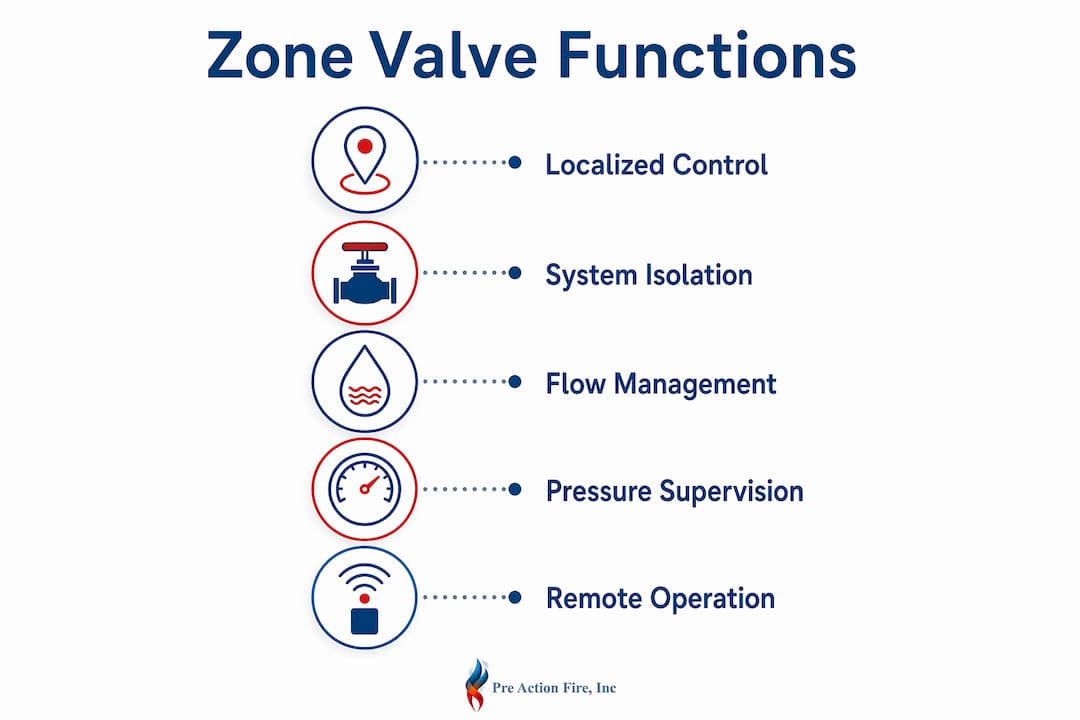
Together, these components serve four primary functions: localized water control, system isolation for maintenance, flow monitoring, and alarm notification. The zone valve enables maintenance on one floor or tenant space while every other zone stays fully pressurized and protected. For a property manager overseeing a multi-story office building or an industrial warehouse with phased occupancy, that capability is the difference between a planned two-hour shutdown and a full building evacuation.
Fire protection codes that govern zone valve requirements
Zone valves do not exist in a regulatory vacuum. Two national frameworks set the floor for what your system must include, and local jurisdictions often go further.
NFPA 13 (2025 Edition) is the primary design standard for fire sprinkler systems in the United States. It requires sectional isolation valves in complex buildings, specifying that high-rise structures must have a control valve at each floor level. The standard also caps the area controlled by a single sectional valve at 52,000 square feet, which influences how you zone a large commercial or industrial facility.
The International Building Code (IBC) translates NFPA 13 requirements into local law through adoption by state and municipal jurisdictions. In practice, the IBC often adds requirements on top of the base NFPA standard. For example, certain state amendments require electrically supervised control valves for each individual tenant space, with a shared valve permitted only when the combined area is relatively small.
NFPA 72 closes the loop on supervision. It mandates that tamper switches on all control valves transmit a supervisory signal to the FACP whenever a valve moves from its fully open position.
Key code requirements at a glance:
- Sectional isolation valves required at each floor level in high-rise buildings per NFPA 13
- Maximum zone size limits per control valve under NFPA 13
- Electrically supervised control valves are commonly required for individual tenant spaces under certain IBC amendments.
- Flow switch required per zone where multiple tenants share a single valve
- Tamper switch required on all control valves in supervised systems per NFPA 72
- All supervisory signals must report to the FACP
Pro Tip: Check your local jurisdiction’s IBC amendments before finalizing zone layouts. Colorado’s Authority Having Jurisdiction (AHJ) may impose stricter sectioning requirements than the base NFPA 13 standard, particularly for mixed-use and high-rise occupancies.
Modern design and operational features worth knowing
Zone valves have moved well past simple manual shutoffs. The current generation of assemblies integrates motorization, pressure management, and real-time FACP connectivity into a single unit.
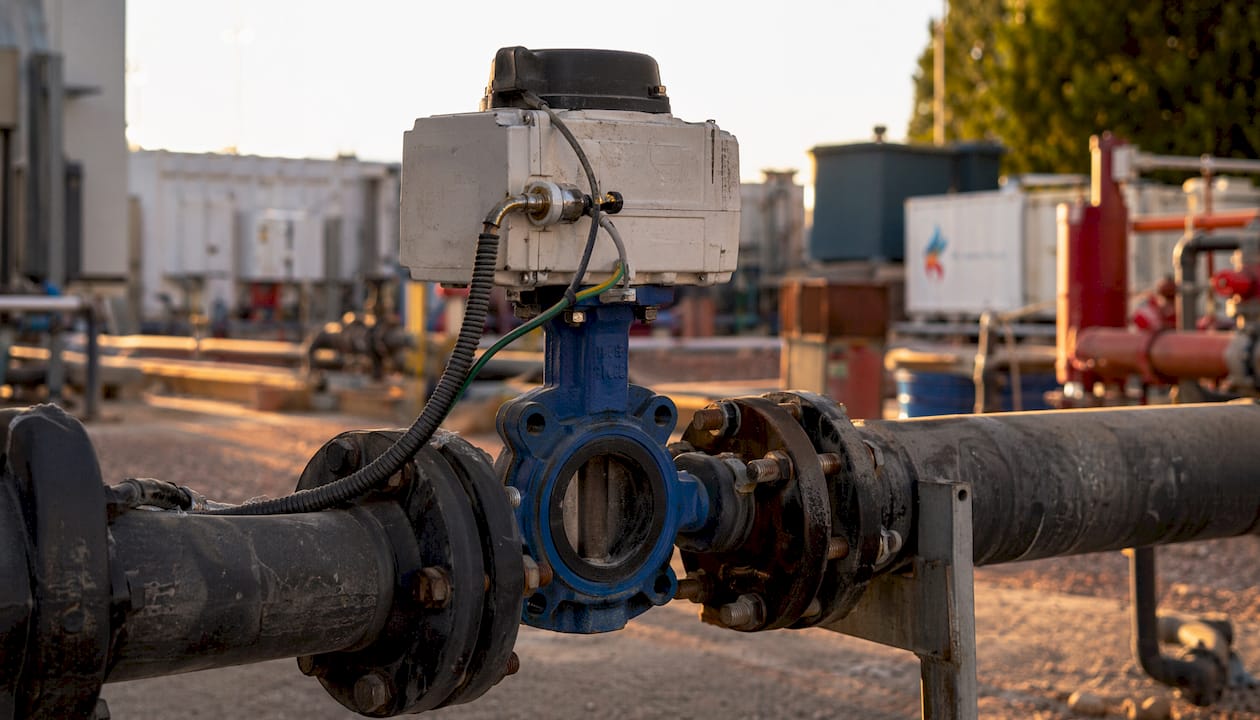
Motorized butterfly valves fitted with electric quarter-turn actuators allow remote zone control from a building management system or fire alarm panel. In a high-rise or large industrial facility, that means a zone can be isolated or reactivated automatically based on detector input, cutting emergency response time compared to sending a technician to a mechanical room.
Pressure management is a frequently overlooked factor in zone valve design. Tall buildings generate significant static pressure at lower floors, and without proper zoning, that pressure can exceed sprinkler head ratings or cause hydraulic imbalance across the system.
to specific areas of the building, keeping each section within its hydraulic design parameters. The National Fire Sprinkler Association also identifies zoning as one of the primary strategies for managing pressure in multi-story buildings, alongside pressure-regulating valves and pump selection.
The test-and-drain valve deserves specific attention during installation. Orifice sizing must match system hydraulics so the functional flow test accurately simulates a single sprinkler activation without triggering the heads. A mismatched orifice produces a false flow reading, which either fails to trip the flow switch or generates a nuisance alarm.
Best practices for installation and maintenance:
- Mount the ZCVA in an accessible location, clearly labeled per your facility’s valve tag and chart system
- Verify electrical supervision is wired to the FACP before the system goes live
- Test the flow switch and tamper switch at commissioning and at every annual inspection
- Confirm the test-and-drain valve orifice matches the hydraulic calculation for that zone
- Document valve locations and functions in a wall-mounted valve chart and the Operations and Maintenance manual
Pro Tip: An unsupervised closed isolation valve is a silent failure. If the valve is shut and no tamper switch reports it to the FACP, the entire zone loses fire protection with no alert to anyone monitoring the system. Every zone valve in your building should carry electrical supervision.
How Preactionfire supports zone valve compliance and installation
Preactionfire has specialized in NFPA-compliant fire protection across the Denver Metro Area since 2009, with a technical team that holds NICET certifications and direct experience with Colorado’s AHJ requirements. That combination matters when you are designing zone layouts for a multi-tenant commercial building or retrofitting an industrial facility to meet the 2025 NFPA 13 edition.
The team at Preactionfire provides:
- Zone valve system design aligned with NFPA 13, IBC, and local Colorado code amendments
- Installation of supervised butterfly valves, flow switches, tamper switches, and test-and-drain assemblies
- Integration of zone valve supervisory signals with fire alarm systems and FACP panels
- Functional testing and commissioning documentation for AHJ submittals
- Ongoing inspection and maintenance programs to keep zone valves code-compliant year over year
For property managers navigating tenant turnover or phased construction, supervised sectional isolation valves at each tenant space allow sprinkler modifications with minimal downtime and no disruption to adjacent zones. Pre Action Fire’s rapid emergency response capability also means that when a zone valve fails or a tamper signal fires outside business hours, a certified technician can respond quickly rather than leaving a zone unprotected overnight.
Key takeaways
Zone valves are the control points that make a large fire sprinkler system manageable, maintainable, and code-compliant. Without proper supervision and correct installation, a single closed valve can silently disable protection for an entire floor.
| Point | Details |
|---|---|
| ZCVA core components | Every assembly includes an isolation valve, flow switch, pressure gauge, and test-and-drain valve. |
| NFPA 13 and IBC compliance | High-rise buildings require a zone valve at each floor; maximum zone area is 52,000 sq ft per NFPA 13. |
| Electrical supervision is mandatory | Tamper switches must report to the FACP per NFPA 72 to prevent silent zone failures. |
| Motorized valves cut response time | Electric actuators enable remote zone control, reducing emergency response time in complex facilities. |
| Preactionfire delivers local expertise | NICET-certified technicians design and install zone valve systems to Colorado AHJ and 2025 NFPA 13 standards. |