Most paint spray booths in the United States must carry automatic fixed fire protection. NFPA 33 and OSHA’s 29 CFR 1910.107 both require it, and both accept a short list of system types beyond traditional sprinklers, including dry chemical, CO2, and gaseous clean agents. Before you buy or upgrade anything, confirm your booth’s classification with the authority having jurisdiction and bring in a qualified fire protection designer.
TL;DR:
- Most U.S. paint spray booths must have approved fixed fire suppression systems, with choices including sprinklers, dry chemicals, CO2, or gas agents based on hazard classification.
- Local authorities having jurisdiction and state or city fire codes ultimately determine which suppression system is acceptable, not just NFPA or OSHA standards.
- Duct and booth design must account for hazard risk, with extra hazard (Group 2) classification requiring higher demands and special considerations for duct sprinkler head spacing and temperature ratings.
- Regular maintenance, inspection, and overspray protection are crucial to sustain compliance and system reliability, with oversight and documentation essential for AHJ reviews.
- Clear pre-inspection planning, including hazard classification, hydraulic calculations, suppressor type rationale, and AHJ correspondence, prevents common pitfalls and facilitates smooth approval.
Table of Contents
- What Codes Govern Paint Booth Fire Suppression Requirements?
- Which Fire Suppression Systems Are Allowed in Paint Booths?
- How Are Sprinklers Designed for Booths and Exhaust Ducts?
- How Do Ventilation and Electrical Rules Affect Suppression Design?
- What Extinguishers and Detection Does a Paint Booth Need?
- What Inspection and Maintenance Schedule Does Compliance Require?
- How Do You Prepare for an AHJ Inspection?
- What Do Installers See in the Field on Real Paint Booth Projects?
- What Are the Three Biggest Compliance Pitfalls We See?
- How Preactionfire Supports Paint Booth Compliance in Denver
- Where to Verify These Requirements Directly
- Sources
What Codes Govern Paint Booth Fire Suppression Requirements?
Two documents run the show, and they don’t always say the same thing the same way. NFPA 33, Standard for Spray Application Using Flammable or Combustible Materials, is the consensus standard fire protection engineers actually design to. It spells out booth construction, ventilation interlocks, and the expectation that spray areas get automatic fixed protection sized for the hazard. 29 CFR 1910.107, OSHA’s federal regulation, is the enforceable law. It covers construction, ventilation, grounding, and electrical classification, and it states that spraying areas should be protected by automatic sprinklers where that protection is available.
Here’s the nuance most guides skip: OSHA doesn’t automatically adopt NFPA 33 as federal law just because the fire protection industry treats it as gospel. A 2004 OSHA formal interpretation confirms that spray booths meeting the regulatory definition need approved automatic sprinklers, but it also confirms dry chemical or CO2 systems can substitute when they meet the applicable extinguishing-system standard. NFPA 33 stays a voluntary consensus document at the federal level, unless your state, county, or city fire code has formally adopted it, which most Denver metro jurisdictions and the vast majority of U.S. municipalities have done through their local fire code.
That local adoption is why the AHJ, not a national committee, ends up making the final call on your project. A handful of other NFPA standards typically ride along with a paint booth project:
- NFPA 13 governs sprinkler system design, including the Extra Hazard classification most booths fall under.
- NFPA 17 covers dry chemical extinguishing systems, relevant if solvent chemistry or equipment sensitivity rules out water.
- NFPA 2001 applies to clean agent gaseous systems, common in booths protecting expensive robotics or electrostatic equipment.
- NFPA 750 covers water mist systems, an increasingly common choice where water damage or agent cost is a concern.
- NFPA 10 sets portable extinguisher placement and rating rules.
When these standards conflict with a stricter local requirement, the AHJ’s interpretation wins. Always get code decisions in writing before you commit to a system design.
Which Fire Suppression Systems Are Allowed in Paint Booths?
NFPA 33 doesn’t mandate one suppression technology. It gives you a menu, and the right pick depends on what’s actually being sprayed and what sits inside the booth. The industry guidance on spray application hazards lays out the accepted categories clearly:
- Wet pipe sprinklers — the default choice for booths with reliable, freeze-protected water supply and no equipment sensitivity concerns.
- Dry pipe sprinklers — used where booths sit in unheated bays or where freezing is a realistic risk.
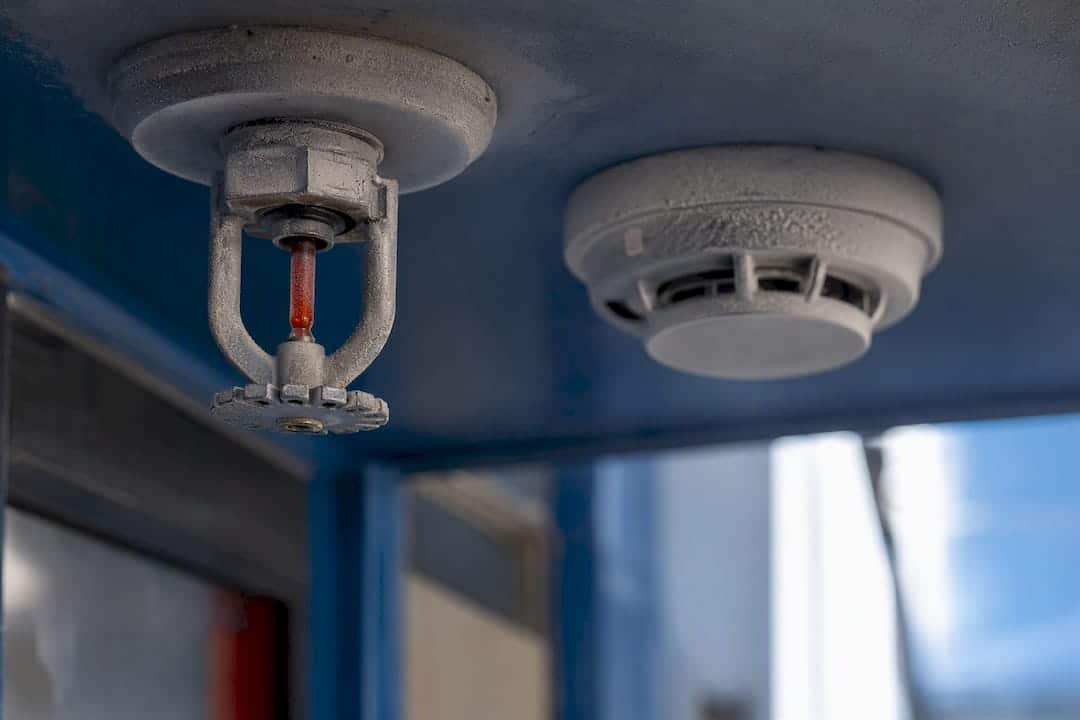
- Preaction systems — add a detection trigger before water releases, reducing accidental discharge risk around expensive robotics or electrostatic paint equipment.
- Deluge systems — all heads open simultaneously once triggered, typically used where fire spread would be near-instant, such as booths handling high-volume solvent-based finishes.
- Foam-water systems — extend sprinkler protection with foam concentrate for booths handling flammable liquid pooling risk.
- CO2 systems — displace oxygen in enclosed spaces, a fit for booths with electronics that water would destroy.
- Dry chemical systems — fast knockdown, commonly paired with smaller booths or specific solvent chemistries where water reacts poorly.
- Gaseous clean agent systems — leave no residue, the go-to for booths protecting sensitive automated equipment.
- Water mist systems — use far less water than conventional sprinklers, useful where water supply is limited or runoff containment is a concern.
Choosing among these isn’t a coin flip. Water-reactive solvents, electrostatic spray guns that carry live current, and overspray buildup that could carry a fire outside the booth footprint all change the calculus. A booth spraying water-based automotive basecoat with no electrostatic charge is a straightforward wet pipe sprinkler candidate. A booth running powder coat with electrostatic guns near sensitive conveyor electronics is a much stronger case for a gaseous or dry chemical system, since water and electrified equipment don’t mix well, and the selection has to account for paint and solvent compatibility before agent type gets locked in.
Pro Tip: Pull the safety data sheet for every coating and solvent used in the booth before you talk to a system designer. Some agents react badly with specific solvent classes, and a manufacturer’s technical bulletin will flag incompatibilities that a generic system spec sheet never will.
Corrosion is the quiet cost nobody budgets for. Overspray settles on sprinkler heads, detectors, and piping over months of operation, and certain solvent chemistries accelerate metal fatigue on fittings rated for a “clean” indoor environment. If your booth runs heavy overspray, ask your installer about corrosion-resistant head coatings and more frequent inspection intervals up front, rather than discovering the problem during a failed annual test.
How Are Sprinklers Designed for Booths and Exhaust Ducts?
Design starts with occupancy classification, and paint booths almost always land in Extra Hazard, Group 2. That classification exists because flammable solvent vapors and rapid fire growth potential put spray areas in a different risk tier than a typical warehouse or office space, and it drives every downstream hydraulic calculation.
Extra Hazard Group 2 pushes water demand well above ordinary hazard design. Expect higher minimum densities and a larger hydraulically most demanding area, which is why system demand calculations often need to account for firefighter hose stream allowance on top of the sprinkler flow itself. Undersizing the water supply is one of the most common design failures inspectors flag.
Exhaust ducts get their own set of rules, since they’re effectively a chimney for flammable vapor and overspray residue:
- Duct sprinklers typically need closer head spacing than open-area coverage, often at intervals tied to duct diameter and airflow velocity.
- Minimum flow per head inside ducts is generally higher than standard sprinkler flow, because duct fires spread fast and burn hot.
- Riser and offset locations need dedicated heads wherever ductwork changes direction, since horizontal runs alone won’t catch fire traveling around a bend.
- Head temperature rating matters more inside ducts than in open booth space. Standard-rated heads can be too slow to react to the heat buildup ducts generate; many designs call for intermediate or high-temperature rated heads depending on exhaust temperature.
Overspray protection on heads is a separate, ongoing design consideration, not a one-time install decision. NFPA 33 allows a thin cellophane bag over sprinkler heads to keep overspray off the operating mechanism, but that protection has to be inspected and replaced regularly or it defeats the purpose entirely.
Deluge and open-head configurations show up most often in booths with extreme flame spread risk, where waiting for individual heads to activate one at a time isn’t fast enough. These systems need a dedicated control valve and a detection system to trigger the release, since there’s no thermal fusible element doing that job head by head.
How Do Ventilation and Electrical Rules Affect Suppression Design?
Ventilation and electrical classification aren’t separate from your suppression system. They shape it. A booth’s exhaust fan has to keep running during spraying operations and vent vapors to a location where they won’t reignite or drift back into occupied space, and OSHA requires that ductwork and fans be built to avoid becoming an ignition source themselves, meaning non-sparking fan blades and properly bonded, grounded ductwork.
Electrical classification inside and immediately around the booth follows Class I Division 1 or Division 2 rules (or the equivalent Zone system) depending on distance from the spray area and normal vapor concentration. Equipment inside the classified zone, including detection wiring and any suppression system components, needs to be rated for that environment. This is a spot where cutting corners during a retrofit gets expensive fast, since replacing non-rated electrical fixtures after the fact usually means reopening finished walls or ceilings.
A handful of interlocks typically need to tie the suppression system into the booth’s operating equipment:
- Exhaust fan shutdown on suppression activation, so the fire isn’t being fanned while agent discharges.
- Spray equipment lockout that cuts power to spray guns and conveyors the instant detection triggers.
- HVAC sequencing to prevent makeup air systems from feeding oxygen into an active fire event.
- Safe shutdown sequencing for any automated coating line, so robots and conveyors stop in a controlled position rather than mid-cycle.
At commissioning, insist on watching a live interlock test, not just a paper trail. Trip the detection system and confirm the fan actually stops, the spray guns actually lose power, and the sequence happens in the order your design intended. Paper commissioning reports occasionally miss a miswired relay that a five-minute functional test catches immediately.
What Extinguishers and Detection Does a Paint Booth Need?
Fixed suppression protects the inside of the booth. Portable extinguishers exist for everything the fixed system doesn’t reach, meaning perimeter flare-ups, small spills, or a fire an operator catches before it triggers the automatic system.
NFPA 10 governs placement and rating for Extra Hazard occupancies, and paint booths qualify. That typically means:
- Class B/C rated extinguishers, sized for flammable liquid and electrical fires.
- Placement so that no point in the hazard area sits more than 50 feet from a rated unit.
- Mounting outside the immediate overspray zone, so the extinguisher itself doesn’t get coated and rendered useless.
Detection is what triggers the fixed system before anyone reaches for a handheld unit. Fusible link detection is common and simple, activating at a fixed temperature with no power required, which makes it reliable in a harsh overspray environment. Heat detectors and flame detectors show up in booths where faster response matters, particularly around electrostatic equipment or high-solvent-volume operations. Whatever detection type you run, it needs the same overspray protection consideration as sprinkler heads. A fouled detector is a detector that doesn’t detect anything.
Manual pull stations belong outside the booth enclosure, positioned where an operator can trigger the system while retreating from the hazard rather than reaching back into it. Manual activation should tie into the same control sequence as automatic detection, triggering the identical shutdown and discharge sequence regardless of which one fired first.
What Inspection and Maintenance Schedule Does Compliance Require?
A compliant install on day one doesn’t stay compliant without a maintenance program behind it. NFPA 25 governs water-based system inspection, testing, and maintenance; NFPA 17 covers dry chemical systems; NFPA 2001 covers clean agent systems; and NFPA 10 sets the schedule for portable extinguishers. Each carries its own frequency requirements, and mixing them up is a common source of missed inspections.
Split your program into two tiers:
- Operator-level checks (daily/weekly): visually confirm sprinkler heads and detectors are free of overspray buildup, verify gauges show normal pressure, confirm nothing is stacked or stored blocking a head or nozzle.
- Contractor-level testing (annual/periodic): full system functional tests, control valve exercising, detector sensitivity testing, and hydrostatic testing on the schedule NFPA 25 or the applicable agent standard requires.
Documentation matters as much as the testing itself. AHJs want to see a maintenance log, not just a verbal assurance that “someone checks it.” Keep dated records of every inspection, every deficiency found, and every corrective action taken, and keep them accessible for the AHJ’s next visit.
Overspray is, by a wide margin, the most common field-level cause of impaired suppression and detection performance in working paint booths. Painted-over heads, clogged nozzles, and fouled detector elements don’t show up as a failure until the system is actually called on to work, which is the worst possible time to discover the problem. Scheduled cleaning and head/detector covers that get replaced on a set interval solve most of this at minimal cost.
How Do You Prepare for an AHJ Inspection?
The AHJ has final say on your booth’s compliance status, and the smoothest path through that inspection is showing up with your documentation already organized rather than scrambling for it during the walkthrough.
Before you schedule any inspection or submit plans, assemble the following:
- Occupancy classification confirmation in writing from your fire marshal or AHJ, since Extra Hazard Group 2 assumptions need to be verified, not assumed.
- Suppression system selection rationale, including SDS review for coatings used and documentation of why a particular agent type was chosen.
- Hydraulic calculations for any sprinkler-based system, showing the demand area, density, and hose stream allowance used.
- Duct protection details, including head spacing, temperature ratings, and flow calculations for exhaust ductwork.
- Detector type and placement plan, with overspray protection measures documented.
- Interlock sequence documentation, showing fan shutoff, equipment lockout, and HVAC sequencing tied to detection and suppression activation.
- Extinguisher layout showing travel distances and ratings per NFPA 10.
- A written maintenance and inspection plan, with assigned responsibility and frequency for each task.
Ask your designer or installer directly whether they’ll provide written AHJ correspondence documenting every approval and equivalency determination. Verbal approvals from a walkthrough have a way of getting forgotten by the time a different inspector shows up for the next annual visit. For anything beyond a straightforward small booth retrofit, look for a NICET-certified designer or a third-party plan reviewer. Their sign-off carries weight with most AHJs and catches design errors before they become expensive field corrections. Our guide on NFPA rules every facility manager should know walks through the broader compliance landscape if you’re managing more than one protected system on site.
What Do Installers See in the Field on Real Paint Booth Projects?
Preaction and preaction-plus systems come up constantly in booths protecting expensive automated equipment, robotics, or electrostatic guns, because the added detection step before water release cuts the risk of an accidental discharge frying a six-figure piece of equipment over a false alarm.
Two retrofit scenarios show up often enough to be worth flagging. The first is a facility with limited incoming water supply, where the existing service can’t support Extra Hazard Group 2 demand without a booster pump or a switch to a lower-water-volume agent like water mist. The second is exhaust ductwork installed years before the booth’s current suppression system, where the ducts simply don’t have the head spacing or flow rate current standards require, and retrofitting the duct runs turns out to be the harder half of the project.
A complete handover on a compliant install should include a written maintenance checklist, a detector and head overspray protection plan specific to the coatings in use, and copies of all AHJ correspondence and approvals for the customer’s permanent records.
Preactionfire has served the Denver metro area since 2009 with NICET-certified technicians handling design, installation, and inspection work across commercial and industrial buildings, including facilities running paint and coating operations. Our guide to industrial fire protection for Colorado sites covers additional context for multi-system facilities.
What Are the Three Biggest Compliance Pitfalls We See?
Contractors see the same three mistakes over and over, and every one of them is preventable with a little attention before the inspector shows up.
Wrong system for the hazard. Someone specs a standard wet pipe sprinkler system for a booth running solvents that react badly with water, or skips the electrostatic equipment consideration entirely. Fix: review your coating chemistry with your designer before, not after, the system is installed.
Painted or overspray-coated heads. This is the single most common deficiency we find on inspections, and it’s entirely a maintenance failure, not a design one. Fix: put head and detector inspection on a fixed weekly schedule, not an “as we remember” basis.
Underprotected detection. Detectors placed without overspray shielding foul out fast and stop responding reliably. Fix: budget for detector protection and replacement as a recurring line item, not a one-time install cost.
Document every AHJ conversation in writing, and if it’s been more than a year since your last professional inspection, that’s worth fixing before it becomes a failed test. A site assessment usually surfaces small issues while they’re still cheap to correct.
— Results
How Preactionfire Supports Paint Booth Compliance in Denver
Getting a paint booth suppression system right takes more than picking a system off a spec sheet. It takes someone who can classify the hazard correctly, size the hydraulics for Extra Hazard demand, and get the AHJ’s sign-off in writing before the booth ever goes live. That’s the work Preactionfire has been doing across the Denver metro area since 2009.
Our NICET-certified technicians handle the full scope: design, installation, inspection, and ongoing maintenance contracts for fire suppression systems protecting paint booths and other high-hazard processes. We coordinate directly with your local AHJ on classification and equivalency questions, so you’re not the one interpreting code language on your own. If your facility runs coating or finishing operations anywhere in the Denver metro area, our fire suppression systems page covers the system options we design and install, and our fire safety inspections service covers the recurring testing NFPA 25 and NFPA 10 require. For extinguisher placement and required signage around your booth, proper Class B/C signage compliance is worth checking alongside your suppression review.
If it’s been a while since a qualified technician looked at your booth’s protection, schedule a site survey with our team and get a written compliance packet you can hand straight to your AHJ.
Where to Verify These Requirements Directly
For the regulatory text itself, 29 CFR 1910.107 covers OSHA’s construction, ventilation, and sprinkler requirements for spray booths, and the 2004 OSHA formal interpretation clarifies how dry chemical and CO2 systems can satisfy that requirement as equivalents.
On the standards side, NFPA 33 remains the primary design document for spray booth suppression, with NFPA 13 governing sprinkler hydraulics, NFPA 17 covering dry chemical systems, NFPA 2001 covering clean agent systems, NFPA 750 covering water mist, and NFPA 10 setting portable extinguisher rules. Check with your local fire marshal’s office to confirm which edition of each standard your jurisdiction has adopted, since adoption dates vary by state and county.
Sources
- 29 CFR § 1910.107 – Spray finishing using flammable and combustible materials. | e-CFR | LII
- Spray booth requirements including automatic sprinkler … | Occupational Safety and Health Administration
- PRC guidelines (spray application using flammable and combustible materials) — AXA XL