
TL;DR:
- Regular fire protection system testing is legally required and involves detailed, component-level verification.
- Compliance depends on maintaining thorough, timestamped records, regardless of system appearance or condition.
Regular system testing is the verifiable process of inspecting and confirming that every fire protection component works as designed under real conditions. For facility managers and business owners, this is not optional maintenance. Under NFPA 72 and NFPA 25, documented testing is a legal requirement, and gaps in that record carry fines, insurance penalties, and the risk of losing your certificate of occupancy. This article explains why regular system testing is the foundation of fire safety compliance, what it covers, where facilities most often fail, and how to build a program that holds up under scrutiny.
Why regular system testing is the core of fire safety compliance
Fire protection systems degrade with use and environment. A sprinkler head corrodes. A smoke detector drifts out of sensitivity range. A control panel develops a fault that only shows up under load. Systems that pass daily checks can still fail during an actual emergency if they have not been properly maintained and tested. That gap between apparent function and verified function is exactly what routine testing closes.
The industry term for this process is “inspection, testing, and maintenance,” or ITM. The phrase “regular system testing” describes the same practice from an operational standpoint. Both refer to the scheduled, documented verification of individual fire protection components against NFPA performance standards. Knowing both terms matters because your fire marshal, insurer, and legal counsel will use them interchangeably.
Facility owners remain legally responsible for regulatory compliance even when testing is outsourced to a licensed contractor. That means you cannot hand off the schedule to a vendor and consider the matter closed. You must maintain oversight of what was tested, when, by whom, and what deficiencies were found.
What does system testing involve, and which components are tested?
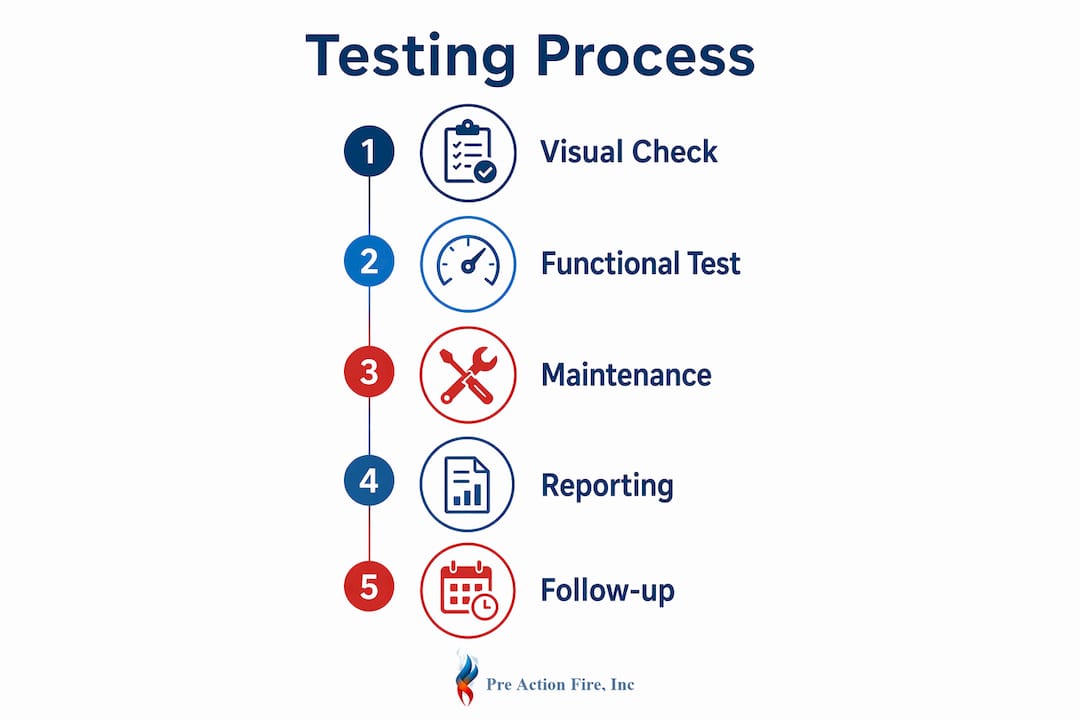
NFPA standards establish a tiered schedule that assigns different testing frequencies to different components. The structure looks like this:
- Weekly/monthly: Visual checks of control panel status, pull station accessibility, and emergency lighting. Building staff typically perform these.
- Quarterly: Functional tests of select devices such as flow switches and supervisory signals.
- Annual: Full functional tests of fire alarm initiating devices, notification appliances, sprinkler systems, fire pumps, and fire extinguishers. NFPA standards mandate that annual functional tests be performed by licensed contractors with NICET certification.
| Component | Typical testing interval | Who performs it |
|---|---|---|
| Control panel visual check | Weekly | Building staff |
| Pull stations and horn/strobe | Monthly visual, annual functional | Staff / NICET contractor |
| Sprinkler heads and valves | Annual | Licensed contractor |
| Fire pump | Weekly visual, annual flow test | Staff / Licensed contractor |
| Fire extinguishers | Monthly visual, annual inspection | Staff / Licensed contractor |
The critical detail most facility managers miss is that testing must occur at the component level, not the system level. Each detector’s sensitivity, each valve’s position, and each device’s response time must be recorded individually. Logging “fire alarm system tested” as a single entry does not satisfy NFPA 72.
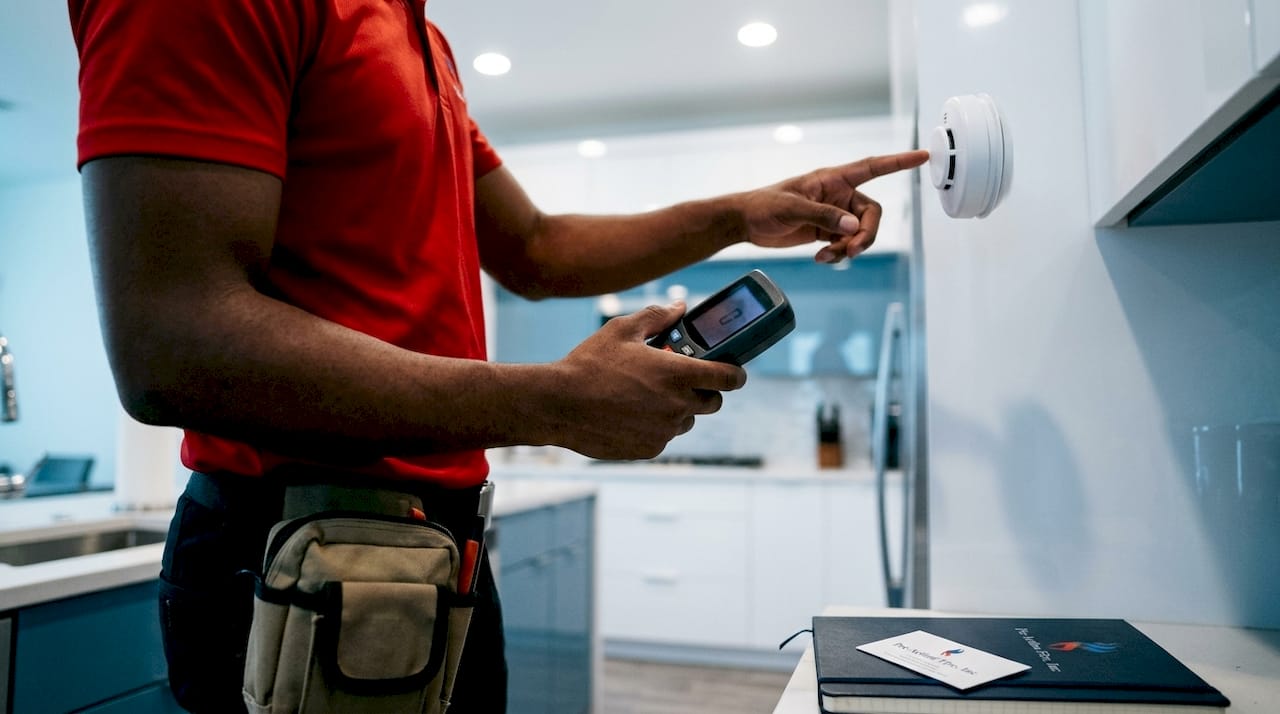
Pro Tip: Set up your CMMS or digital maintenance log to create a separate record for each device ID. Inspectors and insurers look for component-level documentation, not system-wide summaries.
Why is routine testing legally and financially crucial?
The financial case for regular testing is straightforward. Fire code violations tied to recordkeeping failures or expired inspection records carry fines from $600 to $1,750 per incident, plus insurance premium increases of 20–40%. Re-inspection fees add another $150 to $500 when an initial inspection fails. Those costs compound quickly across a multi-building portfolio.
The legal exposure goes further than fines. Uncorrected violations can trigger certificate of occupancy suspension within 60–90 days, forcing a business shutdown and the revenue loss that follows. When violations involve injury or death, criminal charges become a real possibility.
The consequences of neglect include:
- Fines of $600–$1,750 per recordkeeping or inspection violation
- Insurance premium hikes of 20–40% following a violation or claim
- Re-inspection fees of $150–$500 per failed visit
- Certificate of occupancy suspension within 60–90 days of unresolved violations
- Criminal liability when serious violations contribute to injury or death
Inspections serve as the foundation of a defensible compliance program. That means your testing records protect you in insurance claims and litigation, not just in front of a fire marshal. A complete, timestamped record of every test and corrective action is your best evidence that you met your duty of care.
Pro Tip: Keep signed copies of every inspection report, including deficiency notices and repair confirmations, in a dedicated compliance file. Date-stamped digital records are harder to dispute than paper logs.
Common testing pitfalls that cause failures or violations
Most inspection failures trace back to a short list of recurring problems. Knowing them in advance lets you address them before an inspector does.
- Painted or corroded sprinkler heads. Paint clogs the heat-sensitive element and prevents activation. Any sprinkler head that has been painted over must be replaced, not cleaned.
- Closed or partially closed valves. A sprinkler system with a closed control valve is effectively disabled. Valve position must be confirmed and logged at every inspection.
- Documentation gaps. Missing or incomplete documentation is treated by authorities and insurers as a system failure, even when the hardware functions correctly. No record equals no compliance.
- Ignored deficiency reports. Deferring repairs after a deficiency is flagged creates a documented trail of negligence. If an incident occurs before repairs are made, that paper trail works against you in court and in insurance claims.
- System-level tracking instead of component-level tracking. Logging one entry for the entire fire alarm system does not meet NFPA 72. Each device needs its own record.
- Unqualified personnel performing functional tests. Visual checks are appropriate for building staff. Functional tests require NICET-certified contractors. Using the wrong person for the wrong task invalidates the test.
Facility managers often believe that a system functioning during daily checks satisfies compliance requirements. Authorities require detailed records of credentials, component-level test results, and formal reports before they consider compliance met. Daily observation is not a substitute for documented ITM.
Pro Tip: When you receive a deficiency report, assign a repair deadline immediately and track it in your CMMS. Closing deficiencies quickly, and documenting the closure, is the single most effective way to limit legal exposure.
How to build a testing program that meets NFPA standards
A reliable testing program runs on three pillars: a documented schedule, qualified personnel, and a closed-loop process for deficiencies. Here is how to build each one.
- Align your schedule to NFPA 72 and NFPA 25. Map every component in your facility to its required testing interval. Your NFPA compliance inspection baseline is the starting point. Do not rely on memory or a single annual visit to cover everything.
- Use a CMMS or digital maintenance platform. Automated scheduling eliminates missed intervals. Digital records create the timestamped, component-level documentation that inspectors and insurers expect.
- Train building staff on visual inspection protocols. Monthly self-inspections by facility staff, covering control panel status, unobstructed pull stations, and functional emergency lighting, catch problems between contractor visits. Staff should know what normal looks like so they can flag deviations immediately.
- Contract with a NICET-certified provider for annual and specialized testing. Annual functional tests, fire pump flow tests, and sensitivity testing for smoke detectors require licensed contractors. Verify credentials before signing any service agreement.
- Close the loop on deficiencies. Every deficiency gets a repair deadline, a responsible party, and a confirmation record. An open deficiency with no action date is a liability waiting to materialize.
- Review your fire protection maintenance schedule at least annually. Building changes, occupancy shifts, and code updates all affect testing requirements. A schedule that was correct two years ago may be incomplete today.
Coordination between building staff and licensed contractors is not just a best practice. It is the structure that NFPA standards assume. Staff handle the frequent, visual layer. Contractors handle the technical, documented layer. Both are required.
The mindset that actually protects your facility
The facility managers I have seen navigate inspections without incident share one trait. They treat fire protection testing as the last line of defense, not as a compliance checkbox. That distinction changes how they allocate time, budget, and attention.
The common misconception is that a system that has never caused a problem does not need aggressive testing. That logic fails the moment you understand how fire protection systems actually degrade. Corrosion, environmental dust, and electrical drift are invisible until a test reveals them. A system that looks fine can be functionally compromised. Testing is the only way to know the difference.
Documentation is where I see the most underestimation. Facility managers assume that having a contractor visit annually is enough. Building a defensible compliance program means comprehensive records that hold up in an insurance claim or a courtroom, not just a signature on a service ticket. The record is the proof. Without it, the visit may as well not have happened.
The practical shift is this: treat every deficiency report as urgent, not routine. The moment a deficiency is documented and left unaddressed, your legal exposure increases. Closing deficiencies fast, and recording the closure, is the most direct way to protect yourself and your occupants.
— Results
Fire alarm testing and compliance services for Denver facilities
Pre Action Fire has served commercial and industrial facilities across the Denver Metro Area since 2009. The team holds NICET certification and performs fire alarm testing, sprinkler inspections, and full ITM programs aligned to NFPA 72 and NFPA 25.
For facility managers who need reliable, documented testing that holds up under regulatory scrutiny, Preactionfire provides the component-level records, deficiency tracking, and licensed contractor credentials that compliance requires. Explore fire alarm safety and compliance services built for Denver commercial properties, or contact Preactionfire directly to schedule an assessment of your current testing program.
FAQ
Why is regular system testing required by law?
NFPA 72 and NFPA 25 mandate documented inspection, testing, and maintenance for fire protection systems in commercial buildings. Authorities treat missing records as non-compliance, regardless of whether the hardware functions.
How often should fire protection systems be tested?
Testing frequency depends on the component. Visual checks occur weekly or monthly, select functional tests occur quarterly, and full functional tests of all devices occur annually, performed by NICET-certified contractors.
What happens if I ignore a deficiency report?
Ignoring a deficiency creates a documented record of negligence. If an incident occurs before repairs are made, that record can be used against you in insurance claims or litigation.
Does outsourcing inspections remove my legal responsibility?
No. Facility owners remain legally responsible for compliance even when testing is outsourced. You must maintain oversight of schedules, credentials, and corrective actions.
What are the financial penalties for fire code violations?
Recordkeeping failures and expired inspection records carry fines of $600–$1,750 per incident, insurance premium increases of 20–40%, and re-inspection fees of $150–$500 per failed visit.
Key takeaways
Regular system testing is the documented, component-level verification of fire protection equipment required by NFPA 72 and NFPA 25, and the absence of those records constitutes non-compliance regardless of hardware condition.
| Point | Details |
|---|---|
| Component-level records are mandatory | Log each device individually; a single system-wide entry does not satisfy NFPA 72. |
| Violations carry compounding costs | Fines, insurance hikes, and re-inspection fees stack quickly and can trigger occupancy suspension. |
| Deficiencies must be closed fast | An open deficiency with no repair date is documented negligence that increases legal exposure. |
| Staff and contractors both have roles | Building staff handle visual checks; NICET-certified contractors perform annual functional tests. |
| Documentation is your legal defense | Complete, timestamped records protect you in insurance claims and litigation, not just inspections. |