
TL;DR:
- Fire marshals are key enforcement and investigation officials who conduct inspections, review plans, and ensure fire safety compliance. Their legal authority includes issuing citations, arresting for arson, and seizing explosives, making their role more impactful than typical safety checks. Proactively engaging with fire marshals and supporting their authority helps organizations prevent violations and enhance overall safety.
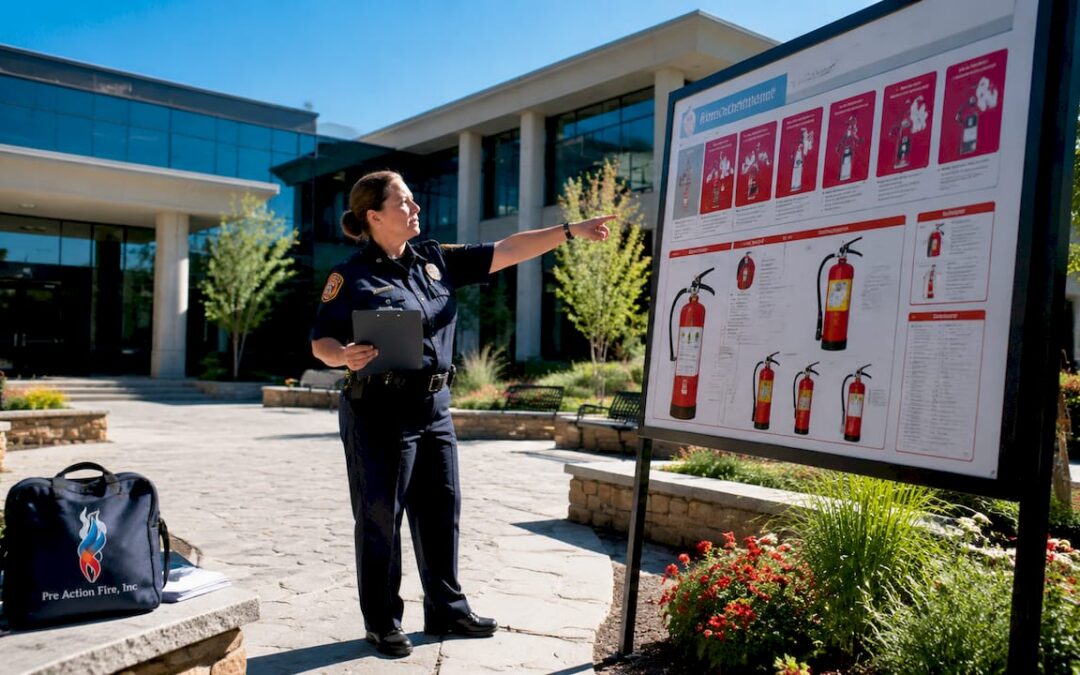
A fire marshal is a public safety official responsible for fire prevention, code enforcement, education, and fire investigation, often holding law enforcement authority related to arson. Most safety professionals know fire marshals exist. Far fewer understand the full scope of what they do, where their authority begins and ends, and why their work determines whether a building passes or fails a compliance audit. This article breaks down the fire marshal’s duties, legal powers, and practical responsibilities across workplace environments, so you can work with them more effectively and build a stronger fire safety program.
What are the primary duties of fire marshals in workplace settings?
The role of fire marshals covers a wide operational range: inspecting buildings, reviewing construction plans, issuing permits for hazardous activities, and coordinating with prosecutors when criminal fire activity is suspected. This is not a single-function job. Fire marshals operate at the intersection of fire science, building codes, and criminal investigation, which demands both technical expertise and legal knowledge.
Their day-to-day responsibilities in workplace and public safety settings include:
- Fire risk assessments: Identifying hazards specific to the building type, occupancy load, and operational processes before an incident occurs.
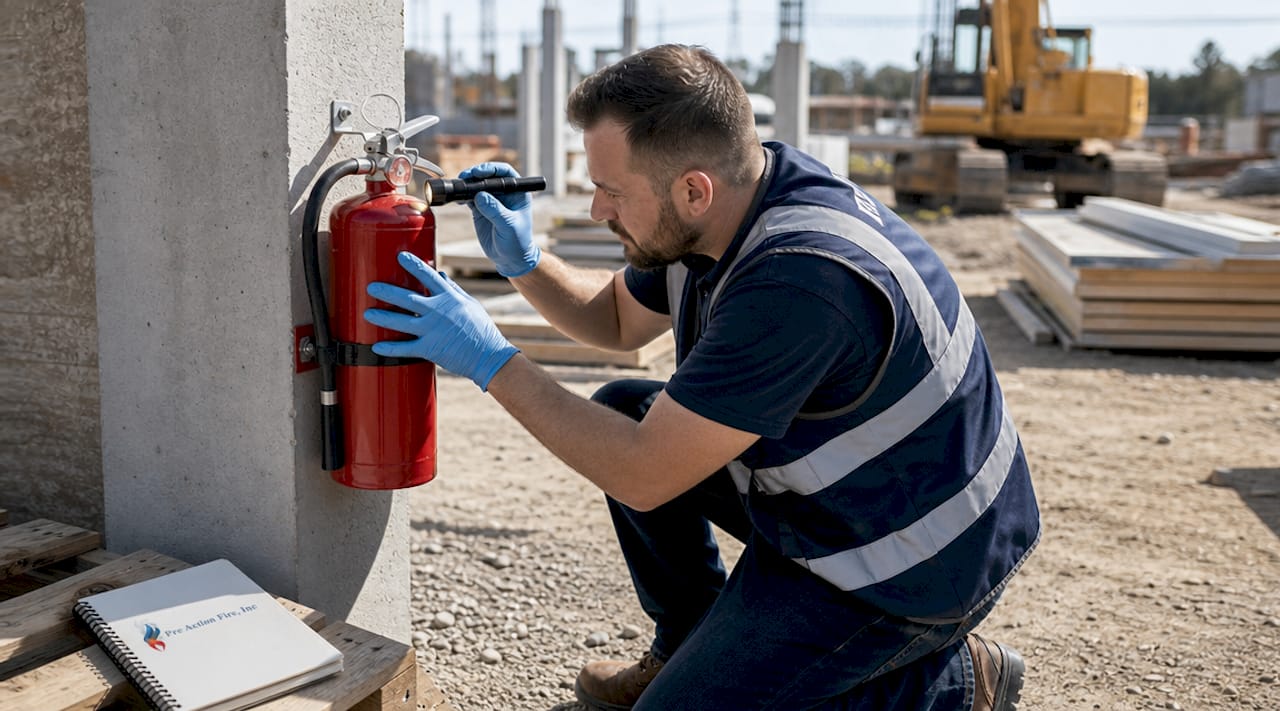
- Code inspections: Verifying that fire exits, suppression systems, alarm systems, and extinguisher placements meet local fire codes and NFPA standards.
- Permit review: Approving or flagging plans for construction, renovation, or hazardous material storage that could affect fire risk.
- Public education programs: Running fire safety awareness training for employees, building occupants, and community groups.
- Incident documentation: Recording violations, near-misses, and compliance actions for regulatory audits and insurance purposes.
- Emergency evacuation support: Directing occupants during drills and live emergencies, managing assembly points, and confirming headcounts.
Fire marshals also maintain safety equipment oversight, verifying that sprinkler systems, fire extinguishers, and alarm panels are tested and functional. This is where their work directly intersects with third-party fire protection vendors.
Pro Tip: Schedule fire marshal inspections at least 30 days before a major compliance audit. This gives your team time to address any flagged violations without rushing remediation under deadline pressure.
How do fire marshals’ legal powers differ from firefighters and fire chiefs?
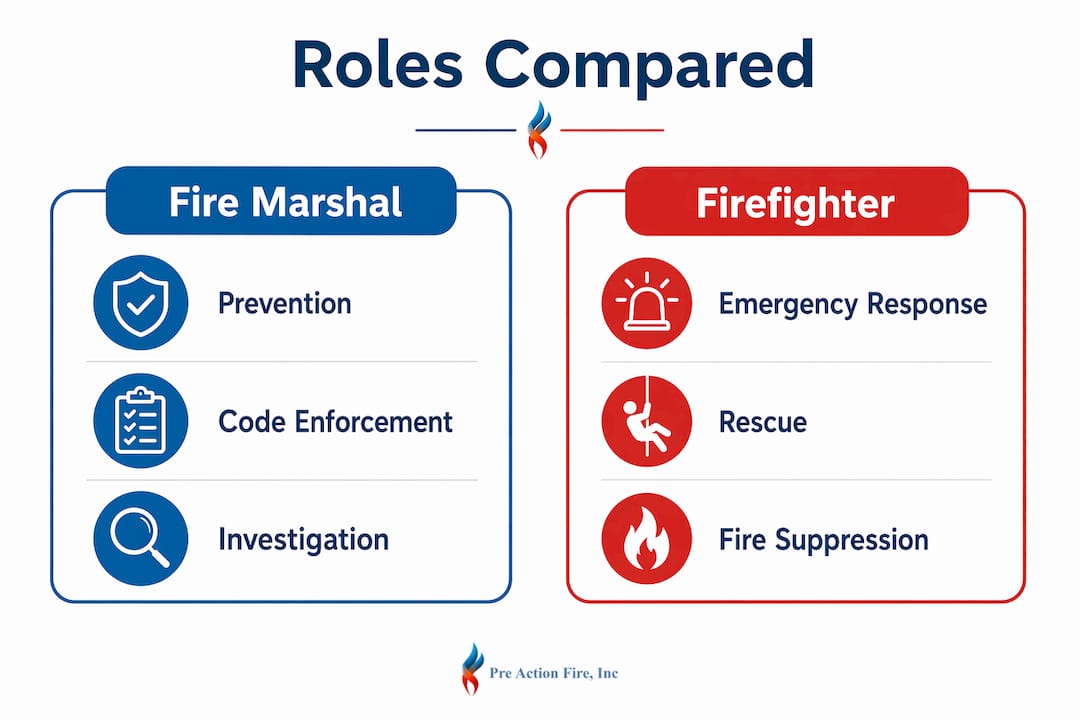
Fire marshals, firefighters, and fire chiefs all serve fire safety, but their authority and focus are fundamentally different. Understanding this distinction matters when you are managing compliance or responding to a fire investigation.
| Role | Primary Focus | Legal Authority | Typical Activities |
|---|---|---|---|
| Fire Marshal | Prevention, enforcement, investigation | Arrest, search warrants, subpoenas, citations | Inspections, arson investigations, code enforcement |
| Firefighter | Emergency response | Limited to incident scene control | Suppression, rescue, hazmat response |
| Fire Chief | Administration and command | Operational authority over department | Staffing, budgets, incident command |
Fire marshals investigate fires scientifically using NFPA 921 methods, the recognized standard for fire and explosion investigation. When arson is suspected, they can make arrests, obtain search warrants, and serve as expert witnesses in criminal proceedings. This is a power set that firefighters do not hold.
Municipal fire marshals also carry explicit statutory authority. Under codes like Spokane Municipal Code Section 17F.080.040, fire marshals can inspect premises, initiate prosecutions, and seize explosives. Similar ordinances exist across Colorado jurisdictions, giving fire marshals real enforcement teeth beyond issuing a warning letter.
The practical implication for your organization: a fire marshal’s visit is not the same as a routine safety walkthrough. Violations they document can result in citations, fines, and closure orders. Their investigation reports also directly affect insurance claims, influencing whether a claim is accepted and how quickly it is processed.
What fire prevention strategies do fire marshals apply across different industries?
Fire marshals adapt their fire prevention strategies to the specific hazards of each environment. A warehouse storing flammable liquids presents entirely different risks than a hotel lobby or a medical office. Workplace-specific hazard identification is one of the most operationally demanding parts of the job.
Here is how fire marshals typically structure their prevention work across different settings:
- Hazard identification by environment: In manufacturing, they focus on ignition sources near combustible materials. In offices, they check electrical load management and blocked exits. In hospitality, they prioritize kitchen suppression systems and guest evacuation routes.
- Fire drill planning and execution: Fire marshals organize drills that simulate realistic evacuation scenarios, not just alarm-and-exit exercises. They time the drills, identify bottlenecks, and document results for compliance records.
- Staff training: They train employees on evacuation procedures, assembly point locations, and how to assist vulnerable occupants. Training frequency and content are often dictated by local fire codes or NFPA guidelines.
- Extinguisher use guidance: Fire marshals define clear boundaries on when employees should attempt to fight an incipient fire versus evacuate immediately. This boundary is critical. Attempting to fight a fire beyond the incipient stage without proper training creates additional casualties.
- Safety culture collaboration: They work directly with facility managers and department heads to embed fire safety into daily operations, not just annual drills.
Pro Tip: When fire marshals conduct training, record attendance and keep signed acknowledgment forms. This documentation protects your organization during regulatory audits and insurance investigations.
For businesses operating under Colorado’s commercial fire codes, aligning your internal fire safety program with the standards outlined in Colorado commercial fire code requirements reduces the risk of violations during a fire marshal inspection.
How do fire marshals coordinate with emergency services and business leadership?
The effectiveness of fire marshal programs depends directly on organizational commitment and the authority management grants them. A fire marshal without management backing cannot enforce corrective actions, cannot secure budget for equipment upgrades, and cannot hold departments accountable for training attendance.
Coordination responsibilities fire marshals carry in this space include:
- Hazard reporting to management: Fire marshals document identified risks and present them to facility managers or safety committees with recommended corrective timelines.
- Emergency service liaison: During live incidents, fire marshals coordinate with emergency responders by providing building layouts, occupant counts, and hazardous material locations to arriving fire departments.
- Audit and insurance record maintenance: They maintain detailed logs of inspections, drills, training sessions, and equipment tests. These records are the primary evidence base during insurance claims and regulatory audits.
- NFPA compliance tracking: Fire marshals monitor adherence to NFPA standards relevant to their building type, flagging gaps before they become violations. Businesses can use NFPA compliance inspections to verify their systems meet current standards.
- Post-incident reporting: After any fire event, fire marshals produce detailed reports covering origin, cause, contributing factors, and recommended corrective actions.
The coordination role also extends to new construction. Fire marshals review building plans during the design phase to confirm that suppression systems, alarm placements, and egress routes meet code before a single wall goes up. For developers and contractors, understanding fire protection for new construction requirements early prevents costly redesigns during the inspection phase.
Management support is not optional. Without it, fire safety programs become checkbox exercises rather than genuine risk reduction systems. The most effective organizations treat their fire marshal as a strategic safety partner, not a compliance burden.
Key takeaways
Fire marshals are the operational core of any serious fire safety program, combining prevention, enforcement, investigation, and emergency coordination into a single authority-backed role.
| Point | Details |
|---|---|
| Legal authority is real | Fire marshals can arrest, issue warrants, and testify in court. Violations carry legal and financial consequences. |
| Prevention comes first | Risk assessments, code inspections, and staff training reduce fire incidents before emergency response is needed. |
| Industry-specific adaptation | Fire marshals tailor hazard identification and drills to the specific risks of manufacturing, offices, and hospitality environments. |
| Management support is required | Without organizational authority, fire marshal programs lose enforcement power and fail to reduce risk effectively. |
| Investigation affects insurance | Fire marshal reports directly influence insurance claim outcomes, making accurate documentation a financial priority. |
Why fire marshals deserve more strategic attention than most organizations give them
Most organizations treat fire marshal visits as compliance checkboxes. That is a costly mistake. Fire marshals occupy a position that no other safety role fills: they combine the technical knowledge of fire science, the enforcement authority of a code official, and the investigative skills of a criminal investigator. That combination is rare and genuinely powerful.
What I have seen consistently is that businesses which engage proactively with fire marshals, sharing building updates, flagging new hazards, and inviting pre-inspection walkthroughs, face far fewer violations and resolve issues faster. The fire marshal is not your adversary. They are the person who can tell you exactly what will fail before it fails.
The harder truth is that fire marshal programs inside organizations often collapse because leadership underestimates the authority and resources these roles require. A fire safety officer without management backing is just a person with a clipboard. The management support and authority fire marshals need is not bureaucratic formality. It is the mechanism that makes fire prevention programs actually work.
The organizations that get this right treat fire safety compliance as a business continuity issue, not just a regulatory one. A fire event that shuts down operations for weeks costs far more than the investment in a well-resourced fire safety program. Fire marshals are the professionals who prevent that scenario. Give them the tools, authority, and organizational respect to do the job.
— Preactionfire
How Preactionfire supports fire marshal compliance in Denver

Fire marshals identify the gaps. Preactionfire closes them. Serving the Denver Metro Area since 2009, Preactionfire provides the fire protection systems and inspection services that keep commercial and industrial properties compliant with NFPA standards and local fire codes. From fire alarm systems designed for Denver’s commercial buildings to sprinkler installation and extinguisher compliance services, Preactionfire’s NICET-certified technicians deliver the technical infrastructure fire marshals expect to find during inspections. Contact Preactionfire to schedule a compliance assessment before your next fire marshal review.
FAQ
What does a fire marshal do on a typical inspection?
A fire marshal inspects exits, suppression systems, alarm panels, extinguisher placements, and hazardous material storage for code compliance. They document violations and issue citations, corrective orders, or closure notices depending on severity.
How is a fire marshal different from a firefighter?
Fire marshals focus on prevention, code enforcement, and investigation, while firefighters respond to active emergencies. Fire marshals hold law enforcement authority, including the power to arrest and obtain search warrants in arson cases.
Can a fire marshal shut down a business?
A fire marshal can issue closure orders for serious code violations that present an immediate life safety risk. This authority is backed by municipal ordinances and state fire codes.
What is NFPA 921 and why does it matter for fire marshal investigations?
NFPA 921 is the standard methodology for fire and explosion investigation used by fire marshals across the U.S. It governs how origin and cause are determined, making its findings admissible and credible in court and insurance proceedings.
How often should businesses expect fire marshal inspections?
Inspection frequency varies by jurisdiction and occupancy type, but most commercial properties in Colorado can expect annual inspections. High-risk occupancies such as industrial facilities or buildings with hazardous materials may be inspected more frequently.